
The Good
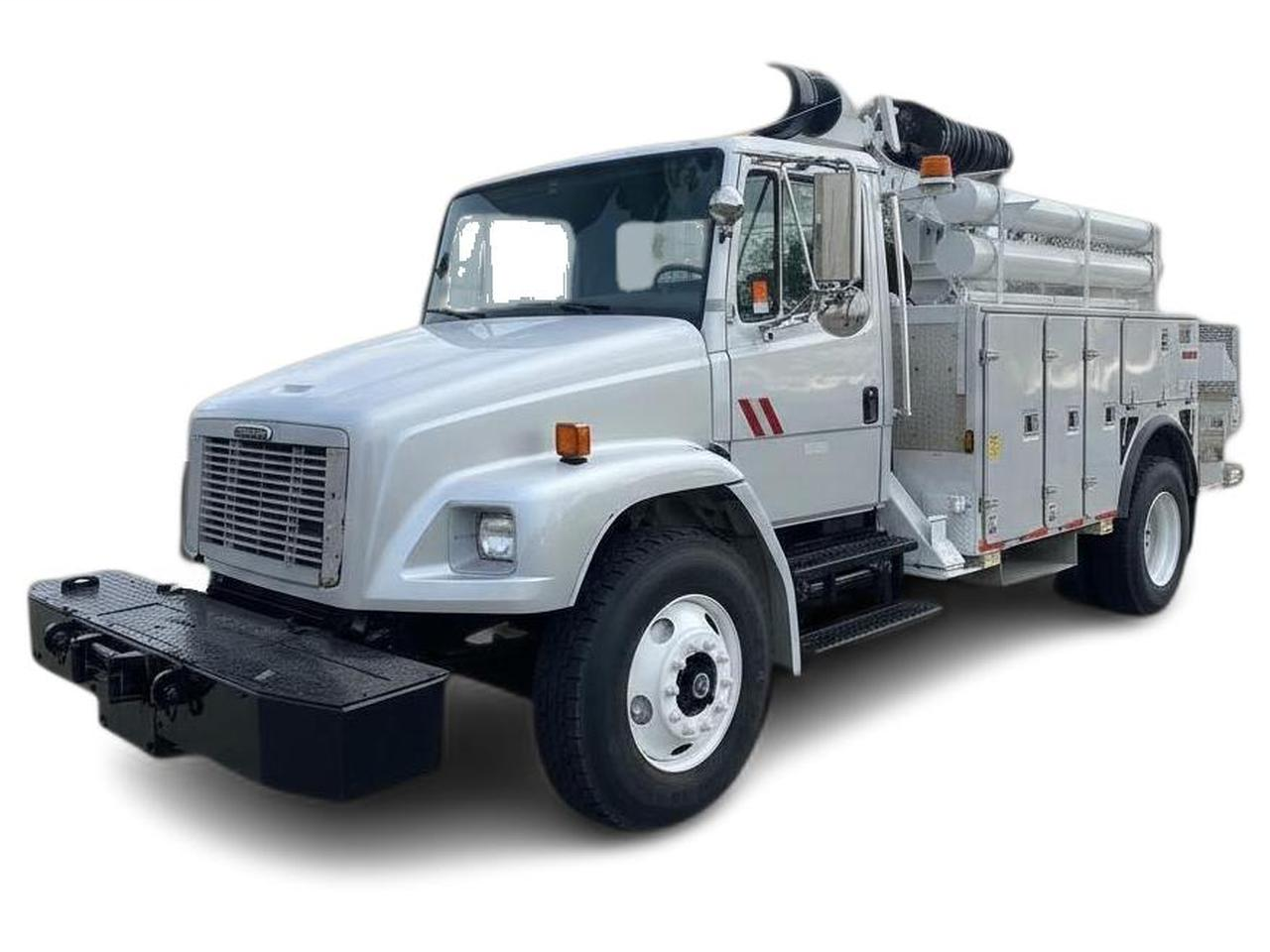
The 2003 Freightliner FL80 excels in sheer toughness and dependable performance, appealing to practicality. Its rugged build inspires confidence, while its straightforward design offers ease of maintenance. For those seeking a solid foundation for a project or a workhorse, its value is undeniable.
The Bad
Potential buyers of the 2003 Freightliner FL80 should be aware of possible rust issues, particularly around the frame and cab. Electrical gremlins can also arise with age. Older models may also exhibit wear and tear on suspension components and the drivetrain, requiring thorough inspection.
2003 Freightliner FL80: Quick Overview
- Engine Options: The 2003 Freightliner FL80 was typically equipped with robust diesel engines designed for commercial use. Common options included the Cummins ISB and ISC series, as well as potentially Detroit Diesel engines. These engines are known for their durability and torque.
- Horsepower: Horsepower varied significantly based on the specific engine and configuration. Cummins ISB models often ranged from around 170 to 275 horsepower, while the larger ISC could produce upwards of 300 horsepower.
- Fuel Economy: Fuel economy for a vehicle of this size and weight is generally measured in miles per gallon (MPG) and is highly dependent on the engine, transmission, load, and driving conditions. Expect figures typically in the range of 8-12 MPG for highway driving, and lower in urban or heavy-duty applications.
- 0-60 Times: 0-60 mph acceleration times are not a primary metric for this class of vehicle, as they are designed for work and hauling, not speed. Performance is more about torque and pulling power.
- Towing Capacity: The towing capacity of the 2003 Freightliner FL80 is substantial and depends heavily on the chassis configuration, axle ratings, suspension, and engine choice. These trucks are capable of towing very heavy loads, often exceeding 20,000 pounds, making them suitable for RV towing, heavy equipment transport, and commercial hauling. Consult specific vehicle ratings for accurate figures.
- Trim-Level Features: The FL80 was primarily sold as a chassis cab, meaning trim levels were less about luxury and more about vocational application and component options. Features were often dictated by the upfitter or customer specification. Standard features would include a functional cab with basic instrumentation, power steering, and a robust frame designed to support various body styles such as dump beds, box trucks, service bodies, or RV conversions. Optional features could include air brakes, upgraded suspension, and different seating configurations.
2003 Freightliner FL80 Specifications
Vehicle Information
| Year | 2003 |
| Make | Freightliner |
| Model | FL80 |
| Trim | - |
| Style | Base Truck FWD 4AT 7.2L I6 |
| Type | Pickup Truck |
| Category | commercial |
Manufacturing Details
| Made In | United States |
| Manufacturing City | MT. HOLLY |
Dimensions
| Doors | 4-Door |
| Curb Weight | - |
| Gross Vehicle Weight Rating | - |
| Overall Height | - |
| Overall Length | - |
| Overall Width | - |
| Wheelbase Length | - |
| Standard Seating | - |
Engine & Performance
| Engine | 7.2L I6 |
| Engine Size | 7.2L |
| Engine Cylinders | 6 |
| Transmission | 4-Speed Automatic |
| Transmission Type | Automatic |
| Transmission Speeds | 4-Speed |
| Drivetrain | Front-Wheel Drive |
Additional Features
| Anti-Brake System | - |
| Steering Type | - |
Pricing
| Manufacturer Suggested Retail Price (MSRP) | - |
| Invoice Price | - |
| Delivery Charges | - |
Vehicle History Report
Specifications
History
Events
History Check
Check
Check
Check
Check
Listings
Recalls
Check
Analysis
What Problems Does the 2003 Freightliner FL80 Have?
Electrical issues are also not uncommon. Owners have reported problems with the wiring harness, dashboard components, and accessory wiring, which can manifest as intermittent failures or complete system malfunctions. Given the age, these can be due to wear, corrosion, or rodent damage.
The drivetrain, while generally robust, can also present concerns. Issues with the transmission, particularly automatic transmissions, can arise due to high mileage and heavy use. Clutch wear on manual transmission models is another point to check. The diesel engines, such as Cummins variants, are known for longevity, but components like injectors, fuel pumps, and turbochargers can require attention over time, especially if maintenance has been neglected.
Suspension and braking systems are also areas where wear and tear are expected. Leaf springs can sag under heavy loads, and air brake systems, if equipped, require regular inspection and maintenance to ensure proper function. Some owners have reported issues with exhaust systems, including leaks or catalytic converter problems.
While specific recalls for the 2003 FL80 model year are not as widely publicized as for passenger vehicles, it is crucial for potential buyers to verify any outstanding recalls with Freightliner or the vehicle's VIN. Long-term reliability is generally good if the vehicle has been consistently maintained with quality parts and serviced by qualified technicians. Neglect is the primary enemy of longevity for these trucks.
How long will the 2003 Freightliner FL80 last?
What Technology & Safety Features are Included?
Driver-assistance and advanced safety features as we understand them today were virtually non-existent. The FL80 relied on robust mechanical systems for safety. Standard safety features would include a sturdy frame and body designed to withstand significant forces, seatbelts, and typically hydraulic or air brakes, depending on the specific configuration and weight class. ABS (Anti-lock Braking System) was becoming more common but might have been an optional feature.
Visibility from the driver's seat is generally good due to the high driving position and large windshield, which is a crucial safety aspect in commercial operations. Mirrors were large and designed to provide a wide field of view.
Optional features could have included more advanced instrumentation, upgraded seating for driver comfort during long hauls, and potentially auxiliary lighting. Specific to RV conversions, the chassis would be the foundation, with all the integrated tech and safety features for living spaces added by the conversion specialist.
Crash-test ratings are not typically available or applicable to commercial truck chassis in the same way they are for passenger vehicles. The design focus was on occupant protection within the context of heavy-duty operation and the potential for significant impacts, emphasizing structural integrity. The FL80 was engineered to meet commercial safety standards of its time, focusing on robust construction and reliable braking systems.
What Colors Options are Available?
2003 Freightliner FL80 Prices and Market Value
2003 Freightliner FL80 Cost of Ownership
2003 Freightliner FL80 Fuel Efficiency
2003 Freightliner FL80 Warranty
Basic
Powertrain
Rust
2003 Freightliner FL80 Insurance
reasonable repair costs.
How Does the 2003 Freightliner FL80 Compare to Other Pickup Truck?
Performance: The FL80 generally offered competitive performance with strong diesel engines, providing ample torque for hauling and towing, comparable to its rivals. Specific engine choices and drivetrain configurations would dictate nuanced performance differences.
Features: In terms of features, these trucks were primarily focused on functionality. The FL80, International 4000 series, Peterbilt 330, and Kenworth T300 all offered similar basic cab amenities, with options for upgraded interiors and specialized equipment depending on the vocational application. Advanced technology was minimal across the board for this model year.
Reliability: Freightliner, International, Peterbilt, and Kenworth are all known for building durable commercial vehicles. The FL80's reliability is generally on par with its peers, with longevity heavily dependent on maintenance. All these trucks are susceptible to age-related issues like rust and wear on components.
Price: New pricing was competitive within the segment, with variations based on specific upfits and engine options. Currently, on the used market, the FL80 often presents a strong value proposition, sometimes being more accessible than comparable Peterbilt or Kenworth models, though prices are highly variable.
Alternatives: For similar capability and durability, the International 4300 is a direct and strong competitor. The Ford F-650/F-750 also offered comparable medium-duty capabilities. If seeking a more premium feel or specific styling, a used Peterbilt 330 or Kenworth T300 might be considered, though they could carry a higher price tag. For those looking at RV conversions, the FL80 chassis remains a popular and often more affordable choice compared to some other premium brands.
Final Verdict: Is the 2003 Freightliner FL80 a Good Pickup Truck?

Drew B
Drew is a seasoned automotive expert and contributor to VinCheck.info. With nearly 15 years of experience as a former Porsche technician, he brings a wealth of hands-on knowledge to his writing. Born in North Carolina, a region renowned for its deep-rooted NASCAR culture, Drew developed a passion for cars early in life, often building and working on vehicles from a young age. At VINCheck, Drew leverages his extensive technical background to provide in-depth analyses of various vehicles. His articles often focus on engine performance, reliability, and maintenance insights, offering readers practical information grounded in real-world experience. Some of his notable contributions include reviews on the Mazda CX-5's longevity and detailed examinations of engine options for models like the 2011 Toyota Camry and Tacoma