
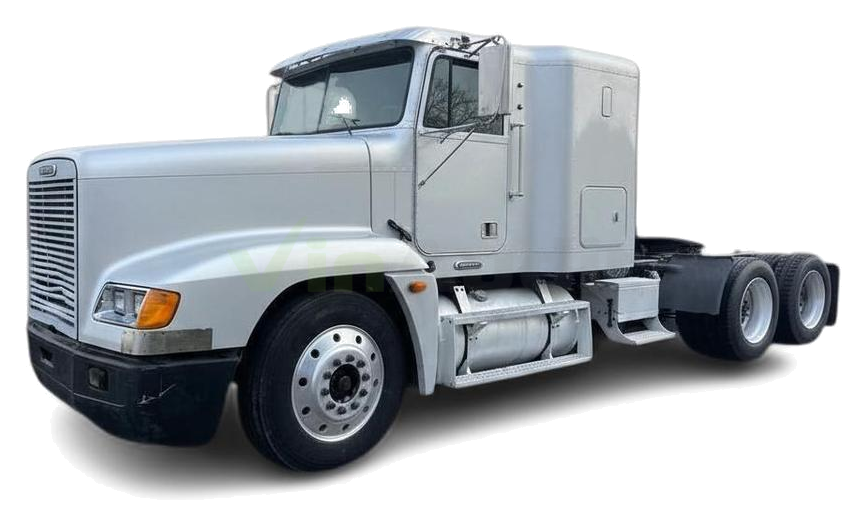
The Good
The 2000 Freightliner FLD120SD boasts exceptional reliability and robust performance, built to endure demanding work. Its spacious and functional cabin offers surprising comfort for long hauls. It represents excellent long-term value due to its durable construction and readily available parts, appealing to both the practical need for a dependable machine and the emotional satisfaction of owning a true workhorse.
The Bad
Potential buyers of the 2000 Freightliner FLD120SD should be aware of common issues like potential electrical gremlins, exhaust leaks, and wear and tear on suspension components due to its age and heavy-duty use. Older models may also exhibit rust in certain areas. Engine and transmission maintenance history is crucial to scrutinize.
2000 Freightliner FLD120SD: Quick Overview
- Engine Options: The 2000 Freightliner FLD120SD was typically equipped with powerful diesel engines. Common options included:
- Caterpillar C-12 and C-15 (various displacements and configurations)
- Cummins N14 and ISX series (various displacements and configurations)
- Detroit Diesel Series 60 (various displacements and configurations)
- Horsepower: Horsepower ratings varied significantly depending on the engine and specific tune, generally ranging from around 350 hp to over 550 hp. Heavy-duty applications often utilized higher horsepower variants.
- Fuel Economy: Fuel economy for a Class 8 truck like the FLD120SD is highly dependent on load, terrain, driving style, and engine configuration. A general estimate might be between 4 to 7 miles per gallon (MPG).
- 0-60 Times: 0-60 mph times are not a primary metric for this type of vehicle and are highly variable. Loaded, these trucks are not built for rapid acceleration; focus is on sustained power and torque.
- Towing Capacity: The FLD120SD is designed for heavy-duty towing. Its towing capacity is not a single number but rather determined by its Gross Combination Weight Rating (GCWR), which can exceed 80,000 pounds, often much higher for specialized applications like semi-trailer hauling.
- Trim-Level Features: As a vocational truck, specific 'trims' were less about luxury packages and more about functional configurations. Standard features would include a durable chassis, a functional cab designed for driver efficiency and visibility, robust braking systems, and a powerful drivetrain. Optional features could include various sleeper configurations, advanced instrumentation, air-ride suspension, premium seating, and specialized auxiliary power units. The focus was always on capability and driver utility.
2000 Freightliner FLD120SD Specifications
Vehicle Information
| Year | 2000 |
| Make | Freightliner |
| Model | FLD120 |
| Trim | - |
| Style | - |
| Type | Truck |
| Category | Medium Truck |
Manufacturing Details
| Made In | United States |
| Manufacturing City | SANTIAGO |
Dimensions
| Doors | - |
| Curb Weight | - |
| Gross Vehicle Weight Rating | - |
| Overall Height | - |
| Overall Length | - |
| Overall Width | - |
| Wheelbase Length | - |
| Standard Seating | - |
Engine & Performance
| Engine | 12.7L I6 |
| Engine Size | 12.7L |
| Engine Cylinders | 6 |
| Transmission | - |
| Transmission Type | - |
| Transmission Speeds | - |
| Drivetrain | 6x4 |
Additional Features
| Anti-Brake System | - |
| Steering Type | - |
Pricing
| Manufacturer Suggested Retail Price (MSRP) | - |
| Invoice Price | - |
| Delivery Charges | - |
Vehicle History Report
Specifications
History
Events
History Check
Check
Check
Check
Check
Listings
Recalls
Check
Analysis
What Problems Does the 2000 Freightliner FLD120SD Have?
Transmission issues, though less common than engine wear, can arise, particularly with manual transmissions where clutch wear is expected. Automatic transmissions may develop issues with seals or torque converters. The cooling system is another area to watch; radiator leaks, hose degradation, and water pump failures can occur due to age and high operating temperatures.
Electrical gremlins are also a possibility in older trucks. Wiring harnesses can degrade, leading to intermittent issues with lights, sensors, or even engine control modules. Dashboard components, such as gauges and warning lights, might become less reliable.
Suspension components, including leaf springs, shock absorbers, and air springs (if equipped), are subject to significant stress and wear. Bushings can deteriorate, leading to noise and handling issues. Braking systems, while designed for heavy loads, require diligent maintenance, and issues with air brakes, such as leaks or malfunctioning valves, can occur.
Rust and corrosion can be a concern, particularly on frame rails, cab corners, and wheel wells, depending on the truck's operating environment and past maintenance. While specific recalls for the 2000 model year might be harder to pinpoint without direct VIN access, Freightliner has historically issued recalls related to various safety systems, including braking, steering, and electrical components across its product lines. Long-term reliability is highly dependent on the initial build quality, the specific components used by the original owner, and crucially, the rigor and quality of its maintenance history. Owners who invested in regular, preventative maintenance and addressed issues promptly tend to have vehicles that continue to serve reliably for hundreds of thousands of miles.
How long will the 2000 Freightliner FLD120SD last?
What Technology & Safety Features are Included?
Entertainment options were usually limited to aftermarket radio/cassette or CD players, with speaker systems being basic. The cabin was designed for practicality; comfort was provided through durable seating and a straightforward dashboard layout. Driver-assistance features were virtually non-existent by today's standards. There were no advanced cruise control systems, lane departure warnings, or automatic emergency braking. The primary 'driver-assistance' was the truck's inherent design for visibility and ergonomic controls.
Safety features were centered on passive and active systems designed for heavy-duty operation. This included heavy-duty brakes (typically air brakes), robust lighting for visibility, sturdy mirrors, and a strong frame designed to withstand significant forces. Seatbelts were standard. More advanced safety options might have included anti-lock braking systems (ABS) on some models, especially those intended for highway use.
Optional features could extend to enhanced climate control, auxiliary lighting, specialized instrumentation for vocational use (like PTO controls), and different cab configurations. However, the focus remained on mechanical robustness rather than electronic wizardry. Crash-test ratings for commercial trucks of this era are generally not published in the same way as passenger cars, as their design and testing protocols differ significantly, focusing on occupant protection in severe impact scenarios relevant to commercial operations rather than standardized consumer tests. The safety emphasis was on structural integrity and braking capability for preventing accidents through control.
What Colors Options are Available?
2000 Freightliner FLD120SD Prices and Market Value
2000 Freightliner FLD120SD Cost of Ownership
2000 Freightliner FLD120SD Fuel Efficiency
2000 Freightliner FLD120SD Warranty
Basic
Powertrain
Rust
2000 Freightliner FLD120SD Insurance
reasonable repair costs.
How Does the 2000 Freightliner FLD120SD Compare to Other Truck?
Similar alternatives would include other Freightliner models of the era, or trucks from brands like International (e.g., 9000 series) which also offered robust diesel powertrains and durable chassis. Mack trucks also presented a strong alternative with their own range of powerful engines and solid build quality.
When considering alternatives, a buyer looking for maximum comfort might lean towards newer models or specific luxury-oriented trims from rivals if budget allows. However, for sheer, no-nonsense durability and a strong value proposition in the used market for a reliable workhorse, the 2000 Freightliner FLD120SD remains a highly relevant and often recommended choice, especially if a well-maintained example can be found. It strikes a near-perfect balance between raw capability, proven reliability, and cost-effectiveness in the used heavy-duty truck market.
Final Verdict: Is the 2000 Freightliner FLD120SD a Good Truck?

Drew B
Drew is a seasoned automotive expert and contributor to VinCheck.info. With nearly 15 years of experience as a former Porsche technician, he brings a wealth of hands-on knowledge to his writing. Born in North Carolina, a region renowned for its deep-rooted NASCAR culture, Drew developed a passion for cars early in life, often building and working on vehicles from a young age. At VINCheck, Drew leverages his extensive technical background to provide in-depth analyses of various vehicles. His articles often focus on engine performance, reliability, and maintenance insights, offering readers practical information grounded in real-world experience. Some of his notable contributions include reviews on the Mazda CX-5's longevity and detailed examinations of engine options for models like the 2011 Toyota Camry and Tacoma