
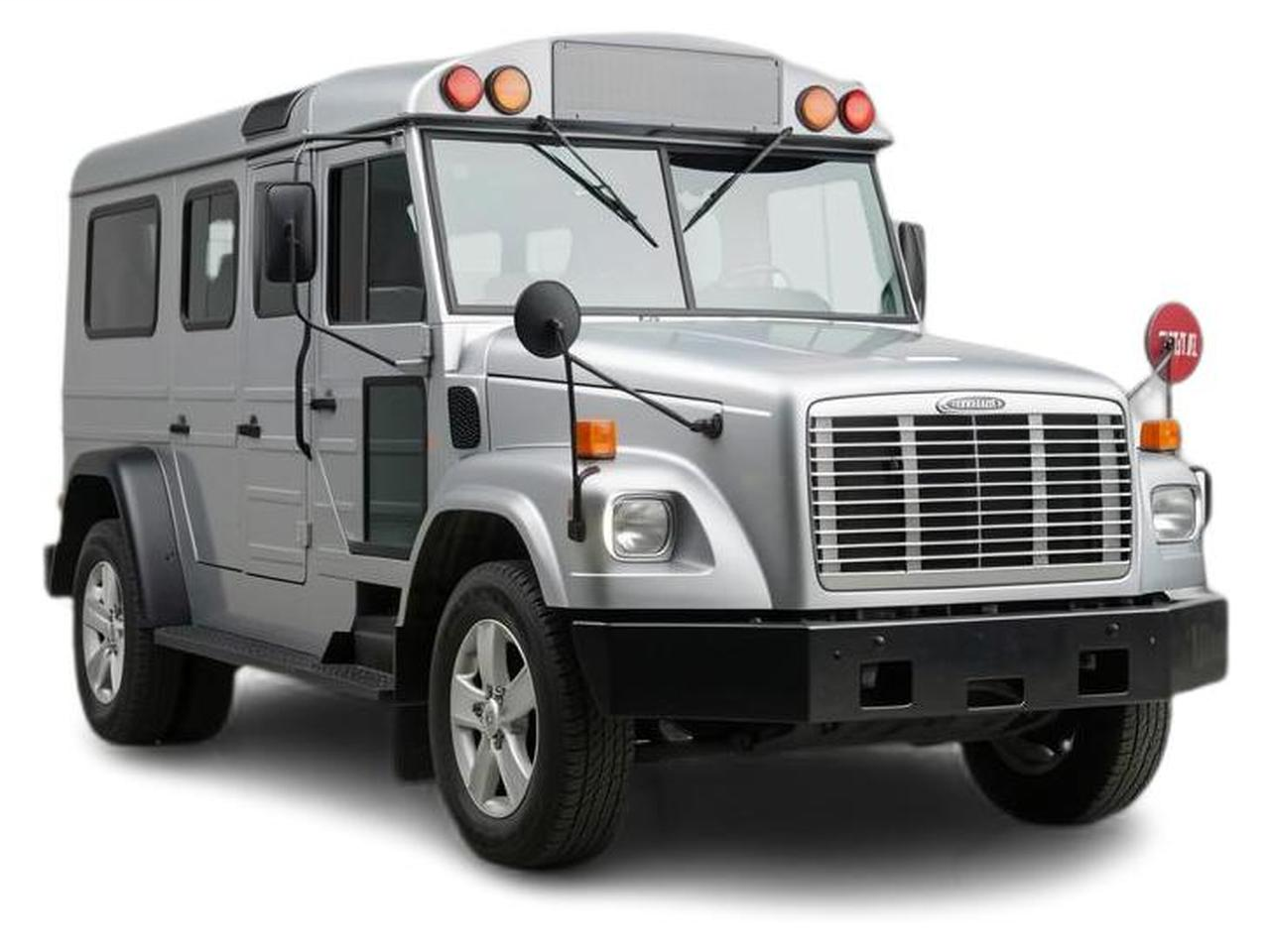
The Good
The 2003 Freightliner FS65 excels in unwavering reliability and durable performance, offering a sense of security and dependable operation. Its practical design prioritizes functionality and ease of maintenance, translating to excellent long-term value and peace of mind for budget-conscious buyers. The robust build also provides a comfortable and safe environment for passengers.
The Bad
Potential weaknesses for the 2003 Freightliner FS65 include occasional issues with exhaust systems and cooling components. Older models may also exhibit wear and tear on suspension and braking systems due to their heavy-duty use. Electrical gremlins, though not widespread, can sometimes arise in high-mileage units.
2003 Freightliner FS65: Quick Overview
- Engine Options: The 2003 Freightliner FS65 was typically offered with robust diesel engines designed for heavy-duty applications. Common choices included the Cummins ISB series and the Mercedes-Benz MBE900 series.
- Horsepower: Horsepower ratings varied depending on the specific engine chosen and its configuration. For the Cummins ISB, outputs generally ranged from approximately 170 hp to 230 hp. The Mercedes-Benz MBE900 engines typically offered power in a similar bracket, often around 170 hp to 210 hp.
- Fuel Economy: Fuel economy for a vehicle of this size and purpose is not typically measured in traditional MPG figures like passenger cars. Instead, it's often discussed in terms of gallons per mile or miles per gallon under specific load and operating conditions. For the FS65, expect figures in the range of 6-10 miles per gallon, highly dependent on the route, load, and engine.
- 0-60 Times: Official 0-60 mph times are not readily available or relevant for this class of vehicle, as they are designed for steady cruising and passenger transport, not acceleration. When fully loaded, acceleration would be gradual.
- Towing Capacity: The Freightliner FS65 chassis itself is not typically rated for towing in the conventional sense of attaching a trailer. Its primary function is to carry passengers and cargo within its gross vehicle weight rating (GVWR). However, when adapted for specific vocational uses, like a towing company's service truck, the chassis's inherent strength allows for significant payload and robust chassis mounting.
- Trim-Level Features: As a chassis, the FS65 doesn't have traditional trim levels like passenger cars. Instead, its 'features' are determined by the body builder and the intended application. However, standard on the chassis would be:
- Heavy-duty frame and suspension components.
- Powerful diesel engine and robust transmission options (often automatic, like an Allison).
- Comprehensive braking system.
- Basic driver controls and instrumentation.
- Provision for various body configurations (e.g., seating for school buses, cargo space for vocational trucks).
- Options could include different axle ratios, air suspension (less common on base models), and enhanced electrical systems to support auxiliary equipment.
- Heavy-duty frame and suspension components.
2003 Freightliner FS65 Specifications
Vehicle Information
| Year | 2003 |
| Make | Freightliner |
| Model | FS65 |
| Trim | - |
| Style | - |
| Type | Truck |
| Category | Medium Truck |
Manufacturing Details
| Made In | United States |
| Manufacturing City | GAFFNEY |
Dimensions
| Doors | - |
| Curb Weight | - |
| Gross Vehicle Weight Rating | - |
| Overall Height | - |
| Overall Length | - |
| Overall Width | - |
| Wheelbase Length | - |
| Standard Seating | - |
Engine & Performance
| Engine | 7.2L I6 |
| Engine Size | 7.2L |
| Engine Cylinders | 6 |
| Transmission | - |
| Transmission Type | - |
| Transmission Speeds | - |
| Drivetrain | Rear-Wheel Drive |
Additional Features
| Anti-Brake System | - |
| Steering Type | - |
Pricing
| Manufacturer Suggested Retail Price (MSRP) | - |
| Invoice Price | - |
| Delivery Charges | - |
Vehicle History Report
Specifications
History
Events
History Check
Check
Check
Check
Check
Listings
Recalls
Check
Analysis
What Problems Does the 2003 Freightliner FS65 Have?
The cooling system is another component to monitor. Over time, radiators can develop leaks, and water pumps may require replacement. Hoses can also degrade, leading to coolant loss. Regular inspection and flushing of the cooling system are essential.
While not specific to the 2003 model year, some owners of FS65 chassis have reported issues with ABS (Anti-lock Braking System) sensors, leading to warning lights and potential malfunctions of the system. Similarly, the alternator and starter, being high-wear items on any vehicle, may require replacement at higher mileage intervals.
Regarding engine-specific issues, while Cummins and Mercedes-Benz diesel engines are known for their durability, potential problems can include injector issues or turbocharger wear over hundreds of thousands of miles. Maintenance records are crucial here.
Electrical gremlins, though less common, can manifest in various ways on older vehicles. This might include dashboard warning lights that are intermittent or faulty gauges.
Specific recalls for the 2003 model year can be checked through the National Highway Traffic Safety Administration (NHTSA) database using the vehicle's VIN. However, general long-term reliability concerns for the FS65 revolve around the expected wear and tear of heavy-duty components. With diligent maintenance, including regular oil changes, fluid checks, and proactive replacement of worn parts, the FS65 can remain a dependable workhorse for many years. Owners should pay close attention to the vehicle's service history and address any unusual noises or performance changes promptly.
How long will the 2003 Freightliner FS65 last?
What Technology & Safety Features are Included?
Built-in Tech & Entertainment: Standard fare would typically include a basic AM/FM radio, possibly with a cassette or CD player. Speakers would be functional rather than high-fidelity. Climate control would likely be manual air conditioning and heating, focused on effectiveness for a large cabin.
Driver-Assistance Features: Advanced driver-assistance systems (ADAS) as we know them today—like lane departure warning, adaptive cruise control, or automatic emergency braking—were not standard or widely available on this chassis. Features would be limited to the essentials for safe operation. This includes:
- Power steering for easier maneuverability.
- Heated mirrors for improved visibility in adverse weather.
- Potentially backup alarms or basic exterior lighting for safety during loading/unloading.
Safety Features: Safety was prioritized through robust construction and essential passive safety measures. This would include:
- Heavy-duty seat belts for the driver and any passenger seating.
- A strong chassis frame and body structure designed to withstand impacts.
- Hydraulic or air brakes (depending on configuration) for reliable stopping power.
- Exterior mirrors for comprehensive driver visibility around the vehicle.
- Some models might have had optional features like intercom systems for passenger communication, or emergency exits built into the bus body.
Crash-Test Ratings: Specific crash-test ratings for a chassis like the 2003 Freightliner FS65 are not readily available in the same way as for passenger cars or SUVs. The safety performance is heavily dependent on the final body built upon the chassis (e.g., the school bus body manufacturer's design and adherence to safety standards for that specific application). Regulatory bodies provide safety standards for school buses, and manufacturers must comply with these, which address structural integrity, occupant protection, and emergency egress. The FS65 chassis provides the foundational strength upon which these safety-oriented bodies are constructed.
What Colors Options are Available?
2003 Freightliner FS65 Prices and Market Value
Currently, the used market prices for a 2003 Freightliner FS65 are highly variable, typically ranging from $5,000 to $25,000. This wide range is dictated by the vehicle's condition, mileage, specific upfit (e.g., passenger capacity, amenities), engine type, and overall maintenance history.
Depreciation for such a workhorse vehicle is less about rapid value loss and more about gradual wear and tear. While not appreciating assets, well-maintained FS65 models hold their value remarkably well for their age, especially those with lower mileage and in good mechanical condition. Factors significantly affecting resale value include the engine's reliability, tire condition, body integrity (no major rust or damage), and functionality of all systems. A clean title and comprehensive service records are also major pluses.
2003 Freightliner FS65 Cost of Ownership
2003 Freightliner FS65 Fuel Efficiency
2003 Freightliner FS65 Warranty
Basic
Powertrain
Rust
2003 Freightliner FS65 Insurance
reasonable repair costs.
How Does the 2003 Freightliner FS65 Compare to Other Truck?
Performance: The FS65 typically offers competitive performance with its Cummins or Mercedes-Benz diesel engines, providing ample power for its intended use in hauling large numbers of passengers or significant payloads. Rivals often offer similar powertrain options, with variations in specific horsepower and torque ratings. The ride quality and handling are optimized for stability rather than agility.
Features: As a chassis, features are secondary to robust construction. All competitors in this class offer durable frames, strong drivetrains, and the basic safety features necessary for bus and vocational applications. Advanced technology and luxury features are generally absent across the board, though specific body builders might offer variations.
Reliability: Freightliner, along with International and Blue Bird, have a strong reputation for building durable chassis. Reliability is a hallmark of this segment, with the FS65 generally holding its own. Longevity is often measured in hundreds of thousands of miles, and maintenance costs are comparable for all these heavy-duty platforms.
Price: When new, prices were competitive within the commercial chassis market. In the used market, the FS65 often represents a good value proposition. Its price point is generally in line with comparable used chassis from International or Blue Bird, with condition and mileage being the primary determinants.
Alternatives:
- Similar Alternatives: International 3000 Series chassis are very similar in purpose and capability, often featuring comparable Cummins engines. Blue Bird chassis (e.g., the All American chassis) are also direct competitors, particularly in the school bus market, known for their robust construction.
- Potentially Better Alternatives (depending on need): For those seeking slightly more modern features or different powertrain philosophies, looking at slightly newer models from these manufacturers or exploring specialized vocational chassis might be considered. However, for sheer workhorse reliability and straightforward maintenance in the 2003-era, the FS65 remains a solid choice. If the budget is extremely tight and basic utility is the sole focus, older, well-maintained chassis from these competitors are also viable.
Final Verdict: Is the 2003 Freightliner FS65 a Good Truck?
It is generally worth buying, especially on the used market, provided it has been well-maintained and inspected thoroughly. The conditions under which it is most advisable to buy are: when purchasing from a reputable seller with a documented service history, when the vehicle shows minimal rust and has functional core systems (engine, transmission, brakes), and when the intended use aligns with its robust, utilitarian design. Given its age, buying new is not an option, making a careful used purchase the only path. Specific 'trims' are less relevant than the quality of the body and the overall mechanical condition of the chassis.

Cathleen V
Cathleen is an exceptional freelance writer covering hot topics in the automotive world from a gearhead's perspective. Her articles delve into various aspects of automotive technology and history, offering readers detailed insights into engine performance, reliability, and maintenance. Through her engaging and informative writing, Cathleen provides valuable information to automotive enthusiasts and consumers alike, helping them make informed decisions about vehicle maintenance and purchases.