
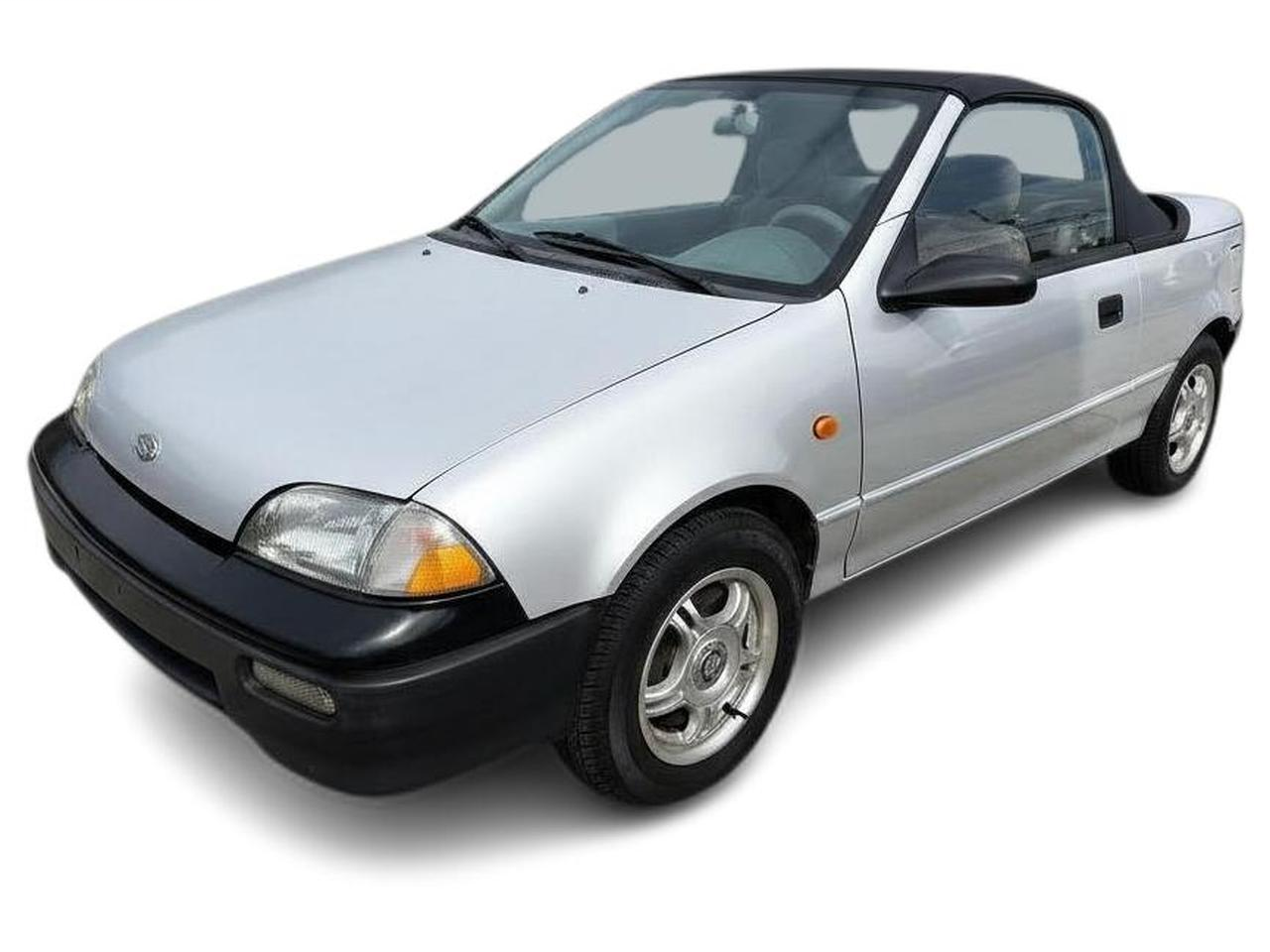
The 1993 Geo Metro, a subcompact car produced by Suzuki and sold under Chevrolet's Geo brand, was a popular choice for its affordability and fuel efficiency. Available as a 2-door coupe or a 4-door hatchback, its model years spanned from 1989 to 2001. Key trims included the base model and the more feature-rich XFi. It stood out for its incredibly low price point and exceptional gas mileage, making it a darling of budget-conscious buyers and urban commuters.
The Good
The 1993 Geo Metro excels in fuel efficiency, making it incredibly practical for saving money. Its nimble handling and compact size offer ease of urban driving. While basic, its straightforward design appeals to those seeking simplicity, and its low purchase price provides excellent value, tugging at both the practical and emotional desire for an economical ride.
The Bad
Potential buyers should be aware of the 1993 Geo Metro's modest power output, which can make highway merging and steep inclines challenging. Interior noise levels can be high, and its basic construction means less protection in a collision compared to larger vehicles. Rust is also a common concern in many older examples.
1993 Geo Metro: Quick Overview
- Engine Options: The 1993 Geo Metro primarily featured a 1.0-liter 3-cylinder engine. Later models and some trims also offered a 1.3-liter 4-cylinder engine.
- Horsepower: The 1.0-liter engine typically produced around 53 horsepower, while the 1.3-liter engine offered approximately 70 horsepower. These were modest figures, prioritizing economy over performance.
- Fuel Economy: This was a major selling point. Expect figures in the range of 40-50 MPG combined, depending on the engine and transmission. The XFi trim was particularly optimized for maximum fuel efficiency.
- 0-60 Times: Performance was not a forte. 0-60 MPH times were generally in the 14-17 second range for the 1.3L engine, and significantly slower for the 1.0L.
- Towing Capacity: Towing capacity is not applicable for the Geo Metro; it was not designed or equipped for towing.
- Trim-Level Features:
- Base Model: Typically came with basic amenities like manual windows, manual door locks, a 4-speaker audio system, and a 5-speed manual transmission. Air conditioning and an automatic transmission were often optional.
- XFi: This trim was focused on maximizing fuel economy, often featuring aerodynamic enhancements, special tires, and sometimes omitting features like power steering or A/C to reduce weight and drag.
- Optional Features: Available options across trims could include power steering, air conditioning, an AM/FM stereo with cassette player, and a tachometer. Interior materials were generally utilitarian but durable.
1993 Geo Metro Specifications
Vehicle Information
| Year | 1993 |
| Make | Geo |
| Model | Metro |
| Trim | - |
| Style | 2-Door Hatchback 5-Speed |
| Type | Hatchback |
| Category | Subcompact Car |
Manufacturing Details
| Made In | Japan |
| Manufacturing City | KOSAI |
Dimensions
| Doors | 2-Door |
| Curb Weight | 1701 pounds |
| Gross Vehicle Weight Rating | - |
| Overall Height | 52.40 inches |
| Overall Length | 147.40 inches |
| Overall Width | 62.70 inches |
| Wheelbase Length | 89.20 inches |
| Standard Seating | 4 |
Engine & Performance
| Engine | 1.3L I4 |
| Engine Size | 1.3L |
| Engine Cylinders | 3 |
| Transmission | 5-Speed Manual |
| Transmission Type | Manual |
| Transmission Speeds | 5-Speed |
| Drivetrain | Front-Wheel Drive |
Additional Features
| Anti-Brake System | Non-ABS |
| Steering Type | Rack & Pinion |
Pricing
| Manufacturer Suggested Retail Price (MSRP) | $6,710 |
| Invoice Price | - |
| Delivery Charges | - |
Vehicle History Report
Vehicle
Specifications
Specifications
Ownership
History
History
All History
Events
Events
NMVTIS Title
History Check
History Check
Salvage/Rebuilt
Check
Check
Accident
Check
Check
Theft
Check
Check
Open Lien
Check
Check
Past Sale
Listings
Listings
Safety
Recalls
Recalls
Odometer
Check
Check
Market Price
Analysis
Analysis
What Problems Does the 1993 Geo Metro Have?
The 1993 Geo Metro, like many vehicles of its era, has some common issues owners should be aware of. One of the most frequently reported problems revolves around the ignition system, specifically issues with the ignition coil and distributor. These can lead to stalling, rough idling, or no-start conditions. The exhaust system is another area prone to problems; due to its lightweight construction and exposure to elements, rust and eventual failure of the muffler or catalytic converter are common. The clutch, especially in manual transmission models, can wear out over time due to the small engine's need to be worked harder, leading to slippage.
Electrical gremlins, though not always severe, can manifest as malfunctioning power windows, door locks, or instrument cluster lights. The cooling system, including radiators and hoses, can also develop leaks over the years, especially if not regularly maintained. Regarding recalls, specific to the 1993 model year, there haven't been widespread, catastrophic recalls that would render the vehicle inherently unreliable. However, it's always prudent to check for any outstanding recalls with the NHTSA. Long-term reliability is generally considered decent for its class and price point, but it's heavily dependent on consistent maintenance. Engines are known for their longevity if oil changes are performed regularly. The subcompact nature and lightweight construction mean that components are generally simpler, which can sometimes translate to fewer complex failures. However, the trade-off is durability under heavy use and resistance to wear and tear over decades. No specific major model year issues are widely reported for 1993 that differ significantly from general concerns for this generation of Metro.
How long will the 1993 Geo Metro last?
Based on owner data and typical maintenance, a well-maintained 1993 Geo Metro can realistically achieve 150,000 to 200,000 miles or more. Many have surpassed this, often with the original engine and transmission, a testament to their simple mechanical design. Long-term durability is surprisingly good for its class, provided basic maintenance like regular oil changes, coolant flushes, and timely replacement of worn parts (like brakes and clutch) is adhered to. Weaknesses that become more pronounced over time include increased susceptibility to rust, especially in regions with harsh winters, and the potential for minor electrical issues to develop. However, the fundamental powertrain components tend to be quite robust.
What Technology & Safety Features are Included?
The 1993 Geo Metro was an exercise in automotive minimalism, so its built-in technology, entertainment, driver-assistance, and safety features were understandably basic.
Technology & Entertainment: The primary entertainment feature was a standard AM/FM stereo system, often with a cassette player. Higher trims or optional packages might have included a 4-speaker setup for slightly better audio. There was no CD player, digital displays, or any form of connectivity like Bluetooth or USB. The instrument cluster was analog, displaying essential information like speed, RPM (on some models), fuel level, and engine temperature.
Driver-Assistance Features: Driver-assistance features were virtually non-existent. Power steering was an optional feature, making lower trims require more physical effort to steer, especially at low speeds. Anti-lock braking systems (ABS) were not available on the 1993 Geo Metro. The focus was on a simple, driver-controlled experience.
Safety Features: Standard safety equipment included seatbelts and basic crumple zones in its construction. Dual front airbags were also standard on the 1993 model year, which was a notable safety advancement for an economy car at the time. Side-impact airbags, traction control, or electronic stability control were not offered.
Crash-Test Ratings: Official crash-test ratings from organizations like the NHTSA or IIHS for the 1993 Geo Metro are not readily available or are from a testing methodology that is significantly different from today's standards. However, given its small size and lightweight construction, it would likely perform poorly in modern frontal and side-impact tests compared to contemporary vehicles. Its safety is primarily derived from its standard airbags and the driver's ability to avoid accidents through its nimble handling. The car's design prioritized fuel efficiency and low cost over advanced safety features.
Technology & Entertainment: The primary entertainment feature was a standard AM/FM stereo system, often with a cassette player. Higher trims or optional packages might have included a 4-speaker setup for slightly better audio. There was no CD player, digital displays, or any form of connectivity like Bluetooth or USB. The instrument cluster was analog, displaying essential information like speed, RPM (on some models), fuel level, and engine temperature.
Driver-Assistance Features: Driver-assistance features were virtually non-existent. Power steering was an optional feature, making lower trims require more physical effort to steer, especially at low speeds. Anti-lock braking systems (ABS) were not available on the 1993 Geo Metro. The focus was on a simple, driver-controlled experience.
Safety Features: Standard safety equipment included seatbelts and basic crumple zones in its construction. Dual front airbags were also standard on the 1993 model year, which was a notable safety advancement for an economy car at the time. Side-impact airbags, traction control, or electronic stability control were not offered.
Crash-Test Ratings: Official crash-test ratings from organizations like the NHTSA or IIHS for the 1993 Geo Metro are not readily available or are from a testing methodology that is significantly different from today's standards. However, given its small size and lightweight construction, it would likely perform poorly in modern frontal and side-impact tests compared to contemporary vehicles. Its safety is primarily derived from its standard airbags and the driver's ability to avoid accidents through its nimble handling. The car's design prioritized fuel efficiency and low cost over advanced safety features.
What Colors Options are Available?
1993 Geo Metro Prices and Market Value
When new, the 1993 Geo Metro was exceptionally affordable, with base models starting in the low $7,000s and higher trims topping out around $9,000-$10,000. This low initial price meant it depreciated rapidly in its early years, as is typical for economy cars. Today, current used market prices for a 1993 Geo Metro typically range from $1,000 to $4,000, heavily depending on condition, mileage, and trim level. Pristine, low-mileage examples, especially the fuel-sipping XFi trims, can command higher prices among enthusiasts. Factors affecting resale value include the presence of rust, the mechanical condition of the engine and transmission, and whether it retains its original components. Its popularity as a quirky, fuel-efficient classic can also drive up prices for well-preserved specimens.
1993 Geo Metro Cost of Ownership
The 1993 Geo Metro is remarkably economical to own. Insurance costs are typically very low due to its low value and basic safety features. Fuel costs are its greatest strength, with its legendary MPG making it incredibly cheap to run. Maintenance is straightforward and affordable; most common repairs can be handled by DIY enthusiasts or inexpensive independent mechanics. Parts are generally readily available and not exorbitantly priced. Repair costs for major issues like engine or transmission failure can still be significant, but these are less common with good care. Overall, the Geo Metro is one of the most economical vehicles to own, offering substantial savings on running expenses.
1993 Geo Metro Fuel Efficiency
Fuel Type
Gasoline
Fuel Capacity
10.60 gallons
City Mileage
36 miles/gallon
Highway Mileage
40 miles/gallon
1993 Geo Metro Safety Rating
NHTSA
IIHS
1993 Geo Metro Warranty
Basic
Original warranty
0 months / No data
Estimated remaining
Expired
Powertrain
Original warranty
0 months / No data
Estimated remaining
Expired
Rust
Original warranty
0 months / No data
Estimated remaining
Expired
1993 Geo Metro Insurance
Insurance for a 1993 Geo Metro is moderately priced, reflecting its status as a Hatchback with strong safety ratings and
reasonable repair costs.
How Does the 1993 Geo Metro Compare to Other Hatchback?
The 1993 Geo Metro competed in the subcompact segment against rivals like the Honda Civic, Toyota Corolla, and Ford Escort. In terms of price, the Geo Metro was often the undisputed champion, offering the lowest entry point among its peers. Its performance was its weakest suit; it lagged significantly behind the Civic and Corolla in acceleration and overall power, making highway driving a less comfortable experience. The Ford Escort offered a bit more power but was generally less fuel-efficient.
When it came to features, the Metro was a study in simplicity. While rivals might offer more refined interiors and slightly more advanced options, the Metro focused on essentials. The Honda Civic and Toyota Corolla generally offered more creature comforts, better ergonomics, and more robust build quality in their interiors.
Reliability is a mixed bag. While the Metro's powertrain is simple and can be durable with care, rivals like the Honda Civic and Toyota Corolla are legendary for their bulletproof reliability, often requiring less frequent major repairs over the long term. Their build quality and material durability generally surpassed that of the Metro.
Similar Alternatives:
* Suzuki Swift: The Geo Metro was essentially a rebadged Suzuki Swift, so if you can find one, it's the same car with a different badge.
* Daihatsu Charade: Another Japanese microcar that offered extreme fuel economy and a low price, though often harder to find.
Better Alternatives (if budget allows for slightly more):
* Honda Civic (EG generation, 1992-1995): Offers better performance, significantly superior reliability, more features, and better build quality, though at a higher used price point.
* Toyota Corolla (E100 generation, 1992-1997): Renowned for extreme reliability, comfortable ride, and good fuel economy, though also typically more expensive than a Metro.
* Ford Escort (1991-1996): Offered more power and a slightly larger interior than the Metro but usually at the expense of fuel economy and long-term reliability compared to Japanese rivals. The Geo Metro's primary appeal was its unparalleled affordability and fuel efficiency, making it a distinct niche choice.
When it came to features, the Metro was a study in simplicity. While rivals might offer more refined interiors and slightly more advanced options, the Metro focused on essentials. The Honda Civic and Toyota Corolla generally offered more creature comforts, better ergonomics, and more robust build quality in their interiors.
Reliability is a mixed bag. While the Metro's powertrain is simple and can be durable with care, rivals like the Honda Civic and Toyota Corolla are legendary for their bulletproof reliability, often requiring less frequent major repairs over the long term. Their build quality and material durability generally surpassed that of the Metro.
Similar Alternatives:
* Suzuki Swift: The Geo Metro was essentially a rebadged Suzuki Swift, so if you can find one, it's the same car with a different badge.
* Daihatsu Charade: Another Japanese microcar that offered extreme fuel economy and a low price, though often harder to find.
Better Alternatives (if budget allows for slightly more):
* Honda Civic (EG generation, 1992-1995): Offers better performance, significantly superior reliability, more features, and better build quality, though at a higher used price point.
* Toyota Corolla (E100 generation, 1992-1997): Renowned for extreme reliability, comfortable ride, and good fuel economy, though also typically more expensive than a Metro.
* Ford Escort (1991-1996): Offered more power and a slightly larger interior than the Metro but usually at the expense of fuel economy and long-term reliability compared to Japanese rivals. The Geo Metro's primary appeal was its unparalleled affordability and fuel efficiency, making it a distinct niche choice.
Final Verdict: Is the 1993 Geo Metro a Good Hatchback?
The 1993 Geo Metro is ideal for budget-conscious individuals or students prioritizing extreme fuel efficiency and low purchase cost above all else. It's a fantastic second car for city commuting or as a first vehicle for a new driver learning the ropes, provided they understand its limitations.
It is absolutely worth buying if you can find one in good mechanical condition with minimal rust, especially if the price reflects its age and basic nature. Focus on used examples, as new ones are long gone. The XFi trim is particularly attractive for maximum MPG. However, if you require spirited acceleration, extensive features, or top-tier safety, you should look elsewhere. For those seeking the cheapest possible way to get from point A to point B while sipping fuel, the Geo Metro remains a compelling, albeit quirky, option.