
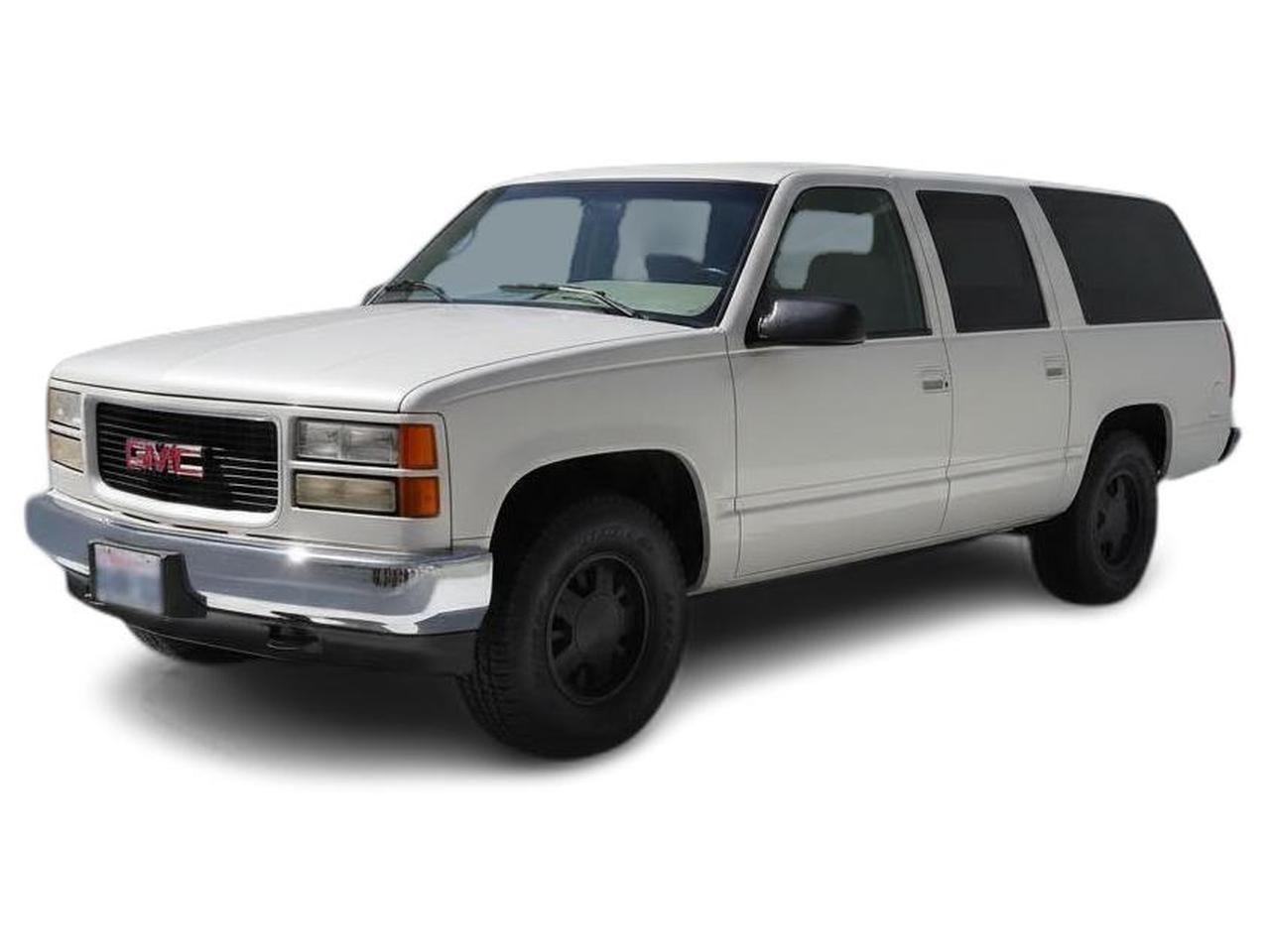
The 1994 GMC Suburban, part of the GMT400 platform, is a full-size SUV renowned for its immense size and capability. Produced from 1992 to 1999, it offered a spacious, three-door or five-door body style. Key trims often included the base model and the more luxurious SLT. It stood out for its truck-like ruggedness, seating capacity, and towing prowess, making it a popular choice for large families and those needing to haul significant loads.
The Good
The 1994 Suburban excels in robust performance and generous passenger/cargo space, offering a comfortable ride and substantial towing capacity. Its imposing presence appeals to buyers seeking confidence and capability, while its practicality ensures it's a dependable workhorse for families and adventurers alike.
The Bad
Potential weaknesses for the 1994 GMC Suburban include its substantial thirst for fuel, particularly with the larger engines. Older models may exhibit rust, especially in colder climates, and transmission issues can arise with high mileage or heavy use. Electrical gremlins are also not uncommon.
1994 GMC Suburban: Quick Overview
- Engine Options: The 1994 GMC Suburban was primarily offered with two V8 engine choices:
- 5.7L V8 (350ci)
- 7.4L V8 (454ci)
- Horsepower:
- 5.7L V8: Approximately 200-205 horsepower
- 7.4L V8: Approximately 230 horsepower
- Fuel Economy:
- Expect very low MPG figures due to the vehicle's size and engine options. Real-world figures often ranged from 10-13 MPG in city driving and 14-17 MPG on the highway, heavily dependent on engine, drivetrain (2WD/4WD), and driving conditions.
- 0-60 Times:
- With the 5.7L engine and 4WD, 0-60 mph times were typically in the 10-12 second range. The more powerful 7.4L engine could shave a second or so off this time.
- Towing Capacity:
- The Suburban was built for towing. Depending on configuration (engine, axle ratio, towing package), towing capacities could range from around 7,000 lbs to over 10,000 lbs, making it ideal for RVs, boats, and large trailers.
- Trim-Level Features:
- Base Model: Typically included essentials like power windows, power door locks, air conditioning, and an AM/FM stereo. Cloth upholstery was standard.
- SLT (Special Luxury Touring): Added more upscale features such as leather seating, upgraded interior trim, power adjustable front seats, a premium audio system, and sometimes alloy wheels. Optional features often included a towing package, rear heating, and privacy glass.
- Common Features Across Trims: Both models offered ample seating for up to nine passengers in a three-row configuration, durable interior materials, and a robust chassis.
1994 GMC Suburban Specifications
Vehicle Information
| Year | 1994 |
| Make | GMC |
| Model | Suburban |
| Trim | - |
| Style | - |
| Type | Wagon |
| Category | Minivan Medium Truck |
Manufacturing Details
| Made In | United States |
| Manufacturing City | JANESVILLE |
Dimensions
| Doors | - |
| Curb Weight | - |
| Gross Vehicle Weight Rating | - |
| Overall Height | - |
| Overall Length | - |
| Overall Width | - |
| Wheelbase Length | - |
| Standard Seating | - |
Engine & Performance
| Engine | 6.5 L V-8 |
| Engine Size | 6.5L |
| Engine Cylinders | 8 |
| Transmission | - |
| Transmission Type | - |
| Transmission Speeds | - |
| Drivetrain | Four-Wheel Drive |
Additional Features
| Anti-Brake System | - |
| Steering Type | - |
Pricing
| Manufacturer Suggested Retail Price (MSRP) | - |
| Invoice Price | - |
| Delivery Charges | - |
Vehicle History Report
Vehicle
Specifications
Specifications
Ownership
History
History
All History
Events
Events
NMVTIS Title
History Check
History Check
Salvage/Rebuilt
Check
Check
Accident
Check
Check
Theft
Check
Check
Open Lien
Check
Check
Past Sale
Listings
Listings
Safety
Recalls
Recalls
Odometer
Check
Check
Market Price
Analysis
Analysis
What Problems Does the 1994 GMC Suburban Have?
The 1994 GMC Suburban, while generally considered a durable vehicle, is not without its common issues, particularly as it ages. One of the most frequently reported problems relates to the transmission. The 4L60E automatic transmission, common in these models, can develop issues like slipping, harsh shifting, or complete failure, especially if subjected to heavy towing or neglected maintenance. Overheating can also be a precursor to transmission problems.
Another area of concern is the powertrain control module (PCM). Failures in the PCM can lead to a wide range of drivability issues, including stalling, rough idling, and check engine lights. Diagnosing PCM issues can be complex and expensive.
Electrical issues are also relatively common. This can manifest as malfunctioning power windows, door locks, instrument cluster problems, or intermittent electrical gremlins. Corroded grounds and aging wiring harnesses are often the culprits.
Fuel system components can also present problems. Fuel pumps can fail, and issues with the fuel injectors or the throttle position sensor can cause performance problems. The intake manifold gaskets are also known to leak over time, leading to coolant or vacuum leaks.
Rust is a significant long-term concern, especially for Suburbans that have lived in areas with harsh winters and road salt. Frame rust, rocker panel rust, and wheel well rust can compromise structural integrity and lead to expensive repairs. The rear quarter panels and tailgate are also susceptible.
While specific recalls for the 1994 model year are less common than for some other vehicles, it's always wise to check for any outstanding safety recalls with GMC. Generally, long-term reliability depends heavily on how well the vehicle has been maintained. Owners who have diligently followed maintenance schedules, addressed minor issues promptly, and avoided excessive strain on the powertrain tend to report better long-term experiences. The 1994 model year did not stand out with particularly widespread, unique issues compared to the surrounding years within the GMT400 generation, suggesting a generally consistent manufacturing quality for that period.
Another area of concern is the powertrain control module (PCM). Failures in the PCM can lead to a wide range of drivability issues, including stalling, rough idling, and check engine lights. Diagnosing PCM issues can be complex and expensive.
Electrical issues are also relatively common. This can manifest as malfunctioning power windows, door locks, instrument cluster problems, or intermittent electrical gremlins. Corroded grounds and aging wiring harnesses are often the culprits.
Fuel system components can also present problems. Fuel pumps can fail, and issues with the fuel injectors or the throttle position sensor can cause performance problems. The intake manifold gaskets are also known to leak over time, leading to coolant or vacuum leaks.
Rust is a significant long-term concern, especially for Suburbans that have lived in areas with harsh winters and road salt. Frame rust, rocker panel rust, and wheel well rust can compromise structural integrity and lead to expensive repairs. The rear quarter panels and tailgate are also susceptible.
While specific recalls for the 1994 model year are less common than for some other vehicles, it's always wise to check for any outstanding safety recalls with GMC. Generally, long-term reliability depends heavily on how well the vehicle has been maintained. Owners who have diligently followed maintenance schedules, addressed minor issues promptly, and avoided excessive strain on the powertrain tend to report better long-term experiences. The 1994 model year did not stand out with particularly widespread, unique issues compared to the surrounding years within the GMT400 generation, suggesting a generally consistent manufacturing quality for that period.
How long will the 1994 GMC Suburban last?
With proper and consistent maintenance, a 1994 GMC Suburban can realistically achieve 200,000 to 300,000 miles or more. Many owners report their Suburbans lasting well into the 200,000-mile range before major component failures become significant. Its robust truck-based chassis and strong V8 engines are designed for longevity. However, weaknesses that emerge over time often include transmission wear, particularly with heavy use, and the aforementioned susceptibility to rust, especially in the frame and body panels in corrosive environments. Regular fluid changes for the engine and transmission, along with addressing any coolant leaks or electrical issues promptly, are crucial for maximizing its lifespan. Neglect is its biggest enemy, leading to accelerated wear and premature failures.
What Technology & Safety Features are Included?
The 1994 GMC Suburban offers a rather basic, yet functional, array of technology and safety features by today's standards. Built in an era before advanced infotainment and driver aids were commonplace, its tech primarily revolves around core functionalities.
Entertainment: Standard entertainment typically consisted of an AM/FM radio, often with a cassette player. Higher trims or optional packages might have included a CD player, which was a premium feature at the time. Speaker systems were generally basic, designed for functionality rather than high-fidelity audio.
Driver-Assistance Features: This is where the 1994 Suburban is notably sparse. Electronic stability control, traction control, adaptive cruise control, lane departure warning, and blind-spot monitoring were non-existent. The primary driver assistance features were the power steering and anti-lock braking system (ABS), which was often standard or an option depending on the trim and drivetrain.
Safety Features: Safety features were also more rudimentary. Standard equipment included seat belts for all occupants, and the robust body-on-frame construction provided a significant degree of passive safety. Airbags were typically limited to driver and front passenger airbags. Side-impact airbags and advanced crumple zones were not part of its design. The vehicle's sheer mass offered some inherent protection in collisions.
Optional Features: Optional features could enhance comfort and utility. These might have included a rear-seat heating system, power-adjustable front seats, cruise control, and sometimes a towing package that included upgraded cooling and wiring.
Crash-Test Ratings: Specific, publicly available crash-test ratings from organizations like the NHTSA or IIHS for the 1994 model year are difficult to find or may not have been conducted with the same rigorous standards as today. However, being a large, heavy truck-based SUV from this era, it was generally perceived as offering good occupant protection in frontal impacts due to its size and steel construction. Side-impact protection was less advanced, and rollover resistance was a concern for all SUVs of this type.
Entertainment: Standard entertainment typically consisted of an AM/FM radio, often with a cassette player. Higher trims or optional packages might have included a CD player, which was a premium feature at the time. Speaker systems were generally basic, designed for functionality rather than high-fidelity audio.
Driver-Assistance Features: This is where the 1994 Suburban is notably sparse. Electronic stability control, traction control, adaptive cruise control, lane departure warning, and blind-spot monitoring were non-existent. The primary driver assistance features were the power steering and anti-lock braking system (ABS), which was often standard or an option depending on the trim and drivetrain.
Safety Features: Safety features were also more rudimentary. Standard equipment included seat belts for all occupants, and the robust body-on-frame construction provided a significant degree of passive safety. Airbags were typically limited to driver and front passenger airbags. Side-impact airbags and advanced crumple zones were not part of its design. The vehicle's sheer mass offered some inherent protection in collisions.
Optional Features: Optional features could enhance comfort and utility. These might have included a rear-seat heating system, power-adjustable front seats, cruise control, and sometimes a towing package that included upgraded cooling and wiring.
Crash-Test Ratings: Specific, publicly available crash-test ratings from organizations like the NHTSA or IIHS for the 1994 model year are difficult to find or may not have been conducted with the same rigorous standards as today. However, being a large, heavy truck-based SUV from this era, it was generally perceived as offering good occupant protection in frontal impacts due to its size and steel construction. Side-impact protection was less advanced, and rollover resistance was a concern for all SUVs of this type.
What Colors Options are Available?
1994 GMC Suburban Prices and Market Value
When new, the 1994 GMC Suburban had an MSRP that varied significantly by trim and options, but typically ranged from approximately $28,000 for a base model to over $40,000 for a well-equipped SLT with the larger engine and 4WD. These vehicles experienced considerable depreciation in their initial years, as is common with large, fuel-inefficient SUVs. Currently, on the used market, 1994 GMC Suburbans can be found for anywhere from $2,000 to $8,000 or more, depending heavily on condition, mileage, maintenance history, and trim level. Well-maintained examples, especially those with lower mileage and in rust-free condition, can command higher prices. Factors affecting resale value include mechanical condition, cosmetic appeal, the presence of rust, and whether original documentation and maintenance records are available. Their utility for towing and hauling still makes them desirable for specific buyers.
1994 GMC Suburban Cost of Ownership
Owning a 1994 GMC Suburban is generally not considered economical. Fuel costs will be a significant factor due to its V8 engines and poor fuel efficiency, easily costing $200-$400+ per month depending on driving habits and fuel prices. Insurance rates can be moderate to high, especially for newer drivers or in areas with high theft rates. Maintenance requires regular attention, and while basic fluid changes are reasonable, parts for this older vehicle can sometimes be more expensive than for common sedans. Repairs, especially for transmission or engine issues, can be costly. Overall, expect a higher cost of ownership compared to smaller, more fuel-efficient vehicles.
1994 GMC Suburban Fuel Efficiency
Fuel Type
Diesel
Fuel Capacity
-
City Mileage
-
Highway Mileage
-
1994 GMC Suburban Safety Rating
NHTSA
1994 GMC Suburban Insurance
Insurance for a 1994 GMC Suburban is moderately priced, reflecting its status as a Wagon with strong safety ratings and
reasonable repair costs.
How Does the 1994 GMC Suburban Compare to Other Wagon?
The 1994 GMC Suburban competed primarily against other large, body-on-frame SUVs of its era. Its main rivals included the Ford Expedition (though the first-generation Expedition debuted in 1997, so it was a direct competitor for later years of the Suburban's generation), the Chevrolet Tahoe/Yukon (which shared much of its platform and powertrain), and to some extent, the Toyota Land Cruiser and Nissan Pathfinder (though these were generally smaller and less focused on maximum passenger and cargo capacity in their 1994 forms).
Performance: The Suburban excelled in raw power and towing capacity, particularly with the 7.4L V8. Its V8 engines offered substantial torque for hauling. Competitors like the Ford Expedition (when it arrived) offered similar V8 power, while the Land Cruiser offered a more refined V8 experience with better off-road prowess but less outright hauling capacity. The Tahoe/Yukon were essentially siblings with similar performance.
Features: The 1994 Suburban was relatively basic in terms of technology and creature comforts compared to its contemporaries and especially modern vehicles. Rivals like the early Ford Expedition offered slightly more modern interior designs and features. The Toyota Land Cruiser, however, often boasted a higher level of luxury and off-road capability features for its price point, even in the mid-90s.
Reliability: GMC Suburbans from this era are known for their mechanical robustness if maintained. However, they can suffer from rust and transmission issues, common to many vehicles of this type. The Chevrolet Tahoe/Yukon shared these same reliability traits. Toyota vehicles, like the Land Cruiser, generally have a superior reputation for long-term reliability and durability, especially in harsh conditions.
Price: New, the Suburban was priced competitively within the large SUV segment. On the used market, its price is significantly lower than a comparable Land Cruiser but often higher than less capable SUVs. A used 1994 Suburban offers a lot of utility for its price if found in good condition.
Alternatives:
Performance: The Suburban excelled in raw power and towing capacity, particularly with the 7.4L V8. Its V8 engines offered substantial torque for hauling. Competitors like the Ford Expedition (when it arrived) offered similar V8 power, while the Land Cruiser offered a more refined V8 experience with better off-road prowess but less outright hauling capacity. The Tahoe/Yukon were essentially siblings with similar performance.
Features: The 1994 Suburban was relatively basic in terms of technology and creature comforts compared to its contemporaries and especially modern vehicles. Rivals like the early Ford Expedition offered slightly more modern interior designs and features. The Toyota Land Cruiser, however, often boasted a higher level of luxury and off-road capability features for its price point, even in the mid-90s.
Reliability: GMC Suburbans from this era are known for their mechanical robustness if maintained. However, they can suffer from rust and transmission issues, common to many vehicles of this type. The Chevrolet Tahoe/Yukon shared these same reliability traits. Toyota vehicles, like the Land Cruiser, generally have a superior reputation for long-term reliability and durability, especially in harsh conditions.
Price: New, the Suburban was priced competitively within the large SUV segment. On the used market, its price is significantly lower than a comparable Land Cruiser but often higher than less capable SUVs. A used 1994 Suburban offers a lot of utility for its price if found in good condition.
Alternatives:
- Chevrolet Tahoe/Yukon: A very similar alternative, often identical mechanically and offering the same strengths and weaknesses, potentially at a slightly different price point.
- Ford Expedition (from 1997): If looking for something a bit newer with a more modern interior, but potentially less rugged construction.
- Toyota Land Cruiser (e.g., 1994-1997): If long-term reliability, off-road capability, and a more premium feel are higher priorities, and you're willing to pay a premium on the used market.
Final Verdict: Is the 1994 GMC Suburban a Good Wagon?
The 1994 GMC Suburban is ideal for buyers who need substantial passenger and cargo capacity, serious towing capability, and a rugged, truck-like vehicle for family hauling or utility tasks, and who are not overly concerned with fuel economy or advanced technology. It's worth buying primarily on the used market, provided you find a well-maintained example with minimal rust and a strong service history, particularly for the transmission. Buying one requires a willingness to perform regular maintenance and potentially tackle repairs as they arise. Specific trims like the SLT offer more comfort. It is not a vehicle for those seeking an economical daily driver or who prioritize modern safety features and technology. For its intended purpose, it remains a capable, if dated, option.