
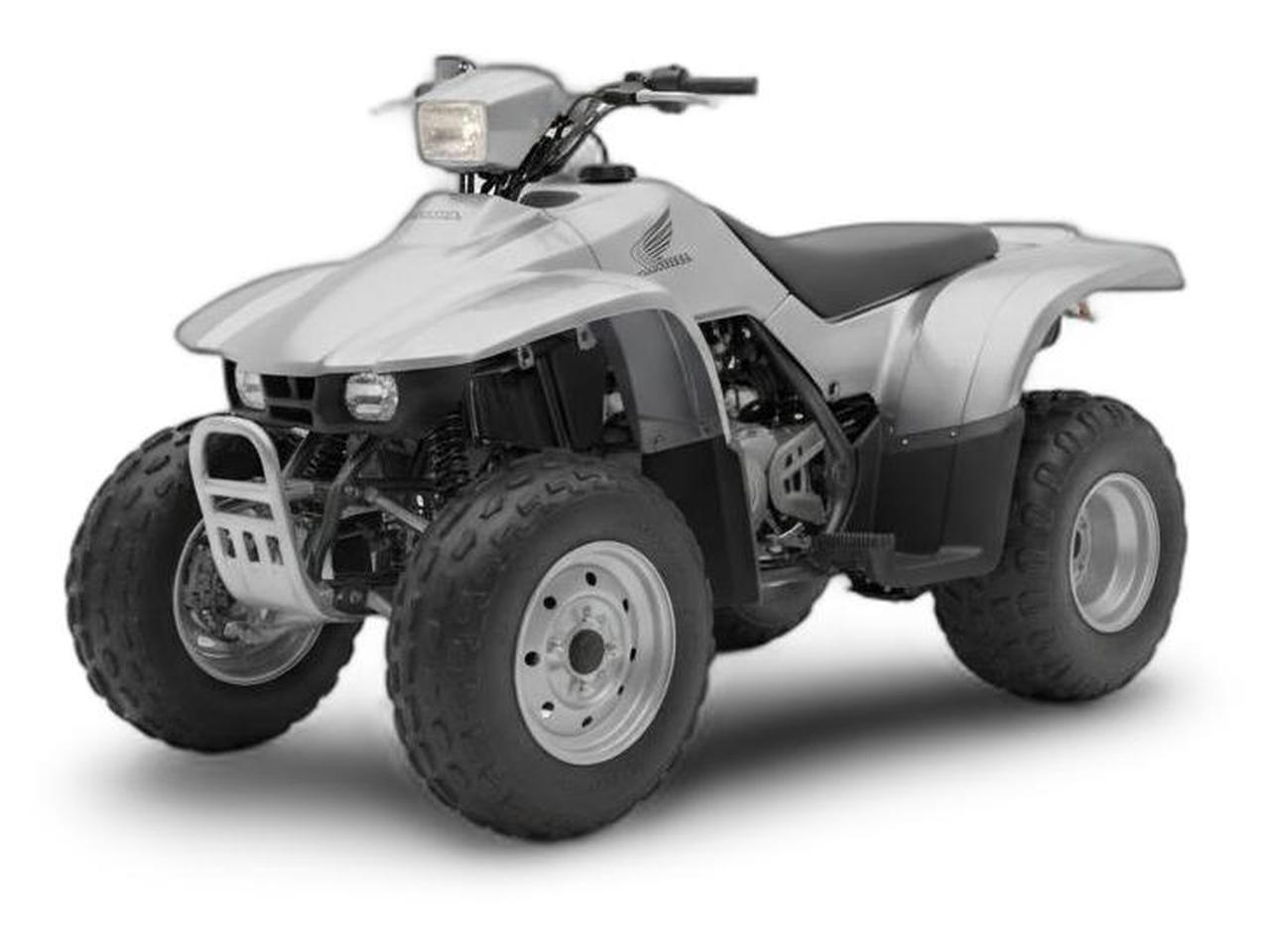
The Good
The 1997 Honda TRX250 excels in unwavering reliability and robust performance, offering a smooth ride and dependable power for both work and play. Its legendary Honda engineering ensures peace of mind, while its practical design appeals to those seeking a durable, value-for-money ATV that won't let them down.
The Bad
Potential weaknesses for the 1997 Honda TRX250 often relate to its age. Look out for wear and tear on suspension components, potential carburetor issues due to infrequent use or fuel degradation, and the general condition of the plastics and bodywork. Older seals and gaskets may also require attention.
1997 Honda TRX250: Quick Overview
- Engine: The 1997 Honda TRX250 typically features a 249cc, air-cooled, four-stroke, OHV, single-cylinder engine.
- Horsepower: While official figures can vary slightly, it generally produces around 17-19 horsepower.
- Fuel Economy: Fuel economy is generally good for its class, often estimated in the range of 30-40 miles per gallon, depending on usage.
- 0-60 Times: Specific 0-60 mph times are not a primary metric for ATVs like this, but acceleration is considered adequate for its intended use, with a focus on low-end torque for trail riding and utility.
- Towing Capacity: The TRX250 is not typically rated for heavy towing. It's designed more for hauling light loads in its racks. A common estimate for its towing hitch capacity, if equipped, would be in the range of 200-300 lbs for light utility purposes.
- Transmission: It usually comes equipped with a manual transmission, often a 5-speed with reverse, providing good control for various terrains.
- Drivetrain: The 1997 model is typically a 2WD (two-wheel drive) with a shaft drive system, known for its low maintenance and reliability.
- Suspension: It features independent front suspension (IFS) for improved comfort and handling, and a swingarm rear suspension.
- Brakes: Usually equipped with drum brakes on both the front and rear, offering reliable stopping power.
- Tires: Standard tire sizes are common for its class, designed for off-road traction.
- Weight: Curb weight is typically around 350-370 lbs.
- Fuel Tank Capacity: Around 2.5 gallons, providing a respectable range for its intended use.
- Trim-Level Features: The 1997 TRX250 is largely a single, well-equipped utility model. Key features include electric start, durable plastic bodywork, comfortable seating, front and rear cargo racks, and a full floorboard for rider protection. It prioritizes functional utility over luxury or advanced technology.
1997 Honda TRX250 Specifications
Vehicle Information
| Year | 1997 |
| Make | Honda |
| Model | TRX250 |
| Trim | - |
| Style | - |
| Type | Terrain |
| Category | Low Speed Vehicle |
Manufacturing Details
| Made In | United States |
| Manufacturing City | MARYSVILLE |
Dimensions
| Doors | - |
| Curb Weight | - |
| Gross Vehicle Weight Rating | - |
| Overall Height | - |
| Overall Length | - |
| Overall Width | - |
| Wheelbase Length | - |
| Standard Seating | - |
Engine & Performance
| Engine | 250CC |
| Engine Size | 250L |
| Engine Cylinders | 1 |
| Transmission | - |
| Transmission Type | - |
| Transmission Speeds | - |
| Drivetrain | Rear-Wheel Drive |
Additional Features
| Anti-Brake System | - |
| Steering Type | - |
Pricing
| Manufacturer Suggested Retail Price (MSRP) | - |
| Invoice Price | - |
| Delivery Charges | - |
Vehicle History Report
Specifications
History
Events
History Check
Check
Check
Check
Check
Listings
Recalls
Check
Analysis
What Problems Does the 1997 Honda TRX250 Have?
One area to watch is the carburetor. Over time, fuel can degrade and leave deposits, leading to starting issues or rough idling. Regular cleaning and proper fuel storage are crucial. The starter motor and battery are also common points of potential failure on any older vehicle, and the TRX250 is no exception.
Suspension components, such as bushings and shocks, can wear out, affecting ride quality and handling. Inspecting these for leaks or excessive play is recommended during a pre-purchase inspection. The braking system, typically drum brakes, can also require adjustments or eventual replacement of shoes as they wear.
While specific recalls for the 1997 model year are not widely documented as major safety concerns, it's always prudent for owners to check Honda's recall database for any outstanding campaigns related to their specific VIN.
Long-term reliability is heavily dependent on how the ATV has been maintained. Machines that have been regularly serviced, stored properly, and not subjected to extreme abuse tend to last indefinitely. Conversely, neglected units might present more challenges. Issues like worn drive shafts, rear axle components, or engine seals can arise with high mileage or hard use. However, the fundamental engine and transmission designs are incredibly robust. Parts availability, while generally good for popular Honda models, may become a consideration for very specific, discontinued items on a 1997 model, though most common wear items are readily available.
How long will the 1997 Honda TRX250 last?
What Technology & Safety Features are Included?
Technology: The technological highlights are basic but essential for operation. This includes an electric starter for convenient ignition, a halogen headlight for illumination during dusk or night riding, and taillights for visibility. A simple digital display might offer neutral indicator and perhaps a gear position indicator on some iterations, but comprehensive instrumentation is limited. There is no onboard computer, no infotainment system, and certainly no connectivity features like Bluetooth or USB ports, which are standard on modern vehicles.
Entertainment: Entertainment is derived from the riding experience itself and the environment, not from an integrated audio system. There are no speakers, no radio, and no screens beyond basic operational indicators.
Driver-Assistance Features: The concept of driver-assistance features, as understood in automotive terms, is entirely absent. The ATV relies on the rider's skill and judgment for operation. There are no electronic aids like traction control, stability control, or anti-lock braking systems (ABS).
Safety Features: Safety features are rudimentary and focused on rider protection and visibility. The sturdy bodywork and floorboards offer some protection against debris and impacts. The integrated headlight and taillight system are its primary active safety features for visibility. Unlike cars, ATVs do not undergo formal crash-test ratings from organizations like the NHTSA or IIHS. Safety is primarily managed through responsible riding practices, the use of personal protective equipment (PPE) such as helmets, gloves, and protective clothing, and understanding the vehicle's limitations. Optional features would typically be limited to accessories like handguards, bumpers, winches, or specialized racks, rather than electronic upgrades.
What Colors Options are Available?
1997 Honda TRX250 Prices and Market Value
Current used market prices for a 1997 Honda TRX250 can vary significantly, generally ranging from $1,500 to $3,500. Factors heavily influencing resale value include the overall condition, mileage (if estimable), maintenance history, originality of parts, and any modifications. A well-maintained, stock TRX250 with low hours of use will command a higher price. Conversely, units showing significant wear, damage, or requiring extensive repairs will be at the lower end of the spectrum. Its value is also bolstered by its simple, robust design that appeals to buyers seeking a dependable workhorse or recreational machine.
1997 Honda TRX250 Cost of Ownership
1997 Honda TRX250 Fuel Efficiency
1997 Honda TRX250 Warranty
Basic
Powertrain
Rust
1997 Honda TRX250 Insurance
reasonable repair costs.
How Does the 1997 Honda TRX250 Compare to Other Terrain?
Performance: In terms of performance, the TRX250 offered a balanced blend of usable power for its 249cc engine. It excelled in low-end torque, making it adept at climbing and utility tasks. Rivals like the Yamaha Warrior 350 might have offered slightly more sporty performance, while the Suzuki LT-F250 (QuadRunner) offered similar utility-focused power. Kawasaki's Bayou 220/250 provided comparable utility. The TRX250's shaft drive was a significant advantage in terms of low maintenance compared to some chain-driven competitors.
Features: Features on the 1997 TRX250 were basic but functional. It typically included electric start, front and rear racks, and robust bodywork. Competitors offered similar features, with some possibly having slightly more advanced suspension or braking systems (e.g., front disc brakes on some models). However, the TRX250's simplicity was also a feature, meaning fewer complex systems to break.
Reliability: This is where the Honda TRX250 truly shines. Honda has a legendary reputation for building incredibly reliable and durable ATVs, and the TRX250 is a prime example. While competitors like Yamaha and Suzuki also build dependable machines, Honda often stands out for its longevity and bulletproof engineering. The TRX250 is known to last for decades with proper maintenance.
Price: The 1997 TRX250 was competitively priced when new. On the used market today, it remains a strong value proposition. While similar models from Yamaha (like a used Warrior or older Big Bear) or Suzuki (like a QuadRunner) might be available, the Honda often holds its value slightly better due to its reputation.
Alternatives:
Similar: For buyers seeking similar utility and reliability, a used Yamaha Big Bear 350/400, Suzuki LT-F250/LT-F300, or Kawasaki Bayou 250 would be comparable. These offer similar engine sizes and utility focus.
Better (depending on needs): If a slightly more powerful engine or more advanced features are desired, one might look at older models like a Yamaha Kodiak 400 or Suzuki Vinson 500, though these will likely be more expensive. For pure sport riding, a Yamaha Warrior 350 or Suzuki LT-Z250 would be a better choice, but they sacrifice utility. For its intended purpose, the 1997 TRX250 remains a fantastic option.
Final Verdict: Is the 1997 Honda TRX250 a Good Terrain?
It's worth buying if you prioritize durability, ease of operation, and low running costs over cutting-edge technology or high-performance speed. Given its age, buying used is the only option. Focus on finding a unit with a documented maintenance history or one that has been stored properly. Avoid units with significant cosmetic damage or signs of neglect, as these may indicate deeper mechanical issues. For its intended purpose, a well-chosen 1997 TRX250 represents excellent value and a long-lasting investment in off-road capability.

Eugene S
Eugene is an automotive enthusiast with over 15 years of experience in the used car market. As a writer at VINCheck.info, he brings deep industry insight and a passion for cars, helping readers make smart, informed decisions. Eugene has written hundreds of used car reviews and is known for breaking down complex automotive topics into clear, actionable advice. Over the years, he has driven and worked on a wide range of vehicles—starting with tuning street cars in his early days and eventually focusing on performance upgrades and reliability improvements. Today, he specializes in evaluating used vehicles through the lens of real-world ownership and enthusiast needs. A longtime fan of Porsche, Eugene especially appreciates vehicles that blend durability with driving enjoyment.