
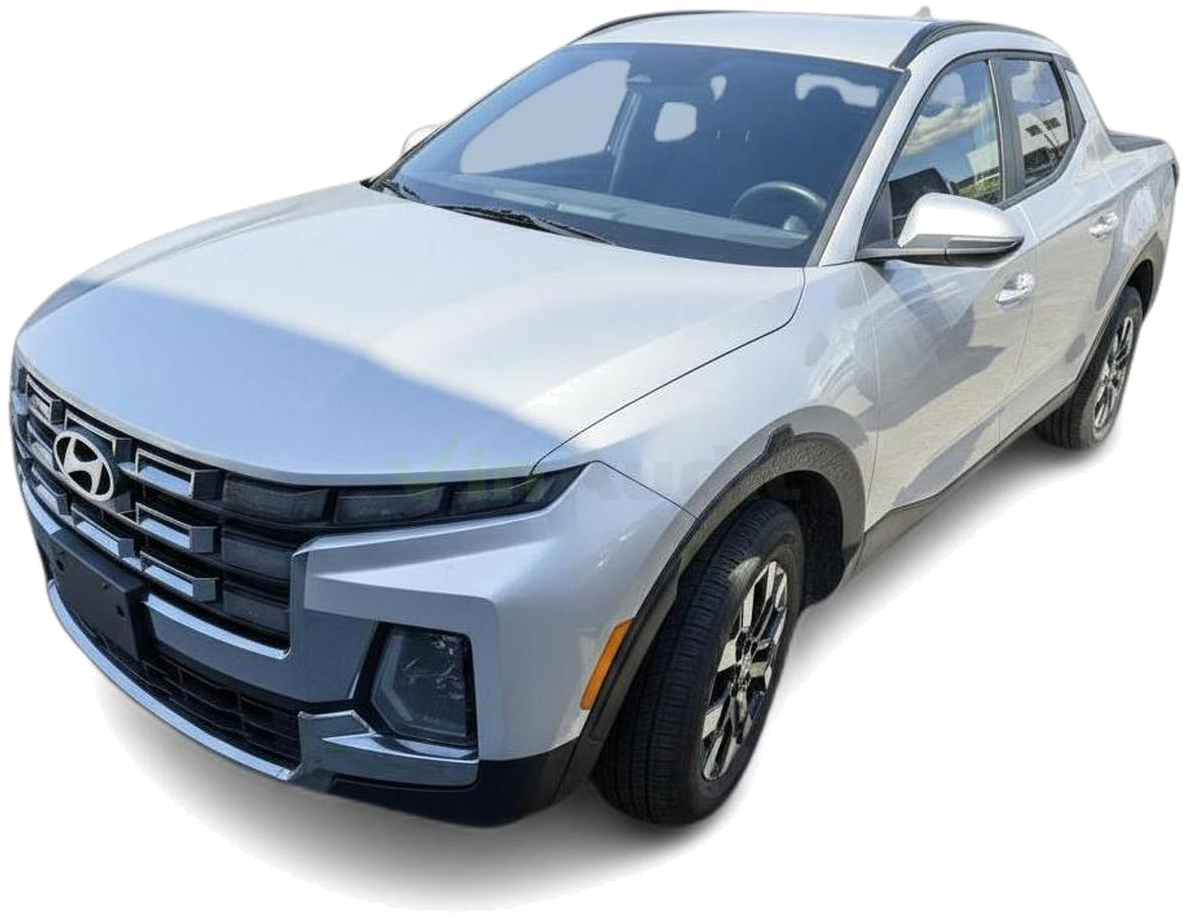
The Good
The Santa Cruz offers a comfortable, car-like ride, appealing to practical daily drivers. Its stylish, modern design and versatile bed cater to emotional desires for adventure and utility. Reliable performance from its available powertrains and good value for money make it a compelling choice.
The Bad
Potential weaknesses include a smaller bed capacity compared to traditional mid-size trucks. Some drivers find the base engine adequate but not exceptionally powerful. Road noise can be noticeable at higher speeds, and the ride can feel firmer than some car-based crossovers.
2025 Hyundai Santa Cruz: Quick Overview
- Engine Options:
- Standard: 2.5-liter inline-4
- Optional: 2.5-liter turbocharged inline-4
- Horsepower:
- 2.5L I4: Approximately 191 hp
- 2.5L Turbo I4: Approximately 281 hp
- Fuel Economy (Estimated EPA MPG):
- 2.5L FWD: ~21 City / 26 Highway
- 2.5L AWD: ~20 City / 26 Highway
- 2.5L Turbo AWD: ~19 City / 26 Highway
- 0-60 Times (Estimated):
- 2.5L I4: ~8.5 seconds
- 2.5L Turbo I4: ~6.0-6.5 seconds
- Towing Capacity:
- 2.5L I4: Up to 3,500 lbs
- 2.5L Turbo I4: Up to 5,000 lbs
- Key Trim-Level Features (Illustrative, subject to change for 2025):
- SE (Base): 8-inch touchscreen, wireless Apple CarPlay/Android Auto, LED headlights, cloth seats, Hyundai SmartSense safety features.
- SEL: Adds heated front seats, push-button start with remote start, Blind-Spot View Monitor, rear cross-traffic collision-avoidance assist, 10.25-inch digital instrument cluster, wireless device charging.
- SEL Premium: Includes leather-trimmed seating, panoramic sunroof, premium audio system, ventilated front seats, enhanced LED lighting.
- Limited: Top-tier trim with Nappa leather seats, Highway Driving Assist, Surround View Monitor, head-up display, advanced driver-assistance systems, 20-inch alloy wheels.
2025 Hyundai Santa Cruz Specifications
Vehicle Information
| Year | 2025 |
| Make | Hyundai |
| Model | Santa Cruz |
| Trim | - |
| Style | SEL Truck AWD 8AT 2.5L I4 |
| Type | Pickup Truck |
| Category | passenger |
Manufacturing Details
| Made In | United States |
| Manufacturing City | MONTGOMERY |
Dimensions
| Doors | 4-Door |
| Curb Weight | 4100 pounds |
| Gross Vehicle Weight Rating | - |
| Overall Height | 68.5 inches |
| Overall Length | 195.7 inches |
| Overall Width | 75 inches |
| Wheelbase Length | 118.3 inches |
| Standard Seating | 5 |
Engine & Performance
| Engine | 2.5L I4 |
| Engine Size | 2.5L |
| Engine Cylinders | 4 |
| Transmission | 8-Speed Automatic |
| Transmission Type | Automatic |
| Transmission Speeds | 8-Speed |
| Drivetrain | All-Wheel Drive |
Additional Features
| Anti-Brake System | 4-Wheel ABS |
| Steering Type | Rack & Pinion |
Pricing
| Manufacturer Suggested Retail Price (MSRP) | $33,500 |
| Invoice Price | $32,000 |
| Delivery Charges | $1,195 |
Vehicle History Report
Specifications
History
Events
History Check
Check
Check
Check
Check
Listings
Recalls
Check
Analysis
What Problems Does the 2025 Hyundai Santa Cruz Have?
The turbocharged 2.5-liter engine, while offering robust performance, has had some sporadic reports of minor hesitation or rough idling for a small number of owners, though this doesn't appear to be widespread. Fuel economy, while generally decent for its class, can be lower than some competitors, especially with the turbocharged engine and AWD.
Regarding recalls, Hyundai has issued several for the Santa Cruz across its first few model years. These have addressed various safety concerns, such as potential issues with the trailer brake controller, a risk of fire due to an oil leak in the engine, and problems with the anti-lock braking system (ABS) control unit. It is crucial for prospective buyers to check the latest recall information for any specific model year they are considering, as these are addressed by dealerships.
In terms of long-term reliability, the unibody construction and shared components with Hyundai's SUV lineup suggest good potential for durability. However, consistent maintenance is key. The areas to watch for would be the electronic components, particularly the infotainment and driver-assistance systems, as these can be complex. Early model years are always a bit more of a gamble than later, refined versions. The 2025 model should benefit from lessons learned in previous years, potentially leading to fewer initial quirks.
How long will the 2025 Hyundai Santa Cruz last?
Long-term durability is expected to be good, particularly for the naturally aspirated engine and core drivetrain components. The primary potential weaknesses over time might lie in the complex electronic systems, such as the infotainment screen or advanced driver-assistance features, which can be costly to repair if they fail outside of warranty. The unibody construction is generally robust, but like any vehicle, some interior trim might show wear over many years. Routine inspections can help identify and address minor issues before they become major problems.
What Technology & Safety Features are Included?
Entertainment options extend to an available premium audio system, providing an immersive listening experience. For convenience, wireless device charging is often included on mid-to-upper trims.
Hyundai's comprehensive suite of driver-assistance and safety features, branded as Hyundai SmartSense, comes standard and includes Forward Collision-Avoidance Assist with Pedestrian Detection, Lane Keeping Assist, Lane Following Assist, Driver Attention Warning, and High Beam Assist.
Optional and available on higher trims are more advanced systems such as Blind-Spot Collision-Avoidance Assist, Rear Cross-Traffic Collision-Avoidance Assist, Smart Cruise Control (with or without Stop & Go functionality), Highway Driving Assist (which combines adaptive cruise control with lane centering for semi-autonomous highway driving), and Surround View Monitor for enhanced parking and low-speed maneuvering visibility. An available Head-Up Display (HUD) projects key information onto the windshield, reducing the need for the driver to take their eyes off the road.
As for crash-test ratings, the Santa Cruz typically performs well. While specific ratings for the 2025 model may not be available until closer to its release, previous model years have earned good marks from organizations like the NHTSA and IIHS, often receiving a 4-star overall safety rating from NHTSA and achieving good ratings in IIHS tests, including good performance in front and side crash tests. These ratings underscore the Santa Cruz's commitment to passenger safety through its robust construction and advanced safety technologies.
What Colors Options are Available?
2025 Hyundai Santa Cruz Prices and Market Value
The Santa Cruz typically experiences average to slightly above-average depreciation compared to traditional trucks, but generally holds its value well for a non-luxury vehicle, especially in desirable trims and powertrains. Factors that positively affect its resale value include its unique positioning in the market, strong feature content, excellent safety ratings, and the availability of the more powerful turbocharged engine and AWD. Well-maintained vehicles with lower mileage will always command higher prices. Early model years might see steeper depreciation as newer iterations are released.
2025 Hyundai Santa Cruz Cost of Ownership
2025 Hyundai Santa Cruz Fuel Efficiency
2025 Hyundai Santa Cruz Recalls & Defects
2025 Hyundai Santa Cruz Warranty
Basic
Powertrain
Rust
2025 Hyundai Santa Cruz Insurance
reasonable repair costs.
How Does the 2025 Hyundai Santa Cruz Compare to Other Pickup Truck?
Performance: The Santa Cruz offers two distinct performance profiles: a competent base 2.5L engine and a more robust 2.5L turbocharged option that often outperforms the Maverick's standard hybrid and optional EcoBoost. The Honda Ridgeline, with its standard V6, typically offers stronger acceleration and towing but comes at a higher price point and size.
Features: Hyundai consistently packs the Santa Cruz with technology and safety features, often at competitive price points. Its standard wireless Apple CarPlay/Android Auto and comprehensive Hyundai SmartSense suite are strong selling points. The Ford Maverick also offers good tech and a hybrid option, while the Ridgeline leans towards premium SUV-like features. The Santa Cruz often strikes a good balance between luxury-oriented features and practicality.
Reliability: Hyundai has a generally good reputation for reliability, and the Santa Cruz benefits from this. Early model years of the Maverick have had some reported teething issues, though Ford is working to address them. The Honda Ridgeline has a strong track record for reliability. While the Santa Cruz is a strong contender, potential buyers should check the latest reliability ratings and recall information for all options.
Price: The Santa Cruz generally positions itself competitively. The base model is priced to compete with the Ford Maverick's hybrid and EcoBoost offerings. The higher trims can reach into the territory of the entry-level Honda Ridgeline, but often offer more standard equipment at that price. The Maverick offers the most affordable entry point, especially with its hybrid powertrain.
Alternatives:
- Ford Maverick: A direct competitor, offering a more rugged aesthetic and a highly efficient hybrid powertrain as standard. If fuel economy and a lower starting price are priorities, the Maverick is a strong alternative.
- Honda Ridgeline: For those who need more space, towing capacity, and a more traditional truck feel but still want an urban-friendly ride. It's generally more expensive and larger than the Santa Cruz.
- Compact SUVs (e.g., Hyundai Tucson, Kia Sportage, Toyota RAV4): If the bed utility is not a daily necessity, these offer similar interior comfort, tech, and fuel efficiency, often with better overall cargo space and potentially lower ownership costs.
The Santa Cruz excels by blending SUV comfort and technology with genuine utility, making it an excellent choice for those who find traditional trucks too large and compact SUVs too limiting.
Final Verdict: Is the 2025 Hyundai Santa Cruz a Good Pickup Truck?
It is absolutely worth buying for its unique blend of attributes. Purchasing a new 2025 model offers the latest features and warranty coverage, especially in the SEL Premium or Limited trims if budget allows. Opting for a used Santa Cruz from 2022-2024 can offer significant savings, particularly if you find a well-maintained SEL or SEL Premium trim. The turbocharged engine with AWD is recommended for those who need more capability and a more engaging driving experience. If the bed size is sufficient for your needs, it represents a smart, versatile purchase that compromises less than traditional trucks or conventional SUVs.

Eugene S
Eugene is an automotive enthusiast with over 15 years of experience in the used car market. As a writer at VINCheck.info, he brings deep industry insight and a passion for cars, helping readers make smart, informed decisions. Eugene has written hundreds of used car reviews and is known for breaking down complex automotive topics into clear, actionable advice. Over the years, he has driven and worked on a wide range of vehicles—starting with tuning street cars in his early days and eventually focusing on performance upgrades and reliability improvements. Today, he specializes in evaluating used vehicles through the lens of real-world ownership and enthusiast needs. A longtime fan of Porsche, Eugene especially appreciates vehicles that blend durability with driving enjoyment.