
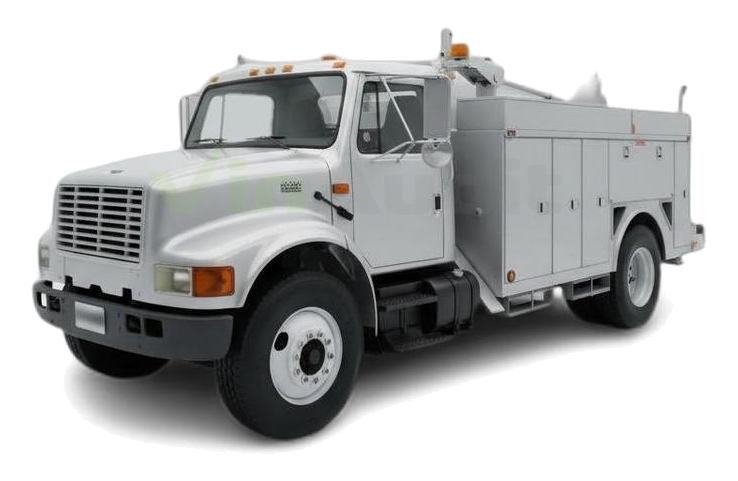
The Good
The 2000 International 4900 offers exceptional durability and raw power, appealing to practical buyers needing a workhorse. Its modular design allows for extensive customization, ensuring it meets specific needs. For those who appreciate a no-nonsense, purpose-built machine, its reliability and straightforward engineering offer peace of mind.
The Bad
Potential buyers should be aware of the 2000 International 4900's less refined interior comfort compared to modern trucks. Aging components, particularly in older models, can lead to increased maintenance needs. Fuel efficiency is generally not a strong suit, and finding specific parts can sometimes be challenging.
2000 International 4900: Quick Overview
- Engine Options: The 2000 International 4900 was typically equipped with a range of robust diesel engines. Common options included:
- International DT 466E: A popular inline-six, turbocharged diesel engine known for its reliability and strong torque.
- Cummins ISB/ISC Series: Other configurations might have featured Cummins engines, depending on the specific application and buyer's preference.
- Horsepower: Horsepower ratings varied significantly based on the specific engine and tuning, generally ranging from approximately 195 horsepower to over 300 horsepower. For instance, the DT 466E could be found in variants producing around 210-250 horsepower.
- Fuel Economy: Specific MPG figures for heavy-duty trucks like the 2000 International 4900 are rarely officially published and highly dependent on load, terrain, driving style, and the specific engine configuration. However, as a general expectation for a truck of this class, fuel economy would likely be in the single digits, perhaps ranging from 5-10 MPG.
- 0-60 Times: 0-60 mph times are not a primary performance metric for this type of vehicle and are highly variable due to its intended purpose. When tested, laden, these times would be significantly longer than passenger vehicles, likely in the 20-30+ second range.
- Towing Capacity: The towing capacity is not a single fixed number as it depends heavily on the specific chassis, drivetrain, axle ratios, and any factory or aftermarket towing packages installed. However, the International 4900 platform is designed for substantial towing and hauling, with capacities often ranging from 10,000 lbs for lighter configurations to upwards of 30,000 lbs or more for specialized applications (e.g., fifth-wheel or gooseneck towing, commercial hauling). Gross Vehicle Weight Ratings (GVWR) could exceed 30,000 lbs.
- Trim-Level Features: As a commercial chassis, "trims" were less about luxury and more about functional configurations. Key features and options were dictated by the intended use:
- Chassis Cab: The most common configuration, designed to accept a custom body (e.g., flatbed, box truck, dump bed, service body).
- Powertrain Options: Choices in transmissions (manual or automatic), axle ratios, and engine specifications.
- Suspension Systems: Heavy-duty suspension options to handle specific load requirements.
- Cab Configurations: Typically standard cab (two-door) with some variations possibly offering extended cabs.
- Optional Equipment: Air brakes, power take-off (PTO) units, auxiliary fuel tanks, specialized lighting, and onboard auxiliary power systems.
2000 International 4900 Specifications
Vehicle Information
| Year | 2000 |
| Make | International |
| Model | 4900 |
| Trim | - |
| Style | - |
| Type | Truck |
| Category | Bus |
Manufacturing Details
| Made In | Mexico |
| Manufacturing City | SPRINGFIELD |
Dimensions
| Doors | - |
| Curb Weight | - |
| Gross Vehicle Weight Rating | 33000 pounds |
| Overall Height | - |
| Overall Length | - |
| Overall Width | - |
| Wheelbase Length | - |
| Standard Seating | - |
Engine & Performance
| Engine | 7.6L I6 |
| Engine Size | 7.6L |
| Engine Cylinders | 6 |
| Transmission | - |
| Transmission Type | - |
| Transmission Speeds | - |
| Drivetrain | 6x4 |
Additional Features
| Anti-Brake System | - |
| Steering Type | - |
Pricing
| Manufacturer Suggested Retail Price (MSRP) | - |
| Invoice Price | - |
| Delivery Charges | - |
Vehicle History Report
Specifications
History
Events
History Check
Check
Check
Check
Check
Listings
Recalls
Check
Analysis
What Problems Does the 2000 International 4900 Have?
- Engine Issues: The International DT 466E, while generally reliable, can sometimes experience issues such as head gasket failures, injector problems, or oil leaks if not properly maintained. EGR (Exhaust Gas Recirculation) system failures are also not uncommon on diesel engines of this era, leading to reduced performance and increased emissions.
- Transmission Woes: Depending on the transmission installed (e.g., Eaton Fuller manual or an Allison automatic), common problems can include clutch wear (manuals), synchronizer issues, or automatic transmission fluid leaks and overheating if not serviced regularly.
- Electrical Gremlins: Older trucks, including the 2000 International 4900, can be prone to electrical issues. This might manifest as failing alternators, starter problems, wiring harness degradation, or malfunctioning dashboard components. Corroded connections are a common culprit.
- Brake System Maintenance: With air brake systems, regular inspection and maintenance are crucial. Issues can include air leaks, failing brake chambers, or worn brake pads/shoes, which are critical for safety.
- Suspension and Drivetrain Wear: Components like U-joints, leaf springs, and shock absorbers will naturally wear out over time, especially under heavy use. Driveline vibrations can indicate worn U-joints or a bent driveshaft.
- Cooling System: Radiator leaks, water pump failures, and thermostat issues can lead to overheating, which is detrimental to the engine.
- Recalls: Specific recalls for the 2000 model year would need to be checked against the vehicle's VIN through official NHTSA (National Highway Traffic Safety Administration) databases. However, recalls on commercial vehicles often pertain to safety-critical systems like brakes, steering, or potential fire hazards. It's essential for any prospective buyer to verify if any outstanding recalls apply to the specific vehicle.
- Long-Term Reliability: The long-term reliability of a 2000 International 4900 heavily depends on its original build quality, how it was used, and, most importantly, the rigor of its maintenance history. A well-maintained unit with regular fluid changes, filter replacements, and prompt attention to minor issues can last for hundreds of thousands of miles. Conversely, a neglected truck will likely present numerous costly repairs. Model year specific issues are less documented in broad strokes for these workhorses; it's more about the individual truck's history and the owner's care.
How long will the 2000 International 4900 last?
What Technology & Safety Features are Included?
- Technology: Expect basic instrumentation like analog gauges for speed, RPM, fuel level, oil pressure, and temperature. Diagnostic ports (like OBD-II) would be present for engine diagnostics. Higher-end options might have included more sophisticated engine monitoring systems or GPS tracking for fleet management, but these were usually aftermarket additions or specific vocational packages.
- Entertainment: Standard entertainment systems would typically consist of a basic AM/FM radio, possibly with a cassette or CD player. More advanced audio systems were rare and typically only found in specific upfitted vehicles or as aftermarket installations. Bluetooth connectivity or touchscreens were non-existent in this era for this class of vehicle.
- Driver-Assistance Features: Driver-assistance features as we understand them today (lane keeping assist, adaptive cruise control, blind-spot monitoring) were not available on the 2000 International 4900. The focus was on the driver's direct control and awareness. Some vehicles might have had options like heated mirrors for improved visibility in adverse weather.
- Safety Features: Safety features were primarily focused on essential mechanical systems. Key safety components include:
- Air Brakes: Standard on most configurations for robust stopping power.
- Seatbelts: Standard three-point seatbelts for the driver and any passengers.
- Mirrors: Multiple large mirrors were crucial for visibility around the large vehicle.
- Lighting: Standard headlights, taillights, and turn signals.
- Optional Safety Equipment: Depending on the specific vocational use and customer requirements, options might have included a backup alarm, additional lighting for work areas, or specialized fire suppression systems for certain hazardous environments.
- Crash-Test Ratings: Commercial trucks like the 2000 International 4900 are not typically subjected to the same standardized crash-test ratings (e.g., NHTSA's star ratings) as passenger cars and light trucks. Their safety is assessed based on regulatory compliance for commercial vehicles, focusing on structural integrity under load and the performance of safety-critical systems. The design philosophy emphasizes robustness and driver awareness rather than crumple zones or passive safety technology found in cars.
What Colors Options are Available?
2000 International 4900 Prices and Market Value
2000 International 4900 Cost of Ownership
2000 International 4900 Fuel Efficiency
2000 International 4900 Recalls & Defects
Equipment
2000 International 4900 Warranty
Basic
Powertrain
Rust
2000 International 4900 Insurance
reasonable repair costs.
How Does the 2000 International 4900 Compare to Other Truck?
- Performance: In terms of raw performance and hauling capability, the International 4900 is on par with its contemporaries. Engines like the DT 466E offer comparable torque and horsepower to similar offerings from Freightliner and Kenworth. Its ability to be upfitted for various tasks means its performance can be tailored.
- Features: Feature-wise, the 2000 International 4900, like its direct competitors from this era, is basic. Comfort and technology were secondary to functionality. All these trucks would offer similar utilitarian interiors, analog gauges, and essential safety features. Modern alternatives offer significantly more in terms of infotainment, driver aids, and interior refinement.
- Reliability: Reliability is a mixed bag and highly dependent on maintenance. International trucks of this vintage are known for their ruggedness. However, specific engine or transmission choices can influence this. Competitors like Freightliner also have strong reputations, though individual model issues can arise. Kenworth and Peterbilt often carry a premium for their build quality and perceived reliability, sometimes leading to higher used prices.
- Price: When new, prices were competitive within the class. On the used market, the 2000 International 4900 tends to be more affordable than comparable models from Kenworth or Peterbilt, offering a strong value proposition for budget-conscious buyers. Freightliner models often fall into a similar used price bracket.
- Alternatives:
- Similar Alternatives: For those seeking a similar utilitarian, robust truck, the Freightliner FL80/FL70 would be a direct competitor. They offer comparable chassis strength and engine options. GMC Topkick/Chevrolet Kodiak models from the same era also fit this niche, though they often had different engine platforms (e.g., Duramax diesel).
- Better Alternatives (Newer/More Refined): If a buyer prioritizes modern features, comfort, and potentially better fuel efficiency, newer models from any of the major manufacturers (International, Freightliner, Kenworth, Peterbilt) would be superior, but at a significantly higher cost. For specific vocational needs, specialized manufacturers might offer niche solutions. For light-duty towing or recreational use, a heavy-duty pickup truck from Ford, Ram, or Chevrolet might be a more comfortable and feature-rich, albeit less robust, option.
Final Verdict: Is the 2000 International 4900 a Good Truck?

Jovan
Jovan specializes in interpreting vehicle records and making sense of VIN data. With over 10 years of experience in the automotive data industry, his work ensures that every report is clear, accurate, and useful for car buyers.