
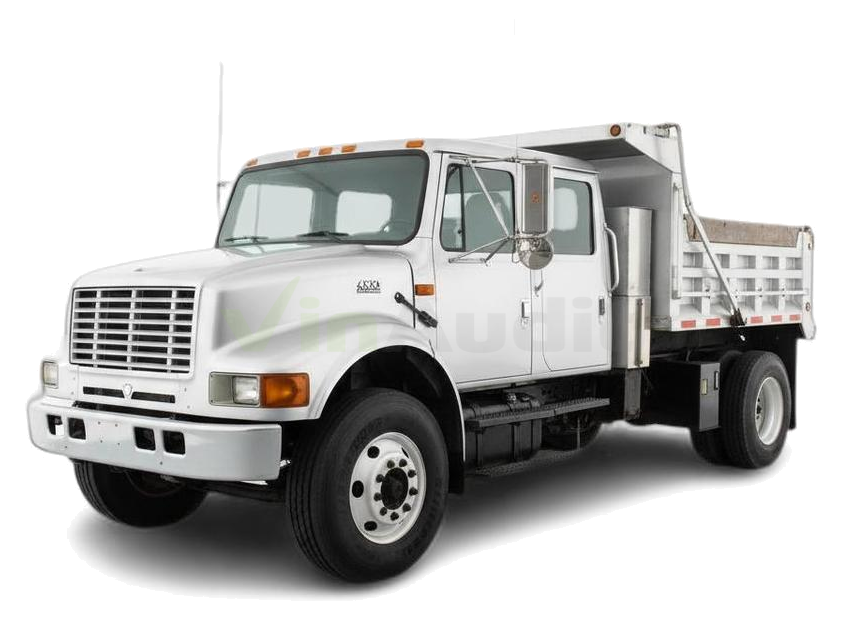
The Good
The 2002 International 4900 boasts exceptional reliability and robust performance, built to tackle tough jobs. Its straightforward, functional design prioritizes durability and ease of maintenance, offering practical value for fleet owners and owner-operators seeking a dependable workhorse. This truck inspires confidence through its sheer capability.
The Bad
Potential weaknesses of the 2002 International 4900 include aging electrical systems and potential for rust, especially in harsher climates. Maintenance records are crucial, as neglect can lead to significant powertrain issues. Fuel efficiency can also be a concern depending on the engine and application.
2002 International 4900: Quick Overview
- Engine Options: The 2002 International 4900 was typically equipped with robust diesel engines designed for commercial use. Common options included:
- International DT 466E: A highly regarded inline-six turbo-diesel engine known for its durability and strong torque.
- Cummins ISB: Another popular choice, offering reliable performance and fuel efficiency.
- Other potential engine variants from Caterpillar or Cummins might have been available depending on specific configurations and customer orders.
- Horsepower: Horsepower ratings varied significantly based on the specific engine chosen and its tuning. For the International DT 466E, horsepower typically ranged from approximately 210 hp to 275 hp. Cummins ISB engines could also offer a similar power band.
- Fuel Economy: Fuel economy for a Class 7 truck like the 4900 is highly dependent on the engine, transmission, rear axle ratio, load, and driving conditions. Expect figures generally in the range of 8-12 miles per gallon (MPG). This is not a primary selling point for these vehicles, with performance and durability being prioritized.
- 0-60 Times: 0-60 mph times are largely irrelevant for this class of commercial vehicle and are not typically measured or published. These trucks are designed for hauling and operational efficiency, not acceleration.
- Towing Capacity: The towing capacity is not a fixed specification for a chassis cab truck like the 4900, as it depends entirely on the body type and upfit installed. The Gross Vehicle Weight Rating (GVWR) of the chassis itself would dictate the maximum permissible weight, which then influences the towing capability of the complete vehicle. GVWRs for the 4900 could range from 25,500 lbs to over 33,000 lbs, allowing for substantial towing and hauling.
- Trim-Level Features: The concept of "trim levels" as found in consumer vehicles doesn't directly apply to the 2002 International 4900. Instead, features were determined by the vocational application and optional packages. Key features often included:
- Robust frames and suspension systems for heavy-duty use.
- Various wheelbase lengths to accommodate different body styles.
- Power steering and air brakes as standard or readily available options.
- Optional features could include air conditioning, upgraded interior materials for the cab, various transmission types (manual and automatic), and specialized hydraulic systems for dump bodies or other equipment.
2002 International 4900 Specifications
Vehicle Information
| Year | 2002 |
| Make | International |
| Model | 4900 |
| Trim | - |
| Style | - |
| Type | Truck |
| Category | Bus |
Manufacturing Details
| Made In | Mexico |
| Manufacturing City | SPRINGFIELD |
Dimensions
| Doors | - |
| Curb Weight | - |
| Gross Vehicle Weight Rating | 33000 pounds |
| Overall Height | - |
| Overall Length | - |
| Overall Width | - |
| Wheelbase Length | - |
| Standard Seating | - |
Engine & Performance
| Engine | 7.6L I6 |
| Engine Size | 7.6L |
| Engine Cylinders | 6 |
| Transmission | - |
| Transmission Type | - |
| Transmission Speeds | - |
| Drivetrain | 6x4 |
Additional Features
| Anti-Brake System | - |
| Steering Type | - |
Pricing
| Manufacturer Suggested Retail Price (MSRP) | - |
| Invoice Price | - |
| Delivery Charges | - |
Vehicle History Report
Specifications
History
Events
History Check
Check
Check
Check
Check
Listings
Recalls
Check
Analysis
What Problems Does the 2002 International 4900 Have?
One of the most commonly discussed areas for trucks of this age, including the 4900, pertains to the electrical systems. Aging wiring harnesses, corrosion on connectors, and failing sensors can lead to intermittent issues or diagnostic challenges. This is less a design flaw and more a consequence of age and environmental exposure.
Powertrain issues, while not necessarily frequent in design, can be significant when they arise. The popular International DT 466E engine is highly regarded for its durability, but like any engine, it can experience problems if maintenance intervals are neglected. Issues such as injector failures, turbocharger wear, or head gasket problems can occur on high-mileage units. Similarly, the Cummins ISB engines are generally reliable, but they too can suffer from similar ailments under heavy use or poor maintenance.
Rust and corrosion are perennial concerns for any vehicle operating in regions with harsh winters or coastal environments. The frame, cab structure, and underbody components can be susceptible to significant rust, especially if not treated or protected regularly. This can compromise structural integrity and lead to costly repairs.
While specific recalls for the 2002 model year might be limited and vary by region, it is always advisable for owners to check with Navistar International or NHTSA (National Highway Traffic Safety Administration) for any outstanding safety recalls. For commercial vehicles, maintenance records are paramount. A well-documented history of regular oil changes, filter replacements, and component inspections will greatly mitigate the risk of major problems and ensure long-term reliability.
In terms of long-term reliability, the 4900's reputation is built on its heavy-duty construction. However, the lifespan of components like transmissions (especially automatics in heavy-duty applications), suspension parts, and braking systems will be influenced by how the vehicle has been used and maintained. A truck used for frequent heavy hauling will naturally experience more wear and tear than one used for lighter, less frequent duties.
How long will the 2002 International 4900 last?
What Technology & Safety Features are Included?
Built-in Tech and Entertainment: As standard, the technological features were quite basic. Expect a functional AM/FM radio, and possibly a cassette player. CD players were becoming more common but were often optional. Climate control was typically managed through manual heating and air conditioning systems. Diagnostics were primarily focused on engine and operational status indicators on the dashboard. There were no integrated infotainment systems, touchscreens, or navigation as one would find in modern vehicles. The dashboard design was utilitarian, prioritizing clear readability of essential gauges and warning lights.
Driver-Assistance Features: Driver-assistance features as we understand them today were virtually non-existent in the 2002 International 4900. There were no features like adaptive cruise control, lane departure warnings, blind-spot monitoring, or automatic emergency braking. The primary focus was on providing the driver with good visibility and responsive controls for operating a large vehicle. Power steering and power brakes were standard or widely available, aiding in maneuverability and control.
Safety Features: Safety in this context primarily revolved around passive and active safety systems designed for heavy vehicles. Standard safety equipment would include:
- Seatbelts: Three-point seatbelts were standard for driver and passenger.
- Air Brakes: Air brakes are a crucial safety feature for heavy trucks, providing superior stopping power compared to hydraulic brakes.
- Mirrors: Extensive mirror setups (including convex and spot mirrors) were essential for mitigating blind spots and ensuring awareness of the vehicle's surroundings.
- Lighting: Comprehensive exterior lighting (headlights, taillights, turn signals, marker lights) was critical for visibility and signaling intentions to other road users.
Crash-Test Ratings: Commercial vehicles like the 2002 International 4900 are generally not subjected to the same type of crash testing by organizations like the NHTSA or IIHS that passenger cars and light trucks undergo. Their design and construction are inherently different, focusing on occupant protection in scenarios relevant to their operation, such as rollovers or frontal impacts with other heavy vehicles. Specific crash-test ratings are not readily available or applicable in the same way.
What Colors Options are Available?
2002 International 4900 Prices and Market Value
In the current used market, the 2002 International 4900 can be found for prices ranging widely, typically from $5,000 to $25,000 or more. The price is heavily influenced by the type of upfit, overall condition, mileage, and maintenance history.
Depreciation for these workhorses is significant in the initial years but then plateaus, as their value becomes tied more to their operational utility and remaining lifespan rather than a traditional depreciation curve. Factors affecting resale value include the quality of the upfit, the condition of the engine and transmission, the presence of rust, and the truck's compliance with current emissions standards. A well-maintained truck with a sought-after configuration will always command a higher price.
2002 International 4900 Cost of Ownership
2002 International 4900 Fuel Efficiency
2002 International 4900 Recalls & Defects
Equipment
Service Brakes, Air:supply:check Valve
Service Brakes, AIR
Service Brakes, Air:antilock:wheel Speed Sensor
2002 International 4900 Warranty
Basic
Powertrain
Rust
2002 International 4900 Insurance
reasonable repair costs.
How Does the 2002 International 4900 Compare to Other Truck?
Performance: In terms of performance, the International 4900, especially with the DT 466E engine, was known for its robust torque and reliability in demanding vocational applications. Competitors like the Freightliner FL70/FL80, Kenworth T300, and Peterbilt 257/330 offered comparable or sometimes more powerful engine options, depending on the specific configurations. The 4900 generally held its own in terms of raw hauling and towing capability, prioritizing durability over outright speed.
Features: As discussed, features in this class are functional rather than luxurious. The International 4900 offered a straightforward, no-nonsense cab designed for utility. Competitors might have offered slightly more ergonomic cab designs or a wider array of optional comfort features in higher-spec variants, but the core functionality was similar across the board. Advanced driver aids and extensive entertainment tech were absent from all competitors in this model year.
Reliability: The International DT 466E engine is a strong point for the 4900, often cited for its longevity and ease of repair. Competitors like Cummins engines found in Freightliners and Kenworths are also renowned for their reliability. The overall reliability of any commercial truck from this era is heavily dependent on its maintenance history and the specific components used in its build. All major manufacturers in this class offered durable trucks, but individual unit reliability can vary.
Price: The pricing for the 2002 International 4900 was competitive within its segment. New prices varied significantly based on upfits. Used prices are also highly variable. Generally, these trucks offered good value for money, providing a durable platform for various businesses.
Alternatives:
- Freightliner FL70/FL80: A very common and strong competitor, often featuring Cummins engines. Offers similar durability and vocational versatility.
- Kenworth T300: Known for its excellent build quality and driver comfort, though sometimes at a slightly higher price point.
- Peterbilt 257/330: Similar to Kenworth, offering robust construction and good reliability, often preferred for their classic styling.
In summary, the 2002 International 4900 is a solid contender in its class. For buyers prioritizing a proven and durable powertrain like the DT 466E, it remains an excellent choice. If specific features or brand loyalty are paramount, Freightliner, Kenworth, and Peterbilt offer very similar capabilities and reliability, making them excellent alternative options to consider based on availability and specific deal terms.
Final Verdict: Is the 2002 International 4900 a Good Truck?
Buying this vehicle is best done on the used market, as new models are no longer produced. When purchasing, thoroughly inspect the frame for rust, check maintenance records meticulously, and consider having a mechanic specializing in heavy trucks evaluate the engine, transmission, and air brake systems. Specific configurations tailored to your exact needs will always be more valuable than a generic chassis. It represents a sound investment for those needing a reliable workhorse and willing to commit to its upkeep.

Eugene S
Eugene is an automotive enthusiast with over 15 years of experience in the used car market. As a writer at VINCheck.info, he brings deep industry insight and a passion for cars, helping readers make smart, informed decisions. Eugene has written hundreds of used car reviews and is known for breaking down complex automotive topics into clear, actionable advice. Over the years, he has driven and worked on a wide range of vehicles—starting with tuning street cars in his early days and eventually focusing on performance upgrades and reliability improvements. Today, he specializes in evaluating used vehicles through the lens of real-world ownership and enthusiast needs. A longtime fan of Porsche, Eugene especially appreciates vehicles that blend durability with driving enjoyment.