
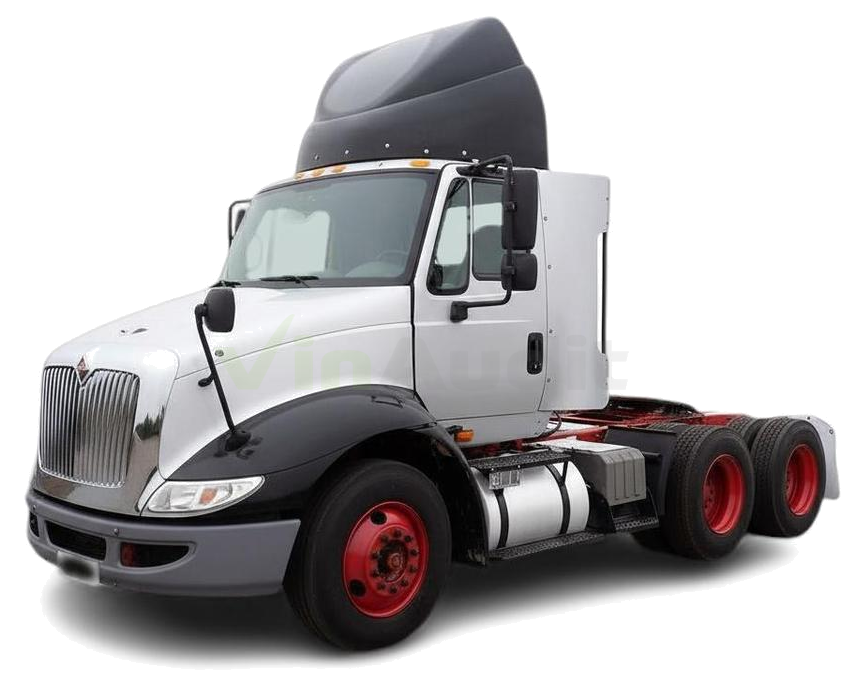
The 2005 International 8600 is a Class 8 heavy-duty truck, often found in vocational applications like construction, towing, and long-haul trucking. Part of the International Trucks lineup, it was produced for several years. While specific trims varied greatly based on application, its popularity stemmed from its robust build, customizable configurations, and the powerful engine options available. Pricing on the used market varies significantly based on condition, mileage, and specific upfitting.
The Good
The 2005 International 8600 offers exceptional durability and power for demanding tasks. Its rugged design inspires confidence, while its surprisingly spacious cabin provides comfort for long hauls, making it a dependable workhorse that doesn't compromise on practicality or toughness.
The Bad
When considering a 2005 International 8600, potential buyers should watch out for issues related to wear and tear on high-mileage components, particularly in the powertrain and suspension. Electrical gremlins and potential DPF issues on later models are also points to investigate.
2005 International 8600: Quick Overview
- Engine Options: The 2005 International 8600 was typically equipped with powerful diesel engines. Common options included:
- International DT 530/570: These inline-six engines offered robust performance for vocational use.
- Cummins ISX: Often found in heavier configurations, providing significant horsepower and torque.
- Detroit Diesel Series 60: Another formidable engine choice known for its reliability and power.
- International DT 530/570: These inline-six engines offered robust performance for vocational use.
- Horsepower: Horsepower ratings varied significantly depending on the specific engine and configuration, but commonly ranged from approximately 300 hp to over 500 hp.
- Fuel Economy: Fuel economy is highly variable in Class 8 trucks and is heavily dependent on engine choice, load, driving conditions, and axle ratios. Expect figures in the range of 4-7 miles per gallon for highway driving.
- 0-60 Times: 0-60 mph times are not a primary consideration for this class of vehicle and are generally not published. These trucks are built for sustained heavy hauling, not rapid acceleration.
- Towing Capacity: The towing capacity is determined by the truck's Gross Vehicle Weight Rating (GVWR), Gross Combined Weight Rating (GCWR), axle configurations, and braking systems. These trucks are designed to haul very heavy loads, often exceeding 80,000 lbs GCWR, making them suitable for heavy-duty towing and hauling.
- Trim-Level Features: The 2005 International 8600 did not have traditional "trim levels" in the passenger car sense. Instead, features were dictated by the intended vocational application and customer specifications. Common features included:
- Various cab configurations (e.g., conventional, extended, day cab, sleeper cabs).
- Air suspension systems for improved ride comfort and load handling.
- Robust braking systems (air brakes).
- Heavy-duty transmissions (manual and automatic options).
- Power take-off (PTO) options for auxiliary equipment.
- Customizable chassis lengths and configurations.
- Optional driver amenities like air conditioning, power windows, and comfortable seating for long-haul comfort.
- Various cab configurations (e.g., conventional, extended, day cab, sleeper cabs).
2005 International 8600 Specifications
Vehicle Information
| Year | 2005 |
| Make | International |
| Model | 8600 |
| Trim | - |
| Style | - |
| Type | Truck |
| Category | Heavy Truck Rf027 |
Manufacturing Details
| Made In | United States |
| Manufacturing City | GARLAND |
Dimensions
| Doors | - |
| Curb Weight | - |
| Gross Vehicle Weight Rating | 33001 pounds |
| Overall Height | - |
| Overall Length | - |
| Overall Width | - |
| Wheelbase Length | - |
| Standard Seating | - |
Engine & Performance
| Engine | 12L I6 |
| Engine Size | 12.5L |
| Engine Cylinders | 6 |
| Transmission | - |
| Transmission Type | - |
| Transmission Speeds | - |
| Drivetrain | 6x4 |
Additional Features
| Anti-Brake System | - |
| Steering Type | - |
Pricing
| Manufacturer Suggested Retail Price (MSRP) | - |
| Invoice Price | - |
| Delivery Charges | - |
Vehicle History Report
Vehicle
Specifications
Specifications
Ownership
History
History
All History
Events
Events
NMVTIS Title
History Check
History Check
Salvage/Rebuilt
Check
Check
Accident
Check
Check
Theft
Check
Check
Open Lien
Check
Check
Past Sale
Listings
Listings
Safety
Recalls
Recalls
Odometer
Check
Check
Market Price
Analysis
Analysis
What Problems Does the 2005 International 8600 Have?
The 2005 International 8600, like many heavy-duty trucks, can experience issues that are often related to high mileage and the demanding nature of their work. Frequently reported problems tend to center around the powertrain and associated systems. Common concerns include injector issues with the diesel engines, which can lead to performance problems and increased fuel consumption. The fuel injection pump is another component that may require attention over time, especially if fuel quality is inconsistent.
Transmission problems, particularly with manual transmissions experiencing clutch wear or difficult shifting, are not uncommon in trucks of this age and mileage. Automatic transmissions can also develop issues with torque converters or internal hydraulic systems. The exhaust gas recirculation (EGR) system and diesel particulate filters (DPF), if equipped on later models within this generation, are known to be susceptible to clogging, especially if the truck is used primarily for short-haul or stop-and-go driving, leading to derating or complete shutdown.
Electrical system gremlins are also a recurring theme. This can manifest as intermittent dashboard warning lights, issues with lighting, or problems with sensors that affect engine performance. Corroded wiring harnesses or failing relays can be culprits. The suspension components, including airbags, bushings, and shock absorbers, will naturally wear down over hundreds of thousands of miles, leading to a rougher ride and potential handling issues.
Recalls for trucks of this era are often specific to particular model years and configurations, and it's crucial to check the VIN for any outstanding safety recalls. Long-term reliability is heavily dependent on the truck's original specifications, how it was maintained, and the type of work it performed. A well-maintained 8600 used for long-haul highway driving with regular oil changes and filter replacements is likely to be more reliable than one used for constant heavy vocational work with frequent idling and heavy-duty cycles. While specific model-year-related issues are hard to pinpoint without extensive historical data, general wear and tear on all components is the most significant factor affecting long-term reliability.
Transmission problems, particularly with manual transmissions experiencing clutch wear or difficult shifting, are not uncommon in trucks of this age and mileage. Automatic transmissions can also develop issues with torque converters or internal hydraulic systems. The exhaust gas recirculation (EGR) system and diesel particulate filters (DPF), if equipped on later models within this generation, are known to be susceptible to clogging, especially if the truck is used primarily for short-haul or stop-and-go driving, leading to derating or complete shutdown.
Electrical system gremlins are also a recurring theme. This can manifest as intermittent dashboard warning lights, issues with lighting, or problems with sensors that affect engine performance. Corroded wiring harnesses or failing relays can be culprits. The suspension components, including airbags, bushings, and shock absorbers, will naturally wear down over hundreds of thousands of miles, leading to a rougher ride and potential handling issues.
Recalls for trucks of this era are often specific to particular model years and configurations, and it's crucial to check the VIN for any outstanding safety recalls. Long-term reliability is heavily dependent on the truck's original specifications, how it was maintained, and the type of work it performed. A well-maintained 8600 used for long-haul highway driving with regular oil changes and filter replacements is likely to be more reliable than one used for constant heavy vocational work with frequent idling and heavy-duty cycles. While specific model-year-related issues are hard to pinpoint without extensive historical data, general wear and tear on all components is the most significant factor affecting long-term reliability.
How long will the 2005 International 8600 last?
The 2005 International 8600 is built for the long haul, and with proper maintenance, it's not uncommon to see these trucks accumulate well over 500,000 to 1,000,000 miles or more. Owner data and maintenance habits are paramount to their longevity. Trucks used for consistent highway hauling with regular oil changes, filter replacements, and diligent attention to any emerging issues can achieve exceptional service lives. Weaknesses that emerge over time are typically related to the cumulative wear on heavy-duty components like the engine, transmission, and suspension. Regular servicing, especially of the fuel system and emissions components, is critical to mitigating premature failure. A well-cared-for 8600 demonstrates impressive durability, proving itself a workhorse for many years.
What Technology & Safety Features are Included?
The 2005 International 8600, being a commercial heavy-duty truck, prioritizes functionality and durability over advanced technology and creature comforts typically found in passenger vehicles. Built-in tech features are generally basic and focused on the operation of the truck itself. Standard equipment would likely include an AM/FM radio and possibly a CD player for entertainment.
Higher-end or optional features might include more sophisticated entertainment systems, such as satellite radio capabilities or improved speaker systems for those spending extended periods on the road. Navigation systems were not standard and would have been an aftermarket or optional dealer-installed feature. Communication systems like CB radios were common.
Driver-assistance features in the traditional sense are virtually non-existent for a 2005 model year heavy-duty truck. Features like cruise control would have been standard or a common option. Advanced systems such as lane departure warning, adaptive cruise control, or automatic emergency braking were not available. The primary focus for driver assistance in this era of trucks was on mechanical systems that aid in control and safety.
Safety features are robust for its class. Standard safety equipment would include powerful air brakes for superior stopping power, especially when under load. The heavy-duty chassis and frame are inherently designed for structural integrity and occupant protection in the event of a collision. Seat belts are standard, and some models might have offered advanced seat designs for better support. Anti-lock braking systems (ABS) would likely have been standard or a widely available option, crucial for maintaining control during emergency braking.
Crash-test ratings for commercial heavy-duty trucks like the International 8600 are not typically performed or published by organizations like the NHTSA or IIHS in the same way they are for light-duty vehicles. The design philosophy for these trucks emphasizes strength and payload capacity, with occupant safety being a consequence of that robust engineering rather than a specific test target for passenger car-like metrics. The sheer mass and construction of these vehicles provide a significant level of passive safety.
Higher-end or optional features might include more sophisticated entertainment systems, such as satellite radio capabilities or improved speaker systems for those spending extended periods on the road. Navigation systems were not standard and would have been an aftermarket or optional dealer-installed feature. Communication systems like CB radios were common.
Driver-assistance features in the traditional sense are virtually non-existent for a 2005 model year heavy-duty truck. Features like cruise control would have been standard or a common option. Advanced systems such as lane departure warning, adaptive cruise control, or automatic emergency braking were not available. The primary focus for driver assistance in this era of trucks was on mechanical systems that aid in control and safety.
Safety features are robust for its class. Standard safety equipment would include powerful air brakes for superior stopping power, especially when under load. The heavy-duty chassis and frame are inherently designed for structural integrity and occupant protection in the event of a collision. Seat belts are standard, and some models might have offered advanced seat designs for better support. Anti-lock braking systems (ABS) would likely have been standard or a widely available option, crucial for maintaining control during emergency braking.
Crash-test ratings for commercial heavy-duty trucks like the International 8600 are not typically performed or published by organizations like the NHTSA or IIHS in the same way they are for light-duty vehicles. The design philosophy for these trucks emphasizes strength and payload capacity, with occupant safety being a consequence of that robust engineering rather than a specific test target for passenger car-like metrics. The sheer mass and construction of these vehicles provide a significant level of passive safety.
What Colors Options are Available?
2005 International 8600 Prices and Market Value
When new, the 2005 International 8600 could range significantly in price, from approximately $70,000 to well over $150,000 depending on the specific configuration, engine, transmission, and any specialized vocational upfitting. Heavy-duty trucks, especially those in the Class 8 segment, experience a steeper depreciation curve initially compared to passenger cars. However, their robust build and long service life mean they retain significant value for many years.
Current used market prices for a 2005 International 8600 vary drastically, typically from around $10,000 to $50,000+. Factors heavily influencing resale value include: mileage, overall condition (mechanical and cosmetic), maintenance history, the presence of specialized equipment (like a sleeper cab, specific PTOs, or heavy-duty axles), tire condition, and emissions compliance. Trucks that have been well-maintained and have lower mileage for their age tend to command higher prices. Demand from vocational sectors also plays a role.
2005 International 8600 Cost of Ownership
Owning a 2005 International 8600 is generally considered costly, though its value proposition lies in its capability. Insurance costs will be significant, reflecting the vehicle's value and usage type. Fuel expenses are substantial, with fuel economy typically in the 4-7 MPG range, depending on load and terrain. Maintenance and repair are the largest cost centers; these are heavy-duty machines with expensive components. Routine maintenance like oil changes and filter replacements are costly. Major repairs to the engine, transmission, or emissions systems can run into thousands of dollars. Overall, it is a costly vehicle to own and operate, but its economic viability depends entirely on its earning potential.
2005 International 8600 Fuel Efficiency
Fuel Type
Diesel
Fuel Capacity
-
City Mileage
-
Highway Mileage
-
2005 International 8600 Recalls & Defects
Exterior Lighting:back UP Lights
Recall date
2023-05-18
Recall no.
23v353000
Source
NHTSA
Summary
Navistar, Inc. (Navistar) IS Recalling Certain 2000-2003 International 8100, 2001-2003 International 9100i, 2001-2007 International 9400i, 2001-2010 International 9200i, 2002-2007, 2009 International 8500, 2003-2007, 2013 International 9900i, 2003-2018 International 8600, 2004, 2007 International 9900ix, 2008-2018 International Prostar, 2010-2011, 2013, 2016 International Lonestar, 2011-2012, 2016 International 4400, 2017-2024 International LT, 2018-2024 International RH, 2019-2021 International LS, 2019-2024 International MV Vehicles. THE Back-up Lights Offer Low Visibility When THE Vehicle IS IN Reverse and Bobtail Mode. Also, THE Vehicles Have NOT Been Equipped With Additional Unobstructed Back-up Lights. AS Such, These Vehicles Fail TO Comply With THE Requirements OF Federal Motor Vehicle Safety Standard Number 108, "lamps, Reflective Devices, and Associated Equipment."
Consequence
Low Visibility or Obstructed Back UP Lights MAY NOT Alert Other Drivers That THE Vehicle IS Backing UP, Increasing THE Risk OF A Crash.
Remedy
Dealers Will Replace THE Existing Rear Stop/Turn Signal Lights, Free OF Charge. Owner Notification Letters Were Mailed MAY 06, 2024. Owners MAY Contact Navistar's Customer Service AT 1-800-448-7825. Navistar's Number FOR This Recall IS 23514.
Notes
Owners MAY Also Contact THE National Highway Traffic Safety Administration Vehicle Safety Hotline AT 1-888-327-4236 (Tty 1-800-424-9153), or GO TO Www.nhtsa.gov.
Structure
Recall date
2004-12-03
Recall no.
04v569000
Source
NHTSA
Summary
ON Certain Trucks, THE Bolts That Mount THE Front OF THE Cab TO THE Mounting Brackets Were NOT Properly Torqued AT THE Manufacturing Plant.
Consequence
These Bolts CAN Loosen During Normal Vehicle USE and Fall Out. This MAY Lead TO THE Cab Separating From THE Vehicle's Chassis During A Vehicle Crash That MAY Result IN Property Damage, Personal Injury or Death.
Remedy
AS AN Interim Action, Dealers Will Properly Tighten THE Existing Cab Mounting Bolts and Replace ANY Missing Bolts. AS Soon AS Parts ARE Available, Dealers Will Replace All Sixteen Bolts and Tighten Them Properly. AN Interim Letter WAS Sent TO Owners ON February 11, 2005. Another Letter WAS Sent TO Owners ON April 8, 2005, AS Soon AS Parts ARE Available. Owners Should Contact International AT 1-800-448-7825.
Notes
International Recall NO. 05502 (04521 Interim Action).customers CAN Also Contact THE National Highway Traffic Safety Administration's Auto Safety Hotline AT 1-888-Dash-2-dot (1-888-327-4236).
Trailer Hitches:fifth Wheel Assembly
Recall date
2005-04-28
Recall no.
05v188000
Source
NHTSA
Summary
ON Certain Vehicles Equipped With AIR Operated Fifth Wheel Slides and AN Msva 7-Pack Accessory Controller, THE 7-Pack CAN Allow Water TO Contaminate ITS Circuit Board. This Could Result IN Inadvertent Operation OF THE Fifth Wheel Slide Control.
Consequence
IF THE Slide Control Actuates While THE Vehicle IS IN Motion, Momentum From THE Trailer CAN Cause THE Fifth Wheel TO Slide Without Input From THE Driver, Which Could Result IN A Crash Without Warning.
Remedy
Dealers Will Relocate THE Msva 7-Pack TO A Less Water Intensive Environment. A NEW Msva 7-Pack Base, That HAS Been Improved TO Prevent Water Intrusion, and All AIR Accessory Solenoids Will BE Installed Free OF Charge. THE Recall Began ON August 5, 2005. Owners MAY Contact International AT 1-800-448-7825.
Notes
International Recall No.05511. Customers MAY Also Contact THE National Highway Traffic Safety Administration's Vehicle Safety Hotline AT 1-888-327-4236 (Tty 1-800-424-9153), or GO TO Http://Www.safercar.gov.
Engine and Engine Cooling
Recall date
2005-12-21
Recall no.
05v567000
Source
NHTSA
Summary
ON Certain Heavy Duty Trucks Equipped With Caterpillar Diesel Engines, THE Engine Electrical Ground Cable That Connects THE Engine Block With THE Starter MAY BE Routed IN A WAY That Could Cause Chafing Against THE Starter's Positive Battery Cables.
Consequence
IF Chafing Occurs Between THE Positive and Negative Cables, AN Electrical Short MAY Result and MAY Cause A Vehicle Fire, Possibly Resulting IN Property Damage, Personal Injury or Death.
Remedy
Dealers Will Inspect THE Engine Ground Cables FOR Proper Routing. IF ANY Chafing IS Found, THE Engine Block Ground Cable Will BE Replaced With A Shorter (280mm) Cable and ANY Other Damaged Cables Will BE Replaced and Routed Correctly Free OF Charge. THE Recall Began ON December 21, 2005. Owners MAY Contact International AT 1-800-448-7825.
Notes
International Recall No.05523.customers MAY Also Contact THE National Highway Traffic Safety Administration's Vehicle Safety Hotline AT 1-888-327-4236 (Tty 1-800-424-9153), or GO TO Http://Www.safercar.gov.
2005 International 8600 Warranty
Basic
Original warranty
0 months / No data
Estimated remaining
Expired
Powertrain
Original warranty
0 months / No data
Estimated remaining
Expired
Rust
Original warranty
0 months / No data
Estimated remaining
Expired
2005 International 8600 Insurance
Insurance for a 2005 International 8600 is moderately priced, reflecting its status as a Truck with strong safety ratings and
reasonable repair costs.
How Does the 2005 International 8600 Compare to Other Truck?
The 2005 International 8600 competes in the highly demanding Class 8 heavy-duty truck market. Its primary rivals in this segment for the 2005 model year include offerings from Peterbilt (e.g., Model 379), Kenworth (e.g., T800), Freightliner (e.g., Century Class), and Mack (e.g., CHU series).
Performance: The 8600, equipped with powerful Cummins, International DT, or Detroit Diesel engines, generally offers comparable performance in terms of horsepower and torque to its rivals. The choice of engine and axle ratios dictates its suitability for specific heavy-hauling tasks. In terms of raw power and hauling capability, it stands toe-to-toe with the best.
Features: Features are highly application-dependent. International trucks often focused on practical vocational solutions. While competitors like Peterbilt and Kenworth might have a reputation for slightly more premium cab interiors or perceived build quality by some owner-operators, the 8600 offered robust and functional cabins, often with a wide array of customization options for specific industries. Safety features like air brakes and ABS were standard across the board. Entertainment tech was basic in all.
Reliability: Reliability for all these heavy-duty trucks in 2005 was largely dependent on their intended use and maintenance. International trucks have a reputation for being robust workhorses. However, specific engine and transmission choices could influence long-term reliability. Some might argue that brands like Kenworth and Peterbilt hold a slight edge in perceived long-term durability or parts availability in certain regions, but the 8600 is a strong contender.
Price: When new, pricing was competitive across these brands. On the used market, the 2005 International 8600 can often represent a better value proposition compared to comparable Peterbilt or Kenworth models with similar mileage and condition, sometimes offering a lower entry price for similar capability. This makes it an attractive option for budget-conscious buyers.
Alternatives:
Performance: The 8600, equipped with powerful Cummins, International DT, or Detroit Diesel engines, generally offers comparable performance in terms of horsepower and torque to its rivals. The choice of engine and axle ratios dictates its suitability for specific heavy-hauling tasks. In terms of raw power and hauling capability, it stands toe-to-toe with the best.
Features: Features are highly application-dependent. International trucks often focused on practical vocational solutions. While competitors like Peterbilt and Kenworth might have a reputation for slightly more premium cab interiors or perceived build quality by some owner-operators, the 8600 offered robust and functional cabins, often with a wide array of customization options for specific industries. Safety features like air brakes and ABS were standard across the board. Entertainment tech was basic in all.
Reliability: Reliability for all these heavy-duty trucks in 2005 was largely dependent on their intended use and maintenance. International trucks have a reputation for being robust workhorses. However, specific engine and transmission choices could influence long-term reliability. Some might argue that brands like Kenworth and Peterbilt hold a slight edge in perceived long-term durability or parts availability in certain regions, but the 8600 is a strong contender.
Price: When new, pricing was competitive across these brands. On the used market, the 2005 International 8600 can often represent a better value proposition compared to comparable Peterbilt or Kenworth models with similar mileage and condition, sometimes offering a lower entry price for similar capability. This makes it an attractive option for budget-conscious buyers.
Alternatives:
- Similar: Freightliner Century Class or Mack CHU offer very similar vocational capabilities and are also strong used market options.
- Potentially Better (depending on priority): If maximum brand prestige or a reputation for exceptional driver comfort and resale value among owner-operators is the top priority, a well-maintained Peterbilt 379 or Kenworth T800 might be preferred, though often at a higher used price point.
Final Verdict: Is the 2005 International 8600 a Good Truck?
The 2005 International 8600 is ideal for businesses and individuals requiring a robust, capable, and relatively affordable heavy-duty truck for vocational applications, such as construction, towing, or specialized hauling. It is certainly worth buying for those who prioritize raw functionality and durability over advanced technology or luxury. It is overwhelmingly a used vehicle purchase, as new models of this class are significantly more expensive.
Buyers should focus on trucks with comprehensive maintenance records and lower mileage relative to their age. Specific configurations, like those with powerful Cummins engines or desirable vocational upfitting, will offer better performance for targeted jobs. It's crucial to have any potential purchase thoroughly inspected by a qualified heavy-duty mechanic to identify potential issues before committing. For the right price and with proper due diligence, the 2005 International 8600 remains a strong contender.
