
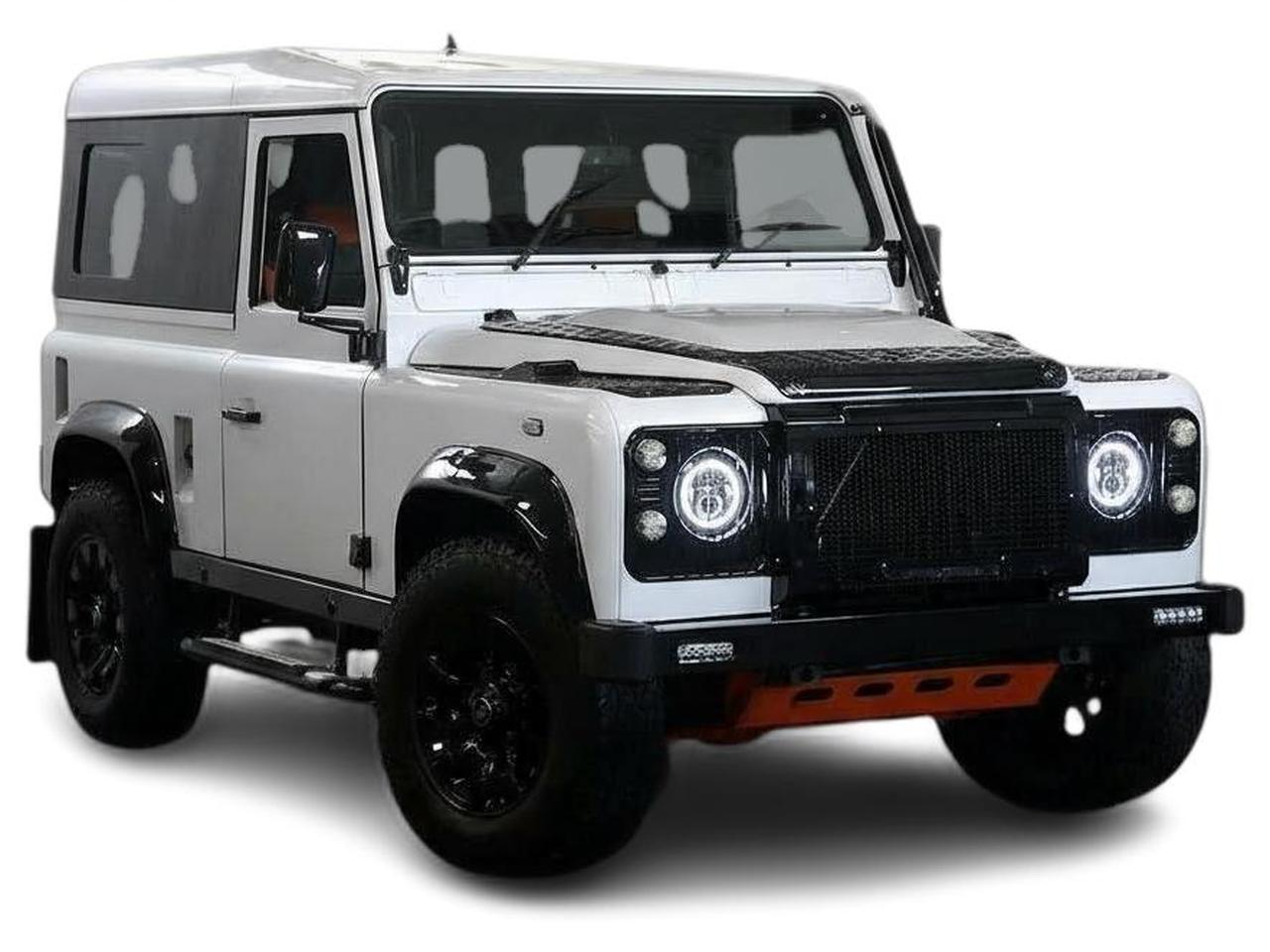
The Good
The 1992 Defender boasts unparalleled off-road performance and robust reliability. Its timeless, functional design appeals to emotional desires for adventure, while its simple mechanicals offer practical ease of maintenance and surprising value in the long run for those seeking a true off-roader.
The Bad
Potential buyers should watch out for rust, particularly on the chassis, bulkhead, and door sills. Electrical gremlins, aging suspension components, and potential oil leaks from the engine and gearbox are also common concerns for the 1992 Defender. Maintenance history is crucial.
1992 Land Rover Defender: Quick Overview
- Engine Options: The 1992 Land Rover Defender was typically offered with a range of diesel and gasoline engines. Common diesel options included the 2.5-liter 200Tdi inline-four turbo-diesel. Gasoline engines, though less common in many markets, could include the 2.5-liter 16-valve petrol or the 3.5-liter V8.
- Horsepower: Horsepower varied significantly by engine. The 200Tdi diesel engine produced around 111 horsepower. The 3.5-liter V8 could generate upwards of 135 horsepower.
- Fuel Economy: Fuel economy is not a strong suit for the Defender. Expect figures in the range of 15-20 mpg (miles per gallon) in mixed driving conditions, heavily influenced by engine type, driving style, and load.
- 0-60 Times: Performance figures are modest. The 0-60 mph time for models with the 200Tdi engine was typically in the range of 14-17 seconds. V8 models would be slightly quicker.
- Towing Capacity: The Defender is well-suited for towing, with a typical towing capacity ranging from 7,700 lbs to 7,716 lbs (3,500 kg), depending on the specific configuration and market.
- Trim-Level Features: As a utilitarian vehicle, trim levels were basic. Key features across models generally included robust four-wheel-drive systems with a locking center differential, selectable high and low-range gearing, solid axles, and durable interior materials. Optional features could include power steering (often standard on later models), forward-facing rear seats, a sunroof, and various accessory packs for enhanced off-road use or comfort. The 1992 model year typically saw the introduction of more refined features compared to earlier iterations, but still prioritized function over luxury.
1992 Land Rover Defender Specifications
Vehicle Information
| Year | 1992 |
| Make | Land Rover |
| Model | Defender |
| Trim | - |
| Style | - |
| Type | - |
| Category | - |
Manufacturing Details
| Made In | - |
| Manufacturing City | - |
Dimensions
| Doors | - |
| Curb Weight | - |
| Gross Vehicle Weight Rating | - |
| Overall Height | - |
| Overall Length | - |
| Overall Width | - |
| Wheelbase Length | - |
| Standard Seating | - |
Engine & Performance
| Engine | - |
| Engine Size | - |
| Engine Cylinders | - |
| Transmission | - |
| Transmission Type | - |
| Transmission Speeds | - |
| Drivetrain | - |
Additional Features
| Anti-Brake System | - |
| Steering Type | - |
Pricing
| Manufacturer Suggested Retail Price (MSRP) | - |
| Invoice Price | - |
| Delivery Charges | - |
Vehicle History Report
Specifications
History
Events
History Check
Check
Check
Check
Check
Listings
Recalls
Check
Analysis
What Problems Does the 1992 Land Rover Defender Have?
Rust: This is arguably the most significant concern. The chassis, bulkhead (the structure behind the dashboard), door sills, and wheel arches are particularly susceptible to corrosion. Regular inspections and proactive rustproofing are essential for long-term durability.
Electrical System: While generally simpler than modern vehicles, the electrical system can be a source of frustration. Worn wiring harnesses, failing relays, and corroded connections can lead to intermittent issues with lights, indicators, and other accessories. This is a common problem across most Defender model years.
Engine and Drivetrain: The Tdi diesel engines are generally robust, but like any older diesel, they can develop issues such as injector pump problems, turbocharger wear, and oil leaks. The gearbox and transfer case can also develop wear over time, leading to noise or difficulty engaging gears. Clutch wear is also common.
Suspension and Steering: Bushings, kingpins, and ball joints in the suspension and steering can wear out, leading to sloppy handling and uneven tire wear. Power steering components can also develop leaks.
Bulkhead Issues: The bulkhead is a critical structural component and is prone to rust. If it deteriorates significantly, it can compromise the vehicle's structural integrity, making repairs costly.
Recalls: Specific recalls for the 1992 model year are not as widely documented as for more modern vehicles. However, general safety campaigns for older Land Rovers have existed, often related to steering or braking components. It is advisable to check with Land Rover or relevant authorities for any outstanding recalls associated with a specific VIN.
Long-Term Reliability: While the Defender is mechanically sound at its core, its long-term reliability heavily depends on how it has been maintained. A well-maintained Defender with regular servicing and rust prevention can be remarkably durable. However, neglected examples can become money pits due to the cumulative effect of these common issues.
How long will the 1992 Land Rover Defender last?
What Technology & Safety Features are Included?
Built-in Tech & Entertainment: In 1992, "tech" in a Defender largely meant a functional radio/cassette player. Some models might have offered upgraded sound systems, but sophisticated infotainment systems, touchscreens, or digital displays were non-existent. Heating and ventilation were often basic, with manual controls.
Driver-Assistance Features: Driver-assistance technology as we know it today was absent. Features like ABS (Anti-lock Braking System) were not standard, and were only beginning to appear as optional extras on some 4x4s globally by this era, but were rare on the Defender. Cruise control was also not a common feature. The primary driver assistance was the robust four-wheel-drive system itself, which provided excellent traction and control in challenging conditions.
Safety Features: Safety features were rudimentary. Basic seatbelts were standard, and some later models might have offered three-point seatbelts in the front. Airbags were not a feature in 1992 for the Defender. The vehicle's construction, with its sturdy ladder frame and metal body, offered a degree of inherent crash protection, but it would not meet modern safety standards.
Optional Features: Optional equipment was geared towards utility and off-road capability rather than luxury or advanced tech. This could include things like power steering (which became more common around this period), side steps, additional lighting, heavy-duty suspension, and various towing accessories.
Crash-Test Ratings: Formal crash-test ratings, such as those provided by Euro NCAP or NHTSA today, were not conducted or published for vehicles of this age and type in the same rigorous manner. Therefore, specific crash-test ratings for the 1992 Land Rover Defender are not readily available or comparable to contemporary vehicles. Its safety is primarily a function of its robust, if somewhat dated, construction.
What Colors Options are Available?
1992 Land Rover Defender Prices and Market Value
1992 Land Rover Defender Cost of Ownership
1992 Land Rover Defender Fuel Efficiency
1992 Land Rover Defender Recalls & Defects
Electrical System:12v/24v/48v Battery
1992 Land Rover Defender Insurance
reasonable repair costs.
How Does the 1992 Land Rover Defender Compare to Other Vehicle?
Performance: The Defender excelled in off-road performance, with its legendary articulation, robust 4x4 system, and ground clearance often surpassing its rivals. On-road performance was secondary; it was slow, noisy, and not particularly refined. The Jeep Wrangler offered agile off-road capability but was less refined on-road than some. The Land Cruiser offered a better blend of on-road comfort and off-road prowess, with robust powertrains.
Features: The Defender was intentionally spartan, focusing on functionality. Rivals like the Land Cruiser offered more creature comforts and advanced features for the time. The Wrangler was also quite basic but more compact.
Reliability: This is where the Defender often trails. While mechanically simple, its susceptibility to rust and occasional electrical gremlins can impact long-term reliability compared to the legendary durability of Toyota Land Cruisers. Jeeps of this era also had their own set of common issues, but perhaps less pronounced rust concerns than the Defender.
Price: New prices were competitive for their capability. Currently, used Defenders, particularly well-preserved examples, often command higher prices than comparable Wranglers or older Land Cruisers due to their iconic status and enthusiast following.
Alternatives: For similar off-road capability with potentially better on-road manners and reliability, a Toyota Land Cruiser 80 Series is an excellent alternative. If rugged simplicity and iconic status are key, the Jeep Wrangler YJ offers a more affordable entry point, though with less overall utility and interior space. For sheer off-road dominance, few could truly match the Defender, but its drawbacks in comfort and long-term rust prevention are significant considerations.
Final Verdict: Is the 1992 Land Rover Defender a Good Vehicle?

Simon A
Simon is a contributor to VinCheck, where he provides articles and reviews on various automotive topics. His work focuses on delivering accurate and up-to-date information about used cars, helping readers make informed decisions.