
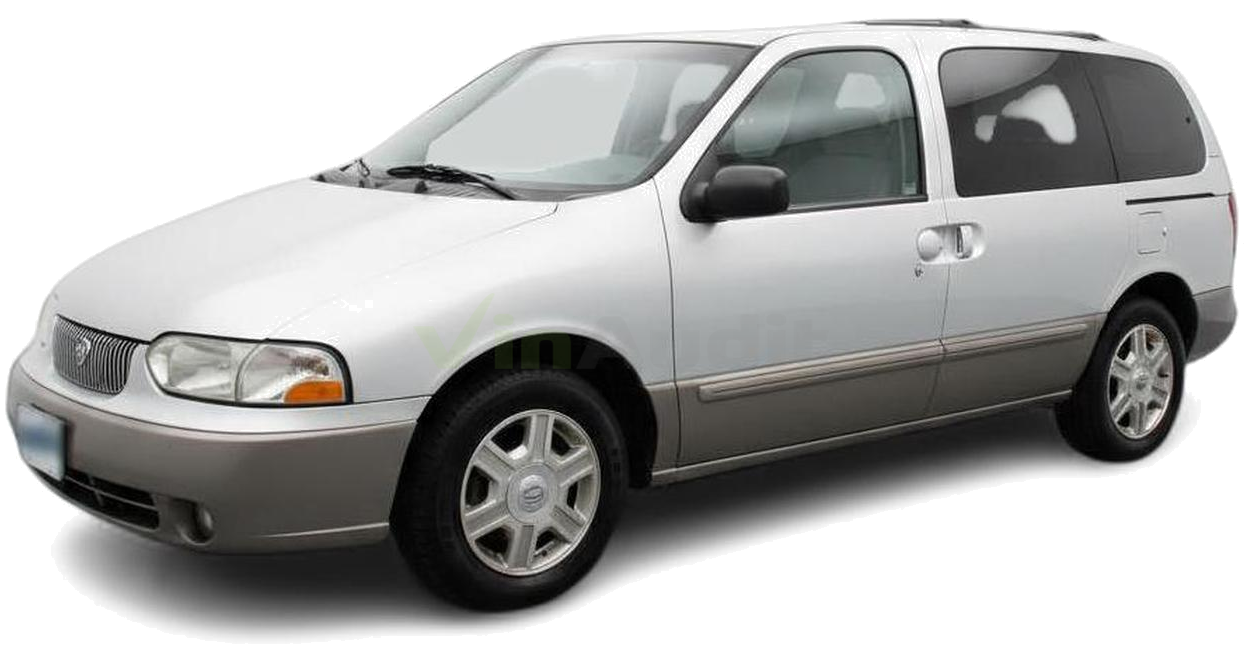
The Good
The 2001 Mercury Villager offered a comfortable, quiet ride and car-like handling, appealing to those seeking ease of driving. Its versatile interior, including a unique sliding third-row seat, provided practical flexibility for both passengers and cargo. With a reliable V6 engine, it delivered adequate performance and decent fuel efficiency for a minivan, making it a valuable and sensible choice for families.
The Bad
Owners of the 2001 Mercury Villager should watch out for potential automatic transmission issues, including shuddering or premature failure. Common problems also include rust, especially on rear quarter panels, and failures of the HVAC blend door actuator. Electrical gremlins and issues with the power sliding door mechanism can also arise as the vehicle ages.
2001 Mercury Villager: Quick Overview
The 2001 Mercury Villager offered a straightforward powertrain and features designed for family utility. Here are its key specifications and trim details:
- Engine Option: The Villager was exclusively powered by a 3.3-liter SOHC V6 engine, shared with its Nissan Quest twin.
- Horsepower: This V6 engine produced a respectable 170 horsepower at 4,800 rpm.
- Torque: It delivered 200 lb-ft of torque at 2,800 rpm, providing adequate thrust for daily driving and highway merging.
- Fuel Economy: EPA estimated fuel economy figures were around 17-18 mpg in the city and 23-24 mpg on the highway, which was competitive for its class at the time.
- 0-60 MPH: Acceleration from 0 to 60 mph typically ranged from 10 to 11 seconds, making it a capable, though not sporty, performer.
- Towing Capacity: When properly equipped with a towing package, the 2001 Villager could tow up to 3,500 pounds, suitable for small trailers or recreational vehicles.
Trim-Level Features:
- Sport (Base): This entry-level trim included essential features such as power windows and door locks, air conditioning, an AM/FM stereo, and cloth upholstery. Manual sliding side doors were standard.
- Estate: Stepping up to the Estate trim added more comfort and convenience, typically featuring alloy wheels, cruise control, rear air conditioning, an eight-way power driver's seat, and an upgraded audio system. A power sliding passenger side door was often standard or a popular option.
- Luxury: As the top-tier trim, the Luxury model boasted premium amenities including leather seating surfaces, automatic climate control for front and rear, dual power sliding doors, a premium sound system usually with a CD player, fog lights, and interior woodgrain accents. A power front passenger seat was also common.
2001 Mercury Villager Specifications
Vehicle Information
| Year | 2001 |
| Make | Mercury |
| Model | Villager |
| Trim | - |
| Style | Sport Minivan FWD 4AT 3.3L V6 |
| Type | Minivan |
| Category | passenger |
Manufacturing Details
| Made In | United States |
| Manufacturing City | DETROIT |
Dimensions
| Doors | 4-Door |
| Curb Weight | 4000 pounds |
| Gross Vehicle Weight Rating | - |
| Overall Height | 68 inches |
| Overall Length | 192.5 inches |
| Overall Width | 72 inches |
| Wheelbase Length | 113.8 inches |
| Standard Seating | 7 |
Engine & Performance
| Engine | 3.3L V6 |
| Engine Size | 3.3L |
| Engine Cylinders | 6 |
| Transmission | 4-Speed Automatic |
| Transmission Type | Automatic |
| Transmission Speeds | 4-Speed |
| Drivetrain | Front-Wheel Drive |
Additional Features
| Anti-Brake System | 4-Wheel ABS |
| Steering Type | Rack & Pinion |
Pricing
| Manufacturer Suggested Retail Price (MSRP) | $26,995 |
| Invoice Price | $24,500 |
| Delivery Charges | $800 |
Vehicle History Report
Specifications
History
Events
History Check
Check
Check
Check
Check
Listings
Recalls
Check
Analysis
What Problems Does the 2001 Mercury Villager Have?
Common Issues:
- Automatic Transmission Problems: Perhaps the most significant and widely reported issue across the second generation Villager (1999-2002) is with the 4-speed automatic transmission. Owners frequently experienced shuddering, harsh shifting, or complete transmission failure. This often occurred between 80,000 and 120,000 miles and could be an expensive repair or replacement.
- HVAC System Malfunctions: Failures of the blend door actuator are common, leading to an inability to control the air temperature or direct airflow properly. Evaporator leaks in the air conditioning system were also reported, resulting in a loss of cooling.
- Rust and Corrosion: The Villager is prone to significant rust, particularly in northern climates. Areas often affected include the rear quarter panels, rocker panels, and around the wheel wells, which can compromise structural integrity and appearance over time.
- Power Sliding Door Issues: The power sliding door mechanisms, especially on higher trim levels, are known to fail. This can involve worn cables, motor burnout, or sensor issues, making the convenient feature inoperable or unreliable.
- Electrical Gremlins: While not catastrophic, owners occasionally reported minor electrical issues such as failing power window motors, intermittent dashboard lights, or sensor malfunctions that could trigger warning lights.
- Suspension Component Wear: As with many vehicles of its age, wear in suspension components like control arm bushings and tie rod ends can lead to clunking noises, poor handling, and premature tire wear.
Recalls and Long-Term Concerns:
For the 2001 Mercury Villager specifically, there weren't widespread, highly publicized safety recalls beyond the general Takata airbag recall that affected many models across various manufacturers. Most long-term reliability concerns revolve around the aforementioned transmission issues and the general aging of components prone to rust and wear. A well-maintained Villager can certainly last, but these common issues indicate that thorough pre-purchase inspections and a budget for potential repairs are wise considerations.
How long will the 2001 Mercury Villager last?
However, long-term durability is significantly impacted by the vehicle's known weaknesses. The automatic transmission is the primary Achilles' heel; without preventative maintenance like regular fluid changes, its lifespan can be cut short, often failing between 80,000 and 120,000 miles. Rust, especially on the rear quarter panels and rocker panels, also becomes a major issue over time, impacting both aesthetics and structural integrity. Other components like power sliding door mechanisms and HVAC blend door actuators tend to fail with age, requiring attention for continued comfort and convenience. Consistent maintenance is paramount for extending its useful years of service.
What Technology & Safety Features are Included?
Built-in Tech & Entertainment:
The standard entertainment system typically featured an AM/FM stereo, often with a cassette player in lower trims, while higher trims like the Estate and Luxury usually included a CD player. Rear audio controls were an available option, allowing passengers in the back to manage their listening experience. For long trips, an optional rear-seat entertainment system, which often comprised a VCR or early DVD player with an overhead screen, was a popular choice to keep children occupied. The dashboard layout was functional and straightforward, prioritizing ease of use over complex digital displays.
Driver-Assistance & Safety Features:
Driver-assistance features were quite basic. Cruise control was standard on higher trim levels but not universally available. There were no advanced systems like blind-spot monitoring, lane-keeping assist, or automatic emergency braking.
In terms of safety, the 2001 Villager came standard with dual front airbags for the driver and front passenger. An Anti-lock Braking System (ABS) was an optional feature on base models and typically standard on higher trims, significantly improving braking performance in emergency situations. Integrated child safety seats in the second row were a clever optional feature, offering convenience for families. However, side airbags, electronic stability control, and traction control were not available, reflecting the safety standards and technologies of the early 2000s.
Crash-Test Ratings:
According to the National Highway Traffic Safety Administration (NHTSA) crash tests, the 2001 Mercury Villager received the following ratings:
- Frontal Impact (Driver): 4 out of 5 stars
- Frontal Impact (Passenger): 4 out of 5 stars
- Side Impact (Driver): 3 out of 5 stars (due to lack of side airbags)
- Side Impact (Rear Passenger): 3 out of 5 stars (due to lack of side airbags)
What Colors Options are Available?
2001 Mercury Villager Prices and Market Value
Today, the 2001 Mercury Villager has undergone significant depreciation, as is typical for most minivans over two decades old. Current used market prices are very low, typically ranging from a few hundred dollars for examples needing significant work to about $2,000 to $4,000 for well-maintained vehicles in excellent condition with lower mileage.
Factors heavily affecting its current resale value include overall condition, particularly the presence and extent of rust, the operational status of the automatic transmission, and the functionality of common failure points like the power sliding doors and HVAC system. Low mileage with a complete maintenance history, especially transmission service records, can command a slightly higher price. However, these vehicles are now primarily bought as cheap utility vehicles or for parts, rather than for long-term investment.
2001 Mercury Villager Cost of Ownership
Routine maintenance, such as oil changes and brake service, is relatively inexpensive, thanks to readily available parts and common mechanicals. However, repair costs can quickly escalate. The notorious automatic transmission failure is a major potential expense. Other issues like rust repair, power sliding door fixes, and HVAC system overhauls can also be costly. If major repairs are needed and professionally performed, the Villager can become expensive to own. Conversely, for mechanically inclined owners who can perform DIY repairs or find a unit with documented major component replacements, it can be a very economical acquisition.
2001 Mercury Villager Fuel Efficiency
2001 Mercury Villager Recalls & Defects
2001 Mercury Villager Warranty
Basic
Powertrain
Rust
2001 Mercury Villager Insurance
reasonable repair costs.
How Does the 2001 Mercury Villager Compare to Other Minivan?
Performance: The Villager's 170 hp V6 offered adequate power for daily driving and a comfortable, car-like ride. It generally felt nimble for its size. However, rivals like the Honda Odyssey and Toyota Sienna often boasted slightly more powerful and refined V6 engines, delivering a smoother and sometimes more responsive driving experience. Domestic counterparts such as the Dodge Grand Caravan/Chrysler Town & Country and Chevrolet Venture provided comparable, though often less refined, performance.
Features: The Villager stood out with its unique sliding rear bench seat, offering versatile cargo and passenger configurations. It provided good standard features for its time, including available dual power sliding doors and a rear entertainment system. However, Honda and Toyota often led in innovative interior design and perceived build quality. Chrysler minivans were known for pioneering many minivan features, offering strong value with numerous options.
Reliability: This is where the Villager faces its biggest challenge. While its Nissan-sourced V6 engine is generally robust, the automatic transmission is a notorious weak point, prone to premature failure, which significantly impacts its long-term reliability. Rust is also a major concern. In contrast, the Toyota Sienna of this era is widely regarded as the reliability leader, often lasting well beyond 200,000 miles with minimal major issues. The Honda Odyssey, while generally reliable, also had some transmission issues in specific model years, though often less severe than the Villager's. Domestic minivans from Chrysler and GM often had their own set of electrical or mechanical gremlins, making the Villager's transmission issue particularly standout.
Price: When new, the Villager was competitively priced against its domestic rivals and a more affordable alternative to the sometimes pricier Japanese offerings. In the current used market, due to its age and known reliability issues, the Villager is typically among the cheapest minivans available, often fetching significantly less than comparable Siennas or Odysseys.
Alternatives: For significantly better long-term reliability and fewer headaches, a 2001 Toyota Sienna is an excellent alternative, though it will likely command a higher used price. A Honda Odyssey from the same year is also a strong contender, provided its transmission has been well-maintained or replaced. If budget is the primary concern and you're prepared for potential repairs, a Dodge Grand Caravan or Chrysler Town & Country from the same era might offer similar utility at a low purchase price, albeit with their own set of reliability caveats.
Final Verdict: Is the 2001 Mercury Villager a Good Minivan?
Is it worth buying? Yes, but only under very specific conditions. Given its age and known issues, particularly the transmission and rust, it is paramount to get a thorough pre-purchase inspection by a trusted mechanic. It's worth buying if the purchase price is extremely low (e.g., under $2,000-$3,000 for a running example) and if you find a unit with a well-documented maintenance history, especially regarding transmission service. Mechanically inclined individuals who can perform their own repairs will find it more economical. The Estate or Luxury trims offer more comfort and features, but also more potential points of failure like power sliding doors. For pure utility and simplicity, a well-preserved Sport model might be less troublesome. Avoid any Villager with noticeable transmission shuddering or significant rust unless you are prepared for immediate, costly repairs.

Eugene S
Eugene is an automotive enthusiast with over 15 years of experience in the used car market. As a writer at VINCheck.info, he brings deep industry insight and a passion for cars, helping readers make smart, informed decisions. Eugene has written hundreds of used car reviews and is known for breaking down complex automotive topics into clear, actionable advice. Over the years, he has driven and worked on a wide range of vehicles—starting with tuning street cars in his early days and eventually focusing on performance upgrades and reliability improvements. Today, he specializes in evaluating used vehicles through the lens of real-world ownership and enthusiast needs. A longtime fan of Porsche, Eugene especially appreciates vehicles that blend durability with driving enjoyment.