
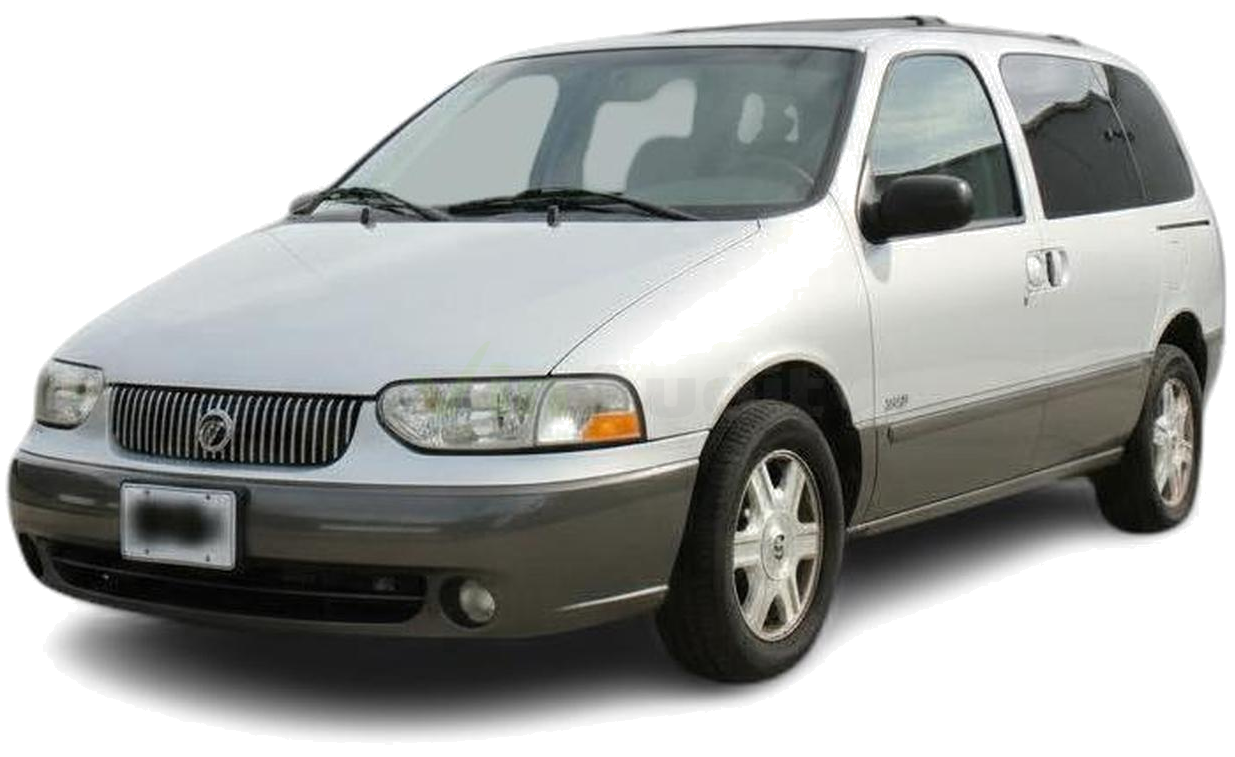
The Good
The 2002 Mercury Villager offered a practical and spacious interior with convenient dual sliding doors, appealing to families needing everyday utility. Its comfortable ride and adequate V6 performance made long trips pleasant. Emotionally, it provided a sense of security and ease for managing family logistics, while practically, it offered good value on the used market as an affordable workhorse.
The Bad
Known weaknesses for the 2002 Mercury Villager include prevalent transmission issues, particularly slipping or failure of the automatic gearbox. Owners also report significant concerns with rust, especially in salt-belt regions, and various electrical gremlins affecting power accessories and dashboard components. Interior materials can also show considerable wear over time.
2002 Mercury Villager: Quick Overview
- Engine: The 2002 Mercury Villager was exclusively powered by a 3.3-liter SOHC V6 engine. This robust Nissan-sourced engine was paired with a 4-speed automatic transmission.
- Horsepower: It produced 170 horsepower at 4800 rpm, providing sufficient power for daily commuting and highway cruising.
- Torque: The engine delivered 200 lb-ft of torque at 2800 rpm, contributing to decent low-end acceleration.
- Fuel Economy: EPA estimates for the 2002 Villager were approximately 17-18 MPG in the city and 23-24 MPG on the highway, typical for minivans of its era.
- 0-60 MPH Time: The Villager typically achieved a 0-60 mph acceleration in the 9.5 to 10-second range, making it competitive with other minivans of its time.
- Towing Capacity: When properly equipped with the optional towing package, the 2002 Mercury Villager had a towing capacity of up to 3,500 pounds, suitable for small trailers or recreational vehicles.
- Trim-Level Features:
- Villager (Base): Standard features included air conditioning, power windows, power door locks, power mirrors, an AM/FM/CD stereo, cruise control, variable-assist power steering, and dual front airbags. It also featured the convenient dual sliding doors and a spacious interior with the "Lift-and-Stow" third-row bench seat.
- Villager Estate: Building upon the base model, the Estate trim added more premium features. These often included leather-trimmed seating surfaces, a power driver's seat, automatic headlights, remote keyless entry, alloy wheels, roof rack, fog lights, and heated side mirrors. Options for the Estate included dual-zone manual climate control with rear air conditioning, and integrated child safety seats in the second row, enhancing its family-friendly appeal and comfort.
2002 Mercury Villager Specifications
Vehicle Information
| Year | 2002 |
| Make | Mercury |
| Model | Villager |
| Trim | - |
| Style | - |
| Type | Sport Utility Vehicle Van |
| Category | Cargo Van |
Manufacturing Details
| Made In | United States |
| Manufacturing City | LOUISVILLE |
Dimensions
| Doors | 4-Door |
| Curb Weight | - |
| Gross Vehicle Weight Rating | - |
| Overall Height | - |
| Overall Length | - |
| Overall Width | - |
| Wheelbase Length | - |
| Standard Seating | - |
Engine & Performance
| Engine | 3.3L V6 |
| Engine Size | 3.3L |
| Engine Cylinders | 6 |
| Transmission | 4-Speed Automatic |
| Transmission Type | Automatic |
| Transmission Speeds | 4-Speed |
| Drivetrain | Front-Wheel Drive |
Additional Features
| Anti-Brake System | - |
| Steering Type | - |
Pricing
| Manufacturer Suggested Retail Price (MSRP) | - |
| Invoice Price | - |
| Delivery Charges | - |
Vehicle History Report
Specifications
History
Events
History Check
Check
Check
Check
Check
Listings
Recalls
Check
Analysis
What Problems Does the 2002 Mercury Villager Have?
Another major concern is rust. The Villager's body, especially in regions exposed to road salt, is highly susceptible to rust around the wheel wells, rocker panels, subframe, and tailgate. This can lead to structural integrity issues and significant cosmetic damage, often making older models visually unappealing and structurally compromised.
Electrical problems are also frequently cited. These can range from malfunctioning power windows, power door locks, and heated mirrors to issues with the instrument cluster or dashboard lighting. Mass Air Flow (MAF) sensors and crankshaft position sensors can fail, leading to rough idling, stalling, or poor engine performance. Oxygen sensor failures are also common, triggering check engine lights.
Other reported long-term reliability concerns include premature wear of suspension components like struts, shocks, ball joints, and control arm bushings, leading to clunking noises and degraded ride quality. Brake components, such as rotors and pads, may also show accelerated wear. Power steering pump failures and leaks are not uncommon.
While the 2002 model year didn't have widespread major safety recalls that define its reliability, some minor recalls existed for accessories or specific components like brake lamp switches. However, the transmission and rust issues are inherent design or aging characteristics rather than recall-addressed defects, making them critical watch points for prospective buyers of a used 2002 Villager.
How long will the 2002 Mercury Villager last?
The most significant long-term vulnerability is the automatic transmission, which often requires significant repair or replacement before reaching higher mileages. Electrical systems can also degrade, leading to numerous intermittent faults. Furthermore, rust becomes a critical structural and cosmetic issue in older Villagers, particularly in northern climates. While many parts are still available, the cumulative effect of these aging components can make maintenance increasingly costly, potentially exceeding the vehicle's diminishing value over time.
What Technology & Safety Features are Included?
For entertainment, the Villager typically came with an AM/FM radio, often with a cassette player, and a CD player was either standard on higher trims or an available option. Higher trims like the Estate might have offered rear audio controls for passenger convenience, but elaborate infotainment screens or navigation systems were not available.
Driver-assistance features were very limited, reflecting the technology of the early 2000s. There were no advanced systems like blind-spot monitoring, lane-keeping assist, or adaptive cruise control. The primary driver aid was a variable-assist power steering system, designed to make maneuvering easier at low speeds.
In terms of safety, the 2002 Villager included essential features: standard dual front airbags for the driver and front passenger, child safety locks on the rear doors, and the LATCH (Lower Anchors and Tethers for Children) system for securing child safety seats. Anti-lock brakes (ABS) were an optional feature, often standard on the Villager Estate trim, enhancing braking control in slippery conditions. A highly practical optional feature for families was the integrated child safety seats available in the second row.
Crash-test ratings from the National Highway Traffic Safety Administration (NHTSA) for the 2002 Villager showed a respectable performance for its class:
- Frontal Driver: 4 out of 5 stars
- Frontal Passenger: 4 out of 5 stars
- Side Impact Front Seat: 3 out of 5 stars
- Side Impact Rear Seat: 3 out of 5 stars
- Rollover: Not specifically rated for this model year, but minivans generally carry a moderate rollover risk.
What Colors Options are Available?
2002 Mercury Villager Prices and Market Value
Currently, in the used market (2024), prices for a 2002 Mercury Villager are very low, typically ranging from $1,500 to $4,000. These prices are heavily influenced by the vehicle's condition, mileage, and maintenance history, with pristine examples being rare and commanding slightly more. Factors severely affecting resale value include common mechanical issues like transmission failure, the pervasive problem of rust, and general wear and tear on interior components. Its age, outdated technology, and the availability of newer, safer, and more fuel-efficient alternatives also contribute to its minimal resale value. A non-running Villager is essentially worth scrap value.
2002 Mercury Villager Cost of Ownership
However, major repairs, especially for known issues like transmission failure or extensive rust remediation, can be very costly, often exceeding the vehicle's market value. Long-term ownership can be economical if you find a well-maintained example with minimal issues and are prepared for potential intermittent repairs. But, if a significant component fails, it can quickly become quite costly to own and maintain.
2002 Mercury Villager Fuel Efficiency
2002 Mercury Villager Safety Rating
NHTSA
2002 Mercury Villager Insurance
reasonable repair costs.
How Does the 2002 Mercury Villager Compare to Other Sport Utility Vehicle Van?
In terms of performance, the Villager's 170-hp V6 was adequate for daily driving, generally competitive with the Windstar and Chrysler minivans. However, it was notably less powerful than the more potent engines offered in the Honda Odyssey (240 hp) and Toyota Sienna (210 hp), which provided more confident acceleration and highway passing power.
Features-wise, the Villager offered practical amenities like dual sliding doors and the versatile "Lift-and-Stow" third-row seat. While functional, its interior design and available tech were more basic compared to the more refined interiors and often more advanced optional features (like DVD entertainment systems) found in the Odyssey and Sienna. Chrysler's minivans, while also having their own reliability issues, often excelled in seating flexibility (though Stow 'n Go came later).
Reliability is where the Villager often falls short compared to its top-tier Japanese rivals. While its Nissan-sourced engine is generally durable, the 4-speed automatic transmission is a notorious weak point, prone to premature failure. Rust is also a significant long-term concern. The Honda Odyssey from this era also experienced transmission issues, but generally, the Toyota Sienna is considered to be the most reliable option among all rivals. The Ford Windstar and Chrysler/Dodge minivans from 2002 shared similar reliability woes, particularly with transmissions and electrical systems, often making them comparable to the Villager in terms of potential repair costs.
Price on the used market heavily reflects these reliability perceptions. The Villager, Windstar, and Chrysler/Dodge minivans are typically the most affordable choices. The Honda Odyssey and especially the Toyota Sienna command higher prices due to their perceived, and often actual, superior reliability and longevity.
Recommended alternatives:
- Better Alternatives: For someone prioritizing long-term reliability and safety (even for a 2002 model), a well-inspected 2002-2003 Toyota Sienna is generally the superior choice. A Honda Odyssey of the same vintage, while potentially having transmission concerns, often offered more features and a more refined driving experience.
- Similar Alternatives: If budget is the absolute primary concern and you're prepared for potential repairs, a 2002 Ford Windstar or Dodge Grand Caravan would offer similar utility and price points, but also come with comparable risks regarding mechanical and electrical longevity.
Final Verdict: Is the 2002 Mercury Villager a Good Sport Utility Vehicle Van?
Is it worth buying? Only under very specific conditions. As a used vehicle, its worth hinges almost entirely on its current mechanical condition, particularly the transmission, and the absence of significant rust. It is definitely not recommended as a primary, long-term family vehicle without a thorough pre-purchase inspection by a trusted mechanic and a dedicated repair fund. Prioritize condition over specific trims like the Estate; a well-maintained base model is preferable to a problematic loaded one. Given its age and common issues, it's only truly "worth it" if acquired at a very low price (e.g., under $3,000) and with a clear understanding of its limitations and potential for future expenses.

Simon A
Simon is a contributor to VinCheck, where he provides articles and reviews on various automotive topics. His work focuses on delivering accurate and up-to-date information about used cars, helping readers make informed decisions.