
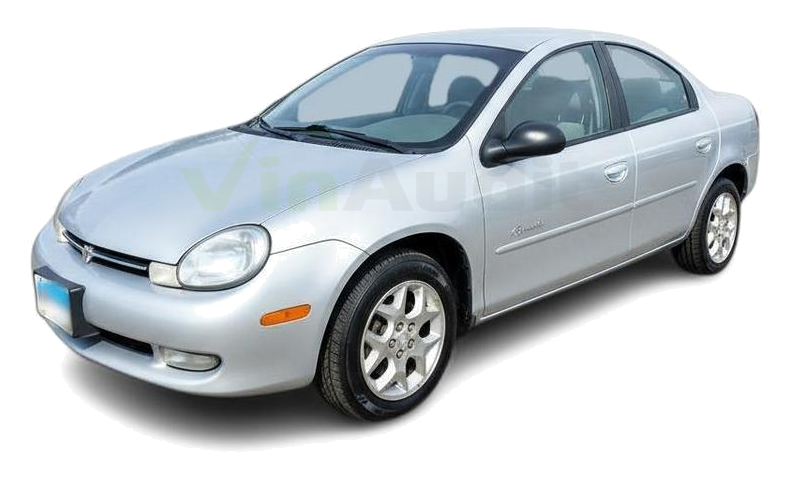
The 2000 Plymouth Neon was part of the second generation of this compact car, produced from 1994 to 2005. Available as a 2-door coupe or 4-door sedan, key trims included the base model, ES, and the sporty R/T. New pricing ranged from approximately $13,000 to $18,000. It stood out for its surprisingly agile handling and sporty appeal in a segment often dominated by more mundane offerings, making it a popular choice for budget-conscious, enthusiastic drivers.
The Good
The 2000 Neon offered zippy performance and engaging handling, appealing to driving enthusiasts. Its attractive, sporty design also garnered attention. For practical buyers, its affordability and good fuel efficiency made it a sensible choice, delivering solid value for money.
The Bad
Owners should be aware of potential issues with the automatic transmission, particularly in earlier models. Rust can also be a concern, especially in colder climates. Electrical gremlins, such as power window failures and dashboard issues, are also frequently reported.
2000 Plymouth Neon: Quick Overview
- Engine Options: The 2000 Plymouth Neon primarily featured two engine options.
- 2.0L Inline-4 (SOHC): This was the standard engine for most trims, offering a balance of economy and performance.
Horsepower: Approximately 132 hp
Fuel Economy: Estimated around 24 MPG city / 32 MPG highway (manual transmission) and slightly less for automatic.
0-60 Times: Roughly 9-10 seconds. - 2.0L Inline-4 (DOHC - R/T trim): The high-performance R/T model came with a more potent DOHC version of the 2.0L engine.
Horsepower: Approximately 150 hp
Fuel Economy: Slightly reduced compared to the SOHC, likely around 22 MPG city / 30 MPG highway.
0-60 Times: Around 8-9 seconds.
- 2.0L Inline-4 (SOHC): This was the standard engine for most trims, offering a balance of economy and performance.
- Towing Capacity: The Plymouth Neon was not designed or equipped for towing. Towing capacity is effectively 0 lbs.
- Trim-Level Features:
- Base Model: Typically included standard features like power steering, tilt steering wheel, AM/FM stereo, and 14-inch wheels. Air conditioning was often optional.
- ES (Executive Sedan): Often added features like air conditioning, power windows, power door locks, cruise control, and a better stereo system. May have had alloy wheels.
- R/T (Road/Track): This performance-oriented trim featured the DOHC engine, sport-tuned suspension, larger wheels (often 15-inch alloy), unique body styling, performance seats, and upgraded brakes. It was designed for a more engaging driving experience.
- Base Model: Typically included standard features like power steering, tilt steering wheel, AM/FM stereo, and 14-inch wheels. Air conditioning was often optional.
2000 Plymouth Neon Specifications
Vehicle Information
| Year | 2000 |
| Make | Plymouth |
| Model | Neon |
| Trim | - |
| Style | Sedan |
| Type | Sedan |
| Category | Compact Car |
Manufacturing Details
| Made In | United States |
| Manufacturing City | BELVIDERE |
Dimensions
| Doors | 4-Door |
| Curb Weight | 2617 pounds |
| Gross Vehicle Weight Rating | - |
| Overall Height | 56.00 inches |
| Overall Length | 174.40 inches |
| Overall Width | 67.40 inches |
| Wheelbase Length | 105.00 inches |
| Standard Seating | 5 |
Engine & Performance
| Engine | 2L I4 |
| Engine Size | 2L |
| Engine Cylinders | 4 |
| Transmission | Automatic |
| Transmission Type | Automatic |
| Transmission Speeds | - |
| Drivetrain | Front-Wheel Drive |
Additional Features
| Anti-Brake System | Non-ABS 4-Wheel ABS |
| Steering Type | Rack & Pinion |
Pricing
| Manufacturer Suggested Retail Price (MSRP) | $12,640 |
| Invoice Price | $11,661 |
| Delivery Charges | - |
Vehicle History Report
Vehicle
Specifications
Specifications
Ownership
History
History
All History
Events
Events
NMVTIS Title
History Check
History Check
Salvage/Rebuilt
Check
Check
Accident
Check
Check
Theft
Check
Check
Open Lien
Check
Check
Past Sale
Listings
Listings
Safety
Recalls
Recalls
Odometer
Check
Check
Market Price
Analysis
Analysis
What Problems Does the 2000 Plymouth Neon Have?
The 2000 Plymouth Neon, while often praised for its spirited driving dynamics, is known to have several recurring issues that can impact long-term reliability. One of the most frequently cited problems is with the automatic transmission. Many owners report premature failure, especially in vehicles with higher mileage. This can manifest as slipping gears, delayed engagement, or complete transmission failure, often a costly repair.
Another common concern, particularly for Neons driven in areas with harsh winters or heavy road salt usage, is rust. Body panels, especially around the wheel wells, rocker panels, and door bottoms, can be susceptible to corrosion. This can compromise structural integrity and lead to expensive bodywork if not addressed.
Electrical gremlins are also a recurring theme. Owners frequently report issues with the power windows not working, faulty door locks, and problems with the instrument cluster or dashboard lights failing. Some have experienced issues with the cooling fan motors burning out. The radiator is also noted as a component that may need replacement sooner than expected.
While not specific to the 2000 model year, the 2.0L engines, especially the SOHC variant, can sometimes suffer from oil leaks, particularly from the valve cover gasket or oil pan. Some owners have also reported issues with the ignition system, such as coil pack failures.
Recalls for the 2000 Plymouth Neon were not extensive but did exist. Some recalls involved potential issues with the airbag system, specifically the passenger airbag inflator. It is crucial for any potential buyer to verify if any outstanding recalls have been addressed.
Overall, while the Neon can be a fun and economical car, its long-term reliability is often hampered by these common issues, requiring diligent maintenance and potential repairs to keep it in good running order.
Another common concern, particularly for Neons driven in areas with harsh winters or heavy road salt usage, is rust. Body panels, especially around the wheel wells, rocker panels, and door bottoms, can be susceptible to corrosion. This can compromise structural integrity and lead to expensive bodywork if not addressed.
Electrical gremlins are also a recurring theme. Owners frequently report issues with the power windows not working, faulty door locks, and problems with the instrument cluster or dashboard lights failing. Some have experienced issues with the cooling fan motors burning out. The radiator is also noted as a component that may need replacement sooner than expected.
While not specific to the 2000 model year, the 2.0L engines, especially the SOHC variant, can sometimes suffer from oil leaks, particularly from the valve cover gasket or oil pan. Some owners have also reported issues with the ignition system, such as coil pack failures.
Recalls for the 2000 Plymouth Neon were not extensive but did exist. Some recalls involved potential issues with the airbag system, specifically the passenger airbag inflator. It is crucial for any potential buyer to verify if any outstanding recalls have been addressed.
Overall, while the Neon can be a fun and economical car, its long-term reliability is often hampered by these common issues, requiring diligent maintenance and potential repairs to keep it in good running order.
How long will the 2000 Plymouth Neon last?
Based on owner data and anecdotal evidence, the 2000 Plymouth Neon, with consistent and diligent maintenance, can achieve between 150,000 to 200,000 miles. However, this range is significantly influenced by the aforementioned weaknesses. Vehicles that have had their automatic transmissions regularly serviced or replaced, and have had rust mitigation addressed, are more likely to reach the higher end of this mileage. Without proper care, especially concerning the transmission and body rust, longevity can be significantly reduced, potentially seeing issues arise well before 100,000 miles. The long-term durability is thus a mixed bag, heavily dependent on the owner's commitment to maintenance and proactive repairs.
What Technology & Safety Features are Included?
The 2000 Plymouth Neon offered a modest suite of technology and safety features, typical for its era and price point.
Entertainment: Standard entertainment systems generally included an AM/FM radio with a cassette player. Higher trims, like the ES and R/T, often upgraded to a more robust AM/FM stereo with a CD player, offering better sound quality. Auxiliary inputs were not standard, relying on the CD player or aftermarket solutions for digital music.
Tech Features: Convenience features were more prominent than advanced tech. Power windows, power door locks, and remote keyless entry were available on higher trims or as optional packages. A tilt steering wheel was standard across most models for driver comfort. Cruise control was also an option on some trims.
Driver-Assistance Features: Advanced driver-assistance systems as we know them today were virtually non-existent in the 2000 Neon. Basic power steering was standard, providing a lighter feel for easier maneuvering. Anti-lock Braking System (ABS) was often an optional feature, particularly on higher trims, enhancing braking control in emergency situations.
Safety Features: Standard safety equipment included front airbags for the driver and front passenger. Seatbelt pretensioners were also standard to help restrain occupants during a collision. Side airbags were not offered. Child seat anchors (LATCH system) were becoming more common but might not have been standard on all 2000 models.
Crash-Test Ratings: According to the National Highway Traffic Safety Administration (NHTSA), the 2000 Plymouth Neon received 4 out of 5 stars for frontal driver and passenger crash protection. For side-impact protection, it received 4 out of 5 stars for the front passenger and 3 out of 5 stars for the rear passenger.
Entertainment: Standard entertainment systems generally included an AM/FM radio with a cassette player. Higher trims, like the ES and R/T, often upgraded to a more robust AM/FM stereo with a CD player, offering better sound quality. Auxiliary inputs were not standard, relying on the CD player or aftermarket solutions for digital music.
Tech Features: Convenience features were more prominent than advanced tech. Power windows, power door locks, and remote keyless entry were available on higher trims or as optional packages. A tilt steering wheel was standard across most models for driver comfort. Cruise control was also an option on some trims.
Driver-Assistance Features: Advanced driver-assistance systems as we know them today were virtually non-existent in the 2000 Neon. Basic power steering was standard, providing a lighter feel for easier maneuvering. Anti-lock Braking System (ABS) was often an optional feature, particularly on higher trims, enhancing braking control in emergency situations.
Safety Features: Standard safety equipment included front airbags for the driver and front passenger. Seatbelt pretensioners were also standard to help restrain occupants during a collision. Side airbags were not offered. Child seat anchors (LATCH system) were becoming more common but might not have been standard on all 2000 models.
Crash-Test Ratings: According to the National Highway Traffic Safety Administration (NHTSA), the 2000 Plymouth Neon received 4 out of 5 stars for frontal driver and passenger crash protection. For side-impact protection, it received 4 out of 5 stars for the front passenger and 3 out of 5 stars for the rear passenger.
What Colors Options are Available?
2000 Plymouth Neon Prices and Market Value
When new, the 2000 Plymouth Neon typically ranged from approximately $13,000 for a base coupe to around $18,000 for a fully equipped R/T model. As with most entry-level compact cars, the Neon experienced significant depreciation in its early years. Currently, used market prices for a 2000 Plymouth Neon vary widely based on condition, mileage, and trim. Expect prices to range from under $1,000 for vehicles needing substantial repairs or with very high mileage, to upwards of $3,000-$5,000 for well-maintained examples, particularly the R/T trim with lower mileage. Factors affecting resale value include the prevalence of rust, transmission health, and overall maintenance history. Clean examples with desirable features and fewer known issues will command higher prices.
2000 Plymouth Neon Cost of Ownership
The 2000 Plymouth Neon is generally considered an economical vehicle to own. Insurance costs are typically low due to its age, market segment, and safety ratings. Fuel costs are also manageable, with the standard engine achieving good MPG. Maintenance is relatively straightforward and parts are generally affordable. However, potential owners must budget for common repairs, particularly concerning the automatic transmission and potential rust issues, which can significantly increase repair expenses. Overall, while routine ownership is economical, unexpected major repairs can make it costly.
2000 Plymouth Neon Fuel Efficiency
Fuel Type
Gasoline
Fuel Capacity
27 gallons
City Mileage
24 miles/gallon
Highway Mileage
31 miles/gallon
2000 Plymouth Neon Safety Rating
NHTSA
IIHS
2000 Plymouth Neon Warranty
Basic
Original warranty
36 months / 36,000 miles
Estimated remaining
Expired
Powertrain
Original warranty
36 months / 36,000 miles
Estimated remaining
Expired
Rust
Original warranty
60 months / 100,000 miles
Estimated remaining
Expired
2000 Plymouth Neon Insurance
Insurance for a 2000 Plymouth Neon is moderately priced, reflecting its status as a Sedan with strong safety ratings and
reasonable repair costs.
How Does the 2000 Plymouth Neon Compare to Other Sedan?
The 2000 Plymouth Neon competed in the highly contested compact car segment against rivals like the Honda Civic, Toyota Corolla, Ford Focus, and Chevrolet Cavalier.
Performance: The Neon, especially the R/T trim, often offered more engaging handling and a sportier feel than many of its competitors. Its European-designed chassis provided nimble dynamics. Competitors like the Civic and Corolla focused more on refined ride quality and overall balance, while the Cavalier was generally considered less refined.
Features: In terms of features, the Neon was comparable to its peers for the era. Higher trims offered power accessories and CD players, but it lacked the advanced technology that some competitors might have offered even as options.
Reliability: This is where the Neon often fell short compared to segment leaders. While the Honda Civic and Toyota Corolla built reputations for bulletproof reliability and durability, the Neon was known for more frequent, albeit often less severe, issues like transmission problems and electrical gremlins. The Ford Focus offered a decent balance but also had its share of reported issues. The Chevrolet Cavalier was generally perceived as a less sophisticated and sometimes less reliable option.
Price: The Neon was typically priced competitively, often undercutting some of its Japanese rivals when new, and remains very affordable on the used market.
Alternatives: For buyers prioritizing long-term reliability above all else, the Honda Civic and Toyota Corolla remain superior choices. If a more engaging driving experience is desired at a similar price point, and one is willing to accept potentially higher maintenance, the Neon can still be a fun option. A used Mazda Protege could also be considered a similar alternative, offering a good blend of sporty handling and reasonable reliability for the period.
Performance: The Neon, especially the R/T trim, often offered more engaging handling and a sportier feel than many of its competitors. Its European-designed chassis provided nimble dynamics. Competitors like the Civic and Corolla focused more on refined ride quality and overall balance, while the Cavalier was generally considered less refined.
Features: In terms of features, the Neon was comparable to its peers for the era. Higher trims offered power accessories and CD players, but it lacked the advanced technology that some competitors might have offered even as options.
Reliability: This is where the Neon often fell short compared to segment leaders. While the Honda Civic and Toyota Corolla built reputations for bulletproof reliability and durability, the Neon was known for more frequent, albeit often less severe, issues like transmission problems and electrical gremlins. The Ford Focus offered a decent balance but also had its share of reported issues. The Chevrolet Cavalier was generally perceived as a less sophisticated and sometimes less reliable option.
Price: The Neon was typically priced competitively, often undercutting some of its Japanese rivals when new, and remains very affordable on the used market.
Alternatives: For buyers prioritizing long-term reliability above all else, the Honda Civic and Toyota Corolla remain superior choices. If a more engaging driving experience is desired at a similar price point, and one is willing to accept potentially higher maintenance, the Neon can still be a fun option. A used Mazda Protege could also be considered a similar alternative, offering a good blend of sporty handling and reasonable reliability for the period.
Final Verdict: Is the 2000 Plymouth Neon a Good Sedan?

The 2000 Plymouth Neon is ideally suited for budget-conscious buyers seeking an engaging driving experience in a compact car, who are also mechanically inclined or have access to affordable repairs. It is generally worth buying on the used market if purchased at a low price point, especially if you prioritize a fun drive over ultimate reliability. Buyers should focus on finding well-maintained examples, preferably with a manual transmission to avoid common automatic gearbox issues. The R/T trim offers the most performance appeal. It is not recommended for those who expect trouble-free, long-term transportation without potential maintenance surprises.