
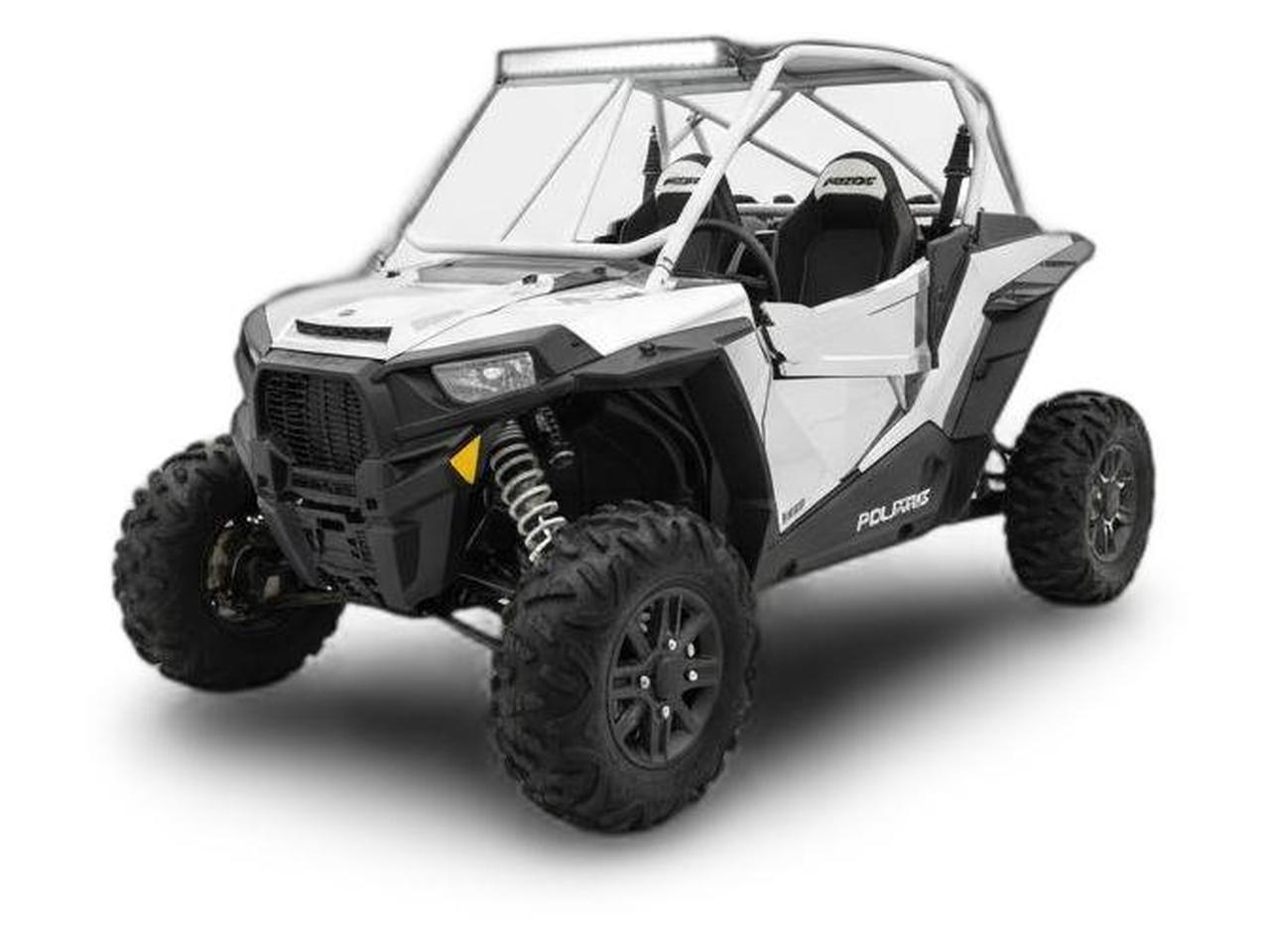
The Good
The 2016 RZR XP Turbo EPS boasts exhilarating turbocharged power for thrilling rides (emotional appeal), while its robust suspension and comfortable cabin offer a smooth, capable experience (practical appeal). Its aggressive design turns heads, and the EPS ensures precise handling.
The Bad
Owners should be aware of potential overheating issues in demanding conditions and the initial high cost of purchase. Some also report a relatively firm suspension at lower speeds and a thirst for premium fuel, impacting running costs.
2016 Polaris RZR XP Turbo EPS: Quick Overview
- Engine Options: The 2016 Polaris RZR XP Turbo EPS features a single, dominant engine option: a 925cc ProStar twin-cylinder, turbocharged, DOHC, 4-valve engine.
- Horsepower: This powerhouse delivers an impressive 144 horsepower, setting a new benchmark for UTVs at its release.
- Fuel Economy: Official EPA fuel economy figures are not readily available for UTVs like this, as they are not street-legal vehicles. However, real-world estimates suggest a consumption of roughly 10-15 miles per gallon, depending heavily on driving style and terrain. It requires premium unleaded fuel.
- 0-60 Times: While precise 0-60 mph times can vary based on rider weight, terrain, and specific conditions, the RZR XP Turbo EPS is renowned for its rapid acceleration, often achieving 0-60 mph in under 5 seconds, making it one of the fastest UTVs on the market.
- Towing Capacity: The 2016 Polaris RZR XP Turbo EPS is not primarily designed for towing heavy loads. Its towing capacity is typically rated at 1,500 lbs, suitable for small trailers or utility tasks rather than significant hauling.
- Trim-Level Features (RZR XP Turbo EPS):
- Engine: 925cc ProStar Turbo H.O.
- Drivetrain: On-Demand All-Wheel Drive (AWD) with 2WD/4WD modes.
- Suspension: Walker Evans® 2.5 inch front and 3.0 inch rear needle-bearing bypass shocks with adjustable spring preload.
- Ground Clearance: 13.5 inches.
- Wheelbase: 81 inches.
- Steering: Electronic Power Steering (EPS) for enhanced control.
- Seating: Two-seater configuration.
- Lighting: LED accent lighting.
- Wheels/Tires: 14-inch aluminum wheels with 29-inch 8-ply GBC Dirt Commander tires.
- Cab Features: Lock & Ride® accessory system, digital instrumentation, cup holders, and storage.
2016 Polaris RZR XP Turbo EPS Specifications
Vehicle Information
| Year | 2016 |
| Make | Polaris |
| Model | RZR XP Turbo EPS |
| Trim | - |
| Style | - |
| Type | Recreational Vehicle |
| Category | Motorcycle |
Manufacturing Details
| Made In | Mexico |
| Manufacturing City | - |
Dimensions
| Doors | - |
| Curb Weight | - |
| Gross Vehicle Weight Rating | - |
| Overall Height | - |
| Overall Length | - |
| Overall Width | - |
| Wheelbase Length | - |
| Standard Seating | - |
Engine & Performance
| Engine | 925cc 2cyl |
| Engine Size | 925L |
| Engine Cylinders | 2 |
| Transmission | - |
| Transmission Type | - |
| Transmission Speeds | - |
| Drivetrain | - |
Additional Features
| Anti-Brake System | - |
| Steering Type | - |
Pricing
| Manufacturer Suggested Retail Price (MSRP) | - |
| Invoice Price | - |
| Delivery Charges | - |
Vehicle History Report
Specifications
History
Events
History Check
Check
Check
Check
Check
Listings
Recalls
Check
Analysis
What Problems Does the 2016 Polaris RZR XP Turbo EPS Have?
Another area of concern, particularly in early models and some early 2016 units, was related to the drive clutch. Some users reported premature wear or failure of clutch components, leading to a loss of power or erratic shifting. This could be linked to the extreme torque and power output of the turbocharged engine demanding robust clutch performance.
Electrical system issues have also been occasionally reported, including problems with the charging system or sensor malfunctions, which can lead to the 'check engine' light illuminating or other performance inconsistencies. The complex electronic systems, while offering advanced features, can sometimes be a source of gremlins.
Regarding specific recalls, Polaris has issued recalls for various RZR models over the years for safety-related issues. For the 2016 RZR XP Turbo, it is crucial to check the Polaris website or the CPSC database for any specific recalls that may have been issued concerning braking systems, fuel lines, or other critical components. While not a specific model year issue for 2016, broader RZR recalls have addressed fire risks and brake performance in other model years, so vigilance is key.
Long-term reliability can be a mixed bag. Those who meticulously maintain their RZR XP Turbo EPS, adhere to recommended service intervals, and avoid excessive strain on the drivetrain tend to have fewer issues. However, the high-performance nature of this machine means it is often pushed to its limits, which can accelerate wear and tear on components compared to less powerful UTVs. Regular inspection of belts, fluid levels, and suspension components is vital for longevity.
How long will the 2016 Polaris RZR XP Turbo EPS last?
What Technology & Safety Features are Included?
Technology & Instrumentation: The primary tech feature is the digital instrument cluster, which provides essential information such as speed, RPM, engine hours, fuel level, and diagnostic codes. It's functional and clear, designed for easy readability in bright sunlight or dusty conditions. Polaris's Lock & Ride® system is also a notable convenience, allowing for quick and easy installation and removal of various accessories like storage boxes, bags, and roofs without tools.
Entertainment: Built-in entertainment systems are not standard on the 2016 RZR XP Turbo EPS. Buyers looking for audio capabilities would typically need to opt for aftermarket solutions, such as marine-grade stereo systems or Bluetooth speakers designed for off-road environments.
Driver-Assistance: The most significant driver-assistance feature is the Electronic Power Steering (EPS). This system significantly reduces steering effort, especially at lower speeds and on rough terrain, combating steering wheel kickback and improving rider fatigue over long distances. It makes the vehicle much more manageable and precise. Other 'assistance' comes from the vehicle's robust suspension and chassis design, which contribute to stability and rider confidence.
Safety Features: Standard safety features include a sturdy roll cage designed to protect occupants in the event of a rollover, seatbelts (typically 3-point harnesses), and integrated handholds. The powerful braking system is also a critical safety component. Unlike automotive standards, UTVs like the RZR XP Turbo EPS do not undergo traditional crash-test ratings from organizations like NHTSA or IIHS. Safety is primarily engineered into the vehicle's construction and design principles for off-road use.
Optional Features: The aftermarket and Polaris accessories catalog offered a wide range of optional features that could enhance safety, comfort, and utility. These included upgraded harnesses, doors, windshields, roof panels, winches, auxiliary lighting, and even heated seats, allowing owners to customize their RZR to their specific needs and preferences.
What Colors Options are Available?
2016 Polaris RZR XP Turbo EPS Prices and Market Value
Currently, on the used market, prices for a 2016 RZR XP Turbo EPS can vary significantly. Expect to see listings typically ranging from $13,000 to $19,000, depending heavily on mileage, condition, any aftermarket modifications, and overall maintenance history.
Depreciation has been substantial from its original MSRP, as is common with most recreational vehicles. However, the RZR XP Turbo EPS has held its value relatively well compared to lower-spec models due to its potent engine and established reputation.
Factors affecting resale value include the number of hours/miles on the vehicle, the presence and quality of aftermarket upgrades (performance parts, suspension, audio), the overall cosmetic condition (wear and tear on seats, plastics, paint), and whether the vehicle has been maintained according to service intervals. A well-maintained machine with desirable upgrades will command a higher price.
2016 Polaris RZR XP Turbo EPS Cost of Ownership
2016 Polaris RZR XP Turbo EPS Fuel Efficiency
2016 Polaris RZR XP Turbo EPS Warranty
Basic
Powertrain
Rust
2016 Polaris RZR XP Turbo EPS Insurance
reasonable repair costs.
How Does the 2016 Polaris RZR XP Turbo EPS Compare to Other Recreational Vehicle?
Performance: In 2016, its 144 horsepower turbocharged engine was a game-changer, outclassing most naturally aspirated rivals. Competitors like the Can-Am Maverick Xds Turbo (which also debuted around this time with comparable power) and the Yamaha YXZ1000R (known for its manual transmission feel but less outright horsepower) were key rivals. The RZR XP Turbo EPS offered blistering acceleration and top-end speed that few could match.
Features: Polaris was strong in offering electronic power steering (EPS) and the versatile Lock & Ride accessory system. Can-Am also offered EPS and a comparable feature set. The Yamaha YXZ1000R stood out with its sequential manual gearbox, appealing to a different type of enthusiast. For 2016, the RZR XP Turbo EPS generally provided a well-rounded package of performance-enhancing features.
Reliability: This is where the RZR XP Turbo EPS has historically faced scrutiny compared to some rivals. While powerful, early turbocharged models could be more prone to overheating and drivetrain stress than simpler, naturally aspirated engines. Yamaha often has a reputation for bulletproof reliability. Can-Am's Maverick line has also had its share of reported issues but is generally competitive.
Price: At launch, the RZR XP Turbo EPS was positioned at the higher end of the performance UTV market, often priced similarly to or slightly above its direct turbocharged competitor, the Can-Am Maverick Xds Turbo. The Yamaha YXZ1000R, especially the base models, might have been slightly more accessible.
Recommendations:
Similar Alternatives: The Can-Am Maverick Xds Turbo (2016) is the closest direct competitor in terms of turbocharged power and overall performance in 2016.
If you prioritize raw, accessible horsepower and aggressive styling, the 2016 RZR XP Turbo EPS remains a strong contender.
If long-term reliability and a more connected driving experience (manual transmission) are paramount, the Yamaha YXZ1000R would be a compelling, albeit less powerful, alternative.
For broader performance and comfort, later model year RZR XP Turbos or newer turbocharged models from Polaris, Can-Am, or even Arctic Cat (now Textron) offer advancements in reliability and technology.
Final Verdict: Is the 2016 Polaris RZR XP Turbo EPS a Good Recreational Vehicle?
Whether it's worth buying depends heavily on the buyer's priorities and risk tolerance. If you can find a well-maintained unit with a solid service history at a reasonable used price (well below its original MSRP), it can still offer incredible performance for the money. However, potential buyers must be aware of its known issues, particularly concerning overheating and potential drivetrain stress, and be prepared for higher maintenance and repair costs compared to less powerful UTVs.
Buying used is the only realistic option now. Focus on units that have been regularly serviced and ideally have some cooling system upgrades. It's not recommended for those seeking ultimate reliability or a low-cost ownership experience, but for the thrill-seeker, it remains a potent and exciting off-road vehicle.

Jovan
Jovan specializes in interpreting vehicle records and making sense of VIN data. With over 10 years of experience in the automotive data industry, his work ensures that every report is clear, accurate, and useful for car buyers.