
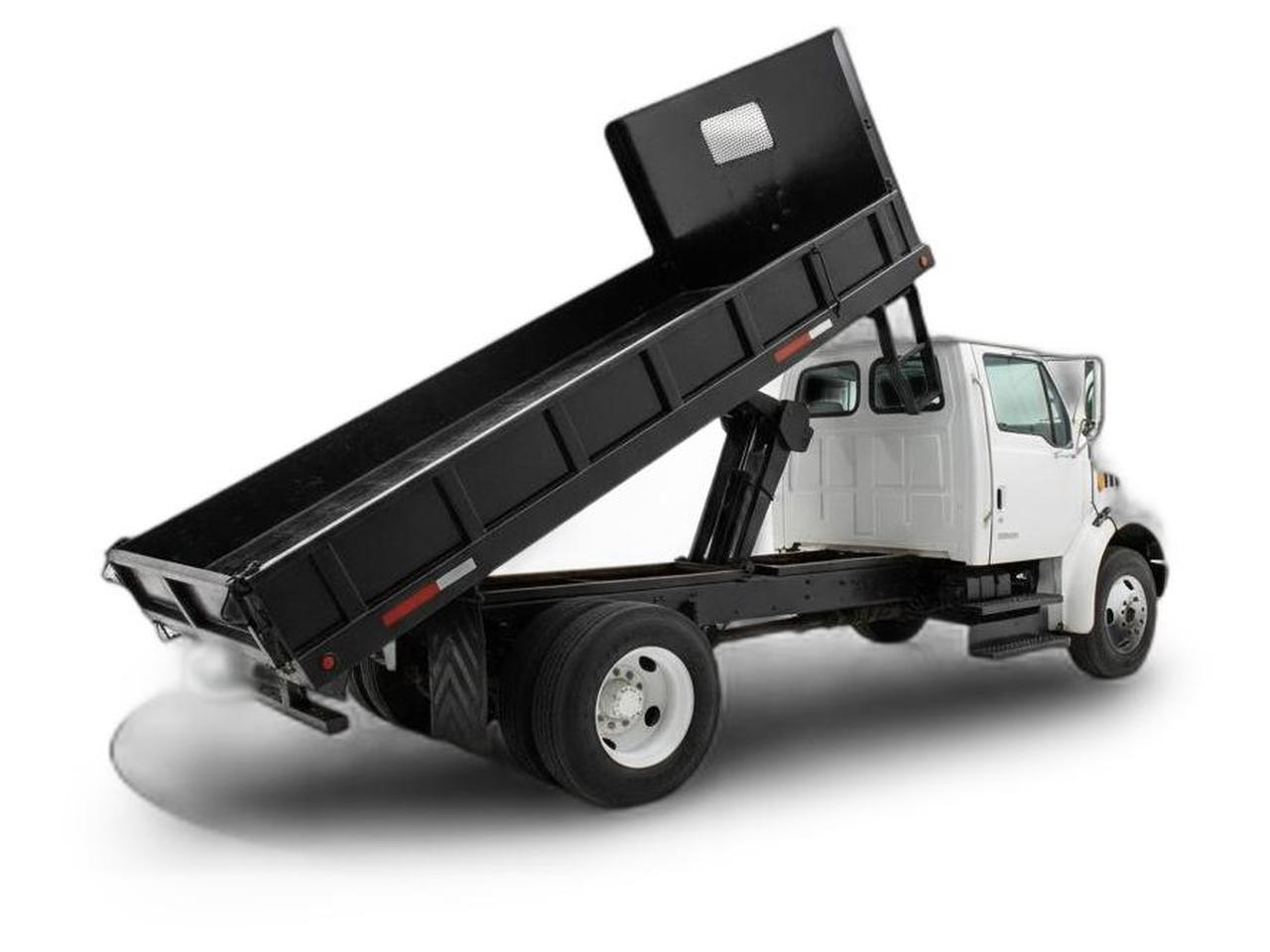
The 2003 Sterling Acterra is a Class 5-8 truck, primarily known as a medium-duty commercial vehicle. Produced from 2000 to 2007, it was available in various body styles including straight trucks and tractors. Key trims often referred to by their GVWR, such as the Acterra 5500, 6500, and 7500, catered to different payload needs. Its popularity stemmed from its robust construction and versatility for commercial applications, making it a workhorse for businesses.
The Good
The 2003 Sterling Acterra boasts strong performance for its class, renowned reliability for demanding tasks, and a practical, no-nonsense design. Its value proposition lies in its durability and capability, offering peace of mind to businesses focused on productivity and return on investment.
The Bad
Potential weaknesses for the 2003 Sterling Acterra include common issues with its aging electrical system, particularly the wiring harness and module failures. Rust can also be a concern on the chassis and body, especially in regions with harsh winters. Interior wear and tear is also typical for a vehicle of this age and purpose.
2003 Sterling Acterra: Quick Overview
- Engine Options: The 2003 Sterling Acterra was typically offered with several diesel engine options from Mercedes-Benz and Caterpillar. Common choices included the Mercedes-Benz MBE 900 series and Caterpillar C7 engines. These were renowned for their durability and torque delivery, crucial for medium-duty commercial applications.
- Horsepower: Horsepower ratings varied significantly based on the specific engine and application, generally ranging from approximately 170 horsepower for smaller MBE engines up to around 300 horsepower or more for the larger Caterpillar C7 engines. This allowed for customization based on the intended use, whether for local delivery or longer-haul routes.
- Fuel Economy: Fuel economy for the 2003 Sterling Acterra is highly dependent on the engine, transmission, payload, and driving conditions. As a medium-duty truck, it was not designed with fuel efficiency as its primary metric, but owners often reported figures in the range of 8-12 miles per gallon (MPG) for typical operational loads.
- 0-60 Times: 0-60 mph times are not a relevant metric for this type of commercial vehicle, as it is designed for hauling capacity and steady operation rather than rapid acceleration. Its focus is on torque and sustained power delivery.
- Towing Capacity: Towing capacity, or more accurately, Gross Combined Weight Rating (GCWR) and Gross Vehicle Weight Rating (GVWR), varied greatly depending on the specific model and configuration. These trucks could be configured for substantial payloads and towing, with GVWRs often ranging from 17,500 lbs to 33,000 lbs, and GCWRs significantly higher.
- Trim-Level Features: While not featuring traditional passenger car trims, the Acterra was available in different GVWR classes (e.g., 5500, 6500, 7500), which dictated its capabilities. Features were generally focused on functionality and durability for commercial use. Standard equipment often included robust chassis, heavy-duty transmissions (manual or automatic), power steering, and basic cabin amenities. Optional features could include air conditioning, upgraded interior materials, and specialized body configurations like box trucks, flatbeds, or dump bodies, tailored to specific business needs.
2003 Sterling Acterra Specifications
Vehicle Information
| Year | 2003 |
| Make | Sterling |
| Model | Acterra |
| Trim | - |
| Style | - |
| Type | Truck |
| Category | Heavy Truck |
Manufacturing Details
| Made In | Canada |
| Manufacturing City | ST.THOMAS |
Dimensions
| Doors | - |
| Curb Weight | - |
| Gross Vehicle Weight Rating | 33000 pounds |
| Overall Height | - |
| Overall Length | - |
| Overall Width | - |
| Wheelbase Length | - |
| Standard Seating | - |
Engine & Performance
| Engine | 6.4L I6 |
| Engine Size | 6.4L |
| Engine Cylinders | 6 |
| Transmission | 6-Speed Automatic |
| Transmission Type | Automatic |
| Transmission Speeds | 6-Speed |
| Drivetrain | 6x4 |
Additional Features
| Anti-Brake System | - |
| Steering Type | - |
Pricing
| Manufacturer Suggested Retail Price (MSRP) | - |
| Invoice Price | - |
| Delivery Charges | - |
Vehicle History Report
Vehicle
Specifications
Specifications
Ownership
History
History
All History
Events
Events
NMVTIS Title
History Check
History Check
Salvage/Rebuilt
Check
Check
Accident
Check
Check
Theft
Check
Check
Open Lien
Check
Check
Past Sale
Listings
Listings
Safety
Recalls
Recalls
Odometer
Check
Check
Market Price
Analysis
Analysis
What Problems Does the 2003 Sterling Acterra Have?
The 2003 Sterling Acterra, like many commercial vehicles of its era, can develop specific issues over time, particularly concerning its electrical system and powertrain components. One of the most frequently reported problems involves the vehicle's wiring harness and electrical control modules. Owners have noted issues with intermittent electrical failures, dashboard warning lights, and problems with engine or transmission control units. This can sometimes be attributed to age, vibration, and exposure to the elements, leading to corroded connections or damaged wiring.
Another area of concern for this model year, and subsequent ones, is the potential for rust and corrosion on the chassis, frame rails, and body panels, especially in regions where salt is used on roads during winter. This can compromise structural integrity if not addressed promptly. The cooling system, including radiators and hoses, can also be a source of leaks and failures over time due to heat and age.
Regarding specific model years, while the 2003 Sterling Acterra is a mature vehicle, general trends for the Sterling Acterra line from this period often included a focus on ensuring the longevity of the Mercedes-Benz MBE engines and Caterpillar C7 engines. However, maintenance is paramount; neglected fluid changes or cooling system issues could lead to more significant engine problems.
Recalls for this specific model year are less commonly highlighted in general owner discussions, as most issues tend to be wear-and-tear related rather than systemic manufacturing defects that trigger widespread recalls. However, it is always advisable for owners to check with the manufacturer or relevant government safety agencies for any outstanding recalls that may apply to their specific VIN. Long-term reliability is heavily contingent on consistent and proper maintenance, addressing minor issues before they escalate, and the type of duty cycle the truck has experienced throughout its operational life.
Another area of concern for this model year, and subsequent ones, is the potential for rust and corrosion on the chassis, frame rails, and body panels, especially in regions where salt is used on roads during winter. This can compromise structural integrity if not addressed promptly. The cooling system, including radiators and hoses, can also be a source of leaks and failures over time due to heat and age.
Regarding specific model years, while the 2003 Sterling Acterra is a mature vehicle, general trends for the Sterling Acterra line from this period often included a focus on ensuring the longevity of the Mercedes-Benz MBE engines and Caterpillar C7 engines. However, maintenance is paramount; neglected fluid changes or cooling system issues could lead to more significant engine problems.
Recalls for this specific model year are less commonly highlighted in general owner discussions, as most issues tend to be wear-and-tear related rather than systemic manufacturing defects that trigger widespread recalls. However, it is always advisable for owners to check with the manufacturer or relevant government safety agencies for any outstanding recalls that may apply to their specific VIN. Long-term reliability is heavily contingent on consistent and proper maintenance, addressing minor issues before they escalate, and the type of duty cycle the truck has experienced throughout its operational life.
How long will the 2003 Sterling Acterra last?
Based on owner data and typical usage for commercial applications, the 2003 Sterling Acterra can achieve an average of 250,000 to 500,000 miles or more over its service life, provided it receives diligent and routine maintenance. The long-term durability of the powertrain, especially the Mercedes-Benz MBE and Caterpillar engines, is generally considered robust. However, weaknesses emerge over time. The electrical system, particularly the wiring harness and connectors, becomes more prone to failure with age and environmental exposure. Rust on the frame and body can also significantly impact longevity if not managed. The suspension and braking systems, due to constant use and heavy loads, will also require regular attention and component replacements.
What Technology & Safety Features are Included?
The 2003 Sterling Acterra, being a commercial medium-duty truck, prioritizes functionality and durability over advanced technology and creature comforts commonly found in passenger vehicles. Built-in tech is generally minimal, focusing on essential operational systems. The infotainment system typically consists of a basic AM/FM radio, often with an auxiliary input, and sometimes a CD player. More advanced entertainment options like touchscreens or integrated navigation were not standard and were rarely offered even as options, as the focus was on the business utility of the vehicle.
Driver-assistance features are virtually non-existent in the modern sense for a 2003 model. There are no advanced safety systems like lane departure warnings, adaptive cruise control, or automatic emergency braking. The primary safety features are those inherent to its robust construction: a sturdy cab designed to withstand impacts, standard seatbelts, and conventional hydraulic disc or drum brakes. Some models might have had optional ABS (Anti-lock Braking System), which was becoming more common in commercial vehicles during this period.
Safety was primarily addressed through its substantial frame and cab design. Given its commercial nature, dedicated crash-test ratings from organizations like the NHTSA or IIHS, in the format expected for passenger cars, are not typically available for the Sterling Acterra. Manufacturers focused on meeting stringent federal motor vehicle safety standards (FMVSS) for commercial vehicles, which address structural integrity, occupant protection, and braking performance under specific test conditions. Optional features were more geared towards the truck's vocational purpose, such as different mirror configurations for better visibility, specialized lighting, or auxiliary power take-off (PTO) systems for operating external equipment. The technology present was primarily mechanical and electrical systems to support the core function of hauling and transport.
Driver-assistance features are virtually non-existent in the modern sense for a 2003 model. There are no advanced safety systems like lane departure warnings, adaptive cruise control, or automatic emergency braking. The primary safety features are those inherent to its robust construction: a sturdy cab designed to withstand impacts, standard seatbelts, and conventional hydraulic disc or drum brakes. Some models might have had optional ABS (Anti-lock Braking System), which was becoming more common in commercial vehicles during this period.
Safety was primarily addressed through its substantial frame and cab design. Given its commercial nature, dedicated crash-test ratings from organizations like the NHTSA or IIHS, in the format expected for passenger cars, are not typically available for the Sterling Acterra. Manufacturers focused on meeting stringent federal motor vehicle safety standards (FMVSS) for commercial vehicles, which address structural integrity, occupant protection, and braking performance under specific test conditions. Optional features were more geared towards the truck's vocational purpose, such as different mirror configurations for better visibility, specialized lighting, or auxiliary power take-off (PTO) systems for operating external equipment. The technology present was primarily mechanical and electrical systems to support the core function of hauling and transport.
What Colors Options are Available?
2003 Sterling Acterra Prices and Market Value
When new, the 2003 Sterling Acterra's price varied significantly based on its configuration, GVWR, and chosen vocational body, but typically ranged from approximately $50,000 to $90,000 or more. As a commercial vehicle, its depreciation curve differs from passenger cars. While it loses value rapidly in its first few years, its resale value is then largely determined by its remaining mechanical condition, mileage, and specific utility for buyers. Current used market prices for a 2003 Sterling Acterra can range from as low as $5,000 to $20,000 or more, depending heavily on its condition, engine, transmission, and whether it's being sold as a chassis cab or with a specific body (e.g., box truck, flatbed). Factors like rust, engine hours, and maintenance history are critical determinants of resale value.
2003 Sterling Acterra Cost of Ownership
Owning a 2003 Sterling Acterra can be costly, especially for smaller operators. Insurance premiums are typically higher than for passenger vehicles due to its commercial nature and higher replacement value. Fuel costs will be significant, given its diesel engine and lower MPG. Maintenance and repair costs are a major consideration; while built for durability, specialized diesel mechanics and parts can be expensive. Routine maintenance such as oil changes, filter replacements, and brake checks are essential. Long-term ownership can be economical if the vehicle is well-maintained and its operational life is maximized, but unexpected major repairs, particularly to the engine or transmission, can be very costly, making it a more expensive vehicle to own compared to a light-duty truck.
2003 Sterling Acterra Fuel Efficiency
Fuel Type
Diesel
Fuel Capacity
-
City Mileage
-
Highway Mileage
-
2003 Sterling Acterra Warranty
Basic
Original warranty
0 months / No data
Estimated remaining
Expired
Powertrain
Original warranty
0 months / No data
Estimated remaining
Expired
Rust
Original warranty
0 months / No data
Estimated remaining
Expired
2003 Sterling Acterra Insurance
Insurance for a 2003 Sterling Acterra is moderately priced, reflecting its status as a Truck with strong safety ratings and
reasonable repair costs.
How Does the 2003 Sterling Acterra Compare to Other Truck?
The 2003 Sterling Acterra competed in the medium-duty truck segment (Class 5-8) against formidable rivals such as the Freightliner Business Class M2, International DuraStar, and the Isuzu NPR/NRR series. In terms of performance, the Acterra, often powered by robust Mercedes-Benz or Caterpillar engines, offered strong torque for hauling and reliable power delivery, comparable to its competitors. The Freightliner M2, also a strong contender, offered a wide range of engine options and a reputation for durability.
Features on the Sterling Acterra were generally utilitarian, focusing on driver functionality rather than luxury. Competitors like the International DuraStar also offered similarly basic, work-focused interiors. While some rivals might have had slightly more modern cabin designs or available comfort features for the era, the Acterra provided a solid, no-frills environment suitable for long workdays.
Reliability is a mixed bag. Sterling trucks, being part of the DaimlerChrysler family (at the time), benefited from some shared technology, but individual truck reliability can depend heavily on specific components and maintenance. The Mercedes-Benz engines often used in the Acterra were generally reliable, but electrical gremlins could be an issue, similar to many trucks of this age. Competitors like Isuzu had a strong reputation for powertrain reliability, particularly their diesel engines.
In terms of price, the Sterling Acterra was competitively positioned within its class. New prices were in line with similarly equipped models from Freightliner and International. On the used market, the Acterra offers good value, often being more affordable than comparable Freightliner or International models with similar mileage and condition.
Alternatives:
For buyers seeking a dependable workhorse at a competitive price, the 2003 Sterling Acterra remains a viable option, but comparing it directly with the Freightliner M2 or International DuraStar for specific vocational needs and available service networks is advisable.
Features on the Sterling Acterra were generally utilitarian, focusing on driver functionality rather than luxury. Competitors like the International DuraStar also offered similarly basic, work-focused interiors. While some rivals might have had slightly more modern cabin designs or available comfort features for the era, the Acterra provided a solid, no-frills environment suitable for long workdays.
Reliability is a mixed bag. Sterling trucks, being part of the DaimlerChrysler family (at the time), benefited from some shared technology, but individual truck reliability can depend heavily on specific components and maintenance. The Mercedes-Benz engines often used in the Acterra were generally reliable, but electrical gremlins could be an issue, similar to many trucks of this age. Competitors like Isuzu had a strong reputation for powertrain reliability, particularly their diesel engines.
In terms of price, the Sterling Acterra was competitively positioned within its class. New prices were in line with similarly equipped models from Freightliner and International. On the used market, the Acterra offers good value, often being more affordable than comparable Freightliner or International models with similar mileage and condition.
Alternatives:
- Freightliner Business Class M2: A very similar offering, often with a slightly more modern feel and a wide array of configurations. It's a strong, reliable choice.
- International DuraStar: Known for its robust construction and diverse engine options. Good for heavy-duty vocational applications.
- Isuzu NPR/NRR: Often considered more fuel-efficient and potentially more reliable for lighter-duty commercial needs, with excellent maneuverability in urban settings.
- Hino 155/195: Another strong competitor known for its reliability and driver comfort, offering good value.
For buyers seeking a dependable workhorse at a competitive price, the 2003 Sterling Acterra remains a viable option, but comparing it directly with the Freightliner M2 or International DuraStar for specific vocational needs and available service networks is advisable.
Final Verdict: Is the 2003 Sterling Acterra a Good Truck?
The 2003 Sterling Acterra is ideal for small to medium-sized businesses or independent contractors needing a durable and capable medium-duty truck for vocational applications such as delivery, light construction, or specialized services. It is well-suited for buyers who prioritize robust construction and powertrain reliability over advanced technology or creature comforts. Given its age, buying new is not an option, so the focus is on the used market.
It is worth buying if found in good condition with thorough maintenance records, especially if it has a desirable body configuration (e.g., a well-maintained box truck or flatbed). Buyers should thoroughly inspect for rust, electrical issues, and check the engine and transmission for any signs of wear. Opting for models with the Mercedes-Benz MBE or Caterpillar engines is generally a good bet for longevity. It represents a solid value proposition for those on a budget needing a workhorse, provided they are prepared for potential age-related maintenance. A pre-purchase inspection by a qualified diesel mechanic is highly recommended.