
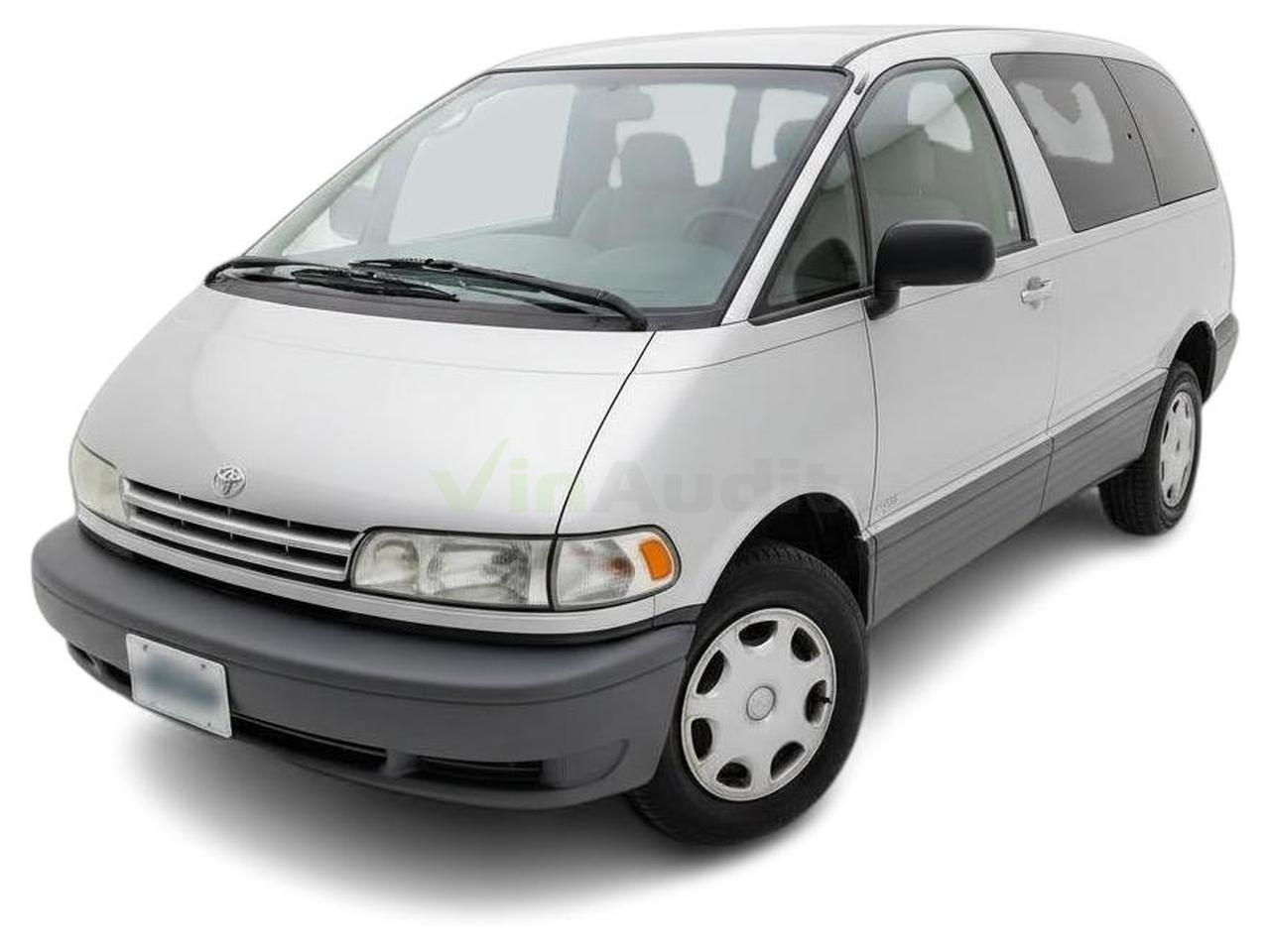
The Good
The 1995 Toyota Previa boasts legendary Toyota reliability, a spacious and comfortable interior, and a distinctive "space-van" design that appeals to emotional buyers. Practical buyers appreciate its robust engineering, optional AWD for all-weather capability, and strong long-term value. Performance is adequate, especially with the optional supercharger, and its unique layout contributes to a balanced, stable ride.
The Bad
Known weaknesses include the difficulty and increased labor cost for engine-related repairs due to its mid-mounted layout. Naturally aspirated models can feel underpowered. Supercharged versions offer improved performance but slightly lower fuel economy. Rust can be a significant issue in salt-prone areas, and A/C systems, though effective, can be complex to repair over time.
1995 Toyota Previa: Quick Overview
- Engine Options: 2.4L 2TZ-FE I4 (naturally aspirated) and 2.4L 2TZ-FZE I4 (supercharged).
- Horsepower:
- Naturally aspirated: 135 hp @ 5000 rpm.
- Supercharged: 161 hp @ 5000 rpm.
- Fuel Economy (estimated):
- Naturally aspirated RWD: ~18-20 MPG city / 22-23 MPG highway.
- Supercharged RWD: ~17-19 MPG city / 20-22 MPG highway.
- AWD models generally slightly lower.
- 0-60 Times:
- Naturally aspirated: ~12-13 seconds.
- Supercharged: ~9-10 seconds.
- Towing Capacity: Typically around 2000-3500 lbs, depending on configuration and specific options, but not its primary strength.
- Trim-Level Features (1995 specifics):
- DX: Base model, focusing on utility with standard cloth interior. Often came with manual windows and locks, though air conditioning was a common option.
- LE: Mid-range trim, adding convenience features such as power windows, power door locks, cruise control, dual-zone climate control, and upgraded cloth upholstery. Alloy wheels and a rear wiper/washer were typically included.
- LE S/C (Supercharged): Featured the more powerful supercharged engine. This trim generally included all LE features, plus specific badging, and often offered additional premium options like a power moonroof, CD player, and enhanced interior trim.
- All-Trac (AWD): Available across DX and LE trims, providing full-time all-wheel drive, greatly enhancing traction and stability in varied driving conditions. This was a distinctive feature compared to many rivals.
- Optional Features: Across trims, available options included anti-lock brakes (ABS), dual front airbags (standard later in the run), rear air conditioning, swiveling captain's chairs for the second row, and various audio system upgrades. The mid-engine layout allowed for a very low and flat floor, offering flexible and spacious interior configurations.
1995 Toyota Previa Specifications
Vehicle Information
| Year | 1995 |
| Make | Toyota |
| Model | Previa |
| Trim | - |
| Style | - |
| Type | - |
| Category | - |
Manufacturing Details
| Made In | - |
| Manufacturing City | - |
Dimensions
| Doors | - |
| Curb Weight | - |
| Gross Vehicle Weight Rating | - |
| Overall Height | - |
| Overall Length | - |
| Overall Width | - |
| Wheelbase Length | - |
| Standard Seating | - |
Engine & Performance
| Engine | - |
| Engine Size | - |
| Engine Cylinders | - |
| Transmission | - |
| Transmission Type | - |
| Transmission Speeds | - |
| Drivetrain | - |
Additional Features
| Anti-Brake System | - |
| Steering Type | - |
Pricing
| Manufacturer Suggested Retail Price (MSRP) | - |
| Invoice Price | - |
| Delivery Charges | - |
Vehicle History Report
Specifications
History
Events
History Check
Check
Check
Check
Check
Listings
Recalls
Check
Analysis
What Problems Does the 1995 Toyota Previa Have?
Engine Issues: While robust, the naturally aspirated 2TZ-FE engine can develop head gasket failures, especially in high-mileage examples or if subjected to overheating. Repair is costly due to the mid-engine placement. Oil leaks from valve covers or oil pan gaskets are common due to age. For supercharged (2TZ-FZE) models, the supercharger unit itself is durable, but issues with its bearings or clutch can arise if maintenance is neglected, leading to noise or reduced boost.
Transmission: The automatic transmissions are generally reliable but can exhibit rough shifting or hesitation as they age, often remedied by fluid changes or needing rebuilds at very high mileage.
Suspension & Steering: Worn suspension components like control arm bushings, ball joints, and tie rod ends are expected wear items, leading to clunks, rattles, and loose steering. Power steering pumps or hoses can also develop leaks.
Electrical: Power window regulators, particularly in LE trims, can fail. Standard age-related electrical component failures like alternators and starters are also common.
Body & Interior: Rust is a significant concern, particularly in areas exposed to road salt, affecting rocker panels, wheel wells, and subframe components. The dual air conditioning system, while effective, can be prone to leaks or component failures (compressor, evaporators) due to its complexity and age, making repairs expensive. Interior plastics may become brittle or faded.
Recalls: For the 1995 model year, recalls were less prevalent. Earlier Previa models (e.g., 1990-1992) experienced a significant recall concerning an engine fire risk related to an oil cooler hose, but this issue was largely addressed in later production years like 1995. Checking the specific VIN for any open recalls via the NHTSA is always recommended. Despite these points, the Previa's core mechanicals are remarkably resilient, ensuring a long service life if maintained.
How long will the 1995 Toyota Previa last?
What Technology & Safety Features are Included?
Built-in Tech & Entertainment:
- Audio System: Standard models typically came with an AM/FM stereo cassette player. Higher trims (LE, S/C) often offered a multi-speaker sound system, a CD player, and sometimes a CD changer as an option. Controls were basic, typically knobs and buttons, without modern digital displays.
- Climate Control: Base DX models usually had manual front air conditioning. LE and S/C trims featured dual-zone climate control, allowing separate temperature settings for front and rear passengers, which was quite advanced for its time. Rear controls were usually accessible from the second row.
- Power Features: LE and S/C trims included power windows, power door locks, and power mirrors. Cruise control was a common option or standard on higher trims.
- Interior Layout: The unique mid-engine, flat-floor design facilitated flexible seating configurations, including captain's chairs in the second row that could swivel or be removed entirely, enhancing versatility for both cargo and passengers.
Driver-Assistance & Safety Features:
- Airbags: For the 1995 model year, dual front airbags (for driver and front passenger) became standard in the Previa, a significant safety upgrade for its time.
- Brakes: Anti-lock brakes (ABS) were available as an option, particularly on LE and S/C models, providing enhanced stopping power and control during emergency braking. Standard brakes were power-assisted front disc/rear drum.
- Seatbelts: Three-point seatbelts were standard for front passengers and outboard second-row passengers. Lap belts were common for the center seating positions.
- All-Wheel Drive (All-Trac): While not strictly a "driver-assistance" feature in the modern sense, the optional full-time All-Trac AWD system significantly enhanced traction and stability, especially in adverse weather conditions, providing a crucial safety benefit.
- Visibility: The large glass area and relatively upright seating position provided good all-around visibility, aiding in maneuvering and parking.
Crash-Test Ratings:
Official, comprehensive crash-test ratings from organizations like the NHTSA or IIHS (especially multi-faceted tests like small overlap front, side, etc.) were not as prevalent or standardized for vehicles from the mid-1990s as they are today. Information is sparse, but general observations from the era suggested the Previa offered a reasonable level of protection for its class, particularly with the inclusion of dual airbags. Specific detailed numerical ratings are generally not readily available for the 1995 model year.
What Colors Options are Available?
1995 Toyota Previa Prices and Market Value
Currently, used market prices for a 1995 Previa vary widely, from as low as $1,500 to $4,000 for a well-maintained example, and potentially higher for exceptional, low-mileage supercharged AWD models which have become somewhat of a cult classic, fetching $5,000 to even $10,000+ from enthusiasts. Factors affecting resale value include overall condition, mileage, the presence of the supercharger and All-Trac AWD, maintenance history, and local demand. Models with minimal rust and working A/C command premium prices. Its unique "JDM" appeal and perceived reliability have helped some examples defy typical depreciation for a 25+ year old vehicle.
1995 Toyota Previa Cost of Ownership
1995 Toyota Previa Fuel Efficiency
1995 Toyota Previa Safety Rating
NHTSA
1995 Toyota Previa Insurance
reasonable repair costs.
How Does the 1995 Toyota Previa Compare to Other Vehicle?
Performance:
- Previa: Its 2.4L I4 (135 hp NA, 161 hp S/C) offered decent acceleration for the supercharged model, but the naturally aspirated version was quite slow. The mid-engine layout provided excellent balance and a car-like ride.
- Rivals: Chrysler minivans offered more powerful V6 engines (e.g., 3.3L and 3.8L V6s providing 150-160 hp), giving them a performance edge over the NA Previa. The Honda Odyssey (based on the Accord) also had a 2.2L 4-cylinder (140 hp), similar to the NA Previa. Nissan Quest had a 3.0L V6 (151 hp).
Features:
- Previa: Stood out with optional full-time All-Trac AWD and dual-zone climate control. Its unique "space-van" design and flexible interior with a flat floor were differentiating. Dual airbags became standard.
- Rivals: Chrysler minivans pioneered features like sliding doors on both sides (later generations), integrated child seats, and more luxurious interior appointments on higher trims. The Odyssey had a more conventional front-engine, front-wheel-drive layout but was praised for its car-like handling and build quality. The Quest offered a "magic seat" that could slide forward.
Reliability:
- Previa: Legendary Toyota reliability. Known for extremely long lifespans if maintained. Mid-engine design made some repairs costly due to access, but core components were robust.
- Rivals: Honda Odyssey and Nissan Quest generally had good reliability for their time, though perhaps not reaching Previa's peak longevity. Chrysler minivans, while popular, had a mixed reputation for long-term reliability, particularly regarding transmissions and electrical systems, though they improved over time.
Price:
- Previa: Often priced at the higher end of the minivan spectrum when new, especially for AWD or supercharged models. Its unique engineering commanded a premium.
- Rivals: Chrysler minivans offered a wider range of price points, from very affordable base models to well-equipped luxury trims, often providing more features for the money. Japanese rivals like Odyssey and Quest were similarly priced to the Previa.
Alternatives:
For those seeking a more conventional, powerful, or modern experience, the Honda Odyssey (first generation) offered superior handling and a more traditional layout. If maximum interior space and a broader range of engine options were priorities, the Chrysler Town & Country or Dodge Caravan (especially post-1996 models) were strong contenders. However, if unique style, proven long-term reliability, and optional AWD are paramount, the Previa is still a compelling, albeit quirky, choice with no direct modern equivalent in its mid-engine layout.
Final Verdict: Is the 1995 Toyota Previa a Good Vehicle?
As a used vehicle, it is absolutely worth buying, but with specific conditions. Seek out well-maintained examples, ideally with a comprehensive service history and minimal rust. The supercharged (S/C) models offer much better performance and are highly sought after. While the naturally aspirated version is reliable, its performance is modest. Prepare for potentially higher labor costs on major engine repairs due to its unconventional layout. For someone valuing robust engineering over cutting-edge features, and who appreciates a vehicle that stands out, a carefully chosen used 1995 Previa can provide many more years of distinctive, reliable service.

Cathleen V
Cathleen is an exceptional freelance writer covering hot topics in the automotive world from a gearhead's perspective. Her articles delve into various aspects of automotive technology and history, offering readers detailed insights into engine performance, reliability, and maintenance. Through her engaging and informative writing, Cathleen provides valuable information to automotive enthusiasts and consumers alike, helping them make informed decisions about vehicle maintenance and purchases.