The 2026 Peterbilt 375 is a reimagining of a classic, designed for the modern vocational market. Building on Peterbilt's legacy of durability and performance, this model aims to blend robust capability with enhanced driver comfort. Expected to be available in various configurations including day cab and extended cab variants, the 375 will likely cater to demanding applications. While specific trims and pricing are yet to be fully revealed, its popularity is anticipated to stem from its reputation for reliability and its suitability for heavy-duty tasks.
The Good
The 2026 Peterbilt 375 offers exceptional durability and proven performance, ensuring operational uptime. Its modernized cab provides superior comfort for long hauls, while its rugged design instills confidence. This combination of reliability and driver-centric features delivers outstanding long-term value.
The Bad
As a new model, specific long-term weaknesses are yet to emerge. However, potential buyers should monitor for any early reports regarding its complex electronic systems and the cost of specialized parts for its vocational-specific configurations. Initial adoption curves for new technology can sometimes present minor issues.
2026 Peterbilt 375: Quick Overview
- Engine Options: The 2026 Peterbilt 375 is expected to offer a range of powerful PACCAR MX-11 and MX-13 engines, known for their robust performance and efficiency in vocational applications. Specific variants and displacement options will be tailored to different job requirements.
- Horsepower: Horsepower ratings will likely span from approximately 300 hp to over 500 hp, depending on the selected engine and configuration, providing ample power for demanding tasks.
- Fuel Economy: While precise EPA ratings are unavailable for future models, PACCAR engines are designed with fuel efficiency in mind, especially with advancements in combustion technology and aerodynamics. Real-world fuel economy will vary significantly based on load, terrain, and driving habits.
- 0-60 Times: 0-60 mph acceleration times are not a primary metric for heavy-duty vocational trucks like the Peterbilt 375. Performance is measured in terms of gradeability and hauling power rather than speed.
- Towing Capacity: The Peterbilt 375 is engineered for heavy-duty towing and hauling. Exact Gross Combination Weight Ratings (GCWR) and Gross Vehicle Weight Ratings (GVWR) will be specified based on chassis configuration, axle ratings, and driveline components, often exceeding 80,000 lbs and potentially much higher for specialized applications.
- Trim-Level Features: Expected trim levels will likely focus on vocational suitability, potentially including:
- Standard Vocational: Robust chassis, durable interior materials, and essential driver controls optimized for work environments.
- Premium Vocational: Enhanced driver amenities, advanced telematics, potentially upgraded suspension and braking systems for specific demanding roles.
- Specialty Configurations: Tailored features for applications like concrete mixers, refuse trucks, or heavy haulers, including specialized PTOs, body builder interfaces, and cooling systems.
- Key Features: Expect a focus on driver visibility, maneuverability, a strengthened frame, and integrated systems for body integration. Advanced diagnostics and connectivity will also be crucial.
2026 Peterbilt 375 Specifications
Vehicle Information
| Year | 2026 |
| Make | Peterbilt |
| Model | 375 |
| Trim | - |
| Style | - |
| Type | Truck |
| Category | Heavy Truck |
Manufacturing Details
| Made In | United States |
| Manufacturing City | DENTON |
Dimensions
| Doors | - |
| Curb Weight | - |
| Gross Vehicle Weight Rating | 33001 pounds |
| Overall Height | - |
| Overall Length | - |
| Overall Width | - |
| Wheelbase Length | - |
| Standard Seating | - |
Engine & Performance
| Engine | 14.9L I6 |
| Engine Size | 14.9L |
| Engine Cylinders | 6 |
| Transmission | - |
| Transmission Type | - |
| Transmission Speeds | - |
| Drivetrain | 6x4 |
Additional Features
| Anti-Brake System | - |
| Steering Type | - |
Pricing
| Manufacturer Suggested Retail Price (MSRP) | - |
| Invoice Price | - |
| Delivery Charges | - |
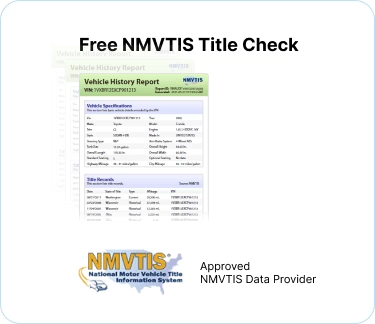
Vehicle History Report
Vehicle
Specifications
Specifications
Ownership
History
History
All History
Events
Events
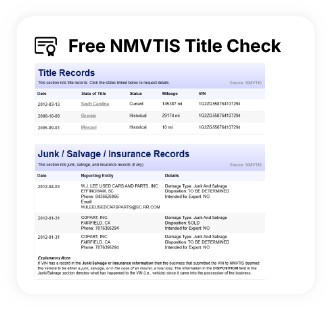
NMVTIS Title
History Check
History Check
Salvage/Rebuilt
Check
Check
Accident
Check
Check
Theft
Check
Check
Open Lien
Check
Check
Past Sale
Listings
Listings
Safety
Recalls
Recalls
Odometer
Check
Check
Market Price
Analysis
Analysis
What Problems Does the 2026 Peterbilt 375 Have?
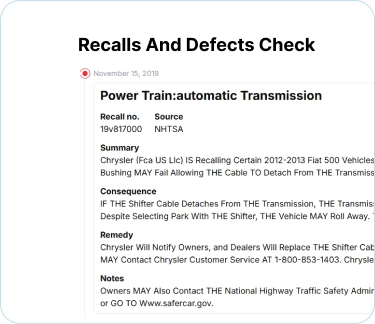
As the 2026 Peterbilt 375 is a forthcoming model, there are no reported problems, recalls, or long-term reliability concerns specific to this exact model year. However, insights can be drawn from Peterbilt's historical performance and general trends in the heavy-duty truck market. Peterbilt has a strong reputation for building durable and reliable vehicles, particularly in vocational applications. Common areas that can sometimes experience issues in heavy-duty trucks across brands, and which buyers of any new model should be aware of, include:
It is advisable for owners of any new Peterbilt model to stay informed through dealer service bulletins and owner forums for any emerging patterns. Early model years of any new truck generation can sometimes have minor bugs that are addressed in subsequent production runs. For the 2026 375, thorough pre-delivery inspections and adherence to the manufacturer's recommended maintenance schedule will be paramount for ensuring long-term reliability.
- Powertrain: While PACCAR engines are generally very robust, long-term issues can sometimes arise with fuel injection systems, turbochargers, or exhaust aftertreatment systems (DEF systems), especially under severe operating conditions. Regular and meticulous maintenance is key to mitigating these potential concerns.
- Electrical Systems: Modern trucks are increasingly complex with sophisticated electronic control units (ECUs) for engine management, transmissions, and integrated vehicle systems. While these enhance efficiency and functionality, they can occasionally be prone to glitches or component failures if not properly protected from vibration, moisture, or electrical surges.
- Drivetrain Components: Transmissions, driveshafts, and differentials are subjected to immense stress in vocational use. Wear and tear are inevitable, but premature failure can sometimes be linked to improper lubrication, overloading, or harsh driving.
- Cab and Chassis Components: While Peterbilt is known for its robust construction, components like suspension, brakes, and steering systems require diligent inspection and maintenance to ensure safety and longevity, especially in off-road or construction environments.
It is advisable for owners of any new Peterbilt model to stay informed through dealer service bulletins and owner forums for any emerging patterns. Early model years of any new truck generation can sometimes have minor bugs that are addressed in subsequent production runs. For the 2026 375, thorough pre-delivery inspections and adherence to the manufacturer's recommended maintenance schedule will be paramount for ensuring long-term reliability.
How long will the 2026 Peterbilt 375 last?
Based on the general lifespan of Peterbilt trucks and typical owner data, the 2026 Peterbilt 375 is expected to offer substantial longevity. With diligent maintenance, including regular oil changes, filter replacements, and inspections, these vocational trucks can realistically achieve between 500,000 to over 1,000,000 miles of service. Peterbilt vehicles are renowned for their robust chassis and durable components, designed to withstand rigorous daily use. Key to long-term durability will be the owner's commitment to preventative maintenance, addressing minor issues before they escalate, and ensuring the truck operates within its designed parameters. Potential weaknesses over time could include wear on specialized vocational equipment attachments, eventual depreciation of electronic components, and typical powertrain wear after hundreds of thousands of miles, though these are manageable with proper care.
What Technology & Safety Features are Included?
The 2026 Peterbilt 375 is anticipated to integrate modern technology to enhance safety, efficiency, and driver experience. Built-in tech will likely focus on advanced diagnostics and telematics, providing real-time vehicle health monitoring and fleet management capabilities. While detailed infotainment systems comparable to passenger cars might not be the primary focus, expect integrated digital displays for essential information, navigation, and communication systems.
Driver-assistance features are becoming increasingly standard in commercial vehicles. For the 375, potential features could include:
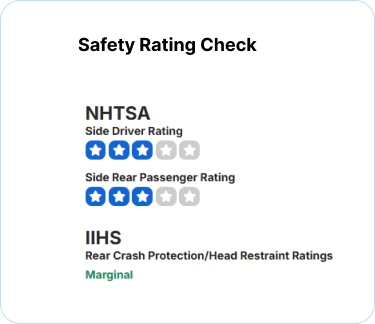
Safety features will extend to robust structural integrity, advanced lighting systems for improved visibility, and potentially cameras for enhanced situational awareness, especially for vocational applications where maneuverability is critical. Optional features may include advanced telematics packages for remote diagnostics, customized driver profiles, and premium sound systems. Crash-test ratings for heavy-duty trucks are typically assessed differently than passenger vehicles, often through internal testing or adherence to strict industry safety standards like FMVSS. Peterbilt's commitment to safety would suggest compliance with or exceeding these standards, focusing on occupant protection and structural integrity under extreme conditions.
Driver-assistance features are becoming increasingly standard in commercial vehicles. For the 375, potential features could include:
- Electronic Stability Control (ESC): To help prevent rollovers and loss of control.
- Anti-lock Braking System (ABS): Standard for improved braking control.
- Lane Departure Warning (LDW): Alerting the driver if the vehicle drifts out of its lane.
- Forward Collision Warning (FCW) and Automatic Emergency Braking (AEB): To help mitigate or avoid frontal collisions.
- Adaptive Cruise Control (ACC): For maintaining a set distance from the vehicle ahead.
- Blind Spot Monitoring: To alert the driver to vehicles in their blind spots.
Safety features will extend to robust structural integrity, advanced lighting systems for improved visibility, and potentially cameras for enhanced situational awareness, especially for vocational applications where maneuverability is critical. Optional features may include advanced telematics packages for remote diagnostics, customized driver profiles, and premium sound systems. Crash-test ratings for heavy-duty trucks are typically assessed differently than passenger vehicles, often through internal testing or adherence to strict industry safety standards like FMVSS. Peterbilt's commitment to safety would suggest compliance with or exceeding these standards, focusing on occupant protection and structural integrity under extreme conditions.
What Colors Options are Available?
2026 Peterbilt 375 Prices and Market Value
Pricing for the 2026 Peterbilt 375 when new will vary significantly based on configuration, engine, and chosen options, but expect a starting point likely in the range of $150,000 to $250,000+, with highly specialized vocational setups reaching considerably higher. Current used market prices for this model are nonexistent as it's a future release. Depreciation on heavy-duty vocational trucks like Peterbilts is generally more gradual than on consumer vehicles, especially for well-maintained units in high demand. Factors affecting resale value include mileage, overall condition, maintenance history, the presence of desired vocational equipment, and market demand for specific configurations. A well-cared-for Peterbilt 375 with low miles for its age and a clean service record will retain a substantial portion of its initial investment.
2026 Peterbilt 375 Cost of Ownership
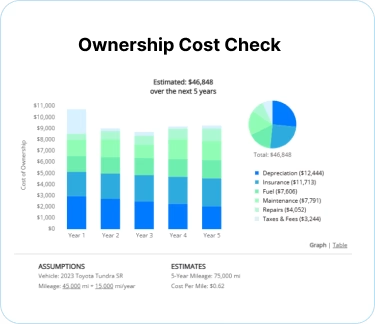
Owning a 2026 Peterbilt 375 represents a significant investment with considerable ongoing costs. Insurance premiums will be substantial due to the vehicle's high value and operational risks. Fuel costs will be a major factor, heavily dependent on the PACCAR engine's efficiency, load, and mileage driven. Maintenance and repair costs will also be considerable; while Peterbilt trucks are durable, parts and specialized labor for heavy-duty vocational applications are expensive. Regular preventative maintenance is crucial to minimize costly unscheduled repairs. Overall, the 375 is not an economical vehicle to own in the short term; its value lies in its long-term durability, productivity, and ability to perform demanding tasks efficiently, making it a costly but justifiable investment for businesses that rely on its capabilities.
2026 Peterbilt 375 Fuel Efficiency
Fuel Type
Diesel
Fuel Capacity
-
City Mileage
-
Highway Mileage
-
2026 Peterbilt 375 Warranty
Basic
Original warranty
0 months / No data
Estimated remaining
Expired
Powertrain
Original warranty
0 months / No data
Estimated remaining
Expired
Rust
Original warranty
0 months / No data
Estimated remaining
Expired
2026 Peterbilt 375 Insurance
Insurance for a 2026 Peterbilt 375 is moderately priced, reflecting its status as a Truck with strong safety ratings and
reasonable repair costs.
How Does the 2026 Peterbilt 375 Compare to Other Truck?
The 2026 Peterbilt 375 enters a competitive vocational truck segment, likely facing strong competition from brands like Kenworth (sister company under PACCAR, offering similar powertrains and chassis), Freightliner (especially models like the M2 or 114SD), and Mack Trucks (known for their durability and vocational prowess, e.g., Granite series).
Performance: Peterbilt, and by extension the 375 with PACCAR MX engines, typically offers robust powertrain options that are competitive in terms of torque, horsepower, and gradeability. Performance is often on par with or exceeds many competitors, especially when tailored for specific vocational needs. Freightliner's offerings can be highly customizable, while Mack trucks are renowned for their raw power and toughness in severe applications.
Features: The 375 is expected to adopt modern driver-assistance and connectivity features, aiming to match or exceed current industry standards. Competitors like Freightliner often lead in integrating advanced technology and customizable digital displays. Peterbilt's focus will likely be on a blend of cutting-edge tech and traditional, proven vocational truck robustness. Mack also offers solid, user-friendly interiors with a focus on functionality.

Reliability: Peterbilt and Kenworth trucks have a long-standing reputation for exceptional reliability and durability, often considered benchmarks in the industry. This strong historical performance is a key selling point. Freightliner offers a wide range of reliability depending on the model and configuration, with some vocational models being very robust. Mack trucks also boast a strong track record for longevity in demanding environments.
Price: Peterbilt trucks often command a premium price due to their perceived quality and residual value. Competitors like Freightliner may offer more aggressive pricing options on certain configurations. Mack trucks can also be competitively priced for their robust build quality.
Alternatives:
The 2026 Peterbilt 375 is likely to be a strong contender, particularly for buyers who value its proven pedigree, driver comfort, and excellent resale value, competing effectively with its PACCAR sibling and offering a compelling choice against Freightliner and Mack.
Performance: Peterbilt, and by extension the 375 with PACCAR MX engines, typically offers robust powertrain options that are competitive in terms of torque, horsepower, and gradeability. Performance is often on par with or exceeds many competitors, especially when tailored for specific vocational needs. Freightliner's offerings can be highly customizable, while Mack trucks are renowned for their raw power and toughness in severe applications.
Features: The 375 is expected to adopt modern driver-assistance and connectivity features, aiming to match or exceed current industry standards. Competitors like Freightliner often lead in integrating advanced technology and customizable digital displays. Peterbilt's focus will likely be on a blend of cutting-edge tech and traditional, proven vocational truck robustness. Mack also offers solid, user-friendly interiors with a focus on functionality.

Reliability: Peterbilt and Kenworth trucks have a long-standing reputation for exceptional reliability and durability, often considered benchmarks in the industry. This strong historical performance is a key selling point. Freightliner offers a wide range of reliability depending on the model and configuration, with some vocational models being very robust. Mack trucks also boast a strong track record for longevity in demanding environments.
Price: Peterbilt trucks often command a premium price due to their perceived quality and residual value. Competitors like Freightliner may offer more aggressive pricing options on certain configurations. Mack trucks can also be competitively priced for their robust build quality.

Alternatives:
- Kenworth T480/T880: As a PACCAR stablemate, these offer very similar performance and reliability, often with slightly different styling and potentially some feature variations. A strong, highly similar alternative.
- Freightliner M2/114SD: Excellent options offering a broad range of configurations, competitive technology, and often a more accessible price point. They are strong contenders, especially for those prioritizing specific technological integrations or cost savings.
- Mack Granite: A direct competitor in the heavy-duty vocational space, known for its extreme durability and power. If the absolute toughest application is the priority, the Granite is worth considering.
The 2026 Peterbilt 375 is likely to be a strong contender, particularly for buyers who value its proven pedigree, driver comfort, and excellent resale value, competing effectively with its PACCAR sibling and offering a compelling choice against Freightliner and Mack.
Final Verdict: Is the 2026 Peterbilt 375 a Good Truck?
The 2026 Peterbilt 375 is ideally suited for businesses and owner-operators who demand exceptional durability, reliable performance, and driver comfort in demanding vocational applications. It represents a significant investment, and its worth is best realized by those who will leverage its capabilities for heavy-duty work, where uptime and longevity are paramount. For new purchases, it's worth buying if budget allows for the premium, especially for specific trims tailored to critical operations like construction, material hauling, or specialized services. As a new model, purchasing it new will ensure the latest technology and full warranty. Buying used will be a consideration in later years, where its inherent durability will still be a strong selling point, provided maintenance history is well-documented. The 375 is a solid choice for those prioritizing long-term value and operational excellence over initial cost savings.