
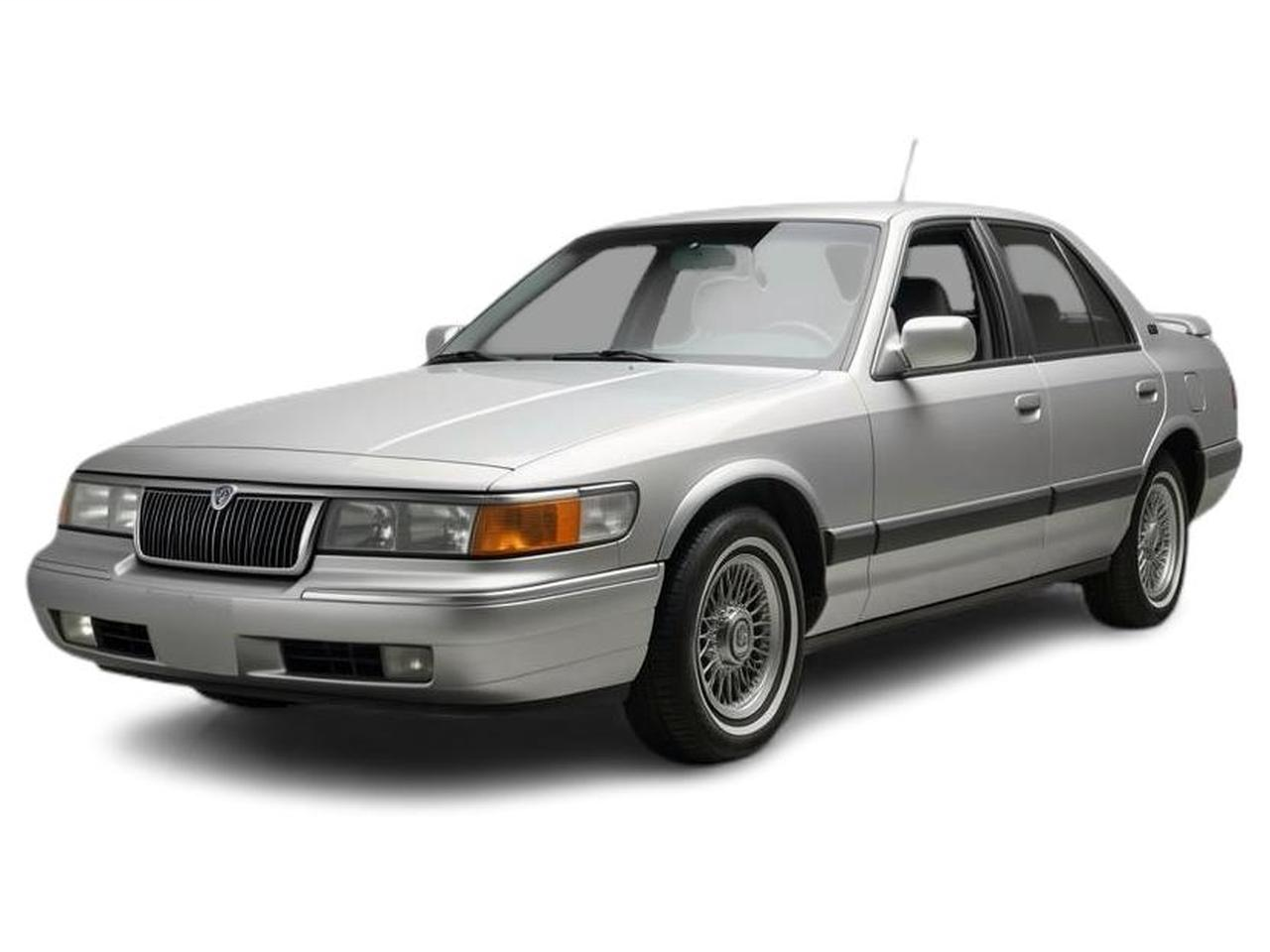
The 1993 Mercury Grand Marquis is a full-size luxury sedan with a rear-wheel-drive platform, part of the Panther platform shared with Ford and Lincoln. Produced from 1975 to 2011, the 1993 model year falls within the fourth generation. Key trims typically included the GS and the more upscale LS. New pricing ranged from the mid-$20,000s to the low-$30,000s. It stood out for its comfortable ride, spacious interior, and classic American styling, making it a popular choice for cruising and as a reliable daily driver.
The Good
The 1993 Grand Marquis excels in comfort with its plush ride and quiet cabin, appealing to those seeking relaxation. Its robust V8 engine offers smooth, confident power. Practical buyers appreciate its legendary reliability and spacious trunk, while its classic, dignified design evokes a sense of enduring value and timeless elegance.
The Bad
Potential buyers of the 1993 Grand Marquis should watch out for issues like aging suspension components, potential for rear-end differential leaks, and the possibility of electrical gremlins developing over time due to its age. Rust, especially in colder climates, can also be a concern on the body and frame.
1993 Mercury Grand Marquis: Quick Overview
- Engine Options:
- 4.6L SOHC V8 (Modular engine introduced in 1992)
- Horsepower:
- Approximately 190-210 hp (depending on specific configuration and year-to-year tuning)
- Torque:
- Around 255-270 lb-ft
- Fuel Economy (EPA Estimates):
- City: ~15-17 mpg
- Highway: ~20-23 mpg
- 0-60 Times:
- Roughly 9.0-10.5 seconds
- Towing Capacity:
- While not its primary function, equipped with the proper towing package, it could tow in the range of 5,000-7,000 lbs.
- Trim-Level Features (GS vs. LS):
- GS Trim (Base):
- Cloth upholstery
- Power windows and locks
- AM/FM stereo with cassette player
- Cruise control
- Tilt steering wheel
- Automatic climate control
- Rear-wheel drive
- Four-wheel ABS (Anti-lock Braking System)
- LS Trim (Luxury Sport):
- All GS features, plus:
- Leather seating surfaces
- Power-adjustable front seats
- Automatic dimming rearview mirror
- Premium sound system with more speakers
- Optional sunroof
- Optional upgraded wheels
- Front bucket seats with center console (less common than bench)
- More sound deadening for a quieter cabin
- All GS features, plus:
- GS Trim (Base):
1993 Mercury Grand Marquis Specifications
Vehicle Information
| Year | 1993 |
| Make | Mercury |
| Model | Grand Marquis |
| Trim | - |
| Style | - |
| Type | Sedan |
| Category | Minicompact Car |
Manufacturing Details
| Made In | Canada |
| Manufacturing City | OAKVILLE |
Dimensions
| Doors | 4-Door |
| Curb Weight | - |
| Gross Vehicle Weight Rating | - |
| Overall Height | - |
| Overall Length | - |
| Overall Width | - |
| Wheelbase Length | - |
| Standard Seating | - |
Engine & Performance
| Engine | 4.6 8 |
| Engine Size | 4.6L |
| Engine Cylinders | 8 |
| Transmission | - |
| Transmission Type | - |
| Transmission Speeds | - |
| Drivetrain | - |
Additional Features
| Anti-Brake System | - |
| Steering Type | - |
Pricing
| Manufacturer Suggested Retail Price (MSRP) | - |
| Invoice Price | - |
| Delivery Charges | - |
Vehicle History Report
Vehicle
Specifications
Specifications
Ownership
History
History
All History
Events
Events
NMVTIS Title
History Check
History Check
Salvage/Rebuilt
Check
Check
Accident
Check
Check
Theft
Check
Check
Open Lien
Check
Check
Past Sale
Listings
Listings
Safety
Recalls
Recalls
Odometer
Check
Check
Market Price
Analysis
Analysis
What Problems Does the 1993 Mercury Grand Marquis Have?
The 1993 Mercury Grand Marquis, while generally considered a reliable vehicle, is not without its common issues, especially given its age. One of the most frequently reported problems involves the air suspension system, particularly the rear air springs, which can degrade and leak over time, leading to a saggy rear end or uneven ride height. While many 1993 models may have already had this addressed or replaced with conventional springs, it's a key area to inspect. Ignition system components, such as the coil packs and spark plug wires, can also become a source of misfires and rough running. The instrument cluster, particularly the digital odometer or gauges, has been known to fail or become erratic.
Cooling system issues, including radiator leaks and failing water pumps, are also not uncommon in vehicles of this vintage. The transmission, typically the AOD-E or 4R70W, is generally robust, but fluid changes are critical. Neglect can lead to slipping or failure.
Electrical gremlins, a common theme for many older vehicles, can manifest in various ways, from malfunctioning power windows and locks to issues with the lighting or central locking system. The fuel pump, located in the tank, is another wear item that can eventually fail.
Rust is a significant concern, particularly in areas with harsh winters or coastal exposure. Check the rocker panels, wheel wells, rear quarter panels, and the frame for corrosion. Body mounts can also rust out, affecting structural integrity.
As for recalls, specific recalls for the 1993 model year would require detailed VIN-based checks, but common areas for recalls on the Panther platform during this era could include issues with the steering column, airbags (though less common in '93), or braking systems. Owners should always check the NHTSA website for any applicable recalls for a specific vehicle. Long-term reliability heavily depends on consistent maintenance and addressing issues promptly. The modular V8 engine is known for its durability if properly maintained.
Cooling system issues, including radiator leaks and failing water pumps, are also not uncommon in vehicles of this vintage. The transmission, typically the AOD-E or 4R70W, is generally robust, but fluid changes are critical. Neglect can lead to slipping or failure.
Electrical gremlins, a common theme for many older vehicles, can manifest in various ways, from malfunctioning power windows and locks to issues with the lighting or central locking system. The fuel pump, located in the tank, is another wear item that can eventually fail.
Rust is a significant concern, particularly in areas with harsh winters or coastal exposure. Check the rocker panels, wheel wells, rear quarter panels, and the frame for corrosion. Body mounts can also rust out, affecting structural integrity.
As for recalls, specific recalls for the 1993 model year would require detailed VIN-based checks, but common areas for recalls on the Panther platform during this era could include issues with the steering column, airbags (though less common in '93), or braking systems. Owners should always check the NHTSA website for any applicable recalls for a specific vehicle. Long-term reliability heavily depends on consistent maintenance and addressing issues promptly. The modular V8 engine is known for its durability if properly maintained.
How long will the 1993 Mercury Grand Marquis last?
With diligent maintenance, a 1993 Mercury Grand Marquis can realistically achieve 200,000 to 300,000 miles or more, extending its service life well beyond 20 years. Many owners report their Grand Marquis reaching these high mileage figures. The Panther platform's body-on-frame construction contributes to its long-term durability. Key to longevity is regular fluid changes (oil, transmission, coolant), addressing minor issues before they escalate, and proactive rust prevention. Weaknesses that emerge over time are typically related to wear-and-tear on suspension components, aging seals and hoses, and potential electrical glitches. However, the core mechanical components, especially the 4.6L V8 engine and the drivetrain, are known for their robustness, making it a highly durable vehicle when cared for.
What Technology & Safety Features are Included?
The 1993 Mercury Grand Marquis was a product of its time, with technology focused on comfort and convenience rather than cutting-edge digital integration. Standard tech features typically included an AM/FM stereo with a cassette player, power windows, power door locks, cruise control, and a tilt steering wheel. Air conditioning and automatic climate control were also common, providing a comfortable cabin environment.
Optional features could elevate the experience significantly. These often included a premium sound system with more speakers, a power moonroof, and an auto-dimming rearview mirror. While navigation systems were not a feature of this era, some models might have offered a compass integrated into the rearview mirror or dash.
Driver-assistance features were minimal by today's standards. The primary safety technology was the standard four-wheel Anti-lock Braking System (ABS), which helped maintain steering control during hard braking. Seatbelts were a given, and the car's substantial mass provided a degree of passive safety. Airbags were not standard equipment on the 1993 model year Grand Marquis; they became standard on this platform in later years.
Crash-test ratings for vehicles from this era are less standardized and less comprehensive than modern NHTSA or IIHS tests. However, the Panther platform, with its robust body-on-frame construction, was generally considered to offer good occupant protection for its time. Larger vehicles from this period often performed relatively well in frontal impacts due to their mass and frame structure. Side-impact and rollover testing were less common or less stringent. It's important to note that safety standards and testing protocols have evolved dramatically since 1993, so its performance in contemporary crash tests would likely be poor.
Optional features could elevate the experience significantly. These often included a premium sound system with more speakers, a power moonroof, and an auto-dimming rearview mirror. While navigation systems were not a feature of this era, some models might have offered a compass integrated into the rearview mirror or dash.
Driver-assistance features were minimal by today's standards. The primary safety technology was the standard four-wheel Anti-lock Braking System (ABS), which helped maintain steering control during hard braking. Seatbelts were a given, and the car's substantial mass provided a degree of passive safety. Airbags were not standard equipment on the 1993 model year Grand Marquis; they became standard on this platform in later years.
Crash-test ratings for vehicles from this era are less standardized and less comprehensive than modern NHTSA or IIHS tests. However, the Panther platform, with its robust body-on-frame construction, was generally considered to offer good occupant protection for its time. Larger vehicles from this period often performed relatively well in frontal impacts due to their mass and frame structure. Side-impact and rollover testing were less common or less stringent. It's important to note that safety standards and testing protocols have evolved dramatically since 1993, so its performance in contemporary crash tests would likely be poor.
What Colors Options are Available?
1993 Mercury Grand Marquis Prices and Market Value
When new, the 1993 Mercury Grand Marquis typically ranged from approximately $23,000 for the base GS trim to over $28,000 for a well-equipped LS model. These prices positioned it as an accessible luxury sedan.
In the current used market (as of late 2023/early 2024), prices for a 1993 Grand Marquis vary widely. Well-maintained, low-mileage examples can fetch anywhere from $3,000 to $8,000, often appealing to collectors or those seeking a classic cruiser. More common examples with higher mileage and some wear and tear can be found for $1,500 to $3,000.
Depreciation was significant in the first 5-10 years, as is typical for most vehicles. However, the Grand Marquis has largely reached its depreciation floor and now holds its value reasonably well, especially in good condition. Factors affecting resale value include overall condition, mileage, maintenance history, rust presence, and trim level. A pristine LS model will always command a premium over a worn GS.
In the current used market (as of late 2023/early 2024), prices for a 1993 Grand Marquis vary widely. Well-maintained, low-mileage examples can fetch anywhere from $3,000 to $8,000, often appealing to collectors or those seeking a classic cruiser. More common examples with higher mileage and some wear and tear can be found for $1,500 to $3,000.
Depreciation was significant in the first 5-10 years, as is typical for most vehicles. However, the Grand Marquis has largely reached its depreciation floor and now holds its value reasonably well, especially in good condition. Factors affecting resale value include overall condition, mileage, maintenance history, rust presence, and trim level. A pristine LS model will always command a premium over a worn GS.
1993 Mercury Grand Marquis Cost of Ownership
Ownership costs for a 1993 Mercury Grand Marquis are generally moderate to low, making it an economical choice for many. Insurance premiums are typically affordable due to its age and market value. Fuel costs will be a consideration, with its V8 engine averaging around 18-20 mpg combined; using regular unleaded gasoline is standard. Routine maintenance, like oil changes and tire rotations, is inexpensive. While parts are generally readily available and affordable, more significant repairs, such as transmission work or significant suspension overhauls, can increase costs. Overall, it's considered cost-effective to own, especially if you can perform some basic maintenance yourself.
1993 Mercury Grand Marquis Fuel Efficiency
Fuel Type
Gasoline
Fuel Capacity
-
City Mileage
-
Highway Mileage
-
1993 Mercury Grand Marquis Safety Rating
NHTSA
1993 Mercury Grand Marquis Recalls & Defects
Electrical System
Recall date
1999-05-19
Recall no.
99v124000
Source
NHTSA
Summary
Vehicle Description: Passenger Vehicles. THE Speed Control Deactivation Switch CAN Develop A Resistive Short IN THE Electrical Circuit That Could Potentially Result IN AN Underhood Fire. A Fire IS Possible Both When THE Vehicle IS Running and When THE Vehicle Engine IS Off. Also, THE Short Could Disable THE Speed Control System or Cause THE Brake Light Fuse TO Open.
Consequence
A Fire CAN Originate IN THE Left Front Underhood Area.
Remedy
Dealers Will Install A NEW Speed Control Deactivation Switch and Connector Shell. Owner Notification Began MAY 20, 1999.
Notes
Ford Recall NO. 99s15.this Recall HAS Been Supersedes BY Ford Recall NO. 05s28 (Please SEE 05v017, 05v388, 06v286 and 07v336). Owners WHO Take Their Vehicles TO AN Authorized Dealer ON AN Agreed Upon Service Date and DO NOT Receive THE Free Remedy Within A Reasonable Time Should Contact Ford AT 1-800-392-3673. Also Contact THE National Highway Traffic Safety Administration's Auto Safety Hotline AT 1-888-dash-2-dot (1-888-327-4236).
Vehicle Speed Control
Recall date
2007-08-03
Recall no.
07v336000
Source
NHTSA
Summary
ON Certain Pickup Trucks, Passenger Vehicles, Sport Utility Vehicles, and Motor Homes Chassis, THE Speed Control Deactivation Switch May, Under Certain Conditions, Leak Internally and Then Overheat, Smoke, or Burn.
Consequence
This Could Result IN AN Underhood Fire.
Remedy
Dealers Will Install A Fused Wiring Harness. Owners OF THE Passenger Cars Included IN This Campaign Will BE Instructed TO Return Their Vehicles TO Their Dealers TO Have THE Speed Control Deactivation Switch Disconnected AS AN Interim Repair. AS Soon AS Repair Parts ARE Available (Expected October 2007), Owners Will BE Instructed TO Return TO THE Dealers FOR Installation OF A Fused Wiring Harness. THE Recall Began ON August 13, 2007, and Mailing Completed BY September 19, 2007. Owners MAY Contact Ford AT 1-888-222-2751.
Notes
Ford Recall NO. 05s28.customers MAY Also Contact THE National Highway Traffic Safety Administration;s Vehicle Safety Hotline AT 1-888-327-4236 (Tty 1-800-424-9153), or GO TO Http://Www.safercar.gov.
Vehicle Speed Control:cruise Control
Recall date
2008-02-04
Recall no.
08v051000
Source
NHTSA
Summary
Ford IS Recalling 225,000 MY 1992-2003 Econoline, MY 1993-1995 Taurus Sho, MY 1992-1998 Crown Victoria, MY 1993 Bronco, F-series, MY 1995-1997 F-series Super Duty Stripped Chassis, MY 1992-1998 Mercury Grand Marquis, and MY 1992-1995 Lincoln Town Car Vehicles. THE Affected Vehicles Were Previously Repaired Using A Wiring Harness That IS NOT Compatible With THE Vehicle Circuit Polarity.
Consequence
AS A Result, THE Fuse IS Located IN THE Output Circuit Rather Than IN THE Intended Input Power Feed Circuit, and MAY NOT Offer THE Intended Protection IN THE Event OF AN Electrical Short TO Ground.
Remedy
Dealers Will Install A NEW Wiring Harness, or Replace THE Mating Electrical Component. THE Recall Began ON February 18, 2008. Owners MAY Contact Ford AT 1-800-392-3673.
Notes
Ford Recall NO. 08s01.customers MAY Also Contact THE National Highway Traffic Safety Administration's Vehicle Safety Hotline AT 1-888-327-4236 (Tty 1-800-424-9153), or GO TO Http://Www.safercar.gov.
1993 Mercury Grand Marquis Insurance
Insurance for a 1993 Mercury Grand Marquis is moderately priced, reflecting its status as a Sedan with strong safety ratings and
reasonable repair costs.
How Does the 1993 Mercury Grand Marquis Compare to Other Sedan?
The 1993 Mercury Grand Marquis competed in a segment of large, comfortable American sedans. Its primary rivals included the Ford Crown Victoria (its platform mate), the Chevrolet Caprice, and the Buick Roadmaster (though the Roadmaster, in its later iterations, was more of a V8-powered cruiser with a different character).
Performance: The Grand Marquis, with its 4.6L V8, offered smooth and adequate acceleration, focusing on comfortable cruising rather than outright speed. The Crown Victoria shared this, while the Caprice often had a more potent V8 option (like the LT1 in later models) offering slightly sportier performance. The Roadmaster also offered a potent V8 but was geared more towards stately comfort.
Features: The Grand Marquis, especially in LS trim, was well-equipped for its time, offering plush interiors and a quiet ride that rivaled or surpassed many competitors. Buick often held an edge in perceived luxury and interior refinement. Ford and Mercury focused on a more traditional, robust American feel.
Reliability: The Panther platform (Grand Marquis, Crown Vic, civilian Caprice) is legendary for its robust chassis and drivetrain. While specific issues can arise with age, they are generally simpler to repair and more durable than some European or Japanese competitors of the era. Buick often had more complex electronics that could be prone to issues.
Price: The Grand Marquis offered excellent value, providing a near-luxury experience at a price point below true luxury brands like Lincoln or Cadillac. The Ford Crown Victoria was typically a bit less expensive. The Caprice and Roadmaster often carried similar or slightly higher price tags.
Alternatives:
Performance: The Grand Marquis, with its 4.6L V8, offered smooth and adequate acceleration, focusing on comfortable cruising rather than outright speed. The Crown Victoria shared this, while the Caprice often had a more potent V8 option (like the LT1 in later models) offering slightly sportier performance. The Roadmaster also offered a potent V8 but was geared more towards stately comfort.
Features: The Grand Marquis, especially in LS trim, was well-equipped for its time, offering plush interiors and a quiet ride that rivaled or surpassed many competitors. Buick often held an edge in perceived luxury and interior refinement. Ford and Mercury focused on a more traditional, robust American feel.
Reliability: The Panther platform (Grand Marquis, Crown Vic, civilian Caprice) is legendary for its robust chassis and drivetrain. While specific issues can arise with age, they are generally simpler to repair and more durable than some European or Japanese competitors of the era. Buick often had more complex electronics that could be prone to issues.
Price: The Grand Marquis offered excellent value, providing a near-luxury experience at a price point below true luxury brands like Lincoln or Cadillac. The Ford Crown Victoria was typically a bit less expensive. The Caprice and Roadmaster often carried similar or slightly higher price tags.
Alternatives:
- Similar: Ford Crown Victoria (virtually identical mechanicals, often slightly less 'premium' styling), Chevrolet Caprice (similar size and RWD, but often with a different driving dynamic and styling).
- Higher-end: Lincoln Town Car (more opulent, longer wheelbase, air suspension standard), Cadillac Sedan DeVille (front-wheel drive, different luxury philosophy).
- Consider if seeking different flavor: Buick LeSabre/Park Avenue (front-wheel drive, also focused on comfort but with a different engineering approach).
Final Verdict: Is the 1993 Mercury Grand Marquis a Good Sedan?
The 1993 Mercury Grand Marquis is ideal for buyers seeking a comfortable, reliable, and spacious full-size sedan with a classic American feel. It's perfect for those who prioritize a smooth ride, ample passenger and cargo room, and long-term durability over cutting-edge technology or sporty performance. It's definitely worth buying as a used vehicle, especially for individuals on a budget looking for a dependable daily driver, a highway cruiser, or even a first car for a new driver (given its forgiving nature).
When buying, prioritize well-maintained examples with a solid maintenance history, and pay close attention to rust and the condition of the suspension. The LS trim offers a more luxurious experience, but the GS is still a very capable and comfortable car. It is a fantastic value proposition in the used market, offering a substantial and comfortable vehicle for a modest price.
