
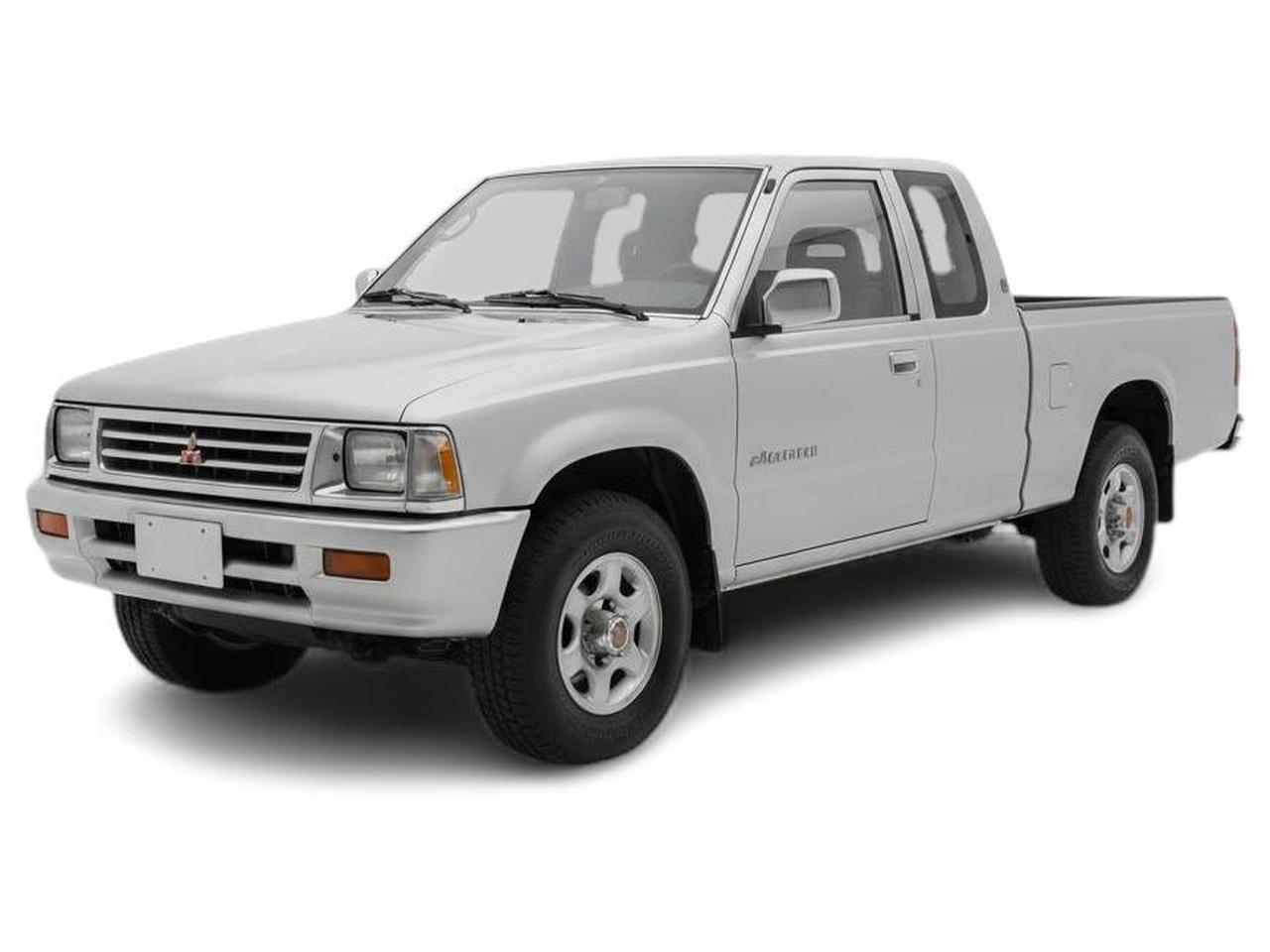
The 1990 Mitsubishi Mighty Max, also known as the Mitsubishi Triton or L200 in other markets, is a compact pickup truck with a heritage dating back to the late 1970s. For 1990, it offered a robust, no-nonsense package. Available in regular and extended cab configurations, key trims typically included the base, LS, and XLS. While precise new pricing varied, it was generally an affordable option in its segment. Its popularity stemmed from its rugged construction, dependable performance, and practical utility, making it a go-to for work and light-duty hauling.
The Good
The 1990 Mighty Max boasts a reputation for mechanical reliability and straightforward engineering, appealing to practical buyers. Its agile performance for its class and durable construction offer peace of mind. For emotional buyers, its classic, no-frills truck design evokes a sense of capability and adventure.
The Bad
When considering a 1990 Mighty Max, be aware of potential rust issues, especially in the lower body panels and frame. Electrical gremlins, such as issues with the alternator or starter, can also arise. Older models may also exhibit worn suspension components and potential for engine oil leaks.
1990 Mitsubishi Mighty Max: Quick Overview
- Engine Options: The 1990 Mitsubishi Mighty Max was primarily offered with two engine choices:
- A 2.0-liter 4-cylinder engine.
- An optional 2.4-liter 4-cylinder engine.
- Horsepower:
- The 2.0-liter engine typically produced around 83 horsepower.
- The 2.4-liter engine offered a more robust output, generally in the range of 107-116 horsepower depending on specific configuration and market.
- Fuel Economy: Fuel economy figures for the 1990 Mighty Max varied based on engine, transmission, and driving conditions, but generally fell within the range of:
- Approximately 18-22 MPG in city driving.
- Approximately 22-26 MPG on the highway.
- 0-60 Times: Accurate 0-60 MPH times are not widely documented for this specific model year, but it was considered adequate for its class. Estimates suggest it would likely range from 10 to 13 seconds depending on the engine and drivetrain.
- Towing Capacity: Towing capacity was modest, typical for compact trucks of the era. Depending on the configuration (engine, drivetrain, and payload package), it could generally tow between 1,500 to 3,000 pounds. This was suitable for small trailers, boats, or utility equipment.
- Trim-Level Features: Key trim levels and their features often included:
- Base: Offered essential truck functionality, often with manual windows and locks, vinyl flooring, and a basic radio.
- LS: Typically added more creature comforts such as power windows and locks, upgraded interior trim, and potentially a better stereo system.
- XLS: Represented the top-tier trim, often featuring alloy wheels, air conditioning, more premium upholstery, and sometimes fog lights or sportier exterior accents.
- Common Features Across Trims: Rear-wheel drive was standard, with four-wheel drive available on many models. Both manual and automatic transmissions were offered. Standard safety features were basic for the time, usually including seatbelts and rudimentary crumple zones.
1990 Mitsubishi Mighty Max Specifications
Vehicle Information
| Year | 1990 |
| Make | Mitsubishi |
| Model | Mighty Max |
| Trim | - |
| Style | - |
| Type | Sport Utility Vehicle Cab; Long Bed |
| Category | Medium Truck |
Manufacturing Details
| Made In | Japan |
| Manufacturing City | - |
Dimensions
| Doors | - |
| Curb Weight | - |
| Gross Vehicle Weight Rating | - |
| Overall Height | - |
| Overall Length | - |
| Overall Width | - |
| Wheelbase Length | - |
| Standard Seating | - |
Engine & Performance
| Engine | 3.0 L V-6 |
| Engine Size | 3L |
| Engine Cylinders | 6 |
| Transmission | - |
| Transmission Type | - |
| Transmission Speeds | - |
| Drivetrain | Four-Wheel Drive |
Additional Features
| Anti-Brake System | - |
| Steering Type | - |
Pricing
| Manufacturer Suggested Retail Price (MSRP) | - |
| Invoice Price | - |
| Delivery Charges | - |
Vehicle History Report
Vehicle
Specifications
Specifications
Ownership
History
History
All History
Events
Events
NMVTIS Title
History Check
History Check
Salvage/Rebuilt
Check
Check
Accident
Check
Check
Theft
Check
Check
Open Lien
Check
Check
Past Sale
Listings
Listings
Safety
Recalls
Recalls
Odometer
Check
Check
Market Price
Analysis
Analysis
What Problems Does the 1990 Mitsubishi Mighty Max Have?
The 1990 Mitsubishi Mighty Max, while generally a dependable truck, does have a few common issues that owners and potential buyers should be aware of. One of the most prevalent concerns, particularly for vehicles of this age and origin, is rust. Corrosion can significantly affect the body panels, frame rails, and suspension components, especially in areas exposed to road salt or high humidity. Areas to meticulously inspect include the wheel wells, rocker panels, cab corners, and the bed floor.
Another area that can sometimes present problems is the electrical system. Issues with the alternator, starter motor, and wiring harnesses can occur as components age. Overheating can also be a concern if the cooling system, including the radiator and water pump, hasn't been properly maintained.
The manual transmission is generally robust, but clutch wear is a common maintenance item for any manual vehicle. Automatic transmissions can be reliable but may develop issues if fluid changes have been neglected.
Engine-wise, the 2.4-liter engine is known for its durability if maintained, but oil leaks from valve cover gaskets or oil pan gaskets are not uncommon. Timing belts require regular replacement, and failure to do so can lead to catastrophic engine damage.
Regarding recalls, specific recalls for the 1990 model year are not extensively documented in common databases, which is not unusual for vehicles of this vintage. However, owners should always check with the NHTSA or Mitsubishi for any potential safety recalls that may have been issued and not addressed. Long-term reliability is largely dependent on the vehicle's maintenance history and the owner's diligence in addressing minor issues before they become major ones. Thorough inspections, especially for rust and mechanical wear, are crucial when considering a purchase.
Another area that can sometimes present problems is the electrical system. Issues with the alternator, starter motor, and wiring harnesses can occur as components age. Overheating can also be a concern if the cooling system, including the radiator and water pump, hasn't been properly maintained.
The manual transmission is generally robust, but clutch wear is a common maintenance item for any manual vehicle. Automatic transmissions can be reliable but may develop issues if fluid changes have been neglected.
Engine-wise, the 2.4-liter engine is known for its durability if maintained, but oil leaks from valve cover gaskets or oil pan gaskets are not uncommon. Timing belts require regular replacement, and failure to do so can lead to catastrophic engine damage.
Regarding recalls, specific recalls for the 1990 model year are not extensively documented in common databases, which is not unusual for vehicles of this vintage. However, owners should always check with the NHTSA or Mitsubishi for any potential safety recalls that may have been issued and not addressed. Long-term reliability is largely dependent on the vehicle's maintenance history and the owner's diligence in addressing minor issues before they become major ones. Thorough inspections, especially for rust and mechanical wear, are crucial when considering a purchase.
How long will the 1990 Mitsubishi Mighty Max last?
Based on owner data and typical maintenance, a well-maintained 1990 Mitsubishi Mighty Max can achieve an average of 200,000 to 250,000 miles, and sometimes even more. The long-term durability of these trucks is a testament to their robust, relatively simple engineering. However, their biggest weakness over time is susceptibility to rust, which can compromise structural integrity if left unaddressed. Engines and drivetrains are generally hardy, but regular fluid changes, timely belt replacements, and addressing minor leaks promptly are key to extending their service life. Neglecting maintenance or allowing rust to take hold will significantly shorten their usable lifespan.
What Technology & Safety Features are Included?
The 1990 Mitsubishi Mighty Max is a product of its time, meaning its technology, entertainment, and safety features are quite basic by modern standards.
Technology and Entertainment:
Built-in tech was minimal. The primary entertainment system was typically an AM/FM radio, often with a single-disc cassette player as an upgrade. Higher trims might have offered a slightly more advanced stereo system with more speakers, but features like CD players or digital displays were non-existent. Air conditioning was often an optional feature, especially on lower trims, and manual climate control was standard. Power windows and door locks were also typically optional or found on higher trim levels like the LS or XLS.
Driver-Assistance Features:
Driver-assistance features were virtually nonexistent in the 1990 Mighty Max. Modern conveniences like cruise control, anti-lock braking systems (ABS), or traction control were not standard and were rare options, if available at all. The focus was on mechanical function rather than electronic aids.
Safety Features:
Safety features were rudimentary. Standard equipment included three-point seatbelts for front occupants and basic crumple zones designed into the vehicle's structure. Side-impact protection was minimal. Airbags were not standard and were not widely offered or adopted in compact trucks of this era.
Crash-Test Ratings:
Crash-test ratings for vehicles from 1990 are not as comprehensive or standardized as they are today. The National Highway Traffic Safety Administration (NHTSA) and the Insurance Institute for Highway Safety (IIHS) did not conduct the same rigorous testing protocols. Information on specific crash-test ratings for the 1990 Mighty Max is scarce and not comparable to modern standards. Generally, vehicles from this period offered significantly less protection in a collision compared to contemporary vehicles.
Technology and Entertainment:
Built-in tech was minimal. The primary entertainment system was typically an AM/FM radio, often with a single-disc cassette player as an upgrade. Higher trims might have offered a slightly more advanced stereo system with more speakers, but features like CD players or digital displays were non-existent. Air conditioning was often an optional feature, especially on lower trims, and manual climate control was standard. Power windows and door locks were also typically optional or found on higher trim levels like the LS or XLS.
Driver-Assistance Features:
Driver-assistance features were virtually nonexistent in the 1990 Mighty Max. Modern conveniences like cruise control, anti-lock braking systems (ABS), or traction control were not standard and were rare options, if available at all. The focus was on mechanical function rather than electronic aids.
Safety Features:
Safety features were rudimentary. Standard equipment included three-point seatbelts for front occupants and basic crumple zones designed into the vehicle's structure. Side-impact protection was minimal. Airbags were not standard and were not widely offered or adopted in compact trucks of this era.
Crash-Test Ratings:
Crash-test ratings for vehicles from 1990 are not as comprehensive or standardized as they are today. The National Highway Traffic Safety Administration (NHTSA) and the Insurance Institute for Highway Safety (IIHS) did not conduct the same rigorous testing protocols. Information on specific crash-test ratings for the 1990 Mighty Max is scarce and not comparable to modern standards. Generally, vehicles from this period offered significantly less protection in a collision compared to contemporary vehicles.
What Colors Options are Available?
1990 Mitsubishi Mighty Max Prices and Market Value
When new, the 1990 Mitsubishi Mighty Max was positioned as an affordable compact pickup truck. Pricing varied by trim and options but generally ranged from approximately $9,000 to $16,000. As with most vehicles of this age, depreciation has been substantial. Current used market prices for the 1990 Mighty Max typically range from $2,000 to $6,000, heavily dependent on condition, mileage, and whether it's a well-preserved example or a project vehicle. Factors significantly affecting resale value include the presence of rust (a major detractor), overall mechanical condition, maintenance history, and the desirability of specific trims or drivelines (e.g., 4WD models often command higher prices).
1990 Mitsubishi Mighty Max Cost of Ownership
The 1990 Mitsubishi Mighty Max is generally an economical vehicle to own. Insurance costs are typically low due to its age and lower market value. Fuel economy is decent, especially with the 2.4-liter engine, making it relatively inexpensive to run. Maintenance is straightforward and parts are generally affordable. However, repair costs can escalate if rust damage is extensive or if major mechanical components fail, as sourcing some specialized parts might become challenging. Overall, it's a cost-effective choice for ownership, provided it has been reasonably maintained and rust is not a significant issue.
1990 Mitsubishi Mighty Max Fuel Efficiency
Fuel Type
Gasoline
Fuel Capacity
-
City Mileage
-
Highway Mileage
-
1990 Mitsubishi Mighty Max Recalls & Defects
Seat Belts:front:buckle Assembly
Recall date
1995-05-24
Recall no.
95v103004
Source
NHTSA
Summary
THE Front Safety Belt Buckle Release Buttons CAN Break. These RED Plastic Release Buttons ARE Marked "press." IF A Button Breaks, Pieces CAN Fall Into THE Buckle Assembly Causing THE Buckle TO Operate Improperly.
Consequence
THE Safety Belts Would NOT Provide Adequate Protection TO AN Occupant IN A Vehicle Crash.
Remedy
Owners Should Promptly Check THE Condition and Operation OF Both Front Safety Belt Buckles and Carefully Inspect THE RED Release Button FOR ANY Breaks or Cracks. They Should Ensure That Both Buckles ARE Operating Properly BY Inserting Each Latch Plate Into ITS Buckle, Tugging ON THE Belt TO Make Sure THE Latch IS Securely Locked, and Then Pressing THE Release Button. THE Latch Plate Should POP OUT OF THE Buckle When THE Button IS Pressed. IF Either Release Button Shows A Sign OF Breaking or Cracking or IF Either Buckle Fails TO Operate Properly, Owners Should Promptly Contact Their Authorized Dealer TO Schedule AN Appointment TO Have THE Buckle Replaced or Repaired, Free OF Charge. THE Manufacturer IS Developing A Remedy Designed TO Prevent Failure OF THE Buttons That ARE NOT Currently Broken.
Notes
System: Interior; Seat Belts; Belt Buckles.vehicle Description: Passenger Vehicles and Light Duty Trucks and Vans Equipped With Safety Belts Made BY Takata Corporation.note: IF Your Vehicle IS Presented TO AN Authorized Dealer ON AN Agreed Upon Service Date and THE Remedy IS NOT Provided Free OF Charge Within A Reasonable Time, Please Contact Mitsubishi AT 1-800-222-0037. Also Contact THE National Highway Traffic Safety Administration's Auto Safety Hotline AT 1-800-424-9393.
1990 Mitsubishi Mighty Max Insurance
Insurance for a 1990 Mitsubishi Mighty Max is moderately priced, reflecting its status as a Sport Utility Vehicle Cab; Long Bed with strong safety ratings and
reasonable repair costs.
How Does the 1990 Mitsubishi Mighty Max Compare to Other Sport Utility Vehicle Cab; Long Bed?
The 1990 Mitsubishi Mighty Max competed in the compact pickup truck segment against strong rivals like the Toyota Hilux/Pickup (which became the Tacoma later), Nissan Hardbody/D21, and Ford Ranger/Mazda B-Series.
Performance: In terms of raw performance, the Mighty Max's available 2.4-liter engine offered competitive power for its class, often on par with or slightly better than base models of its rivals. However, the legendary reliability and often more powerful engine options of the Toyota and Nissan trucks gave them an edge.
Features: Feature-wise, the Mighty Max was generally utilitarian. While higher trims offered conveniences like power windows and A/C, it lagged behind some competitors that were beginning to offer more advanced options even in the late 80s/early 90s. Toyota and Nissan often provided slightly more refined interiors and a wider range of optional amenities.
Reliability: The Mighty Max built a reputation for decent reliability, but it wasn't quite at the bulletproof level of its Japanese counterparts, particularly Toyota. Rust is a more significant concern for the Mighty Max compared to the typically more rust-resistant Toyota pickups of that era. Nissan's Hardbody was also known for its robustness.
Price: The Mighty Max was often competitively priced, making it an attractive option for budget-conscious buyers. It generally offered good value for money, especially when compared to the premium pricing sometimes associated with the most popular Toyota and Nissan models.
Alternatives:
- Toyota Hilux/Pickup: For those prioritizing ultimate reliability and resale value, the Toyota Pickup (pre-Tacoma) is an excellent alternative. Often more expensive on the used market, but known for longevity.
- Nissan Hardbody/D21: Another strong contender, the Nissan Hardbody is renowned for its tough build quality and reliable engines. Often considered on par with or slightly above the Mighty Max in terms of durability.
- Ford Ranger/Mazda B-Series: These offered a wider range of engine choices and configurations, including more powerful V6 options in later years, which the Mighty Max lacked. However, their long-term reliability can be more variable compared to the Japanese competitors.
Performance: In terms of raw performance, the Mighty Max's available 2.4-liter engine offered competitive power for its class, often on par with or slightly better than base models of its rivals. However, the legendary reliability and often more powerful engine options of the Toyota and Nissan trucks gave them an edge.
Features: Feature-wise, the Mighty Max was generally utilitarian. While higher trims offered conveniences like power windows and A/C, it lagged behind some competitors that were beginning to offer more advanced options even in the late 80s/early 90s. Toyota and Nissan often provided slightly more refined interiors and a wider range of optional amenities.
Reliability: The Mighty Max built a reputation for decent reliability, but it wasn't quite at the bulletproof level of its Japanese counterparts, particularly Toyota. Rust is a more significant concern for the Mighty Max compared to the typically more rust-resistant Toyota pickups of that era. Nissan's Hardbody was also known for its robustness.
Price: The Mighty Max was often competitively priced, making it an attractive option for budget-conscious buyers. It generally offered good value for money, especially when compared to the premium pricing sometimes associated with the most popular Toyota and Nissan models.
Alternatives:
- Toyota Hilux/Pickup: For those prioritizing ultimate reliability and resale value, the Toyota Pickup (pre-Tacoma) is an excellent alternative. Often more expensive on the used market, but known for longevity.
- Nissan Hardbody/D21: Another strong contender, the Nissan Hardbody is renowned for its tough build quality and reliable engines. Often considered on par with or slightly above the Mighty Max in terms of durability.
- Ford Ranger/Mazda B-Series: These offered a wider range of engine choices and configurations, including more powerful V6 options in later years, which the Mighty Max lacked. However, their long-term reliability can be more variable compared to the Japanese competitors.
Final Verdict: Is the 1990 Mitsubishi Mighty Max a Good Sport Utility Vehicle Cab; Long Bed?

The 1990 Mitsubishi Mighty Max is ideal for budget-conscious buyers seeking a functional, no-frills compact pickup for light-duty hauling, occasional off-roading (especially 4WD models), or as a reliable work vehicle. It's worth buying if found in good condition with minimal rust and a solid maintenance history. Prospective buyers should prioritize models with the 2.4-liter engine for better performance and consider LS or XLS trims for enhanced comfort features. It's a strong contender on the used market for those who value simplicity and affordability over modern amenities, but thorough inspection for rust is paramount before any purchase. New models are obviously unavailable, making the used market the only option.