The 1997 Freightliner FL80 is a robust Class 7 truck, renowned for its versatility and durability in vocational applications. While specific trims varied based on customization, it generally served as a chassis for dump trucks, box trucks, and specialized equipment. Its popularity stems from its rugged build, reliable components, and adaptability to demanding work environments, making it a workhorse in construction and commercial fleets.
The Good
The FL80 offers exceptional reliability and powerful performance, built for tough jobs. Its practical design prioritizes driver functionality and longevity, providing a solid value proposition for businesses seeking a dependable, long-lasting work vehicle that instills confidence.
The Bad
Owners should be aware of potential issues with older electrical systems, especially wiring harnesses and sensor failures. Rust on the frame and body is also a common concern due to age and exposure. Regular maintenance is crucial to mitigate these potential weaknesses.
1997 Freightliner FL80: Quick Overview
- Engine Options: The 1997 Freightliner FL80 was typically equipped with Detroit Diesel engines, most commonly the Series 60 and the MBE 900/4000. Cummins ISL and ISC engines were also available as options in some configurations.
- Horsepower: Horsepower ratings varied significantly based on the specific engine and its tuning. Detroit Diesel Series 60 engines could range from approximately 300 hp to over 500 hp. MBE engines typically offered lower horsepower, often in the 200-300 hp range. Cummins options also provided a wide spectrum, usually between 250 hp and 450 hp.
- Fuel Economy: Fuel economy for a Class 7 truck like the FL80 is highly dependent on the specific engine, transmission, load, driving conditions, and axle ratios. A general estimate for highway driving might be in the range of 6-8 miles per gallon (MPG), but this can drop significantly under heavy load or in stop-and-go city driving.
- 0-60 Times: 0-60 mph acceleration times are not a standard metric for this class of vehicle and are generally not applicable or tested. These trucks are designed for hauling and work, not for rapid acceleration.
- Towing Capacity: The towing capacity of a 1997 Freightliner FL80 is determined by its Gross Vehicle Weight Rating (GVWR) and Gross Combination Weight Rating (GCWR), as well as the specific configuration (e.g., chassis type, axles, suspension). As a Class 7 truck, it is designed for substantial hauling and can typically tow trailers with Gross Trailer Weight (GTW) ranging from 20,000 lbs up to 70,000 lbs or more, depending on its rating and configuration.
- Trim-Level Features: As a commercial truck chassis, the FL80 did not have traditional 'trim levels' like passenger vehicles. Features were dictated by the vocational application and customer specifications. Common configurations included:
- Chassis Types: Day cab, flat front, extended cab options.
- Suspension: Various spring and air suspension options to handle different load requirements.
- Braking Systems: Air brakes were standard.
- Transmission Options: Manual (e.g., Eaton Fuller) and automatic transmissions were available.
- Body Mounting: Designed to accommodate custom bodies such as dump beds, service bodies, van bodies, flatbeds, and specialized vocational equipment.
- Interior: Basic, functional driver-focused interiors with durable materials. Air conditioning and power steering were common amenities.
1997 Freightliner FL80 Specifications
Vehicle Information
| Year | 1997 |
| Make | Freightliner |
| Model | FL80 |
| Trim | - |
| Style | - |
| Type | Truck |
| Category | Medium Truck |
Manufacturing Details
| Made In | United States |
| Manufacturing City | CLEVELAND |
Dimensions
| Doors | - |
| Curb Weight | - |
| Gross Vehicle Weight Rating | 33001 pounds |
| Overall Height | - |
| Overall Length | - |
| Overall Width | - |
| Wheelbase Length | - |
| Standard Seating | - |
Engine & Performance
| Engine | 7.2L I6 |
| Engine Size | 7.2L |
| Engine Cylinders | 6 |
| Transmission | - |
| Transmission Type | - |
| Transmission Speeds | - |
| Drivetrain | 6x4 |
Additional Features
| Anti-Brake System | - |
| Steering Type | - |
Pricing
| Manufacturer Suggested Retail Price (MSRP) | - |
| Invoice Price | - |
| Delivery Charges | - |
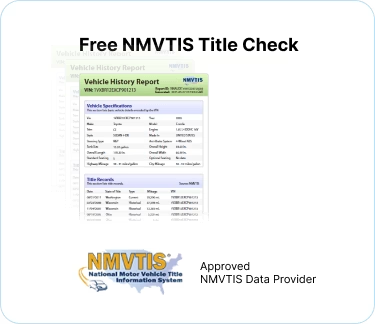
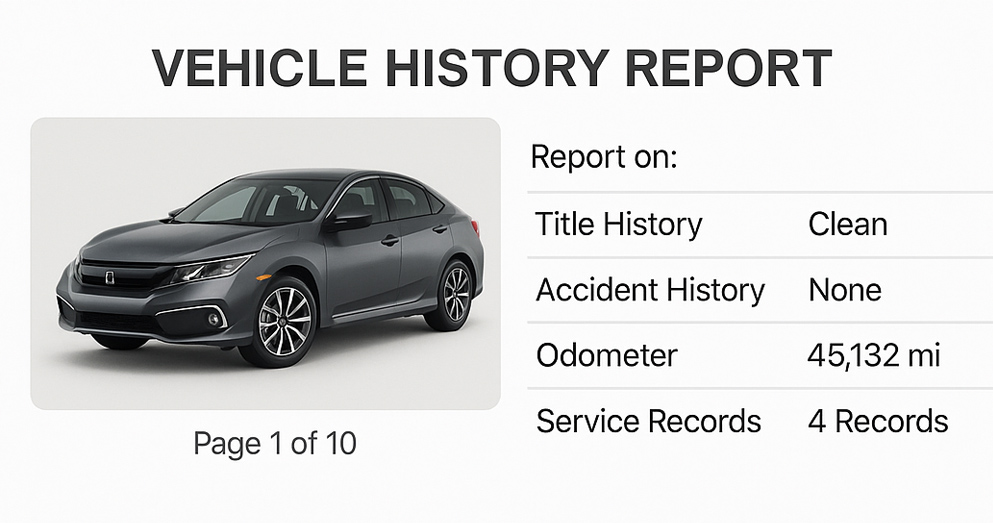
Vehicle History Report
Vehicle
Specifications
Specifications
Ownership
History
History
All History
Events
Events
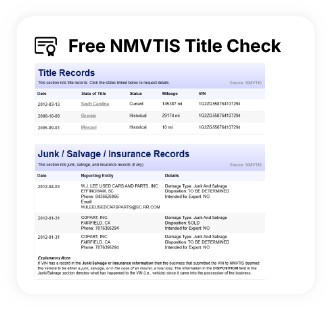
NMVTIS Title
History Check
History Check
Salvage/Rebuilt
Check
Check
Accident
Check
Check
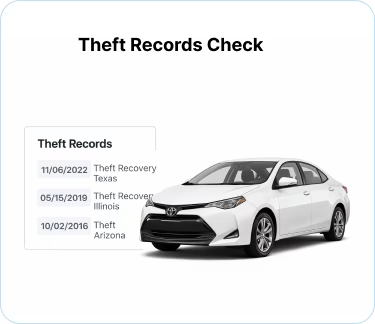
Theft
Check
Check
Open Lien
Check
Check
Past Sale
Listings
Listings
Safety
Recalls
Recalls
Odometer
Check
Check
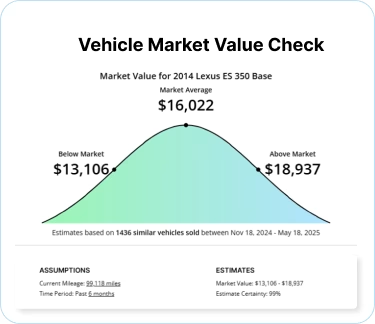
Market Price
Analysis
Analysis
What Problems Does the 1997 Freightliner FL80 Have?
The 1997 Freightliner FL80, being a commercial vehicle of its era, has a history of certain common issues and potential long-term concerns. While specific model year recalls for 1997 are not widely publicized as a single broad campaign, it's crucial to consider that trucks of this age are subject to wear and tear. One frequently reported area of concern is the electrical system. Wiring harnesses can degrade over time, leading to intermittent electrical gremlins, sensor failures, and issues with lighting or instrumentation. Corroded connectors and grounds are also common culprits. Another significant concern, particularly for trucks operating in varied climates or near coastal areas, is rust and corrosion. The frame, cab mounts, and body panels can be susceptible to rust, which can compromise structural integrity if left unaddressed. This is especially true for units that have seen heavy use in construction or road salt environments. Engine and transmission reliability is generally good if properly maintained, but components like the fuel injectors, turbochargers, and cooling systems can require attention as the mileage accumulates. For Detroit Diesel engines, specific issues like liner seal leaks could emerge. Clutch wear and transmission synchro issues might be present in manual transmissions. Air brake systems, while robust, require diligent maintenance; issues with air leaks, brake chamber failures, or valve malfunctions can occur due to age and wear. Suspension components, such as leaf springs and bushings, can wear out, leading to a rougher ride and potential handling issues. Specific to the 1997 model year, while no major widespread recalls are prominently documented, it's always advisable to check with the VIN for any outstanding manufacturer service bulletins or recalls that might have been issued and not addressed. Long-term reliability hinges heavily on the quality of initial maintenance, the severity of the operating conditions, and the owner's commitment to proactive repairs and preventative care. Without meticulous upkeep, the potential for costly repairs to major systems increases significantly.
How long will the 1997 Freightliner FL80 last?
Based on owner data and typical usage for a commercial truck, the 1997 Freightliner FL80 can achieve an average of 50,000 to 100,000 miles per year. With consistent, diligent maintenance, these trucks are designed for longevity and can easily surpass 500,000 to 1,000,000 miles over their service life. Their long-term durability is a testament to their robust construction. However, weaknesses tend to emerge over time, primarily related to rust on the frame and body, and wear on electrical components and suspension parts. Engines and transmissions, if well-maintained, can remain reliable for hundreds of thousands of miles, but eventual rebuilds are a reality for high-mileage units.
What Technology & Safety Features are Included?
The 1997 Freightliner FL80, as a commercial truck of its era, prioritizes functionality and safety over advanced technology. Built-in tech was primarily focused on operational efficiency and driver awareness rather than infotainment or driver assistance. The core safety features include robust air brake systems, designed for the heavy loads this vehicle carries. Standard safety equipment would typically encompass seat belts, large mirrors for maximum visibility, and powerful headlights. Power steering was a common feature to aid in maneuverability. While advanced driver-assistance systems (ADAS) like lane departure warnings or adaptive cruise control were non-existent, the vehicle's design aimed for good visibility with its large windshield and cab-over-engine configuration.
Entertainment features were basic, often limited to an AM/FM radio and possibly a cassette player. Options might have included a CB radio for long-haul communication. There were no integrated navigation systems or digital displays as we see in modern vehicles.
Optional features could have included air conditioning, upgraded seating for driver comfort on long hauls, and possibly auxiliary lighting. Some specialized vocational upfits might have included integrated toolboxes or specific equipment controls.
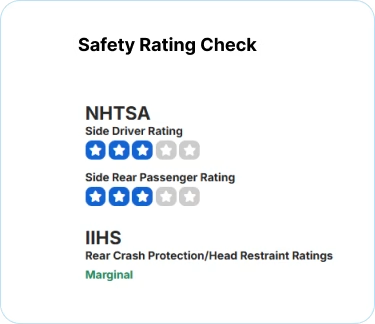
Crash-test ratings for commercial trucks like the Freightliner FL80 are generally not available in the same format as passenger vehicles. Safety assessments for this class of vehicle focus more on the structural integrity of the cab under load, rollover resistance, and the effectiveness of braking systems. Manufacturers typically conduct internal testing and adhere to strict industry safety standards rather than undergoing standardized third-party crash tests. The FL80 was built with a strong, utilitarian frame and cab designed to withstand significant operational stresses, which inherently contributes to a degree of passive safety for the occupants.
Entertainment features were basic, often limited to an AM/FM radio and possibly a cassette player. Options might have included a CB radio for long-haul communication. There were no integrated navigation systems or digital displays as we see in modern vehicles.
Optional features could have included air conditioning, upgraded seating for driver comfort on long hauls, and possibly auxiliary lighting. Some specialized vocational upfits might have included integrated toolboxes or specific equipment controls.
Crash-test ratings for commercial trucks like the Freightliner FL80 are generally not available in the same format as passenger vehicles. Safety assessments for this class of vehicle focus more on the structural integrity of the cab under load, rollover resistance, and the effectiveness of braking systems. Manufacturers typically conduct internal testing and adhere to strict industry safety standards rather than undergoing standardized third-party crash tests. The FL80 was built with a strong, utilitarian frame and cab designed to withstand significant operational stresses, which inherently contributes to a degree of passive safety for the occupants.
What Colors Options are Available?
1997 Freightliner FL80 Prices and Market Value
When new, the 1997 Freightliner FL80 had a price range that varied widely based on its configuration and vocational upfitting, but typically started in the $50,000 to $80,000 range, with fully equipped models exceeding $100,000. These trucks experience significant depreciation in their early years, as is common for commercial vehicles. However, once past their initial rapid depreciation phase, their resale value becomes more stable and is heavily influenced by factors such as mileage, overall condition, maintenance history, and the specific vocational application it's equipped for. A well-maintained FL80 with lower mileage and a desirable body type (e.g., a clean dump body) can still command several thousand dollars on the used market, sometimes upwards of $15,000-$30,000 depending on its specifics.
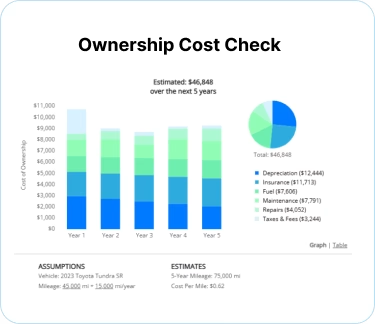
1997 Freightliner FL80 Cost of Ownership
Owning a 1997 Freightliner FL80 involves substantial costs. Insurance for commercial trucks is significantly higher than for passenger cars, often running into thousands of dollars annually. Fuel costs are also a major expense, with V8 diesel engines consuming considerable fuel, typically 6-8 MPG or less. Maintenance and repair costs are considerable; while built to last, parts can be expensive, and specialized mechanics are often required. Long-term ownership can be costly due to the potential for major component failures (engine, transmission) and the need for ongoing upkeep. It is generally not considered an economical vehicle to own but rather a necessary investment for specific vocational needs.


1997 Freightliner FL80 Fuel Efficiency
Fuel Type
Diesel
Fuel Capacity
-
City Mileage
-
Highway Mileage
-
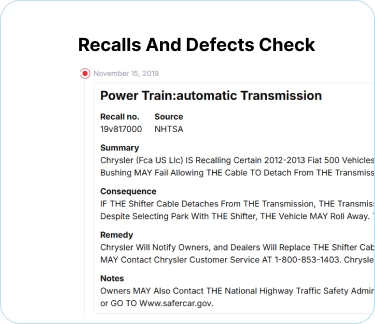
1997 Freightliner FL80 Recalls & Defects
Service Brakes, Air:supply:reservoir/Tank
Recall date
1998-05-26
Recall no.

98v114000
Source
NHTSA
Summary
Vehicle Description: Heady Duty Trucks Equipped With 36" Rear Brake Chambers. THE Brake System Does NOT Meet THE AIR Reservoir Volume Requirement OF Fmvss 121, "air Brake Systems."
Consequence
Increased Braking Distance CAN Occur Increasing THE Risk OF A Vehicle Crash.
Remedy
Dealers Will Repair These Vehicles.
Notes
Owner Notification IS Expected TO Begin During September 1998. Owners WHO Take Their Vehicles TO AN Authorized Dealer ON AN Agreed Upon Service Date and DO NOT Receive THE Free Remedy Within A Reasonable Time Should Contact Freightliner AT 1-800-547-0712.also Contact THE National Highway Traffic Safety Administration's Auto Safety Hotline AT 1-888-dash-2-dot (1-888-327-4236).
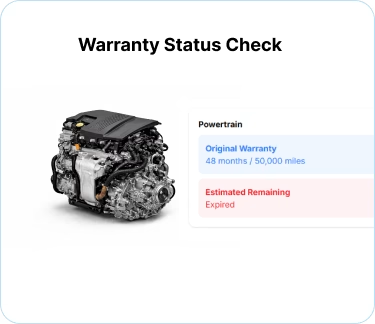
1997 Freightliner FL80 Warranty
Basic
Original warranty
0 months / No data
Estimated remaining
Expired
Powertrain
Original warranty
0 months / No data
Estimated remaining
Expired
Rust
Original warranty
0 months / No data
Estimated remaining
Expired
1997 Freightliner FL80 Insurance
Insurance for a 1997 Freightliner FL80 is moderately priced, reflecting its status as a Truck with strong safety ratings and
reasonable repair costs.
How Does the 1997 Freightliner FL80 Compare to Other Truck?
The 1997 Freightliner FL80 competed in the Class 7 truck market, facing stiff competition from manufacturers like Peterbilt (e.g., Model 330), Kenworth (e.g., T300), International (e.g., 4000 series), and GMC/Chevrolet (e.g., TopKick).
Performance: Freightliner FL80 models, often equipped with powerful Detroit Diesel or Cummins engines, generally offered competitive power and torque suitable for heavy vocational applications. Rivals like Peterbilt and Kenworth were also known for their robust powertrains. International trucks provided reliable engine options as well.
Features: In terms of features, the FL80, like most trucks in its class from this era, prioritized functionality over luxury. Cab comfort and basic amenities were standard across brands. Freightliner's focus was on durability and a no-nonsense work environment. Competitors might have offered slightly different cab configurations or interior options, but the core functionality remained similar.
Reliability: Freightliner built a reputation for ruggedness with the FL80, and it generally held up well. Peterbilt and Kenworth are also highly regarded for their build quality and long-term reliability. International trucks had a solid reputation, though some specific engine or electrical components might have varied in their long-term performance compared to the premium brands.
Price: New, the FL80 was typically priced competitively within its segment. Used market prices for the 1997 FL80 are influenced by condition and mileage, often falling in a similar range to comparable models from Peterbilt, Kenworth, and International.
Alternatives:
Ultimately, the choice often comes down to specific powertrain configurations, availability in the used market, and the condition of the individual truck.
Performance: Freightliner FL80 models, often equipped with powerful Detroit Diesel or Cummins engines, generally offered competitive power and torque suitable for heavy vocational applications. Rivals like Peterbilt and Kenworth were also known for their robust powertrains. International trucks provided reliable engine options as well.
Features: In terms of features, the FL80, like most trucks in its class from this era, prioritized functionality over luxury. Cab comfort and basic amenities were standard across brands. Freightliner's focus was on durability and a no-nonsense work environment. Competitors might have offered slightly different cab configurations or interior options, but the core functionality remained similar.
Reliability: Freightliner built a reputation for ruggedness with the FL80, and it generally held up well. Peterbilt and Kenworth are also highly regarded for their build quality and long-term reliability. International trucks had a solid reputation, though some specific engine or electrical components might have varied in their long-term performance compared to the premium brands.
Price: New, the FL80 was typically priced competitively within its segment. Used market prices for the 1997 FL80 are influenced by condition and mileage, often falling in a similar range to comparable models from Peterbilt, Kenworth, and International.
Alternatives:
- Similar Alternatives: 1997 Kenworth T300 and 1997 Peterbilt 330 are excellent similar alternatives, offering comparable build quality, powertrain options, and vocational versatility. They often command a slightly higher price on the used market due to brand prestige but are very reliable.
- Potentially Better Alternatives (depending on needs): If absolute ruggedness and a reputation for extreme durability are paramount, a well-maintained 1997 Peterbilt or Kenworth might be considered a notch above. For specific engine preferences, exploring models with Cummins ISX or specific Caterpillar engines might be beneficial, though these were less common in the FL80. For simpler, more basic service, some might look at older Ford F-Series medium-duty trucks, though they generally lack the heavy-duty capabilities of the FL80.
Ultimately, the choice often comes down to specific powertrain configurations, availability in the used market, and the condition of the individual truck.
Final Verdict: Is the 1997 Freightliner FL80 a Good Truck?
The 1997 Freightliner FL80 is ideally suited for small to medium-sized businesses or owner-operators in construction, landscaping, utility work, or specialized hauling who require a dependable, no-frills workhorse. It is worth buying if acquired at a fair price, but only for those with a realistic understanding of its age and maintenance needs. Buying used is the only option. The key conditions for a worthwhile purchase are a thorough pre-purchase inspection by a qualified mechanic, a proven maintenance history, and a reasonable mileage for its age. Specific trims are less important than the overall condition and whether the chassis is equipped for the intended vocational use. It is not a vehicle for those seeking modern features or low maintenance; rather, it's for pragmatic buyers who value durability and capability over luxury.