
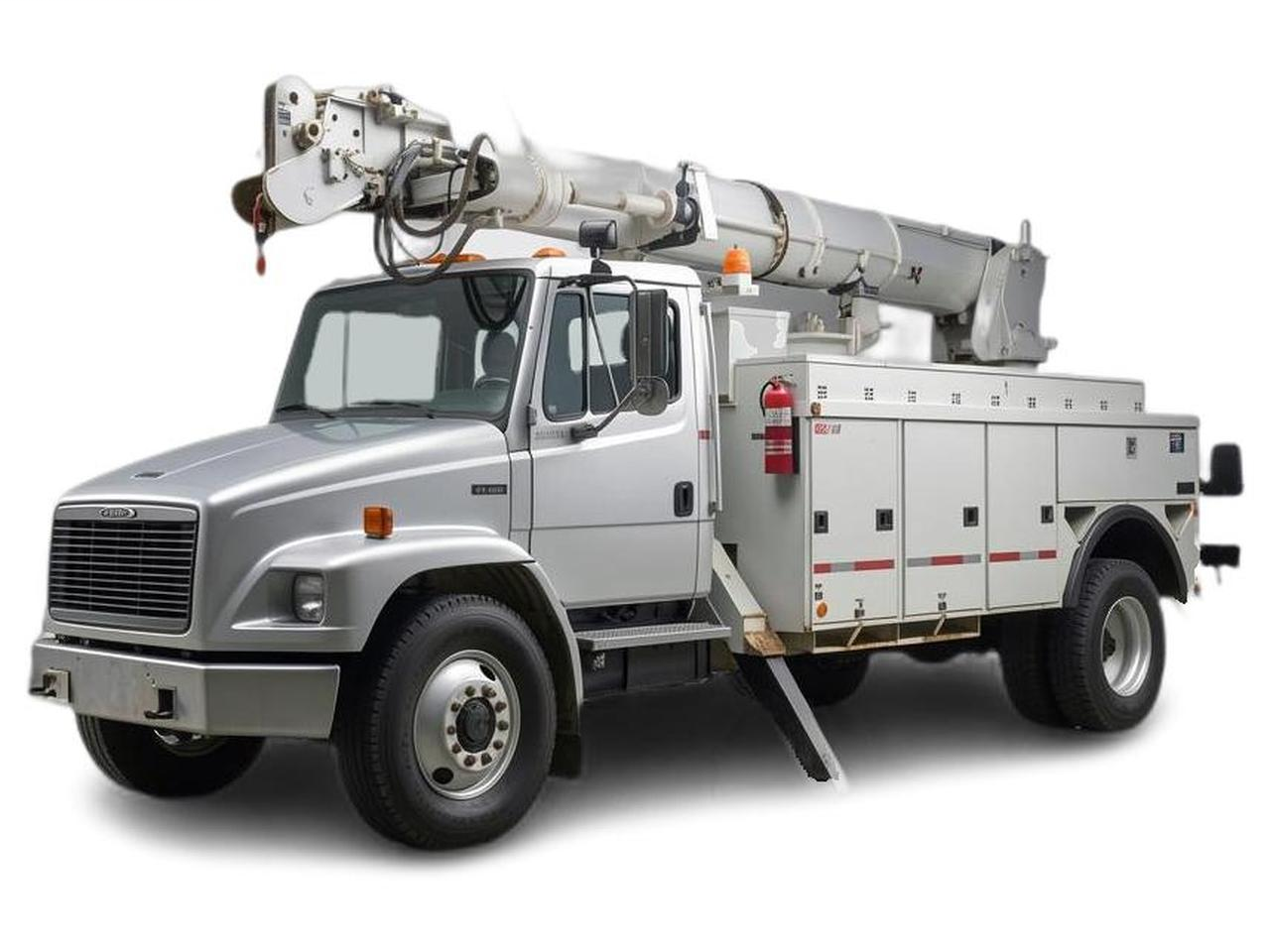
The Good
The 2001 Freightliner FL80 excels in practical performance with its powerful engine options and exceptional towing capacity, assuring buyers of its capability. Its legendary reliability translates to peace of mind and reduced downtime, a crucial emotional and financial benefit. The functional design prioritizes driver visibility and ease of operation, while the comfortable cab, though basic, supports long hauls. This truck offers outstanding value for its durability and work ethic.
The Bad
Potential buyers should watch out for common issues like rust on the chassis, particularly in areas exposed to salt and moisture. Electrical system gremlins can surface over time, requiring diligent inspection. Some older models might exhibit wear and tear on suspension components and braking systems, necessitating thorough checks before purchase. Fuel system issues can also arise due to age and usage.
2001 Freightliner FL80: Quick Overview
- Engine Options: The 2001 Freightliner FL80 offered a range of powerful diesel engines, primarily from Detroit Diesel and Caterpillar. Common options included the Detroit Diesel Series 60 and various Caterpillar C-series engines.
- Horsepower: Horsepower varied significantly depending on the specific engine installed. For instance, Detroit Diesel Series 60 engines could range from approximately 300 hp to over 500 hp. Caterpillar engines also offered a broad spectrum, often starting around 300 hp and reaching upwards of 500 hp for heavy-duty applications.
- Fuel Economy: Fuel economy for a vehicle of this class is highly dependent on engine choice, load, driving conditions, and gear ratios. Generally, expect figures in the range of 6-10 miles per gallon (MPG) for diesel. This is a work truck, and fuel efficiency is secondary to power and durability.
- 0-60 Times: 0-60 mph times are not a typical metric for a commercial truck like the FL80, as it is not designed for rapid acceleration. Performance is geared towards torque and sustained speed under load. When unloaded, acceleration would be significantly slower than passenger vehicles, likely in the 20-30 second range or more, depending on the powertrain.
- Towing Capacity: The towing capacity of the 2001 Freightliner FL80 is substantial and highly dependent on its configuration (chassis type, axle ratings, suspension, transmission, etc.) and any specific upfitting. It is designed for heavy-duty hauling and can typically handle Gross Combination Weight Ratings (GCWR) well over 50,000 lbs, often exceeding 70,000 lbs or more for specialized applications like tractor-trailers or heavy-duty towing rigs.
- Trim-Level Features: The concept of "trim levels" as found in passenger cars is not directly applicable to the Freightliner FL80. Instead, its features were determined by its vocational purpose and optional equipment selected by the buyer or upfitter. Standard features would include a durable chassis, a functional cab designed for driver comfort and visibility, and essential instrumentation. Optional features could include various PTO (Power Take-Off) systems, auxiliary fuel tanks, different suspension setups (air or spring), upgraded braking systems, specialized steering configurations, advanced climate control, and a wide array of body types (flatbed, dump, box, service body, etc.). The interior was typically utilitarian, focused on durability and ease of maintenance, with features like heavy-duty vinyl or cloth seating, basic radio, and manual windows and locks, though some higher-spec vocational applications might have included air conditioning and power options.
2001 Freightliner FL80 Specifications
Vehicle Information
| Year | 2001 |
| Make | Freightliner |
| Model | FL80 |
| Trim | - |
| Style | Base Truck RWD 5AT 7.2L I6 |
| Type | Pickup Truck |
| Category | passenger |
Manufacturing Details
| Made In | United States |
| Manufacturing City | MT. HOLLY |
Dimensions
| Doors | 2-Door |
| Curb Weight | - |
| Gross Vehicle Weight Rating | - |
| Overall Height | - |
| Overall Length | - |
| Overall Width | - |
| Wheelbase Length | - |
| Standard Seating | - |
Engine & Performance
| Engine | 7.2L I6 |
| Engine Size | 7.2L |
| Engine Cylinders | 6 |
| Transmission | 5-Speed Automatic |
| Transmission Type | Automatic |
| Transmission Speeds | 5-Speed |
| Drivetrain | Rear-Wheel Drive |
Additional Features
| Anti-Brake System | - |
| Steering Type | - |
Pricing
| Manufacturer Suggested Retail Price (MSRP) | - |
| Invoice Price | - |
| Delivery Charges | - |
Vehicle History Report
Specifications
History
Events
History Check
Check
Check
Check
Check
Listings
Recalls
Check
Analysis
What Problems Does the 2001 Freightliner FL80 Have?
Rust and corrosion are significant long-term concerns, especially for FL80s operating in regions with harsh winters or coastal environments. The frame rails, cab corners, and wheel wells are particularly susceptible. Regular inspections and preventative measures like undercoating are crucial.
The cooling system can also present issues. Radiator leaks, failing water pumps, and thermostat problems are not uncommon, particularly as the vehicle ages. Overheating can lead to more severe engine damage, so maintaining the cooling system is paramount.
Regarding engine and transmission, while generally reliable, specific issues can arise. For Detroit Diesel Series 60 engines, owners might encounter injector problems or issues with the DDEC (Detroit Diesel Electronic Control) system. For transmissions, clutch wear, and seal leaks are common, as are issues with the air-actuated shifting mechanisms in manual transmissions.
Suspension and braking components, such as leaf springs, shocks, air bags (if equipped), brake pads, rotors, and air brake system components (valves, lines, and chambers), will require regular maintenance and eventual replacement due to the heavy loads they carry.
While specific recalls for the 2001 model year might be limited and often related to specific components or minor safety aspects, it's always advisable to check the NHTSA (National Highway Traffic Safety Administration) website for any applicable recalls using the vehicle's VIN. Long-term reliability hinges heavily on consistent and thorough maintenance. Neglect will significantly shorten the lifespan of these durable trucks. Proper lubrication, timely fluid changes, and prompt attention to minor issues are key to keeping an FL80 on the road for many years and hundreds of thousands of miles.
How long will the 2001 Freightliner FL80 last?
What Technology & Safety Features are Included?
Entertainment options in the 2001 FL80 were generally basic. A standard AM/FM radio was common, with optional CD players or more robust sound systems available depending on the configuration and initial buyer's preference. Connectivity features like Bluetooth or USB ports were virtually nonexistent in this model year, reflecting the technology of the time.
Driver-assistance features were minimal to non-existent by modern standards. The primary driver-assistance systems were the inherent design aspects focused on visibility and control: large mirrors, a commanding driving position, and power steering. ABS (Anti-lock Braking System) was likely standard on most models, a crucial safety feature for heavy vehicles, aiding in controlled braking, especially during emergency stops. Advanced driver-assistance systems (ADAS) such as adaptive cruise control, lane departure warning, or automatic emergency braking were not features offered on this truck.
Safety features were focused on the robust construction of the vehicle itself. The heavy-duty frame and chassis provided a significant protective structure. Air brakes were standard, offering powerful stopping capability essential for safely maneuvering a heavy vehicle. Seat belts were, of course, standard.
Optional features could include things like heated mirrors for better visibility in cold weather, air conditioning systems, and various lighting packages. Some vocational configurations might have included backup alarms or specialized lighting for specific job sites.
Crash-test ratings are not typically available or applicable for commercial trucks like the Freightliner FL80 in the same way they are for passenger cars and SUVs. The design philosophy for these vehicles emphasizes structural integrity, load-carrying capacity, and the ability to withstand operational stresses rather than meeting specific passenger car crashworthiness metrics. Their sheer mass and construction provide a significant level of inherent safety in many collision scenarios, though the focus is on preventing accidents through mechanical reliability and driver control rather than absorbing impact energy through crumple zones designed for lighter vehicles.
What Colors Options are Available?
2001 Freightliner FL80 Prices and Market Value
In the current used market, a 2001 Freightliner FL80 typically ranges from approximately $15,000 to $30,000. This price is heavily influenced by mileage, overall condition, maintenance history, tire wear, and the type of body installed. Trucks with lower mileage and in excellent mechanical and cosmetic condition will command higher prices.
Depreciation for commercial trucks like the FL80 is different from passenger cars. While they lose value, their utility means they maintain a baseline value for longer, especially if they remain mechanically sound and suitable for work. Factors affecting resale value include the reputation of the engine and transmission, the absence of major rust, and the functionality of specialized equipment. A well-maintained FL80 with desirable features can hold its value remarkably well as a work tool.
2001 Freightliner FL80 Cost of Ownership
2001 Freightliner FL80 Fuel Efficiency
2001 Freightliner FL80 Warranty
Basic
Powertrain
Rust
2001 Freightliner FL80 Insurance
reasonable repair costs.
How Does the 2001 Freightliner FL80 Compare to Other Pickup Truck?
Performance: The FL80, often equipped with robust Cummins or Detroit Diesel engines, generally offered competitive or superior horsepower and torque compared to many rivals, making it a strong performer for hauling and heavy-duty tasks. Its chassis was known for its strength and versatility.
Features: In terms of features, the FL80 was typically utilitarian, focusing on driver function. Competitors like Peterbilt and Kenworth often offered slightly more refined interiors or premium options, but for raw work capability, the FL80 was on par. International trucks often provided a comparable blend of work and comfort.
Reliability: Freightliner has a strong reputation for building durable trucks, and the FL80 is no exception. While all trucks of this age will have age-related issues, the FL80 is generally considered very reliable with proper maintenance. International trucks were also robust, while Peterbilt and Kenworth are renowned for their build quality and longevity, often seen as slightly more premium in this regard.
Price: When new, pricing was competitive across these brands, with Freightliner often offering a good balance of capability and cost-effectiveness. Used, the FL80 typically falls within a similar price bracket as comparable International models, while Peterbilt and Kenworth might command a slight premium due to their brand prestige, even in the used market.
Alternatives: For similar capability, one could look at a 2001-2003 International 4300 or 4400 series, a Peterbilt 330, or a Kenworth T300. These offer comparable durability and powertrain options. If seeking a slightly more modern interior or potentially better residual value perception, a slightly newer model from any of these manufacturers might be considered. However, for a no-nonsense, work-ready truck that prioritizes durability and can be found at a competitive price, the 2001 Freightliner FL80 remains a solid choice. Its widespread availability and established service network also contribute to its appeal.
Final Verdict: Is the 2001 Freightliner FL80 a Good Pickup Truck?
Buying this vehicle is best done used, as new models are no longer produced. Thorough pre-purchase inspection by a qualified mechanic specializing in heavy-duty trucks is paramount. Focus on trucks with well-documented maintenance histories, robust engines (like Detroit Diesel Series 60 or strong Cummins options), and minimal rust. It is less ideal for those seeking modern technology, fuel efficiency in urban commuting, or a comfortable daily driver. Its value lies in its purpose-built, rugged nature for hard work.

Simon A
Simon is a contributor to VinCheck, where he provides articles and reviews on various automotive topics. His work focuses on delivering accurate and up-to-date information about used cars, helping readers make informed decisions.