
Warning: Undefined array key "year" in /home/dev2/public_html/wp-content/themes/Divi-child/shortcodes.php on line 298
Warning: Undefined array key "make" in /home/dev2/public_html/wp-content/themes/Divi-child/shortcodes.php on line 298
Warning: Undefined array key "model" in /home/dev2/public_html/wp-content/themes/Divi-child/shortcodes.php on line 298
The Good
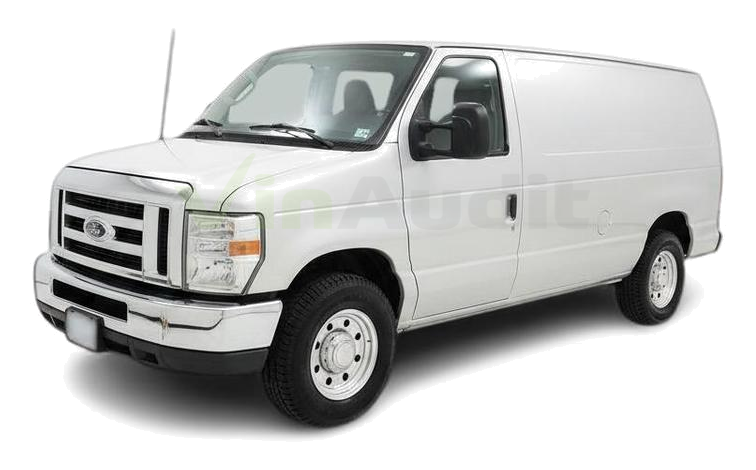
The 2011 Ford E350 Super Duty offers robust performance thanks to powerful V8/V10 engines, ensuring excellent towing and hauling capabilities. It boasts exceptional reliability and strong long-term value due to its "built-Ford-tough" construction and readily available parts. Its utilitarian design is practical, while its dependable workhorse nature offers emotional appeal for those who need a truly capable and no-nonsense vehicle.
The Bad
Known weaknesses of the 2011 E350 Super Duty include its poor fuel economy, a dated interior design with basic comfort levels, and a somewhat harsh ride when unloaded. Potential issues to watch out for include exhaust manifold leaks, front suspension wear, and rust on older, high-mileage units, especially in salt-prone regions.
2011 Ford E350 Super Duty: Quick Overview
Here is a summary of key specifications for the 2011 Ford E350 Super Duty:
- Engine Options:
- 4.6L SOHC V8 (standard in some configurations)
- 5.4L SOHC V8 (most common, offering a good balance of power and efficiency for its class)
- 6.8L SOHC V10 (available for heavier-duty applications and increased towing)
- Horsepower:
- 4.6L V8: Approximately 225 hp @ 4750 rpm
- 5.4L V8: Approximately 255 hp @ 4500 rpm
- 6.8L V10: Approximately 305 hp @ 4250 rpm
- Torque:
- 4.6L V8: 286 lb-ft @ 3500 rpm
- 5.4L V8: 350 lb-ft @ 2500 rpm
- 6.8L V10: 420 lb-ft @ 2750 rpm
- Fuel Economy (Estimated Combined):
- Highly variable based on engine, load, and driving conditions, but generally ranges from 12-15 MPG. These vehicles are not designed for fuel efficiency.
- 0-60 MPH Times:
- Not a performance vehicle. Depending on engine and load, times typically range from 9-12+ seconds.
- Towing Capacity:
- Significantly varies by configuration (engine, axle ratio, wheelbase). Can range from around 5,000 lbs up to a maximum of approximately 10,000 lbs (with the 6.8L V10 and proper towing package).
- Trim-Level Features:
- XL Trim (Work Van/Passenger Wagon): The base model, primarily designed for utility. Features typically include vinyl upholstery, manual windows and door locks, AM/FM stereo, and basic steel wheels. Air conditioning was standard.
- XLT Trim (Passenger Wagon): Offers more comfort-oriented features. These usually include cloth seating, power windows and door locks, cruise control, a CD player, chrome exterior accents, and upgraded interior trim. Rear air conditioning and heating were common options for XLT passenger wagons.
- Cutaway Chassis: Primarily sold to upfitters for customization into ambulances, RVs, box trucks, etc., with minimal standard features from the factory.
2011 Ford E350 Super Duty Specifications
Vehicle History Report
What Problems Does the 2011 Ford E350 Super Duty Have?
Front-end suspension components, such as ball joints, tie rod ends, and wheel bearings, tend to wear out more quickly due to the vehicle's heavy curb weight and often arduous duty cycle. This is especially true for models used commercially with high mileage. Rust is a significant long-term concern, particularly in regions where salt is used on roads. It can affect the frame, body panels, and exhaust components, leading to structural and cosmetic issues.
Transmission reliability, specifically with the 4R75E and 5R110W transmissions, is generally good but can become a concern at very high mileage or under consistent heavy towing/hauling without proper maintenance. Overheating and delayed shifts can signal impending problems. HVAC blend door actuators are also known to fail, leading to issues with temperature control within the cabin. Minor electrical gremlins, such as issues with power windows or accessory functions, can occasionally surface but are usually less severe.
Regarding recalls for the 2011 Ford E-Series, several have been issued over its production run. One significant recall involved the Takata airbag inflators, affecting various Ford models, including the E-Series, requiring replacement of the driver's side frontal airbag module. Another recall involved the cruise control deactivation switch, which could overheat and potentially cause a fire, though many of these were addressed in earlier model years, it's worth checking for a 2011 model. It's always advisable to check the NHTSA website for any open recalls by VIN when considering a used purchase.
How long will the 2011 Ford E350 Super Duty last?
However, long-term weaknesses over time include accelerated wear on suspension components like ball joints and bushings due to constant heavy loads. Rust can become a pervasive issue on the body and undercarriage, especially in corrosive environments, potentially leading to structural compromise if unchecked. While the engines and transmissions are generally durable, neglected fluid changes or persistent heavy towing can lead to premature failure. Interior components, especially in work vans, also show wear and tear over extended use, but the core utility remains.
What Technology & Safety Features are Included?
Driver-assistance features, by modern standards, are virtually nonexistent. You won't find adaptive cruise control, lane-keeping assist, blind-spot monitoring, or automatic emergency braking. The extent of its "assistance" features is limited to fundamental systems like standard anti-lock brakes (ABS) and available electronic stability control (ESC), which Ford markets as AdvanceTrac with Roll Stability Control (RSC). RSC is a significant safety feature for large vans, designed to help prevent rollovers by detecting and mitigating potential rollovers through braking and throttle intervention.
Standard safety features for the 2011 E350 include dual front airbags for the driver and front passenger, along with the aforementioned anti-lock braking system. Electronic Stability Control (AdvanceTrac with RSC) was an important optional feature that significantly enhanced vehicle control, especially when loaded or in adverse conditions. Other optional features focused more on comfort and utility, such as power windows and door locks, cruise control, and rear air conditioning and heating for passenger models.
Regarding crash-test ratings, the National Highway Traffic Safety Administration (NHTSA) typically does not perform full crash testing on large commercial vans like the E350 Super Duty. However, some earlier iterations of the E-Series did receive mixed ratings. The focus for these vehicles is often on structural integrity in commercial use and the effectiveness of basic safety systems like ABS and RSC. Rollover risk is an inherent characteristic of tall, heavy vans, which RSC aims to mitigate, but specific detailed crash impact ratings similar to passenger cars are not available from NHTSA for this model year.
What Colors Options are Available?
2011 Ford E350 Super Duty Prices and Market Value
Depreciation insights show that while it loses a significant portion of its value initially, its utility and durability help it maintain a strong residual value compared to many passenger cars. Factors affecting resale value include the vehicle's condition, especially the absence of significant rust or accident damage, mileage (lower is better), engine choice (5.4L V8 is popular, 6.8L V10 is sought after for heavy work), and configuration (passenger wagons and cutaways for RV conversion often fetch higher prices due to broader appeal). A comprehensive service history also significantly boosts resale value.
2011 Ford E350 Super Duty Cost of Ownership
2011 Ford E350 Super Duty Fuel Efficiency
2011 Ford E350 Super Duty Insurance
reasonable repair costs.
How Does the 2011 Ford E350 Super Duty Compare to Other Vehicle?
- Performance: The E350, with its strong V8 and V10 engine options, offers robust performance for towing and hauling, comparable to the Chevrolet Express/GMC Savana's V8 powertrains. The Sprinter, conversely, focused more on its diesel engines for better fuel economy and often had less outright horsepower but superior torque and a higher, narrower cargo area. The Nissan NV, introduced for the 2012 model year, offered competitive V6 and V8 options. For raw power and traditional American grunt, the E350 and Express are very similar.
- Features: Both the E350 and Express/Savana are traditional, body-on-frame vans with relatively spartan interiors and basic tech. They emphasize functionality over creature comforts or advanced infotainment. The Sprinter, on the other hand, offered a more modern design, better ergonomics, and slightly more advanced (for the time) tech and comfort features, reflecting its European origins. The NV also brought a somewhat more modern interior to the segment.
- Reliability: The E350 and Express/Savana are renowned for their long-term reliability and simpler, more easily repairable mechanicals. Parts are plentiful and generally inexpensive. The Sprinter, while also capable of high mileage, can be more complex and potentially more expensive to repair due to its diesel engine, specialized components, and Mercedes-Benz branding. Nissan NV also proves to be a reliable choice, but its parts network might be less extensive than Ford or GM.
- Price: On the used market, the E350 generally offers excellent value for money. It's often priced competitively with or even below the Express/Savana. Sprinters typically command a higher purchase price, especially the diesel models, but can offer better fuel efficiency. Nissan NVs are also a strong value proposition, often found at attractive prices.
Similar Alternatives:
- Chevrolet Express / GMC Savana (2011 onwards): A direct and highly similar alternative, offering comparable V8 engines, towing capacity, and traditional construction. Choice often comes down to brand preference or best available deal.
- Mercedes-Benz Sprinter (2011 onwards): If fuel economy, taller interior cargo space, and a more modern driving experience are priorities, and budget allows for potentially higher maintenance costs, the Sprinter is superior.
- Nissan NV (2012 onwards): If a slightly newer design, available high roof, and good reliability are desired, the NV offers a compelling package, bridging the gap between traditional American vans and the Sprinter in some aspects.
Final Verdict: Is the 2011 Ford E350 Super Duty a Good Vehicle?
It is absolutely worth buying, but strictly as a used vehicle. Buying new in 2011 would have been for businesses, but its current value is in its used market utility. Focus on well-maintained examples with complete service records and minimal rust. For passenger comfort, the XLT trim is preferable. For pure cargo hauling or custom upfits, the XL cargo van or cutaway chassis are excellent choices. Opt for the 5.4L V8 for a good balance of power and (relative) efficiency, or the 6.8L V10 if heavy towing is a primary requirement. Ensure a thorough pre-purchase inspection to uncover any long-term issues like exhaust manifold leaks or front-end wear, and always check for open recalls by VIN.

Drew B
Drew is a seasoned automotive expert and contributor to VinCheck.info. With nearly 15 years of experience as a former Porsche technician, he brings a wealth of hands-on knowledge to his writing. Born in North Carolina, a region renowned for its deep-rooted NASCAR culture, Drew developed a passion for cars early in life, often building and working on vehicles from a young age. At VINCheck, Drew leverages his extensive technical background to provide in-depth analyses of various vehicles. His articles often focus on engine performance, reliability, and maintenance insights, offering readers practical information grounded in real-world experience. Some of his notable contributions include reviews on the Mazda CX-5's longevity and detailed examinations of engine options for models like the 2011 Toyota Camry and Tacoma