by VIN, Year, Make, Model by License Plate

2021 Polaris RZR Overview, Reviews, Ratings & Specs

Rating: 0.00
Based on 0 Owner Reviews
Drew B | September 30, 2025
The 2021 Polaris RZR represents the pinnacle of recreational off-road utility vehicles (UTVs), specifically designed for exhilarating sport performance. Its open-air, aggressive sport side-by-side body style is instantly recognizable. Polaris has consistently evolved the RZR line since its inception, with the 2021 models including popular trims like the RZR XP 1000, Turbo S, and the cutting-edge Pro XP series. Pricing generally ranged from approximately $14,000 for entry-level Trail models to over $30,000 for top-tier performance versions. The RZR stands out for its exceptional power-to-weight ratio, agile handling, and advanced suspension, making it incredibly popular among enthusiasts seeking adrenaline-fueled adventures across diverse terrains.
The Good

The 2021 Polaris RZR boasts thrilling performance with powerful engines and class-leading suspension, offering an unparalleled off-road experience. Its aggressive design and advanced technology, like Ride Command, appeal emotionally to adventure-seekers. Practically, strong resale value, vast customization options, and surprisingly comfortable ergonomics for rough terrain make it a smart, durable choice, despite its focus not being on traditional efficiency metrics.

The Bad

Known weaknesses for the 2021 Polaris RZR include higher ownership costs, particularly for maintenance of wear items like drive belts, bushings, and ball joints, especially with aggressive riding. Some owners report occasional electrical gremlins or minor fit-and-finish issues. It's not street legal, limiting its use to off-road environments.

2021 Polaris RZR: Quick Overview

  • Engine Options: The 2021 Polaris RZR lineup offered several powerful ProStar engines. The RZR XP 1000 models typically featured a 999cc ProStar 4-stroke DOHC Twin Cylinder engine. Higher performance models, like the Turbo S and Pro XP, utilized a ProStar Turbo H.O. engine, an intercooled, turbocharged version of the 925cc or 999cc twin-cylinder.
  • Horsepower: Horsepower figures varied significantly by trim:
    • RZR XP 1000: 110 hp
    • RZR Turbo S: 168 hp
    • RZR Pro XP: 181 hp
  • Fuel Economy: Official EPA fuel economy ratings are not provided for UTVs. However, RZRs typically have fuel tank capacities ranging from 9.5 gallons (35.9L) to 12 gallons (45.4L) and generally require premium fuel. Real-world fuel economy depends heavily on driving style and terrain, often being quite thirsty under aggressive use.
  • 0-60 Times: While not official manufacturer specs, performance RZR models, especially the Turbo S and Pro XP, are capable of 0-60 mph times in the low 4-second range, highlighting their incredible acceleration.
  • Towing Capacity: Towing is not a primary function for RZR sport models, but some trims feature a 1.25-inch receiver hitch. When equipped, the towing capacity is typically around 1,500 lbs (680 kg).
  • Trim-Level Features:
    • RZR Trail/Trail S: Designed for narrower trails with 50-inch or 60-inch widths. Features like electronic power steering (EPS), LED lighting, and Walker Evans shocks were common.
    • RZR XP 1000: The "do-it-all" RZR, offering a great balance of power and suspension for various terrains with a 64-inch width. Included features like Walker Evans Needle Shocks, ProArmor doors, and standard electronic power steering.
    • RZR Turbo S: Built for extreme performance with a 72-inch stance. Key features included DYNAMIX Active Suspension, massive 32-inch tires, reinforced chassis, stronger axles, and premium Fox Internal Bypass Shocks.
    • RZR Pro XP: A newer generation of RZR, offering a refined chassis, improved ergonomics, and advanced technology. Available in 64-inch and 72-inch widths. Featured DYNAMIX 2.0 active suspension, Ride Command integrated into a 7-inch touchscreen display, Rockford Fosgate audio systems, and redesigned clutching for durability and performance.
    • General Features: Most RZRs offer 2-seat and 4-seat configurations, varying wheel and tire packages, high-clearance A-arms, full skid plates, and robust roll-over protection structures (ROPS).

2021 Polaris RZR Specifications

Vehicle Information
Year 2021
Make Polaris
Model RZR
Trim -
Style -
Type Motorcycle
Category Offroad Vehicle Multipurpose Offhighway Utility Vehicle [mohuv] or Recreational Offhighway Vehicle [rov]
Manufacturing Details
Made In Mexico
Manufacturing City -
Dimensions
Doors -
Curb Weight -
Gross Vehicle Weight Rating -
Overall Height -
Overall Length -
Overall Width -
Wheelbase Length -
Standard Seating -
Engine & Performance
Engine 999cc 2cyl
Engine Size 999L
Engine Cylinders 2
Transmission -
Transmission Type -
Transmission Speeds -
Drivetrain -
Additional Features
Anti-Brake System -
Steering Type -
Pricing
Manufacturer Suggested Retail Price (MSRP) -
Invoice Price -
Delivery Charges -

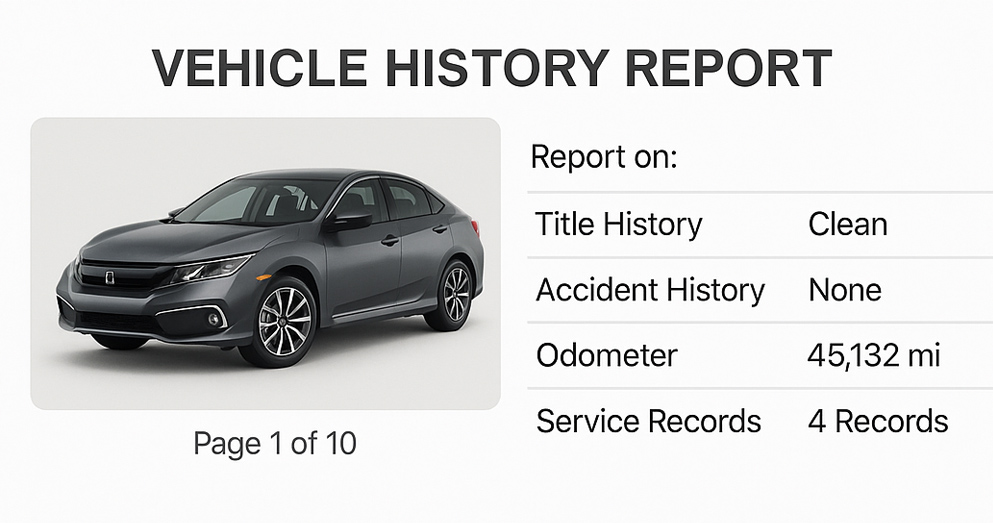
Vehicle History Report

Vehicle
Specifications
Ownership
History
All History
Events
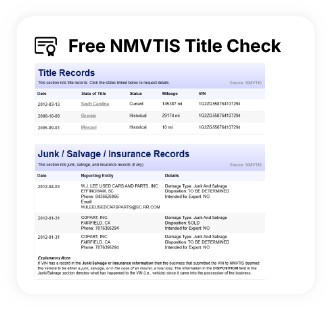
NMVTIS Title
History Check
Salvage/Rebuilt
Check
Accident
Check
Theft
Check
Open Lien
Check
Past Sale
Listings
Safety
Recalls
Odometer
Check
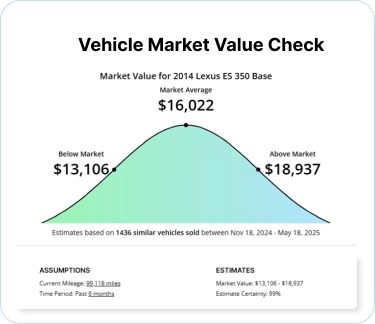
Market Price
Analysis

What Problems Does the 2021 Polaris RZR Have?

For the 2021 Polaris RZR, several frequently reported problems and potential long-term reliability concerns are noted by owners, often amplified by aggressive riding styles and insufficient maintenance. A common issue across many RZR models, including the 2021 lineup, is accelerated wear on drive belts. This can be exacerbated by larger tires, heavy loads, or continuous high-stress driving. Clutch components also see significant wear, necessitating periodic inspection and replacement. Owners frequently report issues with ball joints, A-arm bushings, and wheel bearings, which are high-wear items given the demanding off-road environment. Axle boots and CV joints can be susceptible to tearing or damage, leading to premature axle failure if not addressed quickly.

Electrical issues, while not universal, can pop up, including sensor malfunctions or wiring harness problems, especially in units exposed to a lot of water or mud. Turbocharged models like the Turbo S and Pro XP can sometimes exhibit turbo-related issues, such as boost leaks or intercooler problems, though these are less common with proper maintenance. The general consensus is that while the core engine and transmission are robust, the ancillary components and wear items require consistent attention.

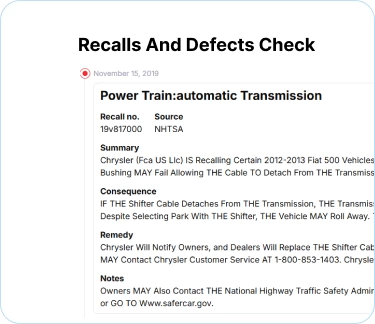
Regarding recalls, Polaris has issued several for various RZR models around the 2021 timeframe, often related to safety. For instance, some 2021 RZR Pro XP and Pro XP 4 models were recalled for a fire hazard due to potential fuel tank and exhaust system issues, which could allow heat to melt the fuel tank, causing a leak. Other recalls, generally affecting multiple model years including 2021, have addressed potential steering rack and pinion assembly failure, increasing crash risk, or concerns with suspension fasteners. It's always advisable for potential buyers to check the NHTSA recall database using the VIN for any specific RZR unit.

Long-term reliability is largely a function of how the RZR is used and maintained. Units subjected to frequent harsh impacts, jumping, or sustained high-speed abuse without regular servicing will inevitably suffer from component fatigue in the frame, suspension, and driveline. Proper maintenance, including regular oil changes, air filter cleaning, greasing, and inspection of wear items, is crucial to achieving a long service life from a 2021 RZR.

How long will the 2021 Polaris RZR last?

Estimating average mileage or years of service for a 2021 Polaris RZR is highly variable, largely depending on owner maintenance habits and riding style. Well-maintained RZRs used for recreational trail riding can easily achieve 5,000 to 10,000+ miles, or 300-500+ engine hours, with many examples surpassing these figures with diligent care. However, units subjected to aggressive dune riding, competitive racing, or prolonged mud bogging without strict maintenance can see major component wear and failure much earlier. The core engine and transmission are generally quite durable, but long-term weaknesses often emerge in wear items. Bushings, ball joints, wheel bearings, axles, and drive belts are common replacement items over time. The frame and suspension components are robust but can experience fatigue or damage from repeated hard impacts. Owners committed to regular, preventative maintenance, including frequent fluid changes, filter replacements, and thorough inspections, can significantly extend the operational life and durability of their 2021 RZR.

What Technology & Safety Features are Included?

The 2021 Polaris RZR lineup, particularly the higher trims like the Pro XP and Turbo S, offers a sophisticated array of built-in tech, entertainment, and driver-assistance features, significantly enhancing the off-road experience. The centerpiece of this technology is the Polaris Ride Command system. This integrated 7-inch glove-touch display provides GPS navigation, group ride tracking, Bluetooth connectivity for phones, and vehicle diagnostics. It can also display front and rear camera views, telemetry data, and control accessory lighting, making it an invaluable tool for both navigation and social riding.

For entertainment, many RZR trims, especially the Pro XP, came standard or offered optional premium Rockford Fosgate audio systems, providing powerful and clear sound even in open-air environments. Bluetooth allows for seamless streaming of music and hands-free calling when paired with a smartphone.

Driver-assistance features are primarily focused on enhancing off-road capability and control. Electronic Power Steering (EPS) is standard on most trims, greatly reducing steering effort and fatigue. The revolutionary DYNAMIX Active Suspension (or DYNAMIX 2.0 on Pro XP models) is a standout feature, automatically adjusting shock damping in real-time based on terrain, speed, and driver input, providing optimal ride comfort and control. This system utilizes sensors to predict and react to terrain changes, offering "Comfort," "Firm," and "Stiff" modes that can be manually overridden. Some models also feature Hill Descent Control.

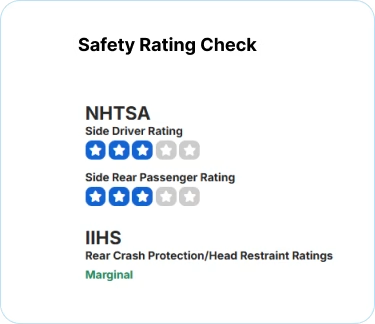
Safety features are foundational to the RZR's design, including robust Roll Over Protection Structures (ROPS), 3-point or 4-point harnesses (depending on trim/model), full doors or protective nets to keep occupants secure, and bright LED headlights and taillights for visibility. Side mirrors and an internal rearview mirror are also standard. It's important to note that, as an off-road utility vehicle, the Polaris RZR does not undergo standard automotive crash testing by agencies like NHTSA or IIHS, so crash-test ratings are not available or applicable in the traditional sense. Optional safety-enhancing features include winches, full windshields, roofs, and various protective cages or bumpers for added durability and occupant protection.

What Colors Options are Available?

We’re working on this section!
In the meantime, feel free to explore the other sections for more content.

2021 Polaris RZR Prices and Market Value

When new in 2021, Polaris RZR prices varied significantly by trim. Entry-level RZR Trail models started around $13,999 to $17,000. The popular RZR XP 1000 models typically ranged from $19,000 to $25,000+, while the high-performance Turbo S and Pro XP models commanded prices upwards of $27,000 to over $30,000.

Currently, the used market for 2021 Polaris RZRs remains strong. Well-maintained units can still fetch 60-80% of their original MSRP, depending on condition, hours/mileage, and modifications. Depreciation for RZRs is generally slower than typical road-going vehicles due to high demand in the recreational market and limited new supply. Factors significantly affecting resale value include a thorough maintenance history, overall cosmetic and mechanical condition, the presence of desirable aftermarket accessories (like winches, audio, or lighting), and the specific trim level (higher trims hold value better). Excessive wear, significant damage, or extensive, poorly executed modifications can negatively impact resale value.

2021 Polaris RZR Cost of Ownership

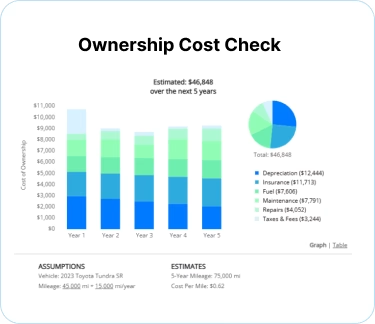
Owning a 2021 Polaris RZR is generally a costly endeavor rather than an economical one. Insurance costs vary widely, often less than a car, but depend on coverage (liability, comprehensive for theft/damage). Fuel expenses are considerable as RZRs require premium gasoline and are quite thirsty under spirited driving, with large tanks resulting in high fill-up costs. Maintenance is frequent and critical; owners should expect regular oil changes, air filter cleaning, belt inspections/replacements, and greasing. Wear items like tires, brakes, bushings, and ball joints need periodic replacement, adding to repair costs. Parts can be expensive, and dealership labor rates are high, making DIY maintenance a popular choice. Long-term ownership costs are substantial, making it a recreational investment, not a cheap mode of transport.

2021 Polaris RZR Fuel Efficiency

Fuel Type Gasoline
Fuel Capacity -
City Mileage -
Highway Mileage -

2021 Polaris RZR Warranty

Basic
Original warranty 0 months / No data
Estimated remaining Expired
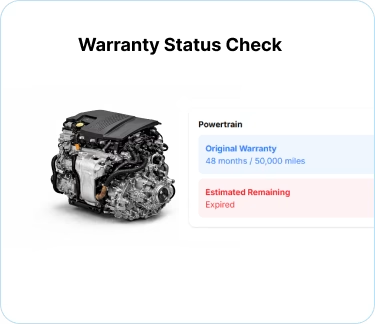
Powertrain
Original warranty 0 months / No data
Estimated remaining Expired
Rust
Original warranty 0 months / No data
Estimated remaining Expired

2021 Polaris RZR Insurance

Insurance for a 2021 Polaris RZR is moderately priced, reflecting its status as a Motorcycle with strong safety ratings and
reasonable repair costs.

How Does the 2021 Polaris RZR Compare to Other Motorcycle?

The 2021 Polaris RZR competes fiercely in the sport UTV segment against formidable rivals like the Can-Am Maverick X3, Yamaha YXZ1000R, Honda Talon, and Kawasaki Teryx KRX 1000.

In terms of performance, the RZR, especially its Pro XP and Turbo S variants, offers class-leading power and an exceptional blend of agile handling and advanced suspension. The Pro XP's 181 hp and DYNAMIX 2.0 active suspension deliver a thrilling, controlled ride. The Can-Am Maverick X3 is arguably its closest rival, often praised for its raw acceleration and high-speed stability, sometimes even surpassing the RZR in sheer horsepower for top trims. The Yamaha YXZ1000R stands out with its sequential manual transmission, offering a highly engaging, driver-centric experience, albeit with less low-end torque than the RZR or X3. The Honda Talon prioritizes refined ride quality and Honda's renowned reliability, while the Kawasaki KRX 1000 is built like a tank, excelling in rock crawling and extreme durability.

Regarding features, the Polaris RZR often leads with its integrated Ride Command system, offering GPS, group ride, and touchscreen controls, a significant advantage for tech-savvy riders. Can-Am's Smart-Lok differential and Fox Smart-Shox are also very advanced. The Honda Talon offers paddle shifters and a very refined interior. Most offer premium audio options like Rockford Fosgate for Polaris or Wet Sounds for Can-Am.

Reliability perceptions vary. Honda and Yamaha often hold a reputation for bulletproof reliability, with fewer reported issues, particularly in their drivetrain components. Polaris and Can-Am, while offering more extreme performance, can be more susceptible to wear on components like drive belts, clutches, and bushings due to the higher stresses and horsepower. However, all modern UTVs require diligent maintenance for longevity.

Price-wise, the RZR, X3, and KRX 1000 are all premium vehicles, with top-tier models often exceeding $30,000. The Honda Talon tends to be competitive, sometimes slightly undercutting the most extreme RZR/X3 trims. The Yamaha YXZ is also in the premium price bracket. Generally, you get what you pay for in terms of performance and features across the board.

Similar alternatives to the RZR Pro XP or Turbo S include the Can-Am Maverick X3 X RS Turbo RR for its comparable extreme performance and high-speed prowess. For a more reliable, refined, and user-friendly experience, the Honda Talon 1000R or 1000X is an excellent choice. If a manual transmission and pure sport driving are priorities, the Yamaha YXZ1000R SS is unique. The Kawasaki Teryx KRX 1000 is a better alternative if extreme durability and technical rock crawling capability are paramount.
Final Verdict: Is the 2021 Polaris RZR a Good Motorcycle?

The 2021 Polaris RZR is ideal for adrenaline junkies, recreational off-road enthusiasts, and competitive drivers who prioritize cutting-edge performance, advanced technology, and a vast aftermarket for customization. It excels in diverse terrains, from dunes to trails, offering an exhilarating driving experience.

It is absolutely worth buying for those who understand and accept its nature as a high-performance recreational vehicle with associated high ownership costs and diligent maintenance requirements. For peak performance and the latest features like DYNAMIX 2.0 and Ride Command, buying new (or a very lightly used, recent model) Pro XP or Turbo S is beneficial. However, a used 2021 RZR XP 1000 can be an excellent value, offering a strong balance of performance and versatility. When buying used, a thorough pre-purchase inspection and a clear maintenance history are paramount to avoid inheriting expensive problems. Specific trims, like the Trail series, are better suited for narrower forest trails, while the XP 1000 is a versatile all-rounder, and the Pro XP/Turbo S models are for those who demand the absolute best in speed, suspension, and technology.

2021 Polaris RZR Owner Reviews

0.00
Consumer Rating, Based on 0 Consumer Reviews
Overall rating
Cancel
Thank You for Your Review!

We truly appreciate the time and effort you took to share your experience with us.

Uh oh!

Something went wrong, please try again later.

Author Image
Drew B

Drew is a seasoned automotive expert and contributor to VinCheck.info. With nearly 15 years of experience as a former Porsche technician, he brings a wealth of hands-on knowledge to his writing. Born in North Carolina, a region renowned for its deep-rooted NASCAR culture, Drew developed a passion for cars early in life, often building and working on vehicles from a young age. At VINCheck, Drew leverages his extensive technical background to provide in-depth analyses of various vehicles. His articles often focus on engine performance, reliability, and maintenance insights, offering readers practical information grounded in real-world experience. Some of his notable contributions include reviews on the Mazda CX-5's longevity and detailed examinations of engine options for models like the 2011 Toyota Camry and Tacoma