
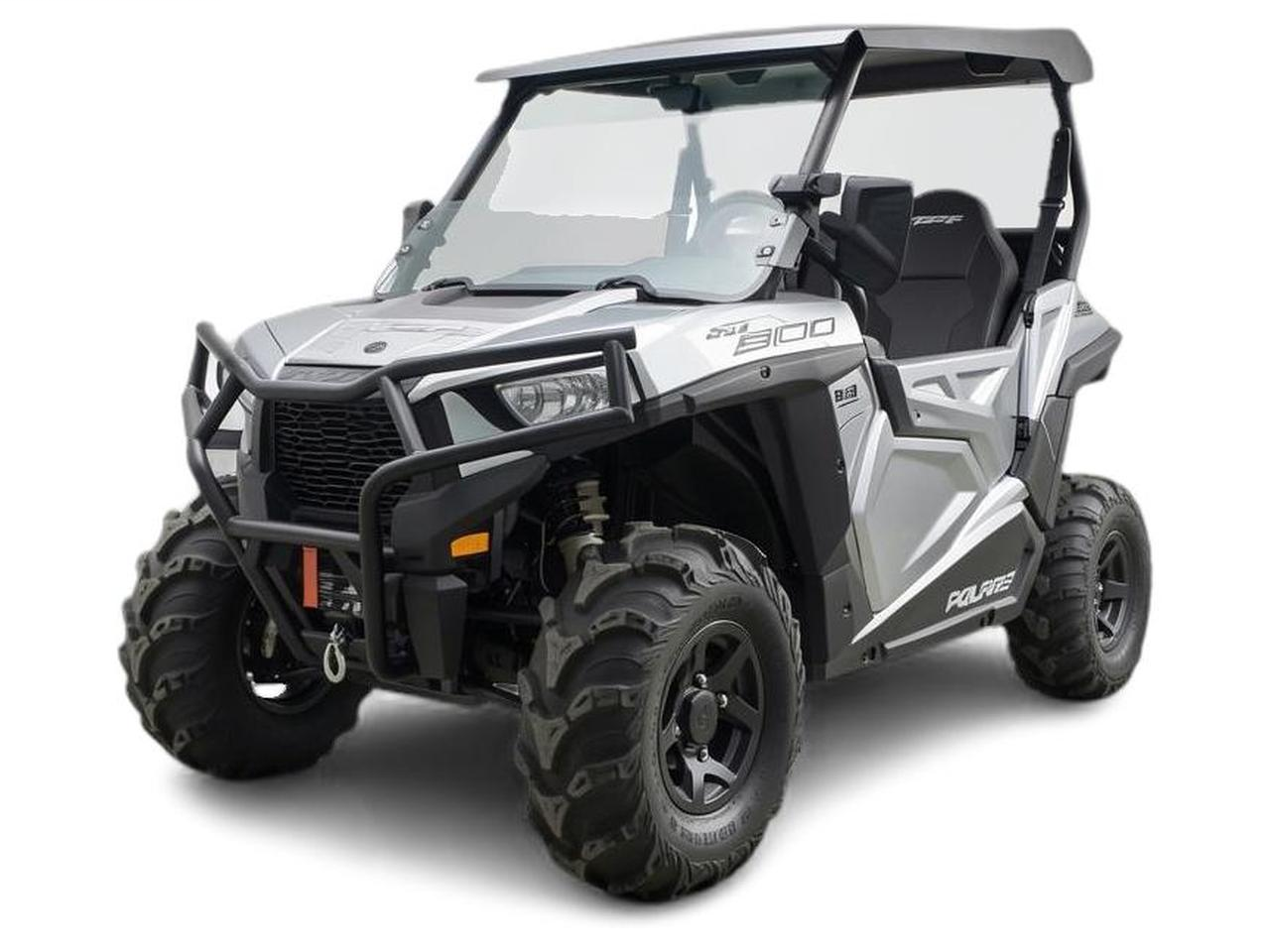
The Good
The 2016 RZR excels in performance with potent engines and agile handling, exciting thrill-seekers. Its robust design and Polaris' reputation for reliability offer practical peace of mind. Comfortable seating and thoughtful ergonomics enhance the riding experience for all-day adventures.
The Bad
Potential weaknesses for the 2016 RZR include some models experiencing driveline issues, particularly with early XP Turbo variants. Owners should also be aware of potential overheating on hard-driven models and the cost of aftermarket upgrades, which can quickly add up.
2016 Polaris RZR: Quick Overview
- Engine Options: The 2016 Polaris RZR lineup offered a diverse range of engine choices to suit various performance demands.
- RZR 570: Powered by a 567cc ProStar engine.
- RZR S 900: Featured a 875cc ProStar engine.
- RZR XP 1000: Equipped with a 999cc ProStar engine.
- RZR XP Turbo: Introduced the 925cc ProStar Turbo engine.
- Horsepower:
- RZR 570: Approximately 44 horsepower.
- RZR S 900: Approximately 75 horsepower.
- RZR XP 1000: Approximately 107 horsepower.
- RZR XP Turbo: Approximately 144 horsepower.
- Fuel Economy: Fuel economy varies significantly based on engine size, terrain, and driving style. Polaris typically quotes MPG figures in the range of 15-20 MPG for most models under typical trail conditions, though aggressive riding will reduce this considerably. Official EPA estimates are not as standardized for UTVs as they are for automobiles.
- 0-60 Times: Official 0-60 mph times are rarely published by manufacturers for UTVs, as their performance is more about acceleration and top speed in off-road conditions rather than road-based sprints. However, the RZR XP 1000 and XP Turbo are known for their rapid acceleration, with the XP Turbo being capable of achieving 0-60 mph in well under 5 seconds in optimal conditions.
- Towing Capacity: Towing capacity for the 2016 Polaris RZR models is generally not a primary feature or focus. Most RZRs are designed for recreational use and trail riding rather than heavy-duty work. Typical towing capacities, if specified, are usually around 500-1500 lbs, sufficient for small trailers or utility tasks.
- Trim-Level Features:
- RZR 570: Entry-level option, offering basic trail performance, comfortable seating for two, and an agile chassis.
- RZR S 900: Enhanced performance with a more powerful engine, wider stance for improved stability, and better suspension for tackling rougher terrain.
- RZR XP 1000: Top-tier performance for its time, featuring a potent engine, advanced suspension, and a more aggressive design for high-speed trail riding and dune adventures. Offers more ground clearance and a longer wheelbase.
- RZR XP Turbo: The pinnacle of the 2016 lineup, boasting a turbocharged engine for unprecedented power and acceleration, advanced suspension, and premium features for extreme off-road enthusiasts. Often included power steering and higher-end shocks.
2016 Polaris RZR Specifications
Vehicle Information
| Year | 2016 |
| Make | Polaris |
| Model | RZR |
| Trim | - |
| Style | - |
| Type | Motorcycle |
| Category | - |
Manufacturing Details
| Made In | United States |
| Manufacturing City | ROSEAU |
Dimensions
| Doors | - |
| Curb Weight | - |
| Gross Vehicle Weight Rating | - |
| Overall Height | - |
| Overall Length | - |
| Overall Width | - |
| Wheelbase Length | - |
| Standard Seating | - |
Engine & Performance
| Engine | Invalid size value 0cyl |
| Engine Size | - |
| Engine Cylinders | - |
| Transmission | - |
| Transmission Type | - |
| Transmission Speeds | - |
| Drivetrain | - |
Additional Features
| Anti-Brake System | - |
| Steering Type | - |
Pricing
| Manufacturer Suggested Retail Price (MSRP) | - |
| Invoice Price | - |
| Delivery Charges | - |
Vehicle History Report
Specifications
History
Events
History Check
Check
Check
Check
Check
Listings
Recalls
Check
Analysis
What Problems Does the 2016 Polaris RZR Have?
Another area that sometimes surfaces in owner forums is related to the cooling system. Overheating can occur, particularly in high ambient temperatures or when the vehicle is pushed hard for extended periods. This can be exacerbated by debris clogging radiators or fans not performing optimally. Regular cleaning and inspection of the cooling system are recommended.
Electrical system gremlins, while not widespread, can also appear. Issues with wiring harnesses, sensors, or battery drain have been reported by a small percentage of owners. Ensuring all connections are clean and secure, and that the battery is in good health, is crucial.
Recalls are not uncommon for any vehicle manufacturer, and Polaris is no exception. While specific recall campaigns can vary, owners should always check the Polaris official website or NHTSA's database for any active recalls pertaining to their specific VIN. Common areas for recalls in UTVs often involve safety-related components such as braking systems, steering, or potential fire hazards. For the 2016 RZR, specific recalls have targeted issues like potential fuel leaks or concerns with steering components. It is imperative for owners to stay informed and have any recalled parts addressed promptly by an authorized dealer.
Long-term reliability is generally good if the RZR is maintained meticulously. However, the high-performance nature of models like the XP 1000 and XP Turbo means that components are under significant stress. Wear and tear on suspension, bushings, and drivetrain components are to be expected with regular, hard use. Proactive maintenance, including regular fluid changes, greasing, and inspecting for worn parts, will significantly contribute to the longevity of the vehicle.
How long will the 2016 Polaris RZR last?
What Technology & Safety Features are Included?
Entertainment features are minimal to non-existent in standard configurations. There are no integrated infotainment systems, touchscreens, or advanced audio setups from the factory. Owners typically opt for aftermarket stereo systems, often installed in the cabin or on the roll cage, to add music capabilities.
Driver-assistance features are virtually absent in the 2016 RZR lineup. These vehicles are designed for manual control and direct driver input. There are no advanced systems like adaptive cruise control, lane departure warnings, or parking sensors. The emphasis is on the driver's skill and awareness in navigating challenging terrain.
Safety features are more about inherent design and basic active safety. All RZRs come equipped with a robust roll cage designed to protect occupants in case of a rollover. Seatbelts (typically 3-point or 4-point harnesses) are standard. The braking system consists of hydraulic disc brakes on all wheels, providing reliable stopping power. Power steering was an optional or standard feature on higher trims (like the XP 1000 and XP Turbo), significantly reducing steering effort and improving control, especially at lower speeds or over rough terrain, which can be considered a safety aid by reducing driver fatigue.
Optional features that enhance the experience and safety include upgraded lighting, winches, different seat and harness configurations, and various protection packages (e.g., skid plates, nerf bars).
Crash-test ratings are not applicable to UTVs in the same way they are for passenger cars. Regulatory bodies like the NHTSA do not conduct standardized crash tests for off-road vehicles. The safety of the RZR is primarily judged by its construction quality, the effectiveness of its protective structures (like the roll cage), and the standard safety equipment provided. Polaris designs its RZRs to meet stringent internal safety standards and industry best practices for off-road vehicles.
What Colors Options are Available?
2016 Polaris RZR Prices and Market Value
Currently, the used market for 2016 Polaris RZR models shows significant depreciation from their original MSRP, but they retain strong value compared to many other powersports vehicles. A 2016 RZR 570 in good condition might be found for $7,000-$9,000. The RZR S 900 could range from $9,000-$12,000. For the performance-oriented RZR XP 1000 and XP Turbo, expect prices from $12,000-$18,000 or even higher for well-equipped or low-mileage units.
Depreciation is influenced by hours/mileage, condition, and presence of aftermarket modifications. Factors affecting resale value include regular maintenance, the extent of damage or wear (especially to the suspension and drivetrain), and whether the vehicle has been used for extreme purposes (e.g., competitive racing, heavy mudding). Popularity and demand for specific trims also play a role. Higher performance models generally hold their value better due to their sought-after capabilities.
2016 Polaris RZR Cost of Ownership
2016 Polaris RZR Fuel Efficiency
2016 Polaris RZR Insurance
reasonable repair costs.
How Does the 2016 Polaris RZR Compare to Other Motorcycle?
Performance: Polaris RZRs, especially the XP models, were often lauded for their class-leading power-to-weight ratio and agile handling. The RZR XP 1000 and XP Turbo were benchmarks for acceleration and high-speed trail capability. Can-Am's Maverick X ds Turbo models were direct competitors, often matching or exceeding RZR's horsepower and offering comparable performance. Arctic Cat's Wildcat X was known for its suspension travel and stability in rough terrain, though sometimes lagged slightly in pure power compared to the top RZRs. Yamaha's YXZ1000R, introduced later, offered a unique sequential manual transmission for a more engaging driving experience but was in a slightly different performance niche initially.
Features: Polaris RZRs offered a good balance of comfort and utility for their class. Features like power steering (on higher trims), comfortable seating, and a relatively intuitive dashboard were common. Can-Am's Mavericks often boasted premium materials and advanced electronic features. Arctic Cat's Wildcats emphasized robust suspension and ground clearance. Yamaha's YXZ stood out with its true sports car-like cockpit and manual transmission. In 2016, the RZR lineup provided a solid all-around package.
Reliability: Reliability was a mixed bag across the segment in 2016. Polaris had some early turbo issues with the XP Turbo. Can-Am's Rotax engines are generally robust but can be complex. Arctic Cat historically had some reliability concerns, though the Wildcat was considered a strong offering. Yamaha has a reputation for excellent reliability, and the YXZ, being naturally aspirated, might have fewer potential failure points than turbocharged competitors. However, all high-performance UTVs require diligent maintenance.
Price: In 2016, the RZR lineup was competitively priced, offering various options from affordable (RZR 570) to premium (XP Turbo). Can-Am's Mavericks often sat in a similar price bracket. Arctic Cat's Wildcats were also similarly priced. Yamaha's YXZ was also in the premium sport UTV price range.
Alternatives:
- Similar: 2016 Can-Am Maverick X ds Turbo, 2016 Arctic Cat Wildcat X. These offer comparable performance and features for aggressive trail riding.
- Different Focus: 2016 Yamaha YXZ1000R. If a more engaging, driver-involved experience with a manual transmission is preferred, the YXZ is a strong contender, though it sacrifices some low-end torque compared to turbo models.
For those seeking raw power and speed, the 2016 RZR XP Turbo or Can-Am Maverick X ds Turbo are excellent choices. For a more balanced trail performance at a slightly lower price point, the RZR S 900 or Maverick 1000R are great options. If a focus on suspension travel and stability is paramount, the Arctic Cat Wildcat X could be considered.
Final Verdict: Is the 2016 Polaris RZR a Good Motorcycle?
Whether it's worth buying depends on the buyer's needs and budget. As a used vehicle, it offers excellent value, especially considering its capability and the enjoyment it provides. It's advisable to buy used, given the significant depreciation from new prices, and to thoroughly inspect any potential purchase. Specific trims like the RZR XP 1000 or XP Turbo are best for those seeking maximum performance, while the RZR S 900 or 570 offer a more accessible entry point. Thorough maintenance history is key when purchasing used, and potential buyers should be aware of common issues like driveline wear or early turbo concerns on the XP Turbo models. For its intended purpose, a well-maintained 2016 RZR remains a capable and fun off-road machine.

Simon A
Simon is a contributor to VinCheck, where he provides articles and reviews on various automotive topics. His work focuses on delivering accurate and up-to-date information about used cars, helping readers make informed decisions.