
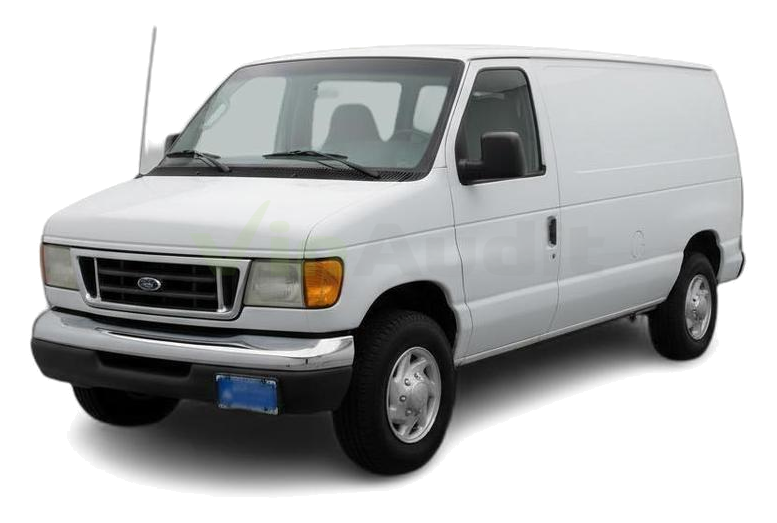
The Good
Key advantages of the 2004 Ford E350 Super Duty include its strong performance from powerful V8 and V10 engines, offering excellent towing and hauling capabilities. Its robust, utilitarian design contributes to legendary reliability and durability, appealing to practical buyers needing a dependable workhorse. While comfort is basic, the spacious interior is highly adaptable, providing freedom for custom conversions like RVs or expedition vehicles, which resonates with emotional buyers seeking adventure and utility.
The Bad
Known weaknesses for the 2004 Ford E350 Super Duty include poor fuel economy, especially with gasoline engines, and a firm, truck-like ride. The 6.0L Power Stroke diesel engine is infamous for numerous reliability issues, requiring significant "bulletproofing" to be dependable. Rust can be a major concern on older models, and interior noise levels are high.
2004 Ford E350 Super Duty: Quick Overview
- Engine Options:
- 5.4L Triton V8 (gasoline)
- 6.8L Triton V10 (gasoline)
- 6.0L Power Stroke V8 Diesel
- Horsepower:
- 5.4L V8: Approximately 255 hp
- 6.8L V10: Approximately 305 hp
- 6.0L Power Stroke V8 Diesel: Approximately 325 hp with substantial torque
- Fuel Economy: Generally poor, reflecting its heavy-duty nature.
- Gasoline engines: Typically 9-13 MPG combined (highly variable based on load and driving conditions).
- 6.0L Diesel: Slightly better, around 12-16 MPG combined.
- 0-60 Times: Not designed for acceleration, times are slow.
- Roughly 10-14 seconds, depending heavily on engine, load, and configuration.
- Towing Capacity: Impressive, a core strength of the E350 Super Duty.
- Ranges from approximately 7,000 lbs to over 10,000 lbs, depending on the engine, axle ratio, and specific configuration.
- Trim-Level Features:
- XL Trim: The utilitarian base model. Features often included vinyl seats, manual windows and door locks, an AM/FM radio, and basic instrumentation. Designed for work applications.
- XLT Trim: Offered more comfort and convenience. Typically included cloth seating, power windows and door locks, cruise control, improved audio systems (often with CD player), air conditioning, and chrome exterior accents.
- Optional Features (across trims): Rear air conditioning/heater, privacy glass, heavy-duty towing packages, various seating configurations for passenger wagons (including captain's chairs), running boards, and numerous upfitter options for commercial or recreational customization.
2004 Ford E350 Super Duty Specifications
Vehicle Information
| Year | 2004 |
| Make | Ford |
| Model | E350 Super Duty |
| Trim | - |
| Style | - |
| Type | Van |
| Category | Cargo Van |
Manufacturing Details
| Made In | United States |
| Manufacturing City | LORAIN |
Dimensions
| Doors | 3-Door |
| Curb Weight | 5485 pounds |
| Gross Vehicle Weight Rating | 9400 pounds |
| Overall Height | 84.10 inches |
| Overall Length | 231.90 inches |
| Overall Width | 79.30 inches |
| Wheelbase Length | 138.00 inches |
| Standard Seating | 2 |
Engine & Performance
| Engine | 5.4L V8 |
| Engine Size | 5.4L |
| Engine Cylinders | 8 |
| Transmission | 5-Speed Automatic |
| Transmission Type | Automatic |
| Transmission Speeds | 5-Speed |
| Drivetrain | Rear-Wheel Drive |
Additional Features
| Anti-Brake System | 4-Wheel ABS |
| Steering Type | Recirculating |
Pricing
| Manufacturer Suggested Retail Price (MSRP) | $26,970 |
| Invoice Price | $23,584 |
| Delivery Charges | $735 |
Vehicle History Report
Specifications
History
Events
History Check
Check
Check
Check
Check
Listings
Recalls
Check
Analysis
What Problems Does the 2004 Ford E350 Super Duty Have?
For the gasoline engines, primarily the 5.4L and 6.8L Triton V8/V10, spark plug ejection was a known, though less common, concern for some 2-valve variants from this era, though less prevalent by 2004 than in earlier years. Transmission issues, specifically with the 4R100 or 4R70W automatic transmissions, can arise under severe towing or hauling conditions without diligent maintenance. These transmissions are generally robust but can be stressed by the E350's heavy-duty applications.
Other common concerns include wear on front suspension and steering components (ball joints, tie rods, bushings) due to the vehicle's weight and demanding usage. Brake components, like pads and rotors, also experience accelerated wear. Electrical gremlins, such as issues with accessory power, sensors, or lighting, can manifest with age. Rust is a significant long-term concern, especially in regions with road salt, affecting body panels, frame, and undercarriage components.
Regarding recalls, the 2004 E-Series had various minor recalls, often related to safety or emissions. A common type of recall for Ford vehicles of this era involved the speed control deactivation switch, which had a potential fire risk. Owners should verify if any applicable recalls were addressed on their specific vehicle.
How long will the 2004 Ford E350 Super Duty last?
However, weaknesses emerge over time. The infamous 6.0L Power Stroke diesel engine significantly impacts perceived long-term reliability, often requiring substantial investment in "bulletproofing" to achieve longevity comparable to its gas counterparts. Other common long-term issues include wear and tear on suspension components due to heavy loads, increased susceptibility to rust on the body and frame, and the eventual need for costly repairs if neglected. Interior materials, particularly in work vans, also show significant wear.
What Technology & Safety Features are Included?
Built-in Tech & Entertainment: Standard entertainment typically included an AM/FM stereo, often with a cassette player, and sometimes a single-CD player. Higher trims or optional packages might have offered a basic upgraded sound system. There were no integrated touchscreens, navigation, or Bluetooth connectivity as standard features. Auxiliary power outlets (12V) were available for charging devices, but USB ports were not yet common. Most advanced tech or entertainment solutions would be aftermarket.
Driver-Assistance Features: Modern driver-assistance technologies like lane-keeping assist, adaptive cruise control, or blind-spot monitoring were nonexistent. The primary "assistance" features were power steering and power brakes. Cruise control was typically an optional feature on the base XL trim and standard on the XLT.
Safety Features: Standard safety equipment included dual front airbags for the driver and front passenger. Anti-lock Braking System (ABS) was usually standard or a common option on the E350 Super Duty due to its intended heavy-duty usage. Three-point seatbelts were provided for front occupants, with lap belts often used for rear passengers in multi-row configurations. The vehicle's sheer mass and heavy-duty frame offered some inherent passive safety in certain collision types.
Optional Features: Beyond the base models, optional features could enhance comfort and convenience, such as rear air conditioning and heating systems, power windows and door locks, and privacy glass. For towing, options often included heavy-duty alternators and coolers, though integrated trailer brake controllers were typically aftermarket or dealer-installed.
Crash-Test Ratings: Full-size vans from this period, including the 2004 E350, often had limited official crash-test ratings from organizations like NHTSA or IIHS, especially when compared to passenger cars. Specific detailed ratings across multiple categories are generally not as comprehensive or readily available. The E350's heavy-duty construction provided a strong occupant compartment, but it lacked the sophisticated crumple zones and advanced restraint systems of contemporary passenger vehicles or modern vans.
What Colors Options are Available?
2004 Ford E350 Super Duty Prices and Market Value
Depreciation was significant in its early years, typical for commercial vehicles. However, the E350 Super Duty has reached a stable point where its utility-driven demand keeps prices from plummeting further. Factors heavily affecting resale value include the overall condition (rust, body damage, interior wear), mileage, and crucially, the engine choice. The reliable 7.3L Power Stroke diesel (if a late-production model is found) or the strong gas V8/V10 engines generally hold value better than problematic 6.0L diesels unless they've been extensively upgraded. Maintenance history and specific configurations (cargo vs. passenger, specialized upfits) also play a major role.
2004 Ford E350 Super Duty Cost of Ownership
2004 Ford E350 Super Duty Fuel Efficiency
2004 Ford E350 Super Duty Safety Rating
NHTSA
IIHS
2004 Ford E350 Super Duty Warranty
Basic
Powertrain
Rust
2004 Ford E350 Super Duty Insurance
reasonable repair costs.
How Does the 2004 Ford E350 Super Duty Compare to Other Van?
In terms of Performance, the E350 offered strong gasoline V8 and V10 engines, along with the powerful, albeit problematic, 6.0L Power Stroke diesel. Its towing and hauling capabilities were excellent. The GM vans countered with reliable Vortec V8 gasoline engines (e.g., 5.3L, 6.0L) and also offered good towing, often with a more reliable (though less powerful) diesel option like the 6.5L or later Duramax. The Dodge Ram Van typically featured V8s but was generally seen as slightly less heavy-duty than Ford or GM.
Features were similar across all rivals: utilitarian by nature. All offered basic comforts like air conditioning, power steering/brakes, and fundamental audio systems. None provided advanced infotainment or driver-assistance features common today. The E350, Express, and Savana had similar passenger and cargo configurations.
Reliability is where distinctions emerge. Ford's gas V8 and V10 engines are generally very durable if maintained. However, the 6.0L Power Stroke diesel in the E350 is a significant reliability liability. The GM Express/Savana vans are often lauded for their exceptional reliability, particularly their Vortec gasoline engines and the 6.5L diesel, which had fewer catastrophic issues than Ford's 6.0L. The Dodge vans were decent but had less market presence and potentially scarcer parts.
Price new was competitive. In the used market, all have depreciated significantly, but E350 and Express/Savana models often hold similar values based on condition, mileage, and engine. Diesel models generally command more, with the 7.3L Ford and GM diesels being highly sought after.
Recommended Alternatives: For a more reliable option, particularly if considering a diesel, a 2004 Chevrolet Express 3500 or GMC Savana 3500 with a 6.0L Vortec gas engine or a reliable Duramax diesel (if a slightly newer model is feasible) would be a strong contender. They offer comparable capability with fewer inherent powertrain risks. If the budget allows for a slightly newer platform, a Mercedes-Benz Sprinter (though a different class) offered better fuel economy and interior volume but often at a higher initial cost and with different maintenance requirements.
Final Verdict: Is the 2004 Ford E350 Super Duty a Good Van?
It is definitely worth buying, but with critical conditions. Always purchase a used model, as new ones are no longer available. Crucially, the engine choice dictates its long-term viability: opt for the reliable 5.4L Triton V8 or 6.8L Triton V10 gasoline engines. If a diesel is desired, only consider a 7.3L Power Stroke (if found, as 2004 was primarily 6.0L) or a 6.0L Power Stroke that has verifiable "bulletproofing" modifications and a thorough pre-purchase inspection by a diesel specialist. A complete maintenance history is paramount. If these conditions are met, the E350 Super Duty is an excellent, versatile workhorse, provided you accept its significant fuel consumption and lack of modern amenities.

Cathleen V
Cathleen is an exceptional freelance writer covering hot topics in the automotive world from a gearhead's perspective. Her articles delve into various aspects of automotive technology and history, offering readers detailed insights into engine performance, reliability, and maintenance. Through her engaging and informative writing, Cathleen provides valuable information to automotive enthusiasts and consumers alike, helping them make informed decisions about vehicle maintenance and purchases.