by VIN, Year, Make, Model by License Plate

2017 Peterbilt 579 Overview, Reviews, Ratings & Specs

Rating: 0.00
Based on 0 Owner Reviews
Cathleen V | October 1, 2025
The 2017 Peterbilt 579 is a prominent Class 8 commercial truck, introduced in 2012 as a modern, aerodynamic tractor designed for efficiency and driver comfort. Available in day cab and various sleeper configurations, it quickly became a staple for long-haul and regional transport. Its model years typically span from 2012 onwards. Key trims often denote sleeper sizes (e.g., 80-inch UltraLoft). New pricing ranged from $140,000 to over $200,000, while used 2017 models can be found from $50,000 to $90,000 depending on mileage and condition. It stands out for its distinctive Peterbilt styling, advanced aerodynamics, and reputation for quality and driver-centric design.

The Good

The 2017 Peterbilt 579 offers a blend of practical efficiency and emotional appeal. Its aerodynamic design delivers excellent fuel economy, reducing operational costs, while powerful engine options ensure strong performance. Drivers appreciate its spacious, quiet, and comfortable cabin, fostering a sense of pride and well-being on long hauls. Renowned Peterbilt reliability and high resale value contribute to its strong practical advantage, making it a smart investment for owner-operators and fleets alike.

The Bad

Known weaknesses for the 2017 Peterbilt 579 often involve complex emissions systems (DEF, DPF) which can be costly to maintain and repair. Some drivers report issues with certain electrical components, sensors, and interior trim durability. The advanced technology, while beneficial, can also lead to more expensive diagnostic and repair costs compared to older, simpler trucks.

2017 Peterbilt 579: Quick Overview

The 2017 Peterbilt 579 offers a range of robust specifications designed for heavy-duty commercial operations. Here's a summary of its key features:


  • Engine Options: The primary engine offerings included the PACCAR MX-13 and the Cummins X15. The MX-13 is a proprietary engine known for its efficiency, while the Cummins X15 is a popular choice for its proven reliability and power.
  • Horsepower: For the PACCAR MX-13, horsepower ratings typically ranged from 405 hp to 510 hp, with torque figures between 1,450 lb-ft and 1,850 lb-ft. The Cummins X15 offered a wider range, generally from 400 hp to 605 hp, with peak torque from 1,450 lb-ft up to 2,050 lb-ft for heavy-haul applications.
  • Fuel Economy: Fuel economy for a Class 8 truck like the 579 is highly dependent on factors such as load, terrain, driver habits, and spec'd components. However, with its aerodynamic design and efficient engine options, the 2017 Peterbilt 579 typically achieved an average of 6.0 to 8.0 MPG (miles per gallon), with some optimized configurations pushing closer to 9 MPG.
  • 0-60 Times: Due to their operational purpose as heavy-duty haulers, 0-60 mph acceleration times are not a standard performance metric for Class 8 semi-trucks. These vehicles are designed for sustained highway speeds with heavy loads, not rapid acceleration.
  • Towing Capacity: The Peterbilt 579's towing capacity is expressed as its Gross Combination Weight Rating (GCWR). This can vary significantly based on axle configurations, engine, transmission, and frame specifications. Standard GCWRs typically range from 80,000 lbs to over 140,000 lbs for specialized heavy-haul setups.
  • Trim-Level Features: The 579 was available in Day Cab and various Sleeper configurations, including the popular 80-inch UltraLoft. Key features include:
    • Interior Comfort: Spacious cabins with premium materials, ergonomic dashboards, and ample storage. Sleeper models offered amenities like refrigerators, microwaves, flat-screen TV mounts, and comfortable bunk beds.
    • Driver-Centric Design: Adjustable steering columns, air-ride seats, intuitive gauge clusters, and easy-to-reach controls.
    • Aerodynamic Enhancements: Integrated fairings, optimized hood and bumper designs, and roof extenders to reduce drag and improve fuel efficiency.
    • Safety: Available advanced braking systems, stability control, and optional collision mitigation technologies.
    • Connectivity: Infotainment systems with Bluetooth, navigation, and telematics integration.

2017 Peterbilt 579 Specifications

Vehicle Information
Year 2017
Make Peterbilt
Model 579
Trim -
Style -
Type Truck
Category Medium Truck
Manufacturing Details
Made In United States
Manufacturing City DENTON
Dimensions
Doors -
Curb Weight -
Gross Vehicle Weight Rating -
Overall Height -
Overall Length -
Overall Width -
Wheelbase Length -
Standard Seating -
Engine & Performance
Engine 12.9L L6 DIESEL
Engine Size 12.9L
Engine Cylinders 6
Transmission -
Transmission Type -
Transmission Speeds -
Drivetrain 6x4
Additional Features
Anti-Brake System -
Steering Type -
Pricing
Manufacturer Suggested Retail Price (MSRP) -
Invoice Price -
Delivery Charges -

Vehicle History Report

Vehicle
Specifications
Ownership
History
All History
Events
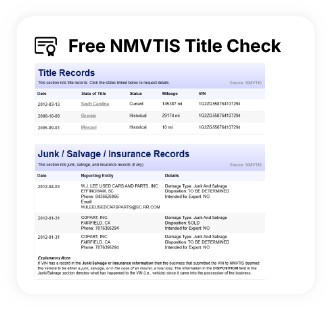
NMVTIS Title
History Check
Salvage/Rebuilt
Check
Accident
Check
Theft
Check
Open Lien
Check
Past Sale
Listings
Safety
Recalls
Odometer
Check
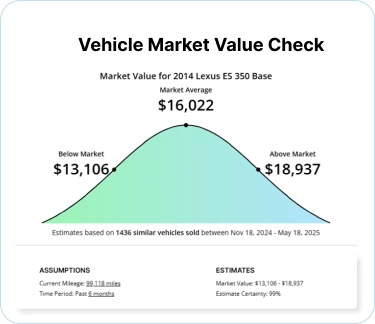
Market Price
Analysis

What Problems Does the 2017 Peterbilt 579 Have?

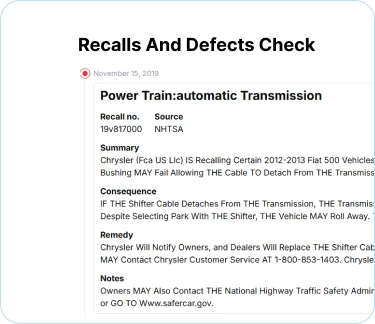
The 2017 Peterbilt 579, while a reliable workhorse, has its share of frequently reported problems, largely tied to the increasing complexity of modern semi-trucks and their emissions systems. A common concern across most 2010+ trucks, including the 2017 Peterbilt 579, involves the Selective Catalytic Reduction (SCR) and Diesel Particulate Filter (DPF) systems. These components, crucial for meeting EPA emissions standards, are prone to issues such as clogged DPFs, faulty DEF (Diesel Exhaust Fluid) sensors, failed DEF pumps, and various related sensor malfunctions. These problems can lead to frequent regens, derates, and costly repairs, significantly impacting uptime. Owners have also reported issues with turbochargers, particularly on PACCAR MX-13 engines, sometimes manifesting as excessive oil consumption or premature failure. Electrical problems, while not widespread, can occur, ranging from minor sensor failures to more complex wiring harness issues affecting everything from lights to engine performance. The heating, ventilation, and air conditioning (HVAC) system is another area where some drivers have experienced problems, including refrigerant leaks or compressor failures. Regarding recalls, the 2017 model year did see some specific actions. For instance, there were recalls concerning potential steering gear issues that could affect steering control, and others related to improper wiring of the ABS system which could impact braking performance. Additionally, some vehicles were recalled for issues with the hydraulic brake lines or potential fuel tank mounting problems. Long-term reliability concerns often center around the durability of these emission components and the high cost of their repair, as well as the longevity of electronic control modules (ECMs) and sensors which are integral to engine and vehicle operation. Proper and timely maintenance, especially concerning the emissions system, is paramount to mitigate these potential issues over the truck's lifespan.

How long will the 2017 Peterbilt 579 last?

A well-maintained 2017 Peterbilt 579 is built for the long haul, commonly achieving high mileage. Based on owner data and typical long-haul usage, it's not uncommon for these trucks to accumulate 100,000 to 150,000 miles per year. Therefore, a 2017 model could easily have 500,000 to 750,000 miles or more by 2024. With diligent maintenance, including regular oil changes, emissions system care, and proactive component replacement, many 579s can exceed 1,000,000 miles of service. Long-term durability is generally strong for the core engine and drivetrain, but weaknesses tend to emerge in the emissions components, electrical systems, and cabin comfort items (e.g., HVAC, seat wear) as mileage climbs. Neglecting maintenance, particularly on the DPF/SCR systems, significantly reduces its lifespan and increases ownership costs.

What Technology & Safety Features are Included?

The 2017 Peterbilt 579 integrated a variety of built-in technologies aimed at improving driver comfort, safety, and operational efficiency. For infotainment and connectivity, the truck typically featured a sophisticated dashboard display and a stereo system with AM/FM radio, CD player, MP3 compatibility, and Bluetooth connectivity for hands-free calling and audio streaming. Optional upgrades included navigation systems integrated into the display, satellite radio, and enhanced sound systems. Telematics systems were often standard or optional, providing real-time data on vehicle performance, location tracking, and driver behavior for fleet management and diagnostics.

In terms of driver-assistance and safety features, the 2017 579 offered a solid suite, though not as comprehensive as current models. Standard safety equipment included anti-lock braking systems (ABS), traction control, and electronic stability control (ESC) to prevent rollovers and maintain control in adverse conditions. Many models came with optional advanced driver-assistance systems (ADAS) such as Bendix Wingman Fusion or Meritor Wabco OnGuard. These systems could provide features like adaptive cruise control, lane departure warning, and collision mitigation systems which could issue warnings and even initiate autonomous emergency braking to reduce the severity of or prevent frontal collisions.

Other safety enhancements included bright LED headlamps for improved visibility, robust chassis construction, and strategically placed mirrors to minimize blind spots. It's important to note that specific crash-test ratings for Class 8 commercial trucks, like passenger vehicles, are not typically performed or published by agencies like the NHTSA or IIHS. Instead, their safety is assessed through compliance with commercial vehicle safety regulations and the effectiveness of their active and passive safety features in preventing incidents and protecting occupants in the event of a collision. The strong frame, heavy construction, and elevated driving position inherent to semi-trucks also contribute significantly to occupant safety.

What Colors Options are Available?

We’re working on this section!
In the meantime, feel free to explore the other sections for more content.

2017 Peterbilt 579 Prices and Market Value

When new, a 2017 Peterbilt 579 could range significantly in price depending on configuration, engine choice, and sleeper options. Day cab models might start around $140,000 to $160,000, while fully spec'd sleeper models, especially with premium engines and interiors, could easily push past $200,000, sometimes reaching $220,000+.

In the current used market (as of 2024), a 2017 Peterbilt 579 will have undergone substantial depreciation. Prices typically range from $50,000 to $90,000, heavily influenced by mileage, overall condition, maintenance records, and regional demand. Trucks with lower mileage and comprehensive maintenance history command higher prices. Depreciation insights indicate that Class 8 trucks depreciate rapidly in their first few years, then stabilize. Factors affecting resale value include the condition of the engine and drivetrain, functionality of emissions systems, cab and sleeper condition, and the presence of any major repair needs. A well-maintained engine (PACCAR MX-13 or Cummins X15) adds significant value.

2017 Peterbilt 579 Cost of Ownership

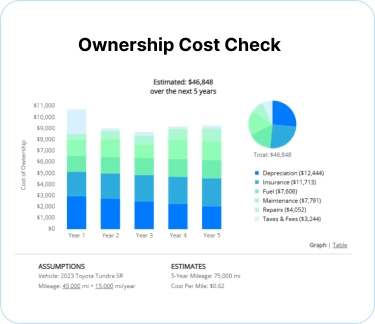
Owning a 2017 Peterbilt 579 involves substantial long-term costs. Insurance for a commercial Class 8 truck varies widely but can range from $5,000 to $15,000+ annually, depending on coverage, driving history, and operation type. Fuel is the largest operating expense; with average MPG of 6-8 and high annual mileage, costs can quickly reach $50,000 to $80,000+ per year. Maintenance costs, including routine service, tires, and expected repairs for emissions systems, can be $15,000 to $30,000 annually. Unexpected major repairs, like engine or transmission overhauls, can be $10,000 to $30,000+. Overall, the 2017 Peterbilt 579 is a costly vehicle to own, reflecting its commercial utility, but its efficiency and reliability can make it economical in operation if well-managed.

2017 Peterbilt 579 Fuel Efficiency

Fuel Type Diesel
Fuel Capacity -
City Mileage -
Highway Mileage -

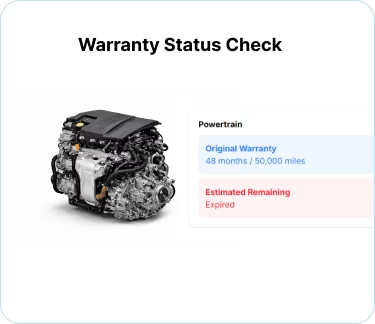
2017 Peterbilt 579 Warranty

Basic
Original warranty 0 months / No data
Estimated remaining Expired
Powertrain
Original warranty 0 months / No data
Estimated remaining Expired
Rust
Original warranty 0 months / No data
Estimated remaining Expired

2017 Peterbilt 579 Insurance

Insurance for a 2017 Peterbilt 579 is moderately priced, reflecting its status as a Truck with strong safety ratings and
reasonable repair costs.

How Does the 2017 Peterbilt 579 Compare to Other Truck?

The 2017 Peterbilt 579 competes in a fierce market against rivals like the Freightliner Cascadia, Kenworth T680, and Volvo VNL.

Performance: The 579, with its PACCAR MX-13 or Cummins X15 engines, offers competitive power and torque. It generally performs on par with the Cascadia's Detroit DD15/DD16 or the T680's PACCAR MX-13, and the VNL's Volvo D13. Acceleration and pulling power are robust across all, tailored for heavy loads and long hauls. Peterbilt's aerodynamics contribute to good fuel efficiency, often comparable to the Cascadia's renowned efficiency and the T680, while the VNL also excels in this area.

Features: The 579 stands out with its premium interior finish and iconic Peterbilt styling. Its cabin ergonomics and quality materials often feel a step above the standard Cascadia, though Freightliner's Evolution and Cascadia series also offer excellent comfort and advanced tech. The Kenworth T680, being a sister model, shares many underlying components and offers a very similar driver experience. The Volvo VNL is known for its quiet cabin, integrated safety features, and often more modern, car-like interior aesthetics. All offer various sleeper configurations and driver-assistance options.

Reliability: All these brands are generally reliable, but modern emissions systems are a common pain point across the board. Peterbilt and Kenworth (PACCAR) have a solid reputation, as does Freightliner (Daimler), and Volvo. Specific engine choices (e.g., Cummins X15) often factor more into perceived reliability than the truck brand itself.

Price: New, the 579 was competitively priced with its direct rivals. On the used market, a 2017 579 typically falls into a similar price bracket as a 2017 Cascadia or T680, depending on specs and condition. Volvo VNLs sometimes hold their value slightly differently, influenced by their integrated powertrain.

Recommendations:
  • Similar Alternatives: The 2017 Kenworth T680 is almost identical mechanically and offers a very similar experience, making it an excellent alternative. The 2017 Freightliner Cascadia is another strong contender, especially if maximizing fuel efficiency and a large dealer network are top priorities.
  • Better Alternatives (depending on preference): For those prioritizing advanced integrated safety and a supremely quiet, comfortable cabin, a 2017 Volvo VNL might be considered "better" in those specific areas, though it may come with different repair network considerations.

Final Verdict: Is the 2017 Peterbilt 579 a Good Truck?

The 2017 Peterbilt 579 is ideal for owner-operators and fleets prioritizing a blend of aerodynamic efficiency, driver comfort, and Peterbilt's classic prestige. It suits long-haul and regional applications where driver satisfaction and fuel economy are key. This vehicle is certainly worth buying, especially as a used model. Its significant depreciation makes it a more accessible entry point into a premium Class 8 truck. Buyers should specifically target models with comprehensive maintenance records, particularly verifying service history for the emissions system and major engine components. It's a strong contender if you value a well-appointed, comfortable interior and the brand's reputation for quality, provided you budget adequately for ongoing maintenance, especially for the emissions aftertreatment system. For those seeking a truck that retains its professional appeal and offers robust performance for years, a well-inspected 2017 579 is an excellent choice.

2017 Peterbilt 579 Owner Reviews

0.00
Consumer Rating, Based on 0 Consumer Reviews
Overall rating
Cancel
Thank You for Your Review!

We truly appreciate the time and effort you took to share your experience with us.

Uh oh!

Something went wrong, please try again later.

Author Image
Cathleen V

Cathleen is an exceptional freelance writer covering hot topics in the automotive world from a gearhead's perspective. Her articles delve into various aspects of automotive technology and history, offering readers detailed insights into engine performance, reliability, and maintenance. Through her engaging and informative writing, Cathleen provides valuable information to automotive enthusiasts and consumers alike, helping them make informed decisions about vehicle maintenance and purchases.