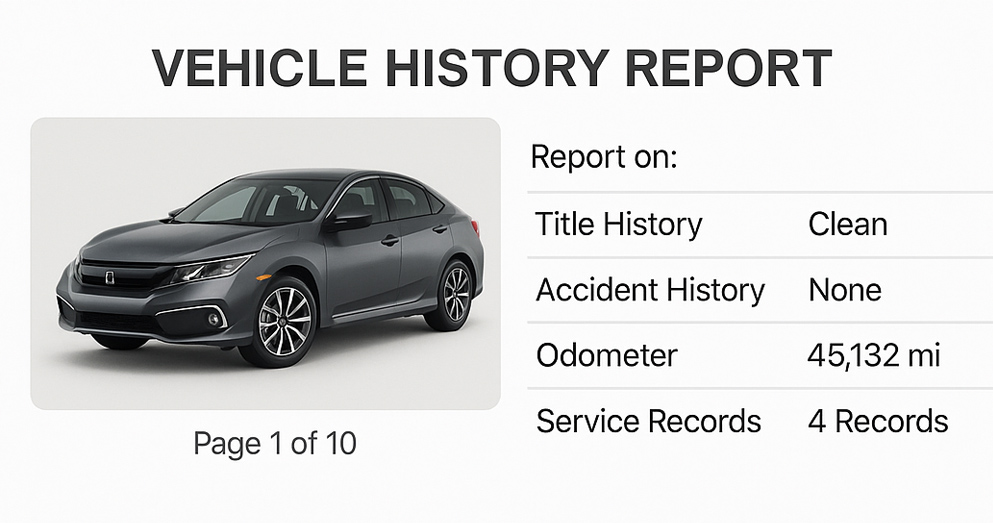
The 2000 Chrysler Grand Voyager is a front-wheel-drive minivan that was a popular choice for families. Part of the third generation of Chrysler minivans, it offered a blend of practicality and comfort. Key trims often included the SE, LX, and LXi. While exact pricing varied, it generally competed in the affordable family vehicle segment. Its spacious interior, flexible seating, and user-friendly design made it a standout for hauling people and cargo.
The Good
The 2000 Grand Voyager excels in practical family hauling with its spacious and versatile interior, offering significant comfort for passengers on long journeys. Its affordability and generally straightforward design provide excellent value for money, appealing to budget-conscious buyers, while its family-oriented features resonate emotionally with those prioritizing convenience and togetherness.

The Bad
Potential buyers should watch out for common issues such as transmission problems, particularly with the automatic gearbox, and potential electrical glitches. Premature wear on suspension components and engine cooling system issues are also frequently reported, necessitating careful inspection before purchase.


2000 Chrysler Grand Voyager: Quick Overview
- Engine Options: The 2000 Chrysler Grand Voyager typically offered two main engine options:
- A 3.3-liter V6 engine.
- An optional, more powerful 3.8-liter V6 engine.
- Horsepower:
- The 3.3L V6 generally produced around 158 horsepower.
- The 3.8L V6 offered approximately 166 horsepower.
- Fuel Economy:
- Expect EPA estimates in the range of 17-18 MPG city and 23-25 MPG highway, varying slightly between engine choices and drivetrain configuration.
- 0-60 Times:
- 0-60 mph times were generally in the 9-10 second range, depending on the engine and load.
- Towing Capacity:
- When properly equipped, the Grand Voyager could tow around 3,500 lbs, suitable for small trailers or recreational equipment.
- Trim-Level Features:
- SE (Base): Typically included power windows and locks, air conditioning, and a basic audio system.
- LX: Added features like cruise control, tinted windows, upgraded interior trim, and often a cassette/CD player.
- LXi (Top Trim): Further enhanced with features such as leather upholstery, power-adjustable front seats, automatic climate control, and a premium sound system.
- All trims featured flexible seating arrangements, with removable second and third-row seats for maximum cargo space.
2000 Chrysler Grand Voyager Specifications
Vehicle Information
| Year | 2000 |
| Make | Chrysler |
| Model | Grand Voyager |
| Trim | - |
| Style | - |
| Type | Minivan |
| Category | Minivan |
Manufacturing Details
| Made In | United States |
| Manufacturing City | WINDSOR |
Dimensions
| Doors | 4-Door |
| Curb Weight | 3982 pounds |
| Gross Vehicle Weight Rating | 5360 pounds |
| Overall Height | 68.50 inches |
| Overall Length | 199.60 inches |
| Overall Width | 76.80 inches |
| Wheelbase Length | 119.30 inches |
| Standard Seating | 7 |
Engine & Performance
| Engine | 3.3L V6 |
| Engine Size | 3.3L |
| Engine Cylinders | 6 |
| Transmission | 4-Speed Automatic |
| Transmission Type | Automatic |
| Transmission Speeds | 4-Speed |
| Drivetrain | Front-Wheel Drive |
Additional Features
| Anti-Brake System | 4-Wheel ABS |
| Steering Type | Rack & Pinion |
Pricing
| Manufacturer Suggested Retail Price (MSRP) | $24,520 |
| Invoice Price | $22,153 |
| Delivery Charges | - |
Vehicle History Report
Vehicle
Specifications
Specifications
Ownership
History
History
All History
Events
Events
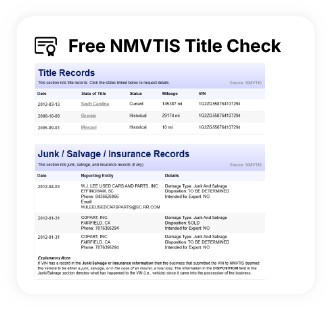
NMVTIS Title
History Check
History Check
Salvage/Rebuilt
Check
Check
Accident
Check
Check
Theft
Check
Check
Open Lien
Check
Check
Past Sale
Listings
Listings
Safety
Recalls
Recalls
Odometer
Check
Check
Market Price
Analysis
Analysis
What Problems Does the 2000 Chrysler Grand Voyager Have?
The 2000 Chrysler Grand Voyager, like many vehicles of its era, has several commonly reported issues that prospective buyers should be aware of. One of the most persistent problems involves the automatic transmission. Failures, including slipping gears, harsh shifting, and complete transmission failure, are frequently cited by owners. This can be a significant and costly repair.
Another area of concern is the powertrain control module (PCM). Reports indicate that the PCM can fail, leading to various drivability issues, including stalling, poor engine performance, and warning lights illuminating on the dashboard.
The cooling system is also a point of contention. Overheating issues are not uncommon, often attributed to leaks in the radiator, coolant hoses, or water pump. This can lead to significant engine damage if not addressed promptly.
Electrical problems are also part of the Grand Voyager's known issues. This can manifest in various ways, including malfunctioning power windows and locks, faulty interior lights, and issues with the instrument cluster. Some owners have also reported problems with the anti-lock braking system (ABS) module.
Suspension components, such as ball joints and struts, can experience premature wear, leading to clunking noises and degraded ride quality. The power steering system can also develop leaks or become noisy.
While specific recalls for the 2000 model year might be limited, it is always advisable to check with the NHTSA (National Highway Traffic Safety Administration) for any outstanding recalls that may apply to this vehicle. Long-term reliability is a mixed bag; while some owners report trouble-free ownership with diligent maintenance, the common issues mentioned above can detract from overall dependability if not addressed.
Another area of concern is the powertrain control module (PCM). Reports indicate that the PCM can fail, leading to various drivability issues, including stalling, poor engine performance, and warning lights illuminating on the dashboard.
The cooling system is also a point of contention. Overheating issues are not uncommon, often attributed to leaks in the radiator, coolant hoses, or water pump. This can lead to significant engine damage if not addressed promptly.
Electrical problems are also part of the Grand Voyager's known issues. This can manifest in various ways, including malfunctioning power windows and locks, faulty interior lights, and issues with the instrument cluster. Some owners have also reported problems with the anti-lock braking system (ABS) module.
Suspension components, such as ball joints and struts, can experience premature wear, leading to clunking noises and degraded ride quality. The power steering system can also develop leaks or become noisy.
While specific recalls for the 2000 model year might be limited, it is always advisable to check with the NHTSA (National Highway Traffic Safety Administration) for any outstanding recalls that may apply to this vehicle. Long-term reliability is a mixed bag; while some owners report trouble-free ownership with diligent maintenance, the common issues mentioned above can detract from overall dependability if not addressed.
How long will the 2000 Chrysler Grand Voyager last?
With consistent and proactive maintenance, a 2000 Chrysler Grand Voyager can realistically achieve between 150,000 to 200,000 miles, and in some cases, even exceed 250,000 miles. However, its long-term durability is heavily influenced by addressing its known weaknesses. Vehicles that have had regular fluid changes (especially transmission fluid), timely replacement of worn suspension parts, and prompt attention to cooling system leaks tend to fare much better. Conversely, neglected maintenance, particularly regarding the transmission and cooling system, can significantly shorten its lifespan and lead to major, costly repairs. The transmission is often the weak link that dictates the ultimate longevity of these minivans.
What Technology & Safety Features are Included?
The 2000 Chrysler Grand Voyager offered a decent array of technology and safety features for its time, focusing on convenience and family transport. Standard equipment typically included manual air conditioning, power windows and door locks (though power sliding doors were an option on higher trims or packages), and a basic AM/FM stereo system with a cassette player.
Optional entertainment upgrades could include a CD player, enhancing the audio experience. For rear-seat passengers, a rear entertainment system, often featuring a VCR or early DVD player with a flip-down screen, was available on higher trim levels, proving a valuable feature for keeping children occupied on long trips.
Driver-assistance features were limited by modern standards. Cruise control was a common convenience feature, particularly on LX and LXi models. Antilock Braking System (ABS) was often standard or available, enhancing braking control, especially in slippery conditions.
Safety features were a priority for family vehicles. Standard safety equipment included front airbags for the driver and front passenger. Seatbelt pretensioners were also standard. Child seat anchors (LATCH system) were becoming more common, improving the ease and security of installing child safety seats. Side-impact airbags were generally not standard but could have been an optional addition.
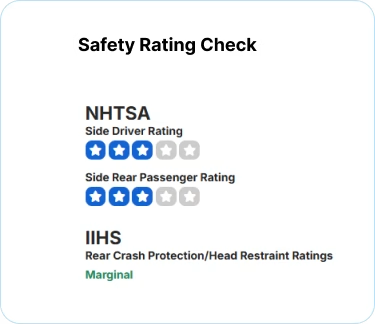
Crash-test ratings for this era of vehicle can be difficult to find in a directly comparable format to today's testing. However, minivans of this generation generally performed acceptably in frontal and side-impact crash tests conducted by the NHTSA and IIHS, though modern vehicles often surpass them in structural integrity and advanced safety features. The focus was on occupant protection through crumple zones and robust seatbelt systems.
Optional entertainment upgrades could include a CD player, enhancing the audio experience. For rear-seat passengers, a rear entertainment system, often featuring a VCR or early DVD player with a flip-down screen, was available on higher trim levels, proving a valuable feature for keeping children occupied on long trips.
Driver-assistance features were limited by modern standards. Cruise control was a common convenience feature, particularly on LX and LXi models. Antilock Braking System (ABS) was often standard or available, enhancing braking control, especially in slippery conditions.
Safety features were a priority for family vehicles. Standard safety equipment included front airbags for the driver and front passenger. Seatbelt pretensioners were also standard. Child seat anchors (LATCH system) were becoming more common, improving the ease and security of installing child safety seats. Side-impact airbags were generally not standard but could have been an optional addition.
Crash-test ratings for this era of vehicle can be difficult to find in a directly comparable format to today's testing. However, minivans of this generation generally performed acceptably in frontal and side-impact crash tests conducted by the NHTSA and IIHS, though modern vehicles often surpass them in structural integrity and advanced safety features. The focus was on occupant protection through crumple zones and robust seatbelt systems.
What Colors Options are Available?
2000 Chrysler Grand Voyager Prices and Market Value
When new, the 2000 Chrysler Grand Voyager had a Manufacturer's Suggested Retail Price (MSRP) that typically ranged from approximately $22,000 for the base SE trim to over $28,000 for the well-equipped LXi model. As a vehicle from the early 2000s, it has undergone significant depreciation. Current used market prices for a 2000 Grand Voyager in average condition with moderate mileage can range from $1,500 to $4,000, depending heavily on the trim level, overall condition, and mileage. Factors significantly affecting resale value include the maintenance history, the presence of known mechanical issues (especially transmission problems), and overall cosmetic condition. Vehicles with extensive service records and in good running order will command higher prices. The minivan segment, in general, sees substantial depreciation due to the availability of newer, more technologically advanced models.
2000 Chrysler Grand Voyager Cost of Ownership
The 2000 Chrysler Grand Voyager is generally considered economical to own, primarily due to its low purchase price on the used market. Insurance costs are typically moderate, falling within average ranges for minivans of this age. Fuel costs are reasonable, with V6 engines offering competitive MPG for their class, though regular unleaded is recommended. Maintenance costs can be average for routine items, but potential significant repair costs, particularly for the transmission, can escalate ownership expenses. While day-to-day running costs are manageable, budget for potential major repairs to ensure long-term ownership isn't unexpectedly costly.
2000 Chrysler Grand Voyager Fuel Efficiency
Fuel Type
Flex-Fuel
Fuel Capacity
19.80 gallons
City Mileage
18 miles/gallon
Highway Mileage
25 miles/gallon
2000 Chrysler Grand Voyager Safety Rating
NHTSA
IIHS
2000 Chrysler Grand Voyager Warranty
Basic
Original warranty
36 months / 36,000 miles
Estimated remaining
Expired
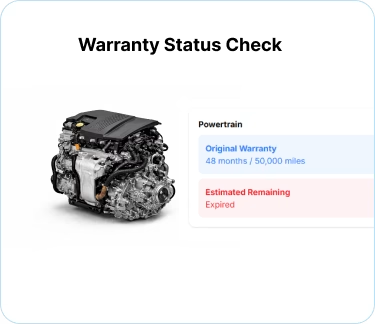
Powertrain
Original warranty
36 months / 36,000 miles
Estimated remaining
Expired
Rust
Original warranty
60 months / 100,000 miles
Estimated remaining
Expired
2000 Chrysler Grand Voyager Insurance
Insurance for a 2000 Chrysler Grand Voyager is moderately priced, reflecting its status as a Minivan with strong safety ratings and
reasonable repair costs.
How Does the 2000 Chrysler Grand Voyager Compare to Other Minivan?
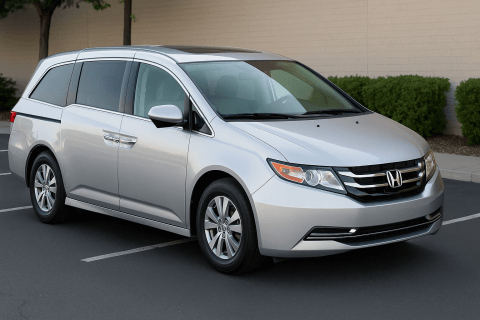
The 2000 Chrysler Grand Voyager competed directly with other popular minivans of the era, such as the Honda Odyssey, Toyota Sienna, and Ford Windstar. In terms of performance, its V6 engines offered adequate power for family duties, though perhaps not as refined as some competitors. The Honda Odyssey and Toyota Sienna were often praised for their smoother ride and more robust powertrain options, particularly the Sienna's more powerful V6.
When it comes to features, the Grand Voyager was competitive, offering flexible seating and available amenities like rear-seat entertainment. However, the Honda Odyssey often held an edge in interior build quality and available advanced features. The Ford Windstar offered a comfortable ride and decent space, but its reliability was often a concern, similar to the Grand Voyager.
Reliability is where the Grand Voyager faced its biggest challenges compared to its Japanese rivals. The Honda Odyssey and Toyota Sienna were renowned for their exceptional long-term reliability and fewer major mechanical issues, especially concerning transmissions. While the Grand Voyager could be a reliable vehicle with diligent maintenance, it was more prone to certain common problems, like transmission failures.
In terms of price, the Grand Voyager typically offered a lower initial purchase price, both new and used, making it an attractive option for budget-conscious buyers. However, this initial savings could be offset by potentially higher repair costs down the line.
Similar Alternatives:
When it comes to features, the Grand Voyager was competitive, offering flexible seating and available amenities like rear-seat entertainment. However, the Honda Odyssey often held an edge in interior build quality and available advanced features. The Ford Windstar offered a comfortable ride and decent space, but its reliability was often a concern, similar to the Grand Voyager.
Reliability is where the Grand Voyager faced its biggest challenges compared to its Japanese rivals. The Honda Odyssey and Toyota Sienna were renowned for their exceptional long-term reliability and fewer major mechanical issues, especially concerning transmissions. While the Grand Voyager could be a reliable vehicle with diligent maintenance, it was more prone to certain common problems, like transmission failures.
In terms of price, the Grand Voyager typically offered a lower initial purchase price, both new and used, making it an attractive option for budget-conscious buyers. However, this initial savings could be offset by potentially higher repair costs down the line.
Similar Alternatives:
- Ford Windstar (2000-2003): Offers similar interior space and a comfortable ride, but also has its own set of reliability concerns, particularly with transmissions.
- Toyota Sienna (2000-2003): Widely considered one of the most reliable minivans of this generation, offering a smooth ride and excellent build quality.
- Honda Odyssey (2000-2003): Known for its car-like handling, practical interior, and strong reputation for reliability, though its third-row seat could be less accommodating than some rivals.
Final Verdict: Is the 2000 Chrysler Grand Voyager a Good Minivan?
The 2000 Chrysler Grand Voyager is ideal for budget-conscious families or individuals who need ample passenger and cargo space for occasional use and prioritize affordability over long-term, bulletproof reliability. It's a worthwhile purchase if you find a well-maintained example with a documented service history, particularly noting any transmission servicing or repairs. Buying it used is the only practical option. Specific trims like the LX or LXi offer more comfort and convenience features that enhance the ownership experience. However, prospective buyers must be prepared for potential maintenance and repair costs, especially concerning the transmission. If ultimate reliability is a top priority, investing in a slightly older Toyota Sienna or Honda Odyssey might be a wiser, though potentially more expensive, choice.