
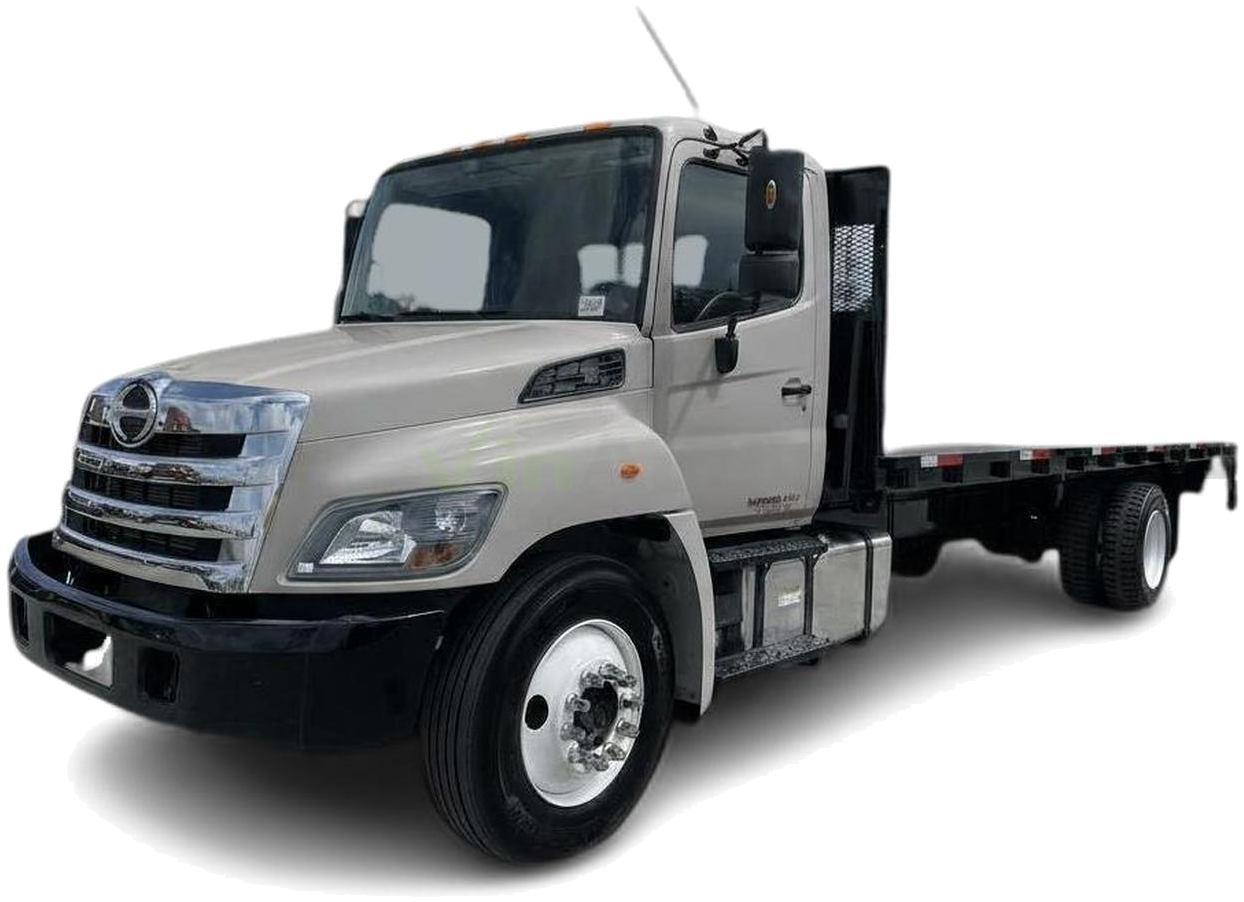
The Good
The 2016 Hino 338 excels in practical performance, offering robust hauling power and remarkable reliability that inspires confidence in business operations. Its straightforward, functional design emphasizes ease of use and maintenance, appealing to the practical buyer. Emotionally, it provides peace of mind through its durability and dependable service, translating into excellent long-term value.
The Bad
Potential weaknesses for the 2016 Hino 338 can include the basic interior amenities, which might feel less refined compared to more modern trucks. Some owners might experience occasional electrical gremlins or slower acceleration when heavily loaded. It's also important to ensure proper maintenance history as this is a work vehicle.
2016 Hino 338: Quick Overview
- Engine Options: The 2016 Hino 338 typically came equipped with Hino's J08E series engine. This is a 7.7-liter inline 6-cylinder turbocharged diesel engine.
- Horsepower: Horsepower ratings generally ranged from approximately 220 hp to 260 hp, depending on the specific configuration and market.
- Torque: Torque figures were substantial, typically in the range of 520 lb-ft to 620 lb-ft, essential for heavy-duty applications.
- Fuel Economy: Fuel economy is highly variable due to the nature of commercial vehicle use, payload, terrain, and driving style. However, for a Class 7 truck, owners could expect figures ranging from 6 to 10 miles per gallon (MPG).
- 0-60 Times: Official 0-60 mph times are not a standard metric for commercial trucks like the Hino 338, as they are not designed for rapid acceleration. Performance is focused on load carrying and steady progress.
- Towing Capacity: The towing capacity is not a singular figure but is determined by the Gross Combination Weight Rating (GCWR) and the vehicle's Gross Vehicle Weight Rating (GVWR). A typical 338 chassis has a GVWR of 33,000 lbs, allowing for significant towing and payload when configured correctly with appropriate trailers and loads.
- Trim-Level Features: The Hino 338 is primarily a chassis cab, meaning its features are focused on functionality and durability rather than luxury. Key features often included:
- Heavy-duty frame construction
- Power steering
- Air brakes
- Adjustable steering column
- Tilt and telescopic steering wheel
- Power windows and door locks (often standard or optional)
- Air conditioning
- AM/FM radio with auxiliary input
- Vinyl or cloth seating
- Standard safety features like seatbelts and daytime running lights
- Optional features could include cruise control, a more advanced audio system, and various upfitter packages tailored to specific vocational needs.
2016 Hino 338 Specifications
Vehicle Information
| Year | 2016 |
| Make | Hino |
| Model | 338 |
| Trim | - |
| Style | - |
| Type | Truck |
| Category | - |
Manufacturing Details
| Made In | United States |
| Manufacturing City | WILLIAMSTOWN |
Dimensions
| Doors | - |
| Curb Weight | - |
| Gross Vehicle Weight Rating | 33000 pounds |
| Overall Height | - |
| Overall Length | - |
| Overall Width | - |
| Wheelbase Length | - |
| Standard Seating | - |
Engine & Performance
| Engine | 7.6L I6 |
| Engine Size | 7.6L |
| Engine Cylinders | 6 |
| Transmission | - |
| Transmission Type | - |
| Transmission Speeds | - |
| Drivetrain | Rear-Wheel Drive |
Additional Features
| Anti-Brake System | - |
| Steering Type | - |
Pricing
| Manufacturer Suggested Retail Price (MSRP) | - |
| Invoice Price | - |
| Delivery Charges | - |
Vehicle History Report
Specifications
History
Events
History Check
Check
Check
Check
Check
Listings
Recalls
Check
Analysis
What Problems Does the 2016 Hino 338 Have?
Another area that can experience wear and tear, common to all trucks of this class, is the suspension and braking components, particularly if subjected to constant heavy loads or rough road conditions. Owners have also occasionally noted minor electrical issues, such as intermittent sensor malfunctions or warning lights appearing on the dashboard, which often require professional diagnosis.
Regarding recalls for the 2016 model year, these are typically addressed through official campaigns from Hino. Owners are advised to check with Hino dealerships or the NHTSA website for any open recalls pertinent to their specific VIN. Long-term reliability is heavily dependent on diligent maintenance. Adhering to Hino's recommended service intervals, including oil changes, filter replacements, and fluid checks, is paramount. Owners who neglect maintenance are more likely to encounter issues with the engine, transmission, or emission control systems. For the 2016 Hino 338, there are no widespread, systemic issues that plague the model across the board. Its reputation is built on a foundation of mechanical sturdiness, provided it receives regular and proper care.
How long will the 2016 Hino 338 last?
What Technology & Safety Features are Included?
In terms of driver-assistance features, the 2016 Hino 338 is quite basic. It lacks the sophisticated systems like adaptive cruise control, lane departure warnings, or blind-spot monitoring common in modern passenger vehicles and some newer commercial trucks. The focus here is on the driver's direct control and experience of the road.
Safety features are robust, focusing on the fundamental aspects of preventing accidents and protecting occupants. Standard safety equipment includes:
- Anti-lock Braking System (ABS) for enhanced stopping control.
- Seatbelts for all occupants.
- Daytime running lights to improve visibility to other road users.
- Heavy-duty construction designed to withstand operational stresses.
Optional safety enhancements might include additional mirrors for improved visibility or specialized lighting packages for vocational applications.
Crash-test ratings for commercial trucks like the Hino 338 are not typically conducted by organizations like the NHTSA or IIHS in the same way they are for passenger cars and SUVs. Instead, their safety is evaluated based on structural integrity, compliance with federal motor vehicle safety standards (FMVSS), and the effectiveness of their braking and restraint systems under heavy-duty operational conditions. The design inherently incorporates features to protect occupants during severe use, but direct comparative crash-test scores are not readily available.
What Colors Options are Available?
2016 Hino 338 Prices and Market Value
Currently, on the used market, the 2016 Hino 338 can be found for anywhere from $25,000 to $60,000 or more. This wide range is dictated by mileage, overall condition, maintenance history, the type of body installed (e.g., basic chassis vs. a fully equipped box truck), and geographical location.
Depreciation is significant in the initial years, as is common with all heavy commercial vehicles, but the rate slows down considerably after the first few years. Factors affecting resale value include consistent maintenance records, low mileage for its age, absence of major mechanical issues, and the overall condition of the chassis and any attached bodywork. A well-maintained Hino 338 with a desirable body configuration will hold its value much better than one that has been neglected or heavily used.
2016 Hino 338 Cost of Ownership
2016 Hino 338 Fuel Efficiency
2016 Hino 338 Recalls & Defects
Suspension:front:springs:leaf Spring Assembly:u-Bolt, Leaf Spring TO Axle
Equipment:other:labels
2016 Hino 338 Warranty
Basic
Powertrain
Rust
2016 Hino 338 Insurance
reasonable repair costs.
How Does the 2016 Hino 338 Compare to Other Truck?
Performance: In terms of performance, the Hino 338's 7.7-liter J08E diesel engine provides competitive horsepower and torque, suitable for demanding vocational tasks. Freightliner's M2 series often offers a broader range of engine choices, including Cummins powerplants, potentially providing more power or specific fuel efficiency characteristics. Isuzu's F-Series is known for its robust diesel engines and smooth operation, while International Durastar trucks are also designed for heavy-duty work.
Features: When comparing features, the 2016 Hino 338 leans towards essential functionality rather than creature comforts. Its interior is practical and durable. Competitors like the Freightliner M2 might offer more advanced interior options, more sophisticated infotainment, and a wider array of driver-assistance technologies, though these often come at a higher price. Isuzu and International also offer functional cabins, with varying levels of optional amenities.
Reliability: Hino has built a strong reputation for reliability, often considered on par with or even exceeding some competitors, particularly in its core powertrain. Isuzu trucks are also widely praised for their durability. Freightliner and International offer robust trucks, but their reliability can sometimes be perceived as more variable, with some models having more reported issues than others.
Price: The Hino 338 typically offers a strong value proposition, often positioned competitively on price when new, and maintaining reasonable used market values due to its durability. Freightliner trucks, especially with premium options, can command higher prices. Isuzu and International are generally priced in a similar range to Hino, with variations based on specific configurations and dealer incentives.
Alternatives: For a similar blend of reliability, performance, and value, similar alternatives include the Isuzu FTR (though newer generations might be more relevant for comparison), and potentially well-maintained used models of the Freightliner M2 106 or International Durastar 4300. If a slightly more refined interior and potentially more advanced tech are priorities, and budget allows, exploring a newer Freightliner M2 might be worthwhile. However, for a no-nonsense, workhorse truck that prioritizes mechanical longevity and straightforward operation, the 2016 Hino 338 remains a strong contender.
Final Verdict: Is the 2016 Hino 338 a Good Truck?
It is absolutely worth buying, particularly on the used market, provided it has a comprehensive maintenance history and is in good mechanical condition. Buying new in 2016 would have been a significant investment, but the real value proposition lies in its ability to serve reliably for many years. When purchasing used, focus on well-maintained chassis cabs or trucks with bodies suitable for your specific needs. Inspecting for signs of heavy wear or neglect is crucial. For buyers seeking a straightforward, reliable work truck without excessive complexity, the 2016 Hino 338 remains an excellent and economically sound choice.

Simon A
Simon is a contributor to VinCheck, where he provides articles and reviews on various automotive topics. His work focuses on delivering accurate and up-to-date information about used cars, helping readers make informed decisions.