
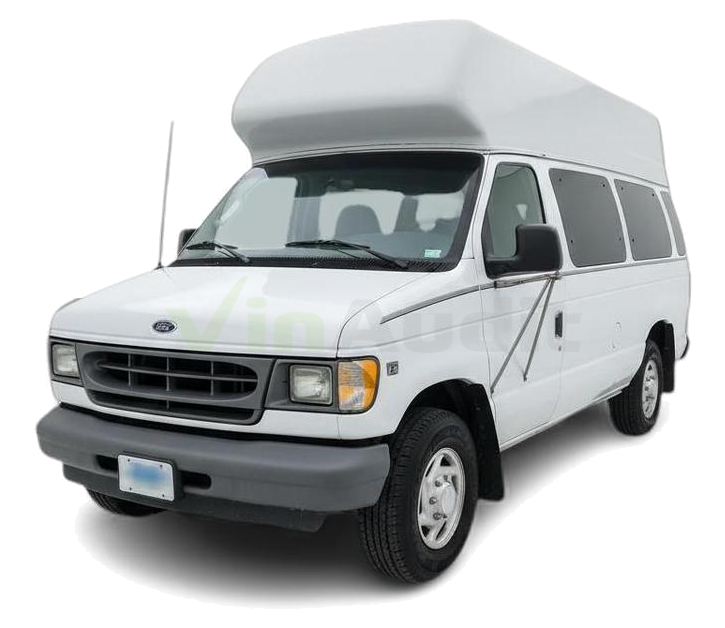
The Good
The 2002 Ford E-350 Super Duty offers exceptional towing and hauling power, a testament to its practical engineering. Its legendary Ford truck underpinnings promise reliability for demanding tasks. While not a luxury vehicle, its spacious interior and smooth ride contribute to surprising comfort for its class. For the practical buyer, its workhorse nature and potential for customization are key; for the emotional buyer, the sense of security and capability it provides is undeniable.
The Bad
Potential buyers should watch out for common issues such as transmission problems, particularly with older models or those heavily used for towing. Rust can be a significant concern, especially on the frame and body panels in certain climates. Fuel economy is inherently low, and interior wear and tear are common given the utilitarian nature of these vans. Electrical gremlins can also surface over time.
2002 Ford E350 Super Duty: Quick Overview
- Engine Options: The 2002 Ford E-350 Super Duty was available with several robust engine choices, designed for power and durability.
- 5.4L Triton V8: This was a common gasoline engine option, offering a good balance of power for general use.
- Horsepower: Approximately 235 hp
Torque: Approximately 330 lb-ft
- Horsepower: Approximately 235 hp
- 6.8L Triton V10: This larger gasoline engine provided significantly more power and torque, ideal for heavier loads and towing.
- Horsepower: Approximately 275 hp
Torque: Approximately 410 lb-ft
- Horsepower: Approximately 275 hp
- 7.3L Power Stroke V8 Turbo Diesel: This legendary diesel engine was the pinnacle of power and torque for the E-350, renowned for its longevity and towing capability.
- Horsepower: Approximately 250 hp
Torque: Approximately 505 lb-ft
- Horsepower: Approximately 250 hp
- 5.4L Triton V8: This was a common gasoline engine option, offering a good balance of power for general use.
- Fuel Economy: Fuel economy is not a strong suit for the E-350 Super Duty due to its size and weight. Expect figures in the range of 10-15 MPG city and 12-18 MPG highway, heavily dependent on the engine, drivetrain (2WD or 4WD), and load.
- V8 Gasoline: Around 11-14 MPG combined.
V10 Gasoline: Slightly lower, around 10-13 MPG combined.
Diesel: Typically the most efficient, around 12-16 MPG combined.
- V8 Gasoline: Around 11-14 MPG combined.
- 0-60 Times: Official 0-60 mph times were not a primary focus for this vehicle. Given its weight and intended use, acceleration was generally leisurely. Estimates place 0-60 times for a loaded E-350 in the 10-15 second range, depending heavily on the engine and load.
- With the 5.4L V8, expect around 12-14 seconds.
With the 6.8L V10, expect around 10-12 seconds.
With the 7.3L Diesel, expect around 10-13 seconds.
- With the 5.4L V8, expect around 12-14 seconds.
- Towing Capacity: The towing capacity is a major strength of the E-350 Super Duty. When properly equipped with the correct towing package, it could tow substantial loads.
- Maximum towing capacity could reach up to 10,000 lbs or more, depending on configuration and specific equipment.
- Trim-Level Features: The E-350 Super Duty was primarily offered in Cargo Van and Wagon (Passenger Van) configurations. Features varied greatly based on whether it was a commercial work vehicle or a more passenger-oriented model.
- Standard features often included basic amenities, durable interior materials, power steering, and ABS brakes.
- Optional features could include air conditioning, power windows and locks, cruise control, upgraded audio systems, rear climate control (for passenger versions), and captain's chairs.
Higher-end trims or aftermarket conversions could add more comfort and convenience features for passenger versions.
- Optional features could include air conditioning, power windows and locks, cruise control, upgraded audio systems, rear climate control (for passenger versions), and captain's chairs.
- Standard features often included basic amenities, durable interior materials, power steering, and ABS brakes.
2002 Ford E350 Super Duty Specifications
Vehicle Information
| Year | 2002 |
| Make | Ford |
| Model | E350 Super Duty |
| Trim | - |
| Style | - |
| Type | Van |
| Category | Cargo Van |
Manufacturing Details
| Made In | United States |
| Manufacturing City | LORAIN |
Dimensions
| Doors | 3-Door |
| Curb Weight | 5472 pounds |
| Gross Vehicle Weight Rating | 9500 pounds |
| Overall Height | 84.10 inches |
| Overall Length | 211.90 inches |
| Overall Width | 79.30 inches |
| Wheelbase Length | 138.00 inches |
| Standard Seating | 2 |
Engine & Performance
| Engine | 5.4L V8 |
| Engine Size | 5.4L |
| Engine Cylinders | 8 |
| Transmission | 4-Speed Automatic |
| Transmission Type | Automatic |
| Transmission Speeds | 4-Speed |
| Drivetrain | Rear-Wheel Drive |
Additional Features
| Anti-Brake System | 4-Wheel ABS |
| Steering Type | Recirculating |
Pricing
| Manufacturer Suggested Retail Price (MSRP) | $24,880 |
| Invoice Price | $21,851 |
| Delivery Charges | $715 |
Vehicle History Report
Specifications
History
Events
History Check
Check
Check
Check
Check
Listings
Recalls
Check
Analysis
What Problems Does the 2002 Ford E350 Super Duty Have?
How long will the 2002 Ford E350 Super Duty last?
What Technology & Safety Features are Included?
Driver-assistance features were virtually non-existent by modern standards. The primary safety focus was on passive systems and fundamental braking technology. Standard safety equipment usually comprised front airbags for the driver and passenger, anti-lock braking system (ABS) for enhanced stopping power, and seatbelts. Higher trims or specific configurations might have offered power windows and locks, which indirectly contribute to a more controlled and secure driving experience.
Crash-test ratings for commercial vans like the E-350 Super Duty from this period are not as readily available or standardized as they are for passenger cars and SUVs today. The National Highway Traffic Safety Administration (NHTSA) and the Insurance Institute for Highway Safety (IIHS) did conduct some testing on vans of this generation, but detailed, specific ratings for the 2002 E-350 might be limited. However, its heavy-duty construction and robust frame were designed to offer a substantial level of occupant protection in the event of a collision. The sheer mass of the vehicle generally provides a physical advantage in many impact scenarios. The emphasis was on structural integrity and the effectiveness of the basic safety restraint systems.
What Colors Options are Available?
2002 Ford E350 Super Duty Prices and Market Value
Currently, used market prices for a 2002 E-350 Super Duty are highly variable, typically ranging from $3,000 to $15,000 or more. Condition, mileage, engine type (diesel commands a premium), and overall maintenance history are critical factors.
Depreciation on these vans is generally quite slow, especially for models with the desirable 7.3L Power Stroke diesel engine, as they are built to last and maintain their utility. Resale value is heavily influenced by their utility (cargo space, towing capability), mechanical condition, and the absence of significant rust. A well-maintained E-350, particularly one with a good service record and the diesel engine, will hold its value considerably better than a poorly maintained gasoline model.
2002 Ford E350 Super Duty Cost of Ownership
2002 Ford E350 Super Duty Fuel Efficiency
2002 Ford E350 Super Duty Safety Rating
NHTSA
IIHS
2002 Ford E350 Super Duty Warranty
Basic
Powertrain
Rust
2002 Ford E350 Super Duty Insurance
reasonable repair costs.
How Does the 2002 Ford E350 Super Duty Compare to Other Van?
Performance: The E-350, especially with the 7.3L Power Stroke diesel, often offered superior towing and hauling performance compared to its gasoline-only competitors. The V10 gasoline engine also provided strong torque for its class. Chevrolet/GMC offered comparable V8 gasoline engines, but often lacked a comparable diesel option in this specific model year.
Features: Feature sets were generally basic across all these vans in 2002. The E-350, like its rivals, focused on utility. While optional features like power accessories and upgraded audio existed, none offered advanced tech or driver aids by today's standards. Ford's interior design was functional, though perhaps less refined than some contemporary competitors in terms of ergonomics.
Reliability: The Ford E-350 has a reputation for durability, particularly the 7.3L diesel. However, transmissions could be a weak point, a concern shared with the Express/Savana. The Ram Van was known for its solid drivetrain but was aging significantly in terms of design and features.
Price: When new, pricing was competitive. In the used market, the E-350, especially with the diesel, often commands higher prices due to its enduring reputation for capability and longevity.
Alternatives:
- Chevrolet Express/GMC Savana: A very similar alternative, offering robust V8 gasoline engines and a long production run. They are often easier to find and can be slightly more affordable on the used market, but generally lack the diesel power of the E-350.
- Mercedes-Benz Sprinter (if available in the US market at this time, though less common for 2002): A more modern and often more fuel-efficient option, but significantly more expensive to purchase and maintain.
Final Verdict: Is the 2002 Ford E350 Super Duty a Good Van?
Whether it's worth buying depends heavily on the specific vehicle and intended use. Used, it represents a fantastic value for its capability if found in good mechanical condition with minimal rust. A well-maintained E-350, especially one equipped with the 7.3L Power Stroke diesel engine, is a worthwhile investment for its longevity and power. Avoid models with a history of heavy abuse, poor maintenance, or significant rust. For those who need its specific strengths, a 2002 E-350 Super Duty remains a compelling, albeit older, option.

Drew B
Drew is a seasoned automotive expert and contributor to VinCheck.info. With nearly 15 years of experience as a former Porsche technician, he brings a wealth of hands-on knowledge to his writing. Born in North Carolina, a region renowned for its deep-rooted NASCAR culture, Drew developed a passion for cars early in life, often building and working on vehicles from a young age. At VINCheck, Drew leverages his extensive technical background to provide in-depth analyses of various vehicles. His articles often focus on engine performance, reliability, and maintenance insights, offering readers practical information grounded in real-world experience. Some of his notable contributions include reviews on the Mazda CX-5's longevity and detailed examinations of engine options for models like the 2011 Toyota Camry and Tacoma