
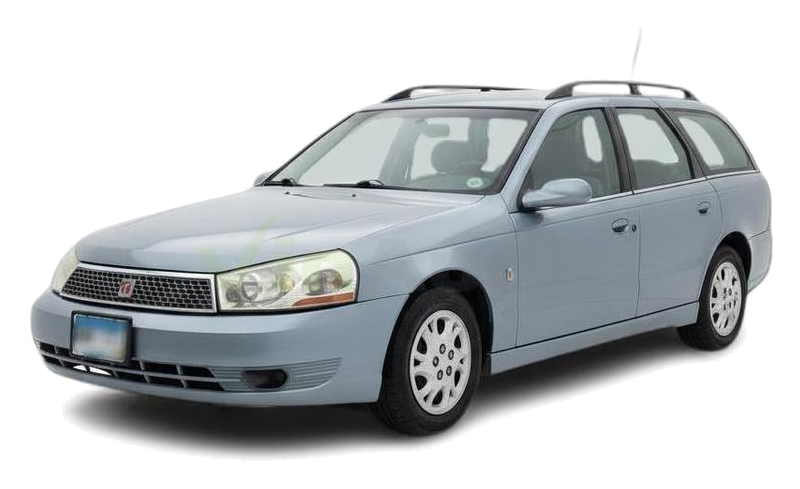
The 2003 Saturn L-Series, produced from 2000 to 2004, was a mid-size sedan and wagon designed to offer a comfortable and practical alternative in its segment. Known for its distinctive dent-resistant polymer body panels, which set it apart visually and practically, the L-Series aimed for value and accessibility. Key trims included the base L100, the mid-range L200, and the more premium L300. Pricing at launch ranged from approximately $18,000 to $23,000, making it an attractive option for budget-conscious buyers seeking a solid, everyday vehicle.
The Good
The 2003 Saturn L-Series offered a comfortable ride and surprisingly spacious interior for its class. Its unique polymer body panels provided peace of mind against minor dings and dents, appealing to practicality. While not a performance powerhouse, its accessible pricing and straightforward nature made it a sensible choice for many.
The Bad
Potential buyers should be aware of common issues like transmission problems, particularly with automatic transmissions. Electrical gremlins, such as faulty power window motors and dashboard warning lights, are also frequently reported. Engine oil leaks and potential coolant system issues are other areas to inspect carefully.
2003 Saturn L-Series: Quick Overview
- Engine Options: The 2003 Saturn L-Series was available with two main engine choices:
- 2.2L Ecotec DOHC 4-cylinder engine
- 3.0L OHV V6 engine (in higher trims)
- Horsepower:
- The 2.2L 4-cylinder engine produced approximately 138 horsepower.
- The 3.0L V6 engine offered around 182 horsepower.
- Fuel Economy:
- Fuel economy varied depending on the engine and transmission. The 2.2L engine typically achieved around 24 MPG city / 32 MPG highway.
- The 3.0L V6 generally offered slightly lower figures, around 20 MPG city / 28 MPG highway.
- 0-60 Times:
- 0-60 mph times were respectable for the class, with 4-cylinder models generally in the 9-10 second range, and V6 models in the 7-8 second range.
- Towing Capacity: Towing capacity was not a primary focus for the Saturn L-Series, and it was generally not advertised or equipped for significant towing.
- Trim-Level Features (General):
- L100 (Base): Typically included power windows, power locks, air conditioning, and a basic AM/FM/CD stereo.
- L200: Added features like cruise control, a more advanced audio system, and sometimes alloy wheels.
- L300: The top trim often featured leather seating, a premium sound system, automatic climate control, and sometimes a power sunroof.
- Common Available Features Across Trims: Anti-lock brakes (ABS), dual front airbags, side-impact airbags (optional or standard on higher trims), and remote keyless entry.
2003 Saturn L-Series Specifications
Vehicle Information
| Year | 2003 |
| Make | Saturn |
| Model | L-Series |
| Trim | - |
| Style | Sedan |
| Type | Sedan |
| Category | Mid-Size Car |
Manufacturing Details
| Made In | United States |
| Manufacturing City | WILMINGTON |
Dimensions
| Doors | 4-Door |
| Curb Weight | 3033 pounds |
| Gross Vehicle Weight Rating | - |
| Overall Height | 56.40 inches |
| Overall Length | 190.40 inches |
| Overall Width | 68.50 inches |
| Wheelbase Length | 106.50 inches |
| Standard Seating | 5 |
Engine & Performance
| Engine | 2.2L L4 DOHC 16V |
| Engine Size | 2.2L |
| Engine Cylinders | 4 |
| Transmission | 4-Speed Automatic |
| Transmission Type | Automatic |
| Transmission Speeds | 4-Speed |
| Drivetrain | Front-Wheel Drive |
Additional Features
| Anti-Brake System | Non-ABS 4-Wheel ABS |
| Steering Type | Rack & Pinion |
Pricing
| Manufacturer Suggested Retail Price (MSRP) | $17,735 |
| Invoice Price | $16,360 |
| Delivery Charges | $610 |
Vehicle History Report
Vehicle
Specifications
Specifications
Ownership
History
History
All History
Events
Events
NMVTIS Title
History Check
History Check
Salvage/Rebuilt
Check
Check
Accident
Check
Check
Theft
Check
Check
Open Lien
Check
Check
Past Sale
Listings
Listings
Safety
Recalls
Recalls
Odometer
Check
Check
Market Price
Analysis
Analysis
What Problems Does the 2003 Saturn L-Series Have?
The 2003 Saturn L-Series, while generally considered a decent value, is known for a few recurring issues that owners should be aware of. One of the most frequently cited problems revolves around the transmission. Automatic transmissions, in particular, have been reported to develop issues, including slipping, harsh shifting, and premature failure, especially as the vehicles age and accumulate mileage. This can be a significant and costly repair.
Electrical gremlins are another common concern. Owners have reported problems with power windows not working, faulty door locks, and various dashboard warning lights illuminating without clear cause. Issues with the instrument cluster, including malfunctioning gauges and a dim odometer display, have also been noted.
The engine, while generally robust, can be prone to oil leaks, particularly from the valve cover gaskets and oil pan. Coolant leaks from hoses, the water pump, or the radiator can also occur, potentially leading to overheating if not addressed promptly.
While there weren't widespread, highly publicized recalls specifically targeting catastrophic failures for the 2003 model year, it's always advisable to check the National Highway Traffic Safety Administration (NHTSA) website for any past recalls that may have applied to your specific vehicle. Some owners have also reported issues with the catalytic converter needing replacement.
Long-term reliability is a mixed bag. With diligent maintenance, many L-Series vehicles can reach higher mileage points. However, the transmission and electrical systems are often the weak links that can detract from overall reliability as the car ages. Potential buyers should thoroughly inspect these areas or have a mechanic do so before purchase.
Electrical gremlins are another common concern. Owners have reported problems with power windows not working, faulty door locks, and various dashboard warning lights illuminating without clear cause. Issues with the instrument cluster, including malfunctioning gauges and a dim odometer display, have also been noted.
The engine, while generally robust, can be prone to oil leaks, particularly from the valve cover gaskets and oil pan. Coolant leaks from hoses, the water pump, or the radiator can also occur, potentially leading to overheating if not addressed promptly.
While there weren't widespread, highly publicized recalls specifically targeting catastrophic failures for the 2003 model year, it's always advisable to check the National Highway Traffic Safety Administration (NHTSA) website for any past recalls that may have applied to your specific vehicle. Some owners have also reported issues with the catalytic converter needing replacement.
Long-term reliability is a mixed bag. With diligent maintenance, many L-Series vehicles can reach higher mileage points. However, the transmission and electrical systems are often the weak links that can detract from overall reliability as the car ages. Potential buyers should thoroughly inspect these areas or have a mechanic do so before purchase.
How long will the 2003 Saturn L-Series last?
Based on owner data and typical maintenance habits, a well-maintained 2003 Saturn L-Series can reasonably be expected to provide 150,000 to 200,000 miles of service. Some owners report even higher figures, exceeding 250,000 miles. The long-term durability of the Saturn L-Series is largely dependent on how well its key components, particularly the transmission and engine, are cared for. The unique polymer body panels contribute positively to long-term aesthetics by resisting rust and minor dents. However, weaknesses like potential transmission issues and electrical gremlins can arise after 100,000 miles, potentially limiting its extended lifespan if not addressed proactively. Regular fluid changes, especially for the transmission, are critical for maximizing its longevity.
What Technology & Safety Features are Included?
The 2003 Saturn L-Series offered a modest array of technology and safety features for its time, focusing on essential comfort and security rather than cutting-edge innovation. Standard technology typically included a basic AM/FM/CD audio system, often with four or six speakers. Higher trim levels, such as the L300, could be equipped with a more premium sound system, sometimes featuring an integrated CD changer. Power windows, power door locks, and air conditioning were standard on most models, enhancing convenience. Optional features might have included cruise control, a power sunroof, and a theft-deterrent system.
In terms of driver-assistance features, the 2003 L-Series was quite basic. Anti-lock brakes (ABS) were available, often standard on higher trims, providing enhanced braking control in emergency situations. Traction control was not commonly offered or was a rare option.
Safety was a priority, and the L-Series was equipped with dual front airbags as standard. Side-impact airbags were also available, and on some of the higher-trim models, they might have been standard. Seatbelt pretensioners were included to help secure occupants during a collision.
Regarding crash-test ratings, the 2003 Saturn L-Series performed reasonably well for its era. In tests conducted by the Insurance Institute for Highway Safety (IIHS), the L-Series generally received "Good" ratings in frontal offset crash tests, indicating good structural integrity and occupant protection in that specific scenario. Frontal crash tests by the National Highway Traffic Safety Administration (NHTSA) also typically awarded it four out of five stars, signifying good protection for the driver and front passenger. Side-impact test results were also generally positive, though specifics could vary based on equipment like side airbags.
In terms of driver-assistance features, the 2003 L-Series was quite basic. Anti-lock brakes (ABS) were available, often standard on higher trims, providing enhanced braking control in emergency situations. Traction control was not commonly offered or was a rare option.
Safety was a priority, and the L-Series was equipped with dual front airbags as standard. Side-impact airbags were also available, and on some of the higher-trim models, they might have been standard. Seatbelt pretensioners were included to help secure occupants during a collision.
Regarding crash-test ratings, the 2003 Saturn L-Series performed reasonably well for its era. In tests conducted by the Insurance Institute for Highway Safety (IIHS), the L-Series generally received "Good" ratings in frontal offset crash tests, indicating good structural integrity and occupant protection in that specific scenario. Frontal crash tests by the National Highway Traffic Safety Administration (NHTSA) also typically awarded it four out of five stars, signifying good protection for the driver and front passenger. Side-impact test results were also generally positive, though specifics could vary based on equipment like side airbags.
What Colors Options are Available?
2003 Saturn L-Series Prices and Market Value
When new, the 2003 Saturn L-Series had a starting Manufacturer's Suggested Retail Price (MSRP) that generally ranged from around $18,000 for the base L100 sedan to approximately $23,000 for the well-equipped L300 sedan or wagon. As with most vehicles, the L-Series experienced significant depreciation from its original sticker price.
Currently, the used market prices for a 2003 Saturn L-Series are quite low, typically ranging from $1,500 to $4,000, heavily dependent on mileage, condition, and trim level. Factors significantly affecting resale value include the overall condition of the vehicle, especially the transmission and engine health, documented maintenance history, and the presence of common wear-and-tear items. The unique polymer body panels, while resistant to rust, don't necessarily command a premium in the used market. Lower mileage examples with good maintenance records will fetch the highest prices within this modest range.
2003 Saturn L-Series Cost of Ownership
The 2003 Saturn L-Series is generally considered economical to own. Insurance costs are typically quite reasonable, especially for older vehicles, though this can vary based on driver profile and location. Fuel costs are moderate; the 4-cylinder engine offers good MPG for its class, making it an efficient choice for daily commuting. Maintenance costs are generally average, with parts being readily available and not excessively expensive. However, potential buyers should budget for potential repairs related to common issues like the transmission or electrical systems, which can increase overall long-term costs. Overall, when factoring in purchase price and running expenses, the L-Series remains an affordable option.
2003 Saturn L-Series Fuel Efficiency
Fuel Type
Gasoline
Fuel Capacity
15.70 gallons
City Mileage
23 miles/gallon
Highway Mileage
31 miles/gallon
2003 Saturn L-Series Safety Rating
NHTSA
IIHS
2003 Saturn L-Series Warranty
Basic
Original warranty
36 months / 36,000 miles
Estimated remaining
Expired
Powertrain
Original warranty
36 months / 36,000 miles
Estimated remaining
Expired
Rust
Original warranty
72 months / 100,000 miles
Estimated remaining
Expired
2003 Saturn L-Series Insurance
Insurance for a 2003 Saturn L-Series is moderately priced, reflecting its status as a Sedan with strong safety ratings and
reasonable repair costs.
How Does the 2003 Saturn L-Series Compare to Other Sedan?
The 2003 Saturn L-Series competed in the crowded mid-size sedan segment against rivals like the Honda Accord, Toyota Camry, Ford Taurus, and Chevrolet Impala. In terms of performance, the L-Series' base 4-cylinder engine was adequate but lagged behind the more refined and powerful engines found in the Accord and Camry. The optional V6 offered better acceleration but still wasn't class-leading.
Feature-wise, the L-Series offered a solid set of standard amenities, but competitors like the Accord and Camry often provided more advanced technology and luxury options, especially in their higher trims. The L-Series' unique polymer body panels were a distinct feature, offering dent resistance, but this didn't translate into a significant advantage in perceived quality or desirability.
Reliability is where the L-Series often faced challenges compared to its Japanese rivals. While the Honda Accord and Toyota Camry built reputations for exceptional long-term reliability and durability, the Saturn L-Series was more prone to issues, particularly with its transmission and electrical systems. This often made the Accord and Camry better long-term investments for buyers prioritizing dependability.
Price-wise, the L-Series was often competitively priced, offering a strong value proposition for buyers on a budget. However, the lower initial cost could be offset by higher maintenance and repair bills over time if problematic components failed.
Similar Alternatives: For those seeking a similar value proposition with potentially better reliability, the Ford Taurus or Chevrolet Impala offered comparable space and V6 power, though they also had their own sets of common issues.
Better Alternatives: If reliability and refinement are paramount, the Honda Accord and Toyota Camry are superior choices, even if they command a higher used price. They offer better build quality, more potent and efficient powertrains, and a stronger track record for longevity. The Nissan Altima is another strong contender in this class, offering a good balance of performance and features.
Feature-wise, the L-Series offered a solid set of standard amenities, but competitors like the Accord and Camry often provided more advanced technology and luxury options, especially in their higher trims. The L-Series' unique polymer body panels were a distinct feature, offering dent resistance, but this didn't translate into a significant advantage in perceived quality or desirability.
Reliability is where the L-Series often faced challenges compared to its Japanese rivals. While the Honda Accord and Toyota Camry built reputations for exceptional long-term reliability and durability, the Saturn L-Series was more prone to issues, particularly with its transmission and electrical systems. This often made the Accord and Camry better long-term investments for buyers prioritizing dependability.
Price-wise, the L-Series was often competitively priced, offering a strong value proposition for buyers on a budget. However, the lower initial cost could be offset by higher maintenance and repair bills over time if problematic components failed.
Similar Alternatives: For those seeking a similar value proposition with potentially better reliability, the Ford Taurus or Chevrolet Impala offered comparable space and V6 power, though they also had their own sets of common issues.
Better Alternatives: If reliability and refinement are paramount, the Honda Accord and Toyota Camry are superior choices, even if they command a higher used price. They offer better build quality, more potent and efficient powertrains, and a stronger track record for longevity. The Nissan Altima is another strong contender in this class, offering a good balance of performance and features.
Final Verdict: Is the 2003 Saturn L-Series a Good Sedan?
The 2003 Saturn L-Series is ideally suited for budget-conscious buyers seeking a practical, relatively spacious, and affordable mode of transportation. It's a good option for first-time car buyers, students, or those needing a second car for light commuting.
Whether it's worth buying largely depends on the specific vehicle and its condition. As a used car, it can represent excellent value if found in good mechanical shape, especially a model with the 4-cylinder engine for better fuel economy. However, buyers must be wary of potential transmission and electrical issues. It is generally not recommended to buy new given its age.
If considering a purchase, prioritize well-maintained examples with documented service history. The L300 trim might offer more comfort and features, but the L100 or L200 with the 4-cylinder engine are likely the most economical to run. Thorough pre-purchase inspection, particularly focusing on the transmission, is absolutely crucial.
Whether it's worth buying largely depends on the specific vehicle and its condition. As a used car, it can represent excellent value if found in good mechanical shape, especially a model with the 4-cylinder engine for better fuel economy. However, buyers must be wary of potential transmission and electrical issues. It is generally not recommended to buy new given its age.
If considering a purchase, prioritize well-maintained examples with documented service history. The L300 trim might offer more comfort and features, but the L100 or L200 with the 4-cylinder engine are likely the most economical to run. Thorough pre-purchase inspection, particularly focusing on the transmission, is absolutely crucial.