
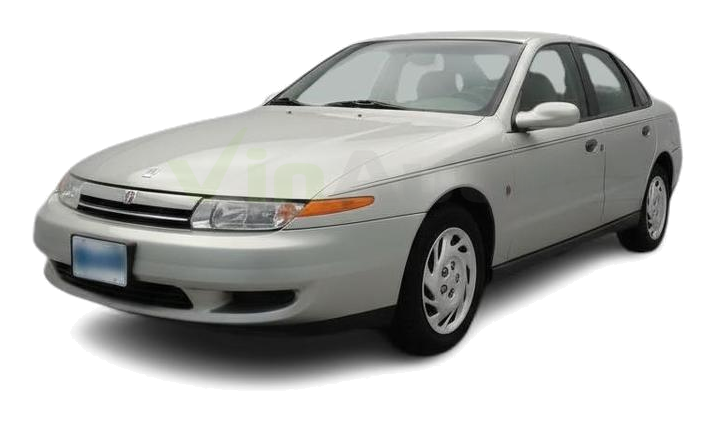
The Good
The 2000 Saturn L-Series offered a comfortable ride and a distinctive, damage-resistant exterior. Practical buyers appreciated its potential value and the unique polymer panels. Emotionally, it appealed to those seeking a non-traditional, stylish alternative in the mid-size segment.
The Bad
Potential buyers of the 2000 Saturn L-Series should be aware of common issues such as transmission problems, particularly with the automatic transmission. Engine oil leaks and electrical gremlins are also frequently reported. Susceptibility to rust in certain areas, despite the polymer panels, is another concern.
2000 Saturn L-Series: Quick Overview
- Engine Options: The 2000 Saturn L-Series was primarily offered with two engine choices:
- 2.2L inline-4 cylinder engine
- 3.0L V6 engine
- Horsepower:
- The 2.2L inline-4 engine typically produced around 135-140 horsepower.
- The 3.0L V6 engine offered a more robust performance, generating approximately 182 horsepower.
- Fuel Economy:
- Fuel economy varied depending on the engine and transmission. For the 2.2L engine, expect roughly 22-24 MPG city and 29-32 MPG highway.
- The V6 engine generally yielded lower figures, around 19-21 MPG city and 26-28 MPG highway.
- 0-60 Times:
- With the 2.2L engine, 0-60 mph times were typically in the 9.5-10.5 second range.
- The V6 engine offered quicker acceleration, with 0-60 mph times often around 8.0-8.5 seconds.
- Towing Capacity: Towing capacity was generally not a strong suit for the Saturn L-Series, and it was not typically equipped for significant towing. Consult owner's manuals for specific ratings, but it was not designed for heavy-duty hauling.
- Trim-Level Features:
- L100: The base model, often featuring essential amenities like power windows, locks, and air conditioning.
- L200: A mid-range trim, typically adding more comfort and convenience features such as upgraded audio systems, cruise control, and potentially alloy wheels.
- L300: The top-tier trim, offering the most luxurious features, including leather upholstery (often optional), power-adjustable seats, automatic climate control, and enhanced exterior styling elements.
2000 Saturn L-Series Specifications
Vehicle Information
| Year | 2000 |
| Make | Saturn |
| Model | L-Series |
| Trim | - |
| Style | - |
| Type | Sedan |
| Category | Mid-Size Car |
Manufacturing Details
| Made In | United States |
| Manufacturing City | WILMINGTON |
Dimensions
| Doors | 4-Door |
| Curb Weight | 3153 pounds |
| Gross Vehicle Weight Rating | - |
| Overall Height | 56.40 inches |
| Overall Length | 190.40 inches |
| Overall Width | 69.00 inches |
| Wheelbase Length | 106.50 inches |
| Standard Seating | 5 |
Engine & Performance
| Engine | 3L V6 |
| Engine Size | 3L |
| Engine Cylinders | 6 |
| Transmission | 4-Speed Automatic |
| Transmission Type | Automatic |
| Transmission Speeds | 4-Speed |
| Drivetrain | Front-Wheel Drive |
Additional Features
| Anti-Brake System | Non-ABS 4-Wheel ABS |
| Steering Type | Rack & Pinion |
Pricing
| Manufacturer Suggested Retail Price (MSRP) | $20,135 |
| Invoice Price | $17,920 |
| Delivery Charges | - |
Vehicle History Report
Specifications
History
Events
History Check
Check
Check
Check
Check
Listings
Recalls
Check
Analysis
What Problems Does the 2000 Saturn L-Series Have?
Another area of concern is oil leaks, often originating from the valve cover gasket or oil pan. While not always catastrophic, these leaks can lead to engine damage if left unaddressed and require regular monitoring and potentially costly repairs. Electrical gremlins are also a recurring theme in owner complaints. This can manifest in various ways, including malfunctioning power windows, faulty door locks, intermittent dashboard lights, and issues with the infotainment system. Diagnosing and fixing these electrical problems can be frustrating and expensive due to the complex wiring harnesses.
While the Saturn L-Series boasted polymer body panels designed to resist dents, this did not make the entire vehicle immune to corrosion. Rust can still be an issue, particularly around the subframes, suspension components, and wheel wells, especially in regions with harsh winters and road salt. This can compromise structural integrity over time.
Regarding recalls, specific recalls for the 2000 model year might vary, but common areas for recalls across Saturn vehicles often involved issues with airbags, fuel systems, or braking components. It is crucial for prospective buyers to check for any outstanding recalls that may not have been addressed by previous owners.
In terms of long-term reliability, the L-Series tends to be more prone to issues as it ages, particularly with its powertrain and electrical systems. While some owners have managed to keep them running reliably with diligent maintenance, others have encountered a string of expensive repairs that can outweigh the initial cost savings. Model year specific issues are less pronounced for the 2000 model compared to later years, but the general trends of transmission and electrical concerns are consistent.
How long will the 2000 Saturn L-Series last?
The long-term durability of the L-Series is often challenged by its known weaknesses. The automatic transmission is a critical component that can limit the vehicle's lifespan if it fails. Similarly, ongoing electrical issues can become a persistent nuisance and drain on resources over time. While the chassis and body structure can hold up reasonably well, especially if protected from excessive rust, the mechanical and electrical components are often the limiting factors in its overall longevity. Neglecting maintenance, particularly of the transmission fluid and seals, can significantly shorten its service life.
What Technology & Safety Features are Included?
Entertainment: Standard entertainment typically included an AM/FM radio with a cassette player. Optional upgrades often featured a single-disc CD player, providing a more modern audio experience. Higher trim levels might have offered an upgraded speaker system for improved sound quality.
Driver-Assistance Features: Driver-assistance features were rudimentary by today's standards. Standard equipment generally included power steering and cruise control (often standard on L200 and L300 trims). Anti-lock Braking System (ABS) was typically available as an option or standard on higher trims, enhancing braking control in emergency situations.
Safety Features: Safety was a key consideration. The 2000 Saturn L-Series came standard with front airbags for the driver and front passenger. Seatbelt pretensioners were also included to enhance occupant safety during a collision. Side-impact airbags were often an optional feature, particularly on the higher trim levels, providing an additional layer of protection.
Crash-Test Ratings: The 2000 Saturn L-Series generally performed adequately in crash tests conducted by the National Highway Traffic Safety Administration (NHTSA) and the Insurance Institute for Highway Safety (IIHS) for its time. NHTSA ratings often showed it achieving 3 or 4 stars out of 5 in frontal and side-impact crash tests, indicating reasonable occupant protection. IIHS testing also typically placed it in the "Acceptable" or "Good" range for frontal offset crash tests. However, it's important to note that safety standards and testing methodologies have evolved significantly since 2000, so comparisons to modern vehicles should be made with this in mind.
Optional Features: Beyond the aforementioned optional features like side airbags and CD players, higher trims could be optioned with features like a power sunroof, alloy wheels, and fog lights, enhancing both aesthetics and convenience.
What Colors Options are Available?
2000 Saturn L-Series Prices and Market Value
Currently, on the used market, the 2000 Saturn L-Series can be found for remarkably low prices, often ranging from $1,000 to $4,000, depending heavily on condition, mileage, and trim level. Vehicles in pristine condition with lower mileage can command slightly higher prices, but they remain very affordable.
Factors affecting resale value are primarily condition and maintenance history. A well-maintained L-Series with documented service records will hold its value better than one that has been neglected. Major mechanical issues, particularly with the transmission, drastically reduce resale value. The inherent reputation for potential reliability issues also impacts its market desirability and, consequently, its resale value.
2000 Saturn L-Series Cost of Ownership
2000 Saturn L-Series Fuel Efficiency
2000 Saturn L-Series Safety Rating
NHTSA
IIHS
2000 Saturn L-Series Warranty
Basic
Powertrain
Rust
2000 Saturn L-Series Insurance
reasonable repair costs.
How Does the 2000 Saturn L-Series Compare to Other Sedan?
Performance: The L-Series, particularly with its base 4-cylinder engine, offered adequate but uninspiring performance, often lagging behind competitors like the Accord and Camry in acceleration and refinement. The optional V6 improved this, but still wasn't class-leading. Rivals like the Camry and Accord were often praised for their smoother power delivery and more engaging driving dynamics.
Features: In terms of features, the L-Series offered a decent array for its time, especially in higher trims, with available leather and upgraded audio. However, competitors like the Camry and Accord often provided more advanced or standard convenience features, and certainly more modern technology as the years progressed. The unique polymer body panels were a standout feature, offering a unique selling proposition in terms of dent resistance.
Reliability: This is where the L-Series generally struggled compared to its rivals. The Toyota Camry and Honda Accord built formidable reputations for bulletproof reliability, often requiring fewer major repairs over their lifespan. The Saturn L-Series, on the other hand, was known for more frequent issues with its transmission and electrical systems, making it less dependable in the long run.
Price: The Saturn L-Series was typically positioned as a more budget-friendly option compared to the Japanese stalwarts, offering a lower entry price. This was a significant advantage for price-conscious buyers.
Alternatives:
- Similar: The Ford Taurus and Chevrolet Impala offered comparable pricing and American styling, but often shared similar reliability concerns in certain areas, though arguably less pronounced than the L-Series transmission issues.
- Better: The Toyota Camry and Honda Accord remain the benchmarks for reliability, resale value, and overall build quality in this segment. If reliability is paramount, these are superior choices, though their used prices might be slightly higher. The Nissan Altima also offered a compelling blend of performance and value.
Final Verdict: Is the 2000 Saturn L-Series a Good Sedan?
Whether it's worth buying hinges heavily on condition and price. A low-mileage, meticulously maintained example, especially a sedan with the 4-cylinder engine, could be a reasonable purchase for under $3,000. However, for those prioritizing reliability and lower maintenance costs, investing in a used Toyota Camry or Honda Accord from the same era would likely be a wiser long-term decision, despite a potentially higher initial cost. Avoid models with known transmission issues or high mileage if longevity is a concern.

Jovan
Jovan specializes in interpreting vehicle records and making sense of VIN data. With over 10 years of experience in the automotive data industry, his work ensures that every report is clear, accurate, and useful for car buyers.