
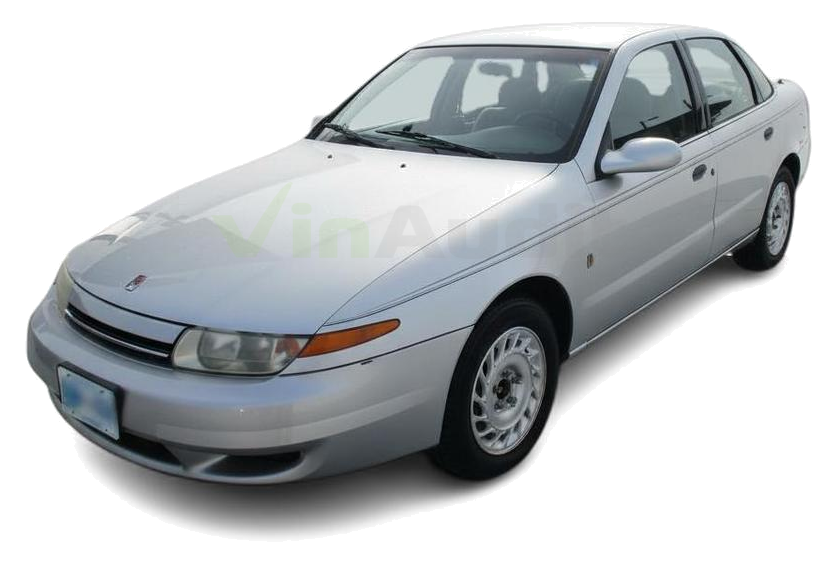
The 2002 Saturn L-Series was part of a mid-size car line produced by Saturn, a division of General Motors, from 2000 to 2004. Available as a sedan and a wagon, it aimed to offer a value-oriented alternative in a competitive segment. Key trims included the base L100, the more feature-rich L200, and the performance-oriented L300. Initially, pricing ranged from around $17,000 to $21,000. Saturn's unique dent-resistant polymer body panels and its reputation for friendly dealerships contributed to its appeal.
The Good
The 2002 Saturn L-Series offered a comfortable ride and surprisingly spacious interiors for its class. Its unique polymer body panels appealed to practical buyers worried about minor dings and dents, while its straightforward design and affordable pricing made it an attractive, no-nonsense choice for budget-conscious consumers.
The Bad
Potential buyers of the 2002 Saturn L-Series should be aware of common issues such as transmission problems, particularly with automatic transmissions, and electrical gremlins like malfunctioning power windows and door locks. Engine performance was often considered lackluster, and interior materials could show wear over time.
2002 Saturn L-Series: Quick Overview
- Engine Options: The 2002 Saturn L-Series was offered with two primary engine choices: a 2.2-liter inline-four cylinder engine and a 3.0-liter V6 engine.
- Horsepower: The 2.2L inline-four typically produced around 135-140 horsepower. The 3.0L V6 offered more power, generally in the range of 180-190 horsepower.
- Fuel Economy: Fuel economy varied depending on the engine and transmission. For the 2.2L engine, expect figures in the ballpark of 21-24 mpg in the city and 28-32 mpg on the highway. The V6 would be slightly lower, perhaps in the 18-20 mpg city and 25-28 mpg highway range.
- 0-60 Times: With the base four-cylinder engine, 0-60 mph times were generally in the 9-10 second range. The V6 offered a more sprightly acceleration, often achieving 0-60 mph in approximately 7.5-8.5 seconds.
- Towing Capacity: The Saturn L-Series was not typically designed for significant towing. Its towing capacity, if equipped with a factory tow package, would be minimal, suitable for very light loads like small trailers. Precise figures are difficult to ascertain as towing was not a primary focus.
- Trim-Level Features:
- L100: Base model usually included standard power windows, power locks, air conditioning, and a basic AM/FM/CD stereo system.
- L200: Added features often included cruise control, remote keyless entry, a better sound system, and sometimes alloy wheels.
- L300: Typically featured the V6 engine as standard, along with more premium amenities such as leather seating (optional or standard depending on packages), a premium audio system, automatic climate control, and more advanced interior trim.
2002 Saturn L-Series Specifications
Vehicle Information
| Year | 2002 |
| Make | Saturn |
| Model | L-Series |
| Trim | - |
| Style | 4-Door Sedan |
| Type | Sedan |
| Category | Mid-Size Car |
Manufacturing Details
| Made In | United States |
| Manufacturing City | WILMINGTON |
Dimensions
| Doors | 4-Door |
| Curb Weight | 2989 pounds |
| Gross Vehicle Weight Rating | - |
| Overall Height | 56.40 inches |
| Overall Length | 190.40 inches |
| Overall Width | 68.50 inches |
| Wheelbase Length | 106.50 inches |
| Standard Seating | 5 |
Engine & Performance
| Engine | 2.2L I4 |
| Engine Size | 2.2L |
| Engine Cylinders | 4 |
| Transmission | 4-Speed Automatic |
| Transmission Type | Automatic |
| Transmission Speeds | 4-Speed |
| Drivetrain | Front-Wheel Drive |
Additional Features
| Anti-Brake System | Non-ABS 4-Wheel ABS |
| Steering Type | Rack & Pinion |
Pricing
| Manufacturer Suggested Retail Price (MSRP) | $16,370 |
| Invoice Price | $15,106 |
| Delivery Charges | $500 |
Vehicle History Report
Vehicle
Specifications
Specifications
Ownership
History
History
All History
Events
Events
NMVTIS Title
History Check
History Check
Salvage/Rebuilt
Check
Check
Accident
Check
Check
Theft
Check
Check
Open Lien
Check
Check
Past Sale
Listings
Listings
Safety
Recalls
Recalls
Odometer
Check
Check
Market Price
Analysis
Analysis
What Problems Does the 2002 Saturn L-Series Have?
The 2002 Saturn L-Series, like many vehicles of its era, is known for a few recurring issues that can impact long-term reliability. One of the most frequently reported problems centers around the automatic transmission. Owners have cited instances of rough shifting, slipping gears, and complete transmission failure, particularly at higher mileage. This can be a significant and costly repair. Another area of concern is with the vehicle's electrical system. Common electrical gremlins include malfunctioning power windows and door locks, faulty power seat motors, and issues with the interior lighting. Some owners have also reported problems with the anti-lock braking system (ABS) sensors. The engine, while generally adequate, can sometimes suffer from coolant leaks and oil consumption, especially as the vehicle ages. Radiator issues and head gasket problems have been noted in some cases. Recalls for the 2002 Saturn L-Series are not extensive but do exist. For instance, there have been recalls related to potential issues with the fuel pump module and airbag inflators. It's crucial for prospective buyers to research any outstanding recalls and ensure they have been addressed. In terms of model year specifics, the 2002 model year generally shared many of the same potential issues as surrounding years. However, early models might have had more teething problems than later ones. Overall, while the L-Series could be a decent car when well-maintained, its long-term reliability can be a mixed bag, with transmission and electrical issues being the primary concerns that potential buyers should investigate thoroughly.
How long will the 2002 Saturn L-Series last?
Based on owner data and typical maintenance patterns, the 2002 Saturn L-Series can reasonably be expected to reach an average mileage of 150,000 to 200,000 miles. With diligent adherence to scheduled maintenance, including regular oil changes, fluid flushes, and timely replacement of wear items, some examples have surpassed 250,000 miles. However, long-term durability is significantly impacted by its known weaknesses. The transmission is a critical component to monitor; if it hasn't been replaced or properly maintained, it can become a limiting factor. Electrical components can also become more prone to failure with age and mileage. While the chassis and body (with its polymer panels) are generally resistant to rust, the mechanical and electrical integrity are the primary determinants of its service life.
What Technology & Safety Features are Included?
The 2002 Saturn L-Series offered a fairly standard set of technology and safety features for its time. Built-in tech was relatively basic, primarily revolving around the audio system. Standard entertainment typically included an AM/FM radio with a CD player. Higher trims or optional packages could upgrade this to a more sophisticated stereo with more speakers, and perhaps even a cassette player. Features like steering wheel-mounted audio controls were not commonly found on this model. Driver-assistance features were minimal to non-existent by modern standards; cruise control was available on higher trims, but advanced systems like traction control or stability control were rare or absent. Anti-lock brakes (ABS) were often available as an option, particularly on V6 models, and were a key safety feature. Standard safety equipment included front airbags and, in some configurations, side-impact airbags for front occupants. The polymer body panels, while offering dent resistance, were also touted for their energy-absorbing properties in low-speed impacts. For crash-test ratings, the 2002 Saturn L-Series received mixed results from the Insurance Institute for Highway Safety (IIHS) and the National Highway Traffic Safety Administration (NHTSA). The IIHS rated it "Acceptable" in frontal offset crash tests, indicating a good performance but not the best. NHTSA gave it four out of five stars for frontal driver and passenger protection in 2002. Side-impact protection ratings were generally decent but varied by configuration and whether side airbags were equipped. Overall, the L-Series provided a baseline level of safety and entertainment for its era, with options for enhanced braking and audio systems, but it lacked the advanced electronic aids that have become commonplace in today's vehicles.
What Colors Options are Available?
2002 Saturn L-Series Prices and Market Value
When new, the 2002 Saturn L-Series carried a Manufacturer's Suggested Retail Price (MSRP) that generally ranged from approximately $17,000 for the base L100 sedan to around $21,000 for the well-equipped L300 sedan and wagon models. As with most vehicles, the L-Series experienced significant depreciation after its initial purchase. Current used market prices for a 2002 Saturn L-Series in good condition typically range from $2,000 to $4,000, with mileage, condition, and trim level being major determinants. Factors affecting resale value include its reputation for potential transmission issues, the availability of desirable features, and overall mechanical health. Lower mileage and well-maintained examples, especially those with the more reliable four-cylinder engine, tend to command slightly higher prices. The discontinuation of the Saturn brand has also contributed to a lower resale value compared to contemporary models from more established brands.
2002 Saturn L-Series Cost of Ownership
The 2002 Saturn L-Series is generally considered economical to own, especially in terms of initial purchase price and insurance costs. Insurance premiums are typically modest due to its age and market segment. Fuel costs are moderate, with the four-cylinder engine offering decent MPG. Maintenance costs can be reasonable for routine items, but potential repairs, particularly for the automatic transmission and electrical components, can become significant expenses. While common maintenance is affordable, unexpected major repairs can make its long-term ownership costly. Overall, it leans towards being an economical choice if major issues are avoided, but preparedness for potential costly repairs is wise.
2002 Saturn L-Series Fuel Efficiency
Fuel Type
Gasoline
Fuel Capacity
24 gallons
City Mileage
21 miles/gallon
Highway Mileage
30 miles/gallon
2002 Saturn L-Series Safety Rating
NHTSA
IIHS
2002 Saturn L-Series Warranty
Basic
Original warranty
36 months / 36,000 miles
Estimated remaining
Expired
Powertrain
Original warranty
36 months / 36,000 miles
Estimated remaining
Expired
Rust
Original warranty
72 months / 100,000 miles
Estimated remaining
Expired
2002 Saturn L-Series Insurance
Insurance for a 2002 Saturn L-Series is moderately priced, reflecting its status as a Sedan with strong safety ratings and
reasonable repair costs.
How Does the 2002 Saturn L-Series Compare to Other Sedan?
The 2002 Saturn L-Series competed in the crowded mid-size sedan and wagon segment against rivals like the Toyota Camry, Honda Accord, Ford Taurus, and Chevrolet Impala. In terms of performance, the L-Series, particularly with its base four-cylinder engine, was often outpaced by competitors like the Accord and Camry, which offered smoother and more powerful engines. The V6 offered more competitive acceleration but still wasn't class-leading. Features on the L-Series were generally comparable for its price point, offering basic amenities expected in the segment. However, rivals like the Camry and Accord often had more refined interiors, better available technology, and a wider array of optional features. Reliability is where the Saturn L-Series faced its biggest challenges. While the polymer body panels were a unique selling point, its mechanical reliability, particularly concerning transmissions and electrical systems, was often seen as inferior to the stellar reputations of the Camry and Accord. The Ford Taurus and Chevrolet Impala offered different strengths; the Taurus was known for its comfortable ride, while the Impala provided V8 power options, though both had their own sets of common issues. Price-wise, the L-Series was often positioned competitively, offering a good value proposition on paper. However, the long-term cost of ownership due to potential repairs can negate initial savings.
Recommendations: For buyers prioritizing bulletproof reliability and strong resale value, the Toyota Camry or Honda Accord from the same era are generally superior alternatives, despite potentially higher used prices. If a more robust V6 option with comfortable ride is desired, the Chevrolet Impala can be considered, but research its specific engine and transmission vulnerabilities. The Ford Taurus offers a comfortable ride, but also requires careful inspection for common issues. If a similar value proposition is sought with potentially better reliability than the L-Series, a well-maintained Nissan Altima from this period could be a comparable, or even better, alternative.
Final Verdict: Is the 2002 Saturn L-Series a Good Sedan?
The 2002 Saturn L-Series is ideal for budget-conscious buyers seeking an affordable and functional used sedan or wagon. It's best suited for individuals or families who prioritize a low purchase price over cutting-edge technology or exceptional long-term reliability. It is worth buying, but with significant caveats. Focus on examples with the 2.2-liter four-cylinder engine and a manual transmission if possible, as these are generally more reliable than the V6 and automatic transmission combinations. Thorough pre-purchase inspection is absolutely essential, with a close eye on the transmission and electrical systems. If you find a well-maintained, lower-mileage example with a documented service history and no signs of major mechanical trouble, it can offer decent value. However, for those who demand unwavering dependability and lower potential repair bills, exploring rivals like the Toyota Camry or Honda Accord might be a wiser long-term investment, even if the initial cost is higher.
