The 1985 Volkswagen Cabriolet, a quintessential German convertible, evolved from the beloved Golf Mk1. Produced from 1979 to 1993, it offered a classic, sporty two-door convertible body style. Key trims often included the base model and more upscale versions. New, prices ranged from approximately $11,000 to $14,000. Its enduring popularity stems from its timeless design, agile handling, and the pure joy of open-top motoring.
The Good
The 1985 Cabriolet boasts nimble performance and a charming, iconic design. It offers an engaging driving experience, reasonable fuel efficiency, and a touch of European flair that appeals to the heart, while its solid build provides practical, long-term enjoyment.
The Bad
Common weaknesses include rust, especially around wheel wells and rocker panels, along with aging electrical systems and convertible top mechanisms. Engine and transmission leaks can also be an issue. Proper maintenance is crucial.
1985 Volkswagen Cabriolet: Quick Overview
- Engine Options: The 1985 Volkswagen Cabriolet typically came with a 1.8-liter inline-four gasoline engine.
- Horsepower: This engine generally produced around 79 horsepower, though variations could exist based on specific market or emissions regulations.
- Fuel Economy: Expect combined fuel economy figures in the range of 23-27 miles per gallon (MPG), depending on driving conditions and transmission type (manual or automatic).
- 0-60 Times: Acceleration was not a strong suit; 0-60 mph times were typically in the 10-12 second range, reflecting its focus on cruising and handling rather than outright speed.
- Towing Capacity: The Volkswagen Cabriolet was not designed for towing, and therefore, it does not have an official towing capacity.
- Trim-Level Features:
- Base Model: Typically featured a manual convertible top, basic cloth upholstery, power steering, an AM/FM radio, and 13-inch steel wheels.
- GL/GLI (if applicable for 1985): More premium trims often included features like power windows, upgraded interior materials (e.g., velour), a more sophisticated sound system, alloy wheels, and sometimes a sport-tuned suspension for the GLI variant. Air conditioning was often an option.
- Convertible Top: All models featured a manually operated, insulated fabric convertible top. Power tops were not standard on this model year.
- Safety Features: Standard safety features included seatbelts, a collapsible steering column, and impact-absorbing bumpers. Anti-lock brakes (ABS) and airbags were not available on this model.
1985 Volkswagen Cabriolet Specifications
Vehicle Information
| Year | 1985 |
| Make | Volkswagen |
| Model | Cabriolet |
| Trim | - |
| Style | - |
| Type | Convertible |
| Category | Compact Car |
Manufacturing Details
| Made In | Germany |
| Manufacturing City | OSNABRUCK |
Dimensions
| Doors | 2-Door |
| Curb Weight | - |
| Gross Vehicle Weight Rating | - |
| Overall Height | - |
| Overall Length | - |
| Overall Width | - |
| Wheelbase Length | - |
| Standard Seating | - |
Engine & Performance
| Engine | 1.8L I4 |
| Engine Size | 1.8L |
| Engine Cylinders | 4 |
| Transmission | - |
| Transmission Type | - |
| Transmission Speeds | - |
| Drivetrain | Front-Wheel Drive |
Additional Features
| Anti-Brake System | - |
| Steering Type | - |
Pricing
| Manufacturer Suggested Retail Price (MSRP) | - |
| Invoice Price | - |
| Delivery Charges | - |
Vehicle History Report
Vehicle
Specifications
Specifications
Ownership
History
History
All History
Events
Events
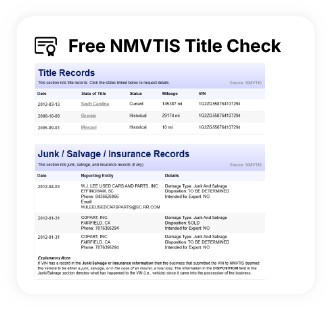
NMVTIS Title
History Check
History Check
Salvage/Rebuilt
Check
Check
Accident
Check
Check
Theft
Check
Check
Open Lien
Check
Check
Past Sale
Listings
Listings
Safety
Recalls
Recalls
Odometer
Check
Check
Market Price
Analysis
Analysis
What Problems Does the 1985 Volkswagen Cabriolet Have?
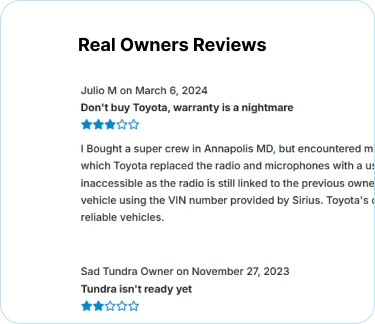
The 1985 Volkswagen Cabriolet, like many cars of its era, has certain recurring issues that owners should be aware of. One of the most significant concerns is rust. This is particularly prevalent on the body panels, including the wheel arches, rocker panels, door sills, and around the windshield. If left unchecked, rust can compromise the structural integrity of the vehicle.
Another common area of concern is the convertible top. The fabric can degrade over time, leading to leaks. The mechanisms for raising and lowering the top can also become stiff or break, requiring repair or replacement. The seals around the top can also wear out, contributing to water ingress.

Electrical systems are another frequent headache. Older wiring harnesses can become brittle and corroded, leading to intermittent failures of lights, gauges, power windows, and other electrical components. The fuel injection system, while generally robust, can develop issues with sensors, fuel pumps, or injectors over time, affecting engine performance and starting.
The suspension and steering components, such as ball joints, tie rod ends, and bushings, can wear out, leading to noisy operation or imprecise handling. Brake components, including calipers and master cylinders, may also require attention due to age.
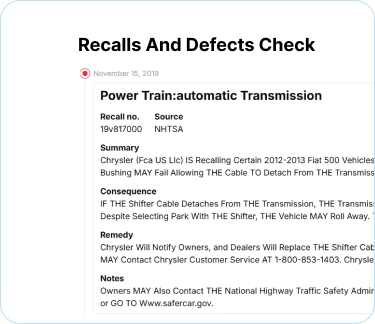
While there haven't been widespread recalls specifically targeting major, critical failures for the 1985 model year that are still highly relevant today, it's always advisable for owners to check any outstanding recalls with Volkswagen. The long-term reliability of a 1985 Cabriolet is heavily dependent on its maintenance history. A well-maintained example can be surprisingly durable, but those neglected are prone to multiple issues.
Regarding specific model year variations for the 1985 model, the core mechanicals and body structure are largely consistent across the model year. However, minor updates in features or emissions controls might have been implemented, but these generally do not introduce unique, model-year-specific major problems that are distinct from the general concerns listed above.
Another common area of concern is the convertible top. The fabric can degrade over time, leading to leaks. The mechanisms for raising and lowering the top can also become stiff or break, requiring repair or replacement. The seals around the top can also wear out, contributing to water ingress.

Electrical systems are another frequent headache. Older wiring harnesses can become brittle and corroded, leading to intermittent failures of lights, gauges, power windows, and other electrical components. The fuel injection system, while generally robust, can develop issues with sensors, fuel pumps, or injectors over time, affecting engine performance and starting.

The suspension and steering components, such as ball joints, tie rod ends, and bushings, can wear out, leading to noisy operation or imprecise handling. Brake components, including calipers and master cylinders, may also require attention due to age.
While there haven't been widespread recalls specifically targeting major, critical failures for the 1985 model year that are still highly relevant today, it's always advisable for owners to check any outstanding recalls with Volkswagen. The long-term reliability of a 1985 Cabriolet is heavily dependent on its maintenance history. A well-maintained example can be surprisingly durable, but those neglected are prone to multiple issues.
Regarding specific model year variations for the 1985 model, the core mechanicals and body structure are largely consistent across the model year. However, minor updates in features or emissions controls might have been implemented, but these generally do not introduce unique, model-year-specific major problems that are distinct from the general concerns listed above.
How long will the 1985 Volkswagen Cabriolet last?
With diligent maintenance, a 1985 Volkswagen Cabriolet can achieve well over 200,000 miles. Many owners report reaching 150,000 to 250,000 miles, especially if the engine and transmission have been properly cared for. The core mechanicals are known for their durability. However, long-term durability is heavily impacted by the aforementioned rust issues and the aging of rubber and plastic components. The convertible top mechanism is a wear item that may require attention or replacement over its lifespan. Neglect in addressing early signs of rust or fluid leaks will significantly shorten its usable life. Consistent oil changes, timely belt replacements, and addressing minor issues promptly are key to maximizing its longevity and enjoying its classic charm for many years.
What Technology & Safety Features are Included?
The 1985 Volkswagen Cabriolet is a product of its time, meaning its built-in technology and features are quite rudimentary by modern standards. The primary form of entertainment was typically an AM/FM radio, often with a cassette player as an optional upgrade. There were no advanced infotainment systems, touchscreens, or integrated navigation.
Driver-assistance features were virtually non-existent. Power steering was usually standard, making maneuvering easier, but there were no electronic aids like traction control, stability control, or cruise control (though cruise control might have been a rare option on some higher trims).
Safety features were basic. Standard equipment included seatbelts, a collapsible steering column designed to absorb impact, and impact-absorbing bumpers. Anti-lock brakes (ABS) and airbags were not available on this model. The car's structural integrity was designed to offer some protection in a collision, but it lacks the advanced crumple zones and safety cage enhancements found in contemporary vehicles.
Optional features could include air conditioning, which was a desirable but not universal addition, especially in warmer climates. Power windows were also an option on some trims, offering a touch of convenience. The main technological highlight was the fuel-injected engine, which offered a more refined and efficient power delivery compared to carbureted engines of the same era.
Crash-test ratings for vehicles from this period are not directly comparable to modern NHTSA or IIHS tests. However, the Volkswagen Golf platform upon which the Cabriolet was based generally performed adequately for its time, though it would not meet current safety standards. The lack of airbags and advanced structural safety features means it would likely perform poorly in frontal and side impact tests by today's benchmarks. Owners seeking modern safety features would need to consider aftermarket solutions or newer vehicles.
Driver-assistance features were virtually non-existent. Power steering was usually standard, making maneuvering easier, but there were no electronic aids like traction control, stability control, or cruise control (though cruise control might have been a rare option on some higher trims).
Safety features were basic. Standard equipment included seatbelts, a collapsible steering column designed to absorb impact, and impact-absorbing bumpers. Anti-lock brakes (ABS) and airbags were not available on this model. The car's structural integrity was designed to offer some protection in a collision, but it lacks the advanced crumple zones and safety cage enhancements found in contemporary vehicles.
Optional features could include air conditioning, which was a desirable but not universal addition, especially in warmer climates. Power windows were also an option on some trims, offering a touch of convenience. The main technological highlight was the fuel-injected engine, which offered a more refined and efficient power delivery compared to carbureted engines of the same era.
Crash-test ratings for vehicles from this period are not directly comparable to modern NHTSA or IIHS tests. However, the Volkswagen Golf platform upon which the Cabriolet was based generally performed adequately for its time, though it would not meet current safety standards. The lack of airbags and advanced structural safety features means it would likely perform poorly in frontal and side impact tests by today's benchmarks. Owners seeking modern safety features would need to consider aftermarket solutions or newer vehicles.
What Colors Options are Available?
1985 Volkswagen Cabriolet Prices and Market Value
When new in 1985, the Volkswagen Cabriolet typically retailed between approximately $11,000 and $14,000, depending on trim level and options. As a classic convertible, it has experienced a unique depreciation curve. While many cars from this era depreciated significantly, the Cabriolet has seen its value stabilize and, in many cases, increase for well-maintained, low-mileage examples. Current used market prices for the 1985 model can range widely from $3,000 for project cars to upwards of $10,000 or more for pristine, original condition vehicles. Factors significantly affecting resale value include the condition of the body (rust is a major detractor), the state of the convertible top, mechanical health, originality, and overall mileage. Low mileage and a comprehensive maintenance history are paramount for retaining and increasing its value.
1985 Volkswagen Cabriolet Cost of Ownership
Ownership costs for a 1985 Volkswagen Cabriolet are generally moderate to low, especially considering its classic status. Insurance can be affordable, particularly for classic car policies if applicable. Fuel costs are reasonable due to its efficient 1.8L engine, typically achieving 23-27 MPG combined. Maintenance and repairs can vary. Routine maintenance like oil changes is inexpensive. However, as the car ages, parts like convertible tops, electrical components, and rust repair can become more costly. Finding specialized VW mechanics might also incur higher labor rates. Overall, it's considered an economical car to own if you're prepared for potential age-related repairs, but not prohibitively expensive.
1985 Volkswagen Cabriolet Fuel Efficiency
Fuel Type
Gasoline
Fuel Capacity
-
City Mileage
-
Highway Mileage
-
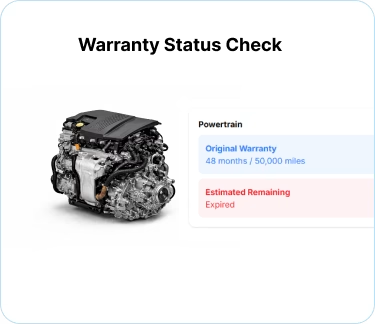
1985 Volkswagen Cabriolet Warranty
Basic
Original warranty
0 months / No data
Estimated remaining
Expired
Powertrain
Original warranty
0 months / No data
Estimated remaining
Expired
Rust
Original warranty
0 months / No data
Estimated remaining
Expired
1985 Volkswagen Cabriolet Insurance
Insurance for a 1985 Volkswagen Cabriolet is moderately priced, reflecting its status as a Convertible with strong safety ratings and
reasonable repair costs.
How Does the 1985 Volkswagen Cabriolet Compare to Other Convertible?
In its segment during 1985, the Volkswagen Cabriolet competed primarily against other small, sporty convertibles. Key rivals included the Mazda RX-7 Convertible (though often a bit pricier and sportier), the Toyota MR2 (a mid-engine coupe, but offered a similar fun factor), and potentially some American convertibles like the Ford Mustang Convertible. Compared to these, the Cabriolet offered a more European driving feel and aesthetic. Its performance was generally more relaxed than the Mustang or RX-7, focusing on nimble handling and comfortable cruising rather than outright acceleration. The 1.8L engine offered decent efficiency. In terms of features, it was relatively spartan, especially compared to luxury offerings. While the RX-7 might have offered more advanced tech for its time, the Cabriolet's simplicity was part of its charm. Reliability was decent for its era, but arguably less bulletproof than its Japanese counterparts like Toyota or Mazda, which were gaining a reputation for superior long-term dependability. Rust was a more significant concern for the VW. Price-wise, the Cabriolet was often positioned as a more accessible entry into the convertible market compared to some European imports.
Similar Alternatives:
Potentially Better Alternatives (depending on priorities):
Similar Alternatives:
- Volkswagen Rabbit Convertible (earlier models): Essentially the predecessor, offering a similar driving experience but with slightly older styling.
- Buick Skyhawk/Oldsmobile Firenza Convertible: American compact convertibles that were more comfort-oriented but often lacked the European handling finesse.
Potentially Better Alternatives (depending on priorities):
- Mazda Miata (later years): If outright driving fun and legendary reliability are paramount, the later Mazda Miata (MX-5) is a superior choice, though the 1985 Cabriolet predates its introduction.
- Toyota Celica Convertible: Offered a blend of sportiness and reliability, though often with a more coupe-like feel even as a convertible.
Final Verdict: Is the 1985 Volkswagen Cabriolet a Good Convertible?
The 1985 Volkswagen Cabriolet is ideal for enthusiasts who appreciate classic European automotive design, enjoy the pleasure of top-down driving, and are willing to perform regular maintenance. It's a fantastic choice for casual cruisers and weekend drives rather than a daily commuter seeking modern amenities or cutting-edge performance. It is worth buying, especially as a used vehicle, for individuals who prioritize style and a fun driving experience over absolute reliability or cutting-edge technology. The ideal purchase is a well-maintained example, preferably with documented service history and minimal rust. While any trim can be enjoyable, higher trims might offer slightly more creature comforts. Buying a project car can be rewarding but requires a significant investment in time and money. It represents a charming slice of 80s automotive history that continues to bring smiles to owners.