The 2018 Yamaha YZ250 is a legendary motocross bike with a rich racing heritage, first introduced in the early 2000s and refined over the years. As a purebred dirt bike, its body style is aggressive and purpose-built for off-road competition. While Yamaha typically offers variations like the YZ250X (cross-country) and YZ250F (four-stroke), the core YZ250 model remains a potent two-stroke. Its enduring popularity stems from its accessible power delivery, nimble handling, and relatively affordable price point for a high-performance machine. New pricing was in the $7,000-$7,500 range, with used models varying significantly.

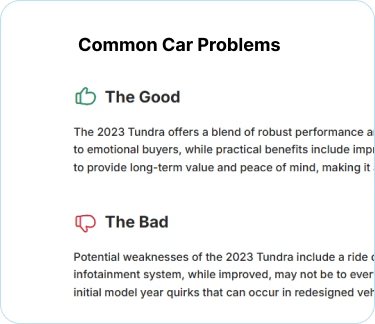
The Good
The 2018 YZ250 excels with its thrilling two-stroke power, sharp handling, and renowned Yamaha reliability. Its intuitive nature appeals to riders seeking pure fun and competitive edge, while the durable build and manageable maintenance offer practical long-term value.
The Bad
Potential weaknesses include the dated ergonomics and plastic bodywork compared to modern designs. Engine vibration can be noticeable on longer rides. It lacks advanced electronic aids, and the two-stroke engine requires more frequent top-end maintenance than a four-stroke.
2018 Yamaha YZ250: Quick Overview
- Engine Options: The 2018 Yamaha YZ250 features a single engine option: a 249cc liquid-cooled, 2-stroke, reed-valve induction, single-cylinder engine.
- Horsepower: While official horsepower figures are rarely published by Yamaha for their motocross bikes, independent dyno tests generally place the 2018 YZ250's horsepower in the range of 45-50 horsepower at the rear wheel. This provides ample power for aggressive motocross riding.
- Fuel Economy: Fuel economy is not a primary design consideration for a dedicated motocross bike like the YZ250. Riders can expect approximately 15-25 miles per gallon, depending heavily on riding style, terrain, and throttle input. The fuel tank capacity is typically around 2.1 gallons, necessitating frequent refueling during extended riding sessions.
- 0-60 Times: 0-60 mph times are not a standard metric for motocross bikes, as their performance is measured in acceleration out of corners and across jumps rather than straight-line speed. However, due to its lightweight and potent engine, the YZ250 can achieve rapid acceleration, likely in the 3-4 second range.
- Towing Capacity: As a motorcycle, the 2018 Yamaha YZ250 has no towing capacity.
- Trim-Level Features: The 2018 Yamaha YZ250 was primarily offered in one main trim, representing the pinnacle of two-stroke motocross performance. Key features include:
- Lightweight aluminum frame for agile handling.
- Kayaba Speed Sensitive System (SSS) front forks and Kayaba shock absorber for superior suspension performance and adjustability.
- Hydraulic clutch for smooth and consistent engagement.
- Wavy brake rotors for enhanced stopping power and heat dissipation.
- High-performance exhaust system tuned for optimal power delivery.
- Durable skid plate to protect the engine and frame.
- Ergonomic design optimized for aggressive riding positions.
- Grippy seat for control.
2018 Yamaha YZ250 Specifications
Vehicle Information
| Year | 2018 |
| Make | Yamaha |
| Model | YZ250 |
| Trim | - |
| Style | - |
| Type | Motorcycle |
| Category | Motorcycle |
Manufacturing Details
| Made In | Japan |
| Manufacturing City | IWATA |
Dimensions
| Doors | - |
| Curb Weight | - |
| Gross Vehicle Weight Rating | - |
| Overall Height | - |
| Overall Length | - |
| Overall Width | - |
| Wheelbase Length | - |
| Standard Seating | - |
Engine & Performance
| Engine | 250CC |
| Engine Size | 250L |
| Engine Cylinders | 1 |
| Transmission | 5 Motorcycle - Chain Drive |
| Transmission Type | Manual |
| Transmission Speeds | 5-Speed |
| Drivetrain | - |
Additional Features
| Anti-Brake System | - |
| Steering Type | - |
Pricing
| Manufacturer Suggested Retail Price (MSRP) | - |
| Invoice Price | - |
| Delivery Charges | - |
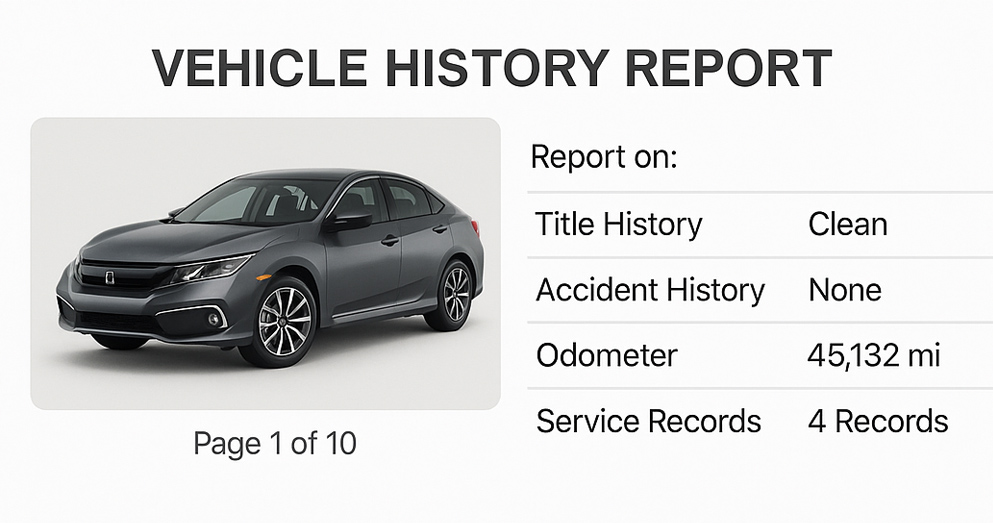
Vehicle History Report
Vehicle
Specifications
Specifications
Ownership
History
History
All History
Events
Events
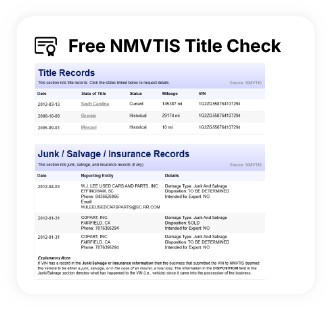
NMVTIS Title
History Check
History Check
Salvage/Rebuilt
Check
Check
Accident
Check
Check
Theft
Check
Check
Open Lien
Check
Check
Past Sale
Listings
Listings
Safety
Recalls
Recalls
Odometer
Check
Check
Market Price
Analysis
Analysis
What Problems Does the 2018 Yamaha YZ250 Have?
The 2018 Yamaha YZ250, like most robust two-stroke motocross bikes, is generally known for its solid reliability, especially when maintained properly. However, there are some commonly reported areas that owners should be aware of.
One frequent area of attention for two-strokes, including the YZ250, is the need for regular top-end rebuilds. This typically involves replacing the piston and piston rings. The frequency of these rebuilds depends heavily on how the bike is ridden (e.g., frequent hard acceleration and high RPMs will necessitate more frequent rebuilds) and the quality of maintenance. While not a 'problem' in the sense of a defect, it is a characteristic of two-stroke engines that requires proactive maintenance. Neglecting this can lead to decreased performance and potentially more significant engine damage.
Clutch wear is another commonly reported item. The hydraulic clutch is generally robust, but aggressive riding, frequent use of the clutch for control, and improper adjustment can lead to premature wear of the clutch plates and potentially the basket or hub over time. Regular clutch fluid changes and proper technique can mitigate this.
Some riders have noted that the ergonomics of the YZ250 platform, which has remained largely unchanged for many years, can feel a bit dated compared to newer, more modern motocross bikes. This might include the seat height, handlebar position, and overall rider triangle, which can lead to fatigue on longer rides or for riders accustomed to more contemporary designs.
Vibration is inherent in a single-cylinder two-stroke engine. While Yamaha has done a good job of managing it, some riders find the vibrations to be noticeable, particularly through the handlebars and footpegs, which can contribute to arm pump or fatigue on extended rides.
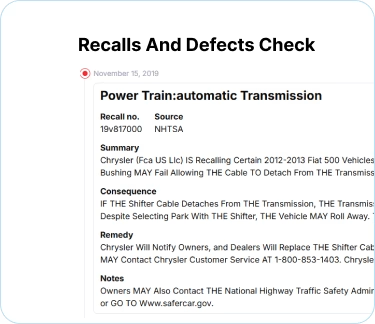
In terms of recalls, Yamaha typically issues recalls for specific manufacturing defects that pose a safety risk. For the 2018 YZ250, there were no widespread or significant recalls reported that would indicate a systemic issue with that particular model year. However, it is always advisable for owners to check the official Yamaha website or the National Highway Traffic Safety Administration (NHTSA) database for any specific safety campaigns related to their VIN.
Long-term reliability is generally excellent if the bike receives consistent and timely maintenance. The engine is a proven design, and the chassis components are robust. The primary factor influencing long-term durability is the owner's commitment to performing routine maintenance, including air filter cleaning, oil changes, chain lubrication, and adhering to the recommended service intervals for top-end inspections and rebuilds. Ignoring these can lead to premature component failure.
One frequent area of attention for two-strokes, including the YZ250, is the need for regular top-end rebuilds. This typically involves replacing the piston and piston rings. The frequency of these rebuilds depends heavily on how the bike is ridden (e.g., frequent hard acceleration and high RPMs will necessitate more frequent rebuilds) and the quality of maintenance. While not a 'problem' in the sense of a defect, it is a characteristic of two-stroke engines that requires proactive maintenance. Neglecting this can lead to decreased performance and potentially more significant engine damage.
Clutch wear is another commonly reported item. The hydraulic clutch is generally robust, but aggressive riding, frequent use of the clutch for control, and improper adjustment can lead to premature wear of the clutch plates and potentially the basket or hub over time. Regular clutch fluid changes and proper technique can mitigate this.
Some riders have noted that the ergonomics of the YZ250 platform, which has remained largely unchanged for many years, can feel a bit dated compared to newer, more modern motocross bikes. This might include the seat height, handlebar position, and overall rider triangle, which can lead to fatigue on longer rides or for riders accustomed to more contemporary designs.
Vibration is inherent in a single-cylinder two-stroke engine. While Yamaha has done a good job of managing it, some riders find the vibrations to be noticeable, particularly through the handlebars and footpegs, which can contribute to arm pump or fatigue on extended rides.
In terms of recalls, Yamaha typically issues recalls for specific manufacturing defects that pose a safety risk. For the 2018 YZ250, there were no widespread or significant recalls reported that would indicate a systemic issue with that particular model year. However, it is always advisable for owners to check the official Yamaha website or the National Highway Traffic Safety Administration (NHTSA) database for any specific safety campaigns related to their VIN.
Long-term reliability is generally excellent if the bike receives consistent and timely maintenance. The engine is a proven design, and the chassis components are robust. The primary factor influencing long-term durability is the owner's commitment to performing routine maintenance, including air filter cleaning, oil changes, chain lubrication, and adhering to the recommended service intervals for top-end inspections and rebuilds. Ignoring these can lead to premature component failure.
How long will the 2018 Yamaha YZ250 last?
Estimating average mileage for a 2018 Yamaha YZ250 is challenging as usage varies greatly; motocross bikes are often measured in 'moto hours' or 'engine hours' rather than miles. However, if we consider a typical motocross riding schedule, where a rider might put in 20-30 hours per year, a well-maintained YZ250 could see 100-150 hours of use before requiring a major engine overhaul (top-end rebuilds).
In terms of years, a 2018 model could easily serve a dedicated owner for 5-10 years or more, provided consistent maintenance. Long-term durability is excellent for the chassis and transmission components. The engine's longevity is directly tied to the owner's adherence to maintenance schedules, particularly the top-end rebuilds. Weaknesses over time are primarily related to the wear items on a two-stroke engine and the potential for dated ergonomics to become a comfort issue for some riders.
What Technology & Safety Features are Included?
The 2018 Yamaha YZ250 is a no-frills, performance-oriented motocross machine, and as such, it is devoid of the sophisticated technology, entertainment systems, driver-assistance features, or advanced safety features found in modern automobiles or even some street-legal motorcycles.
Built-in Tech: The 'technology' on the YZ250 is focused purely on performance and rider control. This includes a robust liquid-cooling system for optimal engine temperature management, a lightweight and durable aluminum frame designed for precise handling, and high-performance Kayaba suspension components (Speed Sensitive System forks and a Kayaba shock) that offer extensive adjustability for various track conditions and rider preferences. The engine management is purely mechanical, relying on the carburetor for fuel delivery and a CDI ignition system. There are no electronic rider aids like traction control, launch control, or riding modes.
Entertainment: There is no entertainment system. The 'entertainment' derived from the YZ250 is the visceral experience of riding it – the sound of the two-stroke engine, the feeling of acceleration, and the challenge of navigating an off-road course.
Driver-Assistance: There are no driver-assistance features. The rider is entirely responsible for controlling the vehicle. This includes throttle control, braking, clutch operation, and balance. The bike's design prioritizes rider feedback and direct control.
Safety Features: Safety on a motocross bike is primarily a function of the rider's skill and the bike's inherent design for off-road use. The YZ250 features strong hydraulic disc brakes front and rear for reliable stopping power. The knobby tires provide grip on loose surfaces. The suspension is designed to absorb impacts and maintain stability. However, it lacks features like ABS or advanced lighting systems found on street bikes.
Optional Features: While not 'built-in,' a vast array of optional features are available from Yamaha and aftermarket manufacturers to enhance performance and protection. These can include different exhaust systems, performance tuning kits, aftermarket seats, handguards, skid plates, graphics kits, and more.
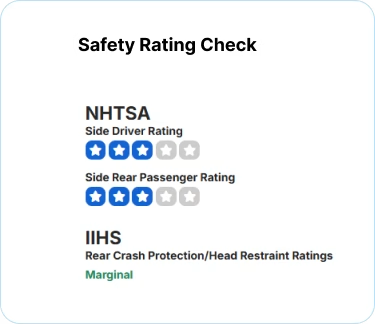
Crash-Test Ratings: Motorcycles, especially dedicated off-road bikes like the YZ250, are not subjected to standardized crash-testing in the same way cars are. Therefore, there are no official crash-test ratings available. The bike's design emphasizes agility, suspension travel, and durability to withstand the rigors of motocross riding.
Built-in Tech: The 'technology' on the YZ250 is focused purely on performance and rider control. This includes a robust liquid-cooling system for optimal engine temperature management, a lightweight and durable aluminum frame designed for precise handling, and high-performance Kayaba suspension components (Speed Sensitive System forks and a Kayaba shock) that offer extensive adjustability for various track conditions and rider preferences. The engine management is purely mechanical, relying on the carburetor for fuel delivery and a CDI ignition system. There are no electronic rider aids like traction control, launch control, or riding modes.
Entertainment: There is no entertainment system. The 'entertainment' derived from the YZ250 is the visceral experience of riding it – the sound of the two-stroke engine, the feeling of acceleration, and the challenge of navigating an off-road course.
Driver-Assistance: There are no driver-assistance features. The rider is entirely responsible for controlling the vehicle. This includes throttle control, braking, clutch operation, and balance. The bike's design prioritizes rider feedback and direct control.
Safety Features: Safety on a motocross bike is primarily a function of the rider's skill and the bike's inherent design for off-road use. The YZ250 features strong hydraulic disc brakes front and rear for reliable stopping power. The knobby tires provide grip on loose surfaces. The suspension is designed to absorb impacts and maintain stability. However, it lacks features like ABS or advanced lighting systems found on street bikes.
Optional Features: While not 'built-in,' a vast array of optional features are available from Yamaha and aftermarket manufacturers to enhance performance and protection. These can include different exhaust systems, performance tuning kits, aftermarket seats, handguards, skid plates, graphics kits, and more.
Crash-Test Ratings: Motorcycles, especially dedicated off-road bikes like the YZ250, are not subjected to standardized crash-testing in the same way cars are. Therefore, there are no official crash-test ratings available. The bike's design emphasizes agility, suspension travel, and durability to withstand the rigors of motocross riding.
What Colors Options are Available?
2018 Yamaha YZ250 Prices and Market Value
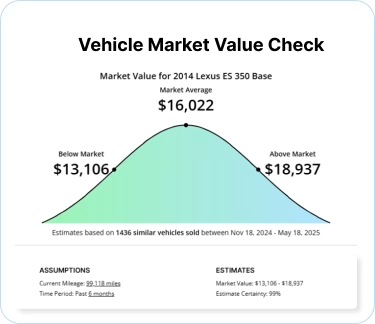
When new, the 2018 Yamaha YZ250 had an MSRP generally ranging from approximately $7,399 to $7,499.
Currently, used market prices for a 2018 Yamaha YZ250 can vary significantly based on condition, hours of use, modifications, and location. You can typically expect to find them in the range of $3,500 to $5,500.
The YZ250 has always held its value exceptionally well due to its reputation, the desirability of the two-stroke platform, and the relatively stable pricing Yamaha has maintained for this model over many years. Depreciation is present, but it's more gradual than for many other powersports vehicles. Factors affecting resale value include: a well-maintained engine with recent top-end service records, stock or high-quality aftermarket modifications, the condition of the plastics and suspension, and overall cosmetic appearance. Bikes that have been raced hard and poorly maintained will fetch lower prices, while exceptionally clean, low-hour examples can command a premium.
Currently, used market prices for a 2018 Yamaha YZ250 can vary significantly based on condition, hours of use, modifications, and location. You can typically expect to find them in the range of $3,500 to $5,500.
The YZ250 has always held its value exceptionally well due to its reputation, the desirability of the two-stroke platform, and the relatively stable pricing Yamaha has maintained for this model over many years. Depreciation is present, but it's more gradual than for many other powersports vehicles. Factors affecting resale value include: a well-maintained engine with recent top-end service records, stock or high-quality aftermarket modifications, the condition of the plastics and suspension, and overall cosmetic appearance. Bikes that have been raced hard and poorly maintained will fetch lower prices, while exceptionally clean, low-hour examples can command a premium.
2018 Yamaha YZ250 Cost of Ownership
Owning a 2018 Yamaha YZ250 can be considered moderately economical for its performance class, though it's not without costs. Insurance is typically inexpensive, often less than a street bike, as it's primarily for off-road use. Fuel costs will be higher than a four-stroke due to the nature of 2-stroke engines and premix. Maintenance is a significant factor; while parts are generally affordable, regular oil changes, air filter cleaning, and periodic top-end rebuilds are essential. Repairs can range from affordable for common wear items to more expensive if major engine work is needed. Overall, it's more economical than many high-performance dirt bikes, but requires a consistent budget for upkeep to ensure reliability.
2018 Yamaha YZ250 Fuel Efficiency
Fuel Type
Gasoline
Fuel Capacity
-
City Mileage
-
Highway Mileage
-
2018 Yamaha YZ250 Warranty
Basic
Original warranty
0 months / No data
Estimated remaining
Expired
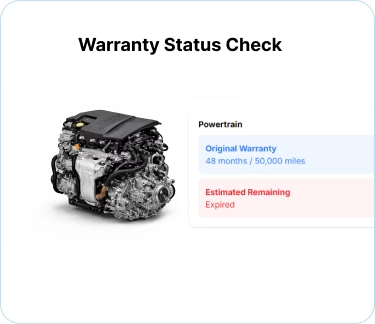
Powertrain
Original warranty
0 months / No data
Estimated remaining
Expired
Rust
Original warranty
0 months / No data
Estimated remaining
Expired
2018 Yamaha YZ250 Insurance
Insurance for a 2018 Yamaha YZ250 is moderately priced, reflecting its status as a Motorcycle with strong safety ratings and
reasonable repair costs.
How Does the 2018 Yamaha YZ250 Compare to Other Motorcycle?
The 2018 Yamaha YZ250 stands as a benchmark in the 250cc two-stroke motocross class, facing competition primarily from KTM and Kawasaki.
Performance: In terms of performance, the YZ250 is renowned for its torquey and tractable two-stroke powerband, offering a thrilling and engaging ride. It excels in agility and handling, making it a favorite for riders who appreciate the direct feel of a two-stroke. KTM's 250 SX offers a more aggressive, top-end focused power delivery and often slightly lighter weight. Kawasaki's KX250 is a four-stroke, offering a different power delivery character with broader torque and less maintenance of the two-stroke engine, but generally lacks the raw excitement of the YZ250.
Features: Feature-wise, the YZ250 is relatively basic, focusing on core functionality. Its Kayaba SSS suspension is often considered superior to its rivals at the time, offering excellent performance and adjustability out of the box. KTM bikes often come with higher-spec components like hydraulic clutches and sometimes Brembo brakes, but their plastics and ergonomics can be less refined than Yamaha's. The Kawasaki KX250, being a four-stroke, offers features like fuel injection and sometimes electronic launch control, which the YZ250 lacks.
Reliability: Yamaha's two-stroke engines, including the YZ250, have a legendary reputation for reliability and durability, provided they are maintained. KTM two-strokes are also robust but sometimes require more specific maintenance knowledge. Four-stroke engines, like the Kawasaki's, have different maintenance needs (e.g., valve adjustments) and can be more complex if issues arise, although they don't require the same frequency of top-end rebuilds as a two-stroke.
Price: When new, the YZ250 was typically priced competitively within the 250cc motocross segment. Used, it generally holds its value very well, often more so than comparable four-strokes. KTMs can sometimes be more expensive, both new and used, due to their premium components. The KX250's price on the used market can vary widely.
Recommendations:
Performance: In terms of performance, the YZ250 is renowned for its torquey and tractable two-stroke powerband, offering a thrilling and engaging ride. It excels in agility and handling, making it a favorite for riders who appreciate the direct feel of a two-stroke. KTM's 250 SX offers a more aggressive, top-end focused power delivery and often slightly lighter weight. Kawasaki's KX250 is a four-stroke, offering a different power delivery character with broader torque and less maintenance of the two-stroke engine, but generally lacks the raw excitement of the YZ250.
Features: Feature-wise, the YZ250 is relatively basic, focusing on core functionality. Its Kayaba SSS suspension is often considered superior to its rivals at the time, offering excellent performance and adjustability out of the box. KTM bikes often come with higher-spec components like hydraulic clutches and sometimes Brembo brakes, but their plastics and ergonomics can be less refined than Yamaha's. The Kawasaki KX250, being a four-stroke, offers features like fuel injection and sometimes electronic launch control, which the YZ250 lacks.
Reliability: Yamaha's two-stroke engines, including the YZ250, have a legendary reputation for reliability and durability, provided they are maintained. KTM two-strokes are also robust but sometimes require more specific maintenance knowledge. Four-stroke engines, like the Kawasaki's, have different maintenance needs (e.g., valve adjustments) and can be more complex if issues arise, although they don't require the same frequency of top-end rebuilds as a two-stroke.
Price: When new, the YZ250 was typically priced competitively within the 250cc motocross segment. Used, it generally holds its value very well, often more so than comparable four-strokes. KTMs can sometimes be more expensive, both new and used, due to their premium components. The KX250's price on the used market can vary widely.
Recommendations:
- Similar Alternative: If you specifically want a 250cc two-stroke motocross bike with excellent handling and a strong, reliable engine, the 2018 Yamaha YZ250 is one of the best options. Other similar alternatives would be a 2018 KTM 250 SX (for a more aggressive engine and potentially lighter feel) or older YZ250 models which share much of the same platform.
- Better Alternative (depending on needs): If you prefer the ease of maintenance, broader torque, and modern features like fuel injection, the 2018 Kawasaki KX250 (or other 250cc four-stroke motocross bikes from Honda, Suzuki, or Husqvarna) would be a better choice. However, you'll sacrifice the raw, exciting power delivery and simplicity of the two-stroke experience. If off-road riding is your primary goal, the YZ250X variant offers features more suited to that discipline.
Final Verdict: Is the 2018 Yamaha YZ250 a Good Motorcycle?
The 2018 Yamaha YZ250 is ideally suited for intermediate to expert motocross riders who appreciate the raw, engaging power and handling characteristics of a two-stroke engine. It's also a fantastic choice for riders looking for a durable, relatively simple, and fun machine for trail riding (though the YZ250X is more purpose-built for that).
It is absolutely worth buying, especially on the used market. Its enduring platform means maintenance parts are readily available, and its resale value remains strong. Buying used is highly recommended, as new models are rare and expensive. Look for a well-maintained example with documented service history. It offers a pure, unadulterated dirt biking experience that many riders find more rewarding than modern four-strokes. If you value simplicity, accessible performance, and a bike that’s a joy to ride and maintain, the YZ250 is a superb investment.