
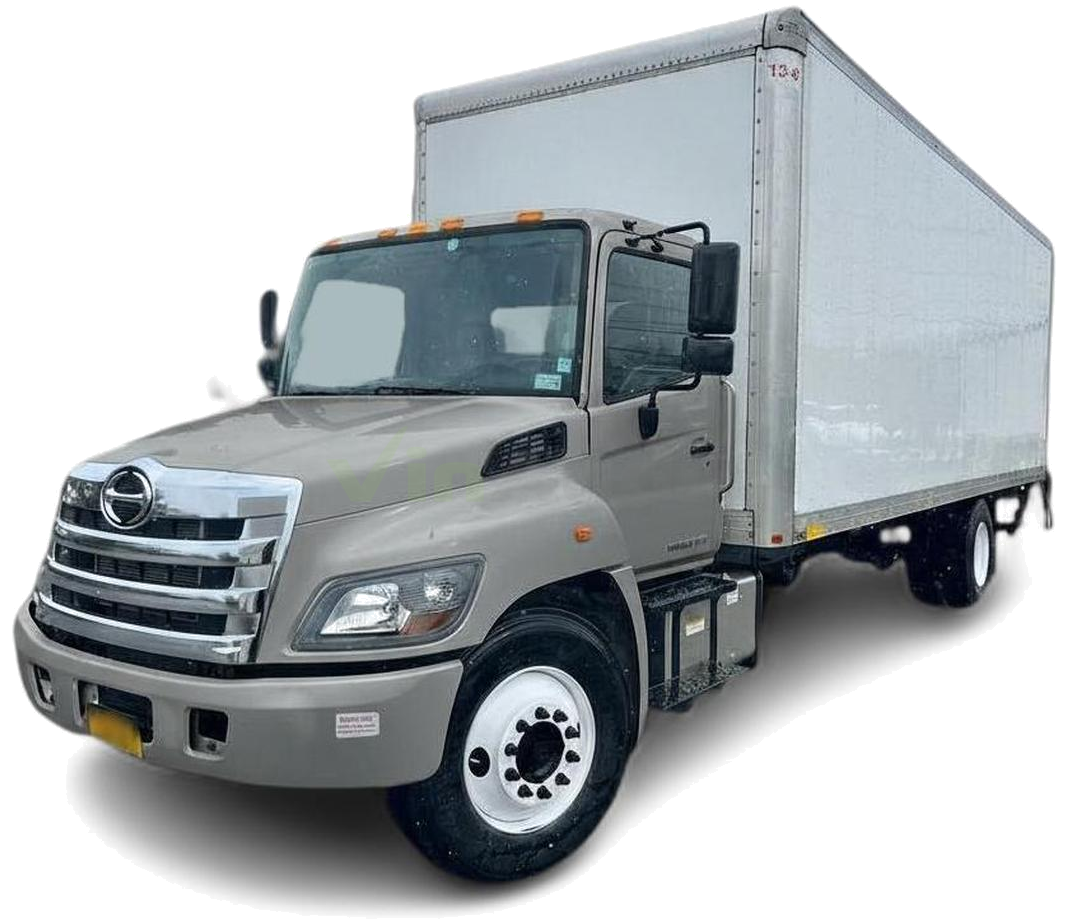
The Good
The 2020 Hino 338 excels in practicality with its exceptional reliability and fuel efficiency, appealing to the logical business owner. Emotionally, its robust and functional design provides a sense of security and dependability for demanding tasks, while the comfortable cabin enhances driver productivity on long hauls.
The Bad
Potential owners of the 2020 Hino 338 should be aware of possible DEF (Diesel Exhaust Fluid) system issues and occasional transmission glitches. Some users have reported less refined interior materials compared to competitors, which might impact long-term cabin wear and driver comfort on extended journeys.
2020 Hino 338: Quick Overview
- Engine Options: The 2020 Hino 338 typically features a Hino J08E Series engine. The primary engine offered is a 7.7-liter inline 6-cylinder turbocharged diesel engine.
- Horsepower: The J08E engine generally produces around 240 horsepower.
- Torque: Maximum torque output is usually in the vicinity of 560 lb-ft, providing ample pulling power for vocational applications.
- Fuel Economy: Fuel economy for Class 7 trucks like the Hino 338 is highly variable due to load, terrain, and body type. However, Hino is known for its competitive fuel efficiency in its class, often cited in the range of 8-12 miles per gallon (MPG).
- 0-60 Times: Specific 0-60 mph times are rarely published or relevant for commercial trucks, as their performance is measured by load capacity and operational efficiency rather than acceleration.
- Towing Capacity: The 2020 Hino 338, as a chassis cab, is designed for a Gross Vehicle Weight Rating (GVWR) that can exceed 33,000 lbs, allowing for substantial towing and hauling capabilities depending on the configured body and trailer.
- Trim-Level Features: As a chassis cab, the Hino 338 does not have traditional trim levels like passenger vehicles. Features are more about configuration and options:
- Standard Cab: Features a functional and durable interior designed for commercial use. Includes basic amenities for driver comfort and operational control.
- Transmission: Typically offered with an Allison 6-speed automatic transmission, known for its smooth shifting and reliability in demanding conditions.
- Braking System: Equipped with hydraulic disc brakes all around, with ABS as standard for enhanced safety.
- Suspension: Heavy-duty front and rear suspension designed to handle significant loads.
- Body Mounting Capabilities: The chassis is designed to accommodate a wide variety of vocational bodies, with various wheelbase options available to suit specific business needs.
- Optional Features: Depending on the dealer and configuration, options might include enhanced infotainment systems, air conditioning, power windows and locks (though often manual in base commercial trims), and advanced telematics for fleet management.
2020 Hino 338 Specifications
Vehicle Information
| Year | 2020 |
| Make | Hino |
| Model | 338 |
| Trim | - |
| Style | - |
| Type | Truck |
| Category | - |
Manufacturing Details
| Made In | United States |
| Manufacturing City | MINERAL WELLS |
Dimensions
| Doors | - |
| Curb Weight | - |
| Gross Vehicle Weight Rating | 14968.54 kg |
| Overall Height | - |
| Overall Length | - |
| Overall Width | - |
| Wheelbase Length | - |
| Standard Seating | - |
Engine & Performance
| Engine | 7.6L I6 |
| Engine Size | 7.6L |
| Engine Cylinders | 6 |
| Transmission | semi-Automatic |
| Transmission Type | Automatic |
| Transmission Speeds | - |
| Drivetrain | Rear-Wheel Drive |
Additional Features
| Anti-Brake System | - |
| Steering Type | - |
Pricing
| Manufacturer Suggested Retail Price (MSRP) | - |
| Invoice Price | - |
| Delivery Charges | - |
Vehicle History Report
Specifications
History
Events
History Check
Check
Check
Check
Check
Listings
Recalls
Check
Analysis
What Problems Does the 2020 Hino 338 Have?
Another area that sometimes surfaces in owner discussions pertains to the transmission. While the Allison automatic transmissions are generally robust, occasional reports of rough shifting or electronic control module (ECM) issues can occur, impacting drivability and requiring dealership attention. Regular maintenance and adherence to recommended service intervals are crucial to mitigating such transmission-related problems.
In terms of recalls for the 2020 model year, these are typically safety-related and can vary. It is always advisable to check the National Highway Traffic Safety Administration (NHTSA) website for any specific recalls pertaining to a particular VIN. For instance, past recalls on Hino trucks have sometimes involved issues with the braking system, steering components, or fuel system integrity. While there might not be a widespread, endemic problem with the 2020 Hino 338, individual component failures can happen, as with any vehicle.
Long-term reliability is a strong suit for Hino, and many 338 models are known to last for hundreds of thousands of miles with proper care. However, potential weaknesses over time can include wear and tear on components like the DPF (Diesel Particulate Filter), which requires regeneration cycles or eventual cleaning/replacement. The chassis and suspension components are built tough, but heavy use, especially in demanding vocational applications, can accelerate wear.
Model year specific issues are less common with Hino compared to some other manufacturers, as they tend to refine their platforms over longer periods. However, it's always prudent to research owner forums and reviews for the specific model year of interest to gather real-world feedback from users who have experienced the truck in daily operation.
How long will the 2020 Hino 338 last?
What Technology & Safety Features are Included?
Standard Technology & Safety:
- Digital Information Display: The instrument cluster usually includes a digital display that provides critical information such as fuel level, engine status, mileage, and warning indicators.
- Basic Audio System: Most Hino 338 models come equipped with a functional AM/FM radio and possibly an auxiliary input for connecting external devices. Bluetooth connectivity for hands-free calling and audio streaming is often an option or standard on higher configurations.
- HVAC System: A robust heating, ventilation, and air conditioning (HVAC) system is standard, crucial for driver comfort in various operating conditions.
- Power Steering: Power steering is standard to reduce driver fatigue during maneuvering.
- ABS: Anti-lock Braking System (ABS) is a standard safety feature, enhancing stability and control during emergency braking.
- Visibility: Large mirrors and ample glass provide excellent outward visibility, a critical safety aspect for commercial drivers operating in busy environments.
- Lighting: Standard halogen headlights and taillights ensure adequate illumination.
Optional Features:
While Hino trucks are highly configurable, options can extend to:
- Navigation System: Some higher-end configurations or dealer-installed options might include a basic navigation system.
- Telematics: Advanced telematics systems are increasingly common for fleet management, allowing for GPS tracking, driver behavior monitoring, and diagnostic data reporting.
- Backup Camera: A backup camera system can be an optional add-on for improved safety when reversing.
- Upgraded Audio: Some dealers may offer more advanced audio systems with CD players or additional speakers.
Driver-Assistance & Crash-Test Ratings:
Dedicated advanced driver-assistance systems (ADAS) such as lane departure warning, adaptive cruise control, or automatic emergency braking are generally not standard or widely available on the 2020 Hino 338. Commercial trucks in this class prioritize robust construction and fundamental safety features over the sophisticated electronic aids found in passenger vehicles. Crash-test ratings for commercial trucks like the Hino 338 are not typically conducted or published by organizations like the IIHS or NHTSA in the same manner as passenger cars. The design emphasis is on structural integrity to withstand the demands of heavy work and protect occupants in the event of an incident.
What Colors Options are Available?
2020 Hino 338 Prices and Market Value
On the used market, a 2020 Hino 338 can currently be found for prices ranging from approximately $45,000 to $70,000, heavily dependent on mileage, overall condition, the type of body installed (if any), and maintenance history.
Depreciation for commercial trucks is generally less steep than for passenger vehicles, especially for well-maintained and popular models like the Hino 338. Factors affecting resale value include: the remaining lifespan of key components like the engine and transmission, the condition of the chassis and body, overall mileage, and the current market demand for specific vocational trucks. Trucks with specialized bodies (e.g., refrigeration units, dump beds) may depreciate differently based on the utility and demand for that specific function.
2020 Hino 338 Cost of Ownership
2020 Hino 338 Fuel Efficiency
2020 Hino 338 Warranty
Basic
Powertrain
Rust
2020 Hino 338 Insurance
reasonable repair costs.
How Does the 2020 Hino 338 Compare to Other Truck?
Performance: Hino 338's 7.7-liter J08E engine offers a solid balance of horsepower (around 240 hp) and torque (around 560 lb-ft), making it competitive for various vocational tasks. Freightliner M2 106 and International MV Series often offer a wider range of engine options, including more powerful Cummins or Detroit Diesel engines, which might provide a slight edge in heavy-duty hauling or sustained high-speed operation. Isuzu's offerings, particularly their diesel engines, are known for their smoothness and efficiency.
Features: In terms of features, the 2020 Hino 338 prioritizes essential functionality. Rivals like the Freightliner M2 106 might offer slightly more advanced cabin ergonomics and a broader array of optional technology and driver-assistance features, though these are often at a premium. Isuzu trucks are also known for their driver-friendly cabins. The Hino 338's strength lies in its straightforward, durable design.
Reliability: Hino has a strong reputation for reliability, and the 338 is no exception. Its J08E engine and Allison transmission are proven workhorses. International trucks also have a long history of robust performance, though some model years have faced specific issues. Freightliner, as a major player, generally offers reliable vehicles, but complexity can sometimes lead to more intricate repairs. Isuzu trucks are renowned for their fuel efficiency and dependability, particularly in lighter-duty applications within the commercial sphere.
Price: The Hino 338 typically offers a competitive price point for its capabilities, often being more affordable than comparable Freightliner or International models when similarly equipped with a vocational body. Isuzu trucks can also be attractively priced, especially for their efficiency ratings.
Alternatives:
- Freightliner M2 106: A strong all-rounder with more engine choices and potential for advanced features, often at a higher price.
- International MV Series: Offers robust performance and a wide range of configurations, a direct competitor in terms of capability.
- Isuzu F-Series: Known for excellent fuel economy and a comfortable ride, particularly good for applications where efficiency is paramount.
The 2020 Hino 338 remains a compelling choice for businesses seeking a reliable, durable, and cost-effective medium-duty truck. While competitors may offer more advanced technology or raw power, the Hino 338's blend of proven mechanics, operational efficiency, and reasonable pricing makes it a smart pick for many vocational applications.
Final Verdict: Is the 2020 Hino 338 a Good Truck?
It is worth buying, especially if acquired in good condition with well-documented maintenance history. Buying used presents a significant value proposition, as the initial depreciation has already occurred, making it accessible for businesses with tighter budgets. New purchases offer the latest configurations and full warranty coverage, which can be beneficial for critical operations.
For most users, the standard configurations with the J08E engine and Allison transmission offer an excellent balance of performance and efficiency. While advanced tech features are minimal, its core strengths lie in its robust engineering and long-term serviceability, making it a sound investment for businesses needing a truck that can go the distance.

Drew B
Drew is a seasoned automotive expert and contributor to VinCheck.info. With nearly 15 years of experience as a former Porsche technician, he brings a wealth of hands-on knowledge to his writing. Born in North Carolina, a region renowned for its deep-rooted NASCAR culture, Drew developed a passion for cars early in life, often building and working on vehicles from a young age. At VINCheck, Drew leverages his extensive technical background to provide in-depth analyses of various vehicles. His articles often focus on engine performance, reliability, and maintenance insights, offering readers practical information grounded in real-world experience. Some of his notable contributions include reviews on the Mazda CX-5's longevity and detailed examinations of engine options for models like the 2011 Toyota Camry and Tacoma