The 2003 Yamaha YZ250 is a highly regarded two-stroke motocross bike with a rich racing heritage. As part of a long-standing YZ250 lineage dating back decades, this model year represents a refined iteration. It's a pure dirt bike, designed exclusively for off-road competition and recreational riding. While Yamaha typically doesn't offer distinct 'trims' for its motocross bikes in the same way cars do, specific years often received performance upgrades. New pricing in 2003 was in the range of $6,000-$7,000, but its popularity stems from its potent two-stroke power delivery, nimble handling, and legendary reliability, making it a favorite for both aspiring racers and seasoned enthusiasts.

The Good
The 2003 YZ250 boasts explosive two-stroke performance, celebrated reliability, and intuitive handling. Its aggressive design appeals to riders seeking thrill, while its robust construction and enduring performance offer practical, long-term value.
The Bad
Potential weaknesses include the inherent maintenance demands of a two-stroke engine, requiring more frequent top-end rebuilds than a four-stroke. Clutch wear can be an issue with aggressive riding, and suspension tuning might need adjustments for different rider weights and preferences.
2003 Yamaha YZ250: Quick Overview
- Engine Options: The 2003 Yamaha YZ250 features a single, potent engine option.
- Engine Type: Liquid-cooled, 249cc, 2-stroke, reed-valve inducted, single-cylinder.
- Bore x Stroke: 66.4mm x 72mm.
- Carburetion: Keihin PWK38S, 38mm.
- Horsepower: While official figures vary and are often not directly released by manufacturers for off-road bikes, the 2003 YZ250 is estimated to produce around 45-50 horsepower at the crank. This is a significant amount of power for its displacement, delivering thrilling acceleration.
- Fuel Economy: Fuel economy is not a primary design consideration for motocross bikes. Riders can expect to get approximately 10-15 miles per gallon, depending heavily on riding style and terrain. The fuel tank capacity is typically around 2.1 gallons, offering a limited range suitable for race or trail riding sessions.
- 0-60 Times: 0-60 mph times are not a standard metric for motocross bikes as they are designed for rapid acceleration and maneuverability in off-road conditions rather than straight-line speed tests. However, its acceleration off the line is extremely quick, allowing it to get out of corners and up obstacles rapidly.
- Towing Capacity: Not applicable. The YZ250 is a motorcycle designed for riding, not for towing.
- Trim-Level Features: Yamaha typically offers the YZ250 in a single, performance-oriented configuration each model year, with optional accessories available. Key features for the 2003 model include:
- Aluminum frame for a lightweight and rigid chassis.
- Advanced suspension system with a fully adjustable Kayaba front fork and a Kayaba rear shock absorber, providing excellent control and impact absorption over rough terrain.
- Powerful disc brakes front and rear for strong stopping power.
- Durable aluminum wheels.
- High-performance exhaust system tuned for optimal power delivery.
- Grippy tires designed for off-road traction.
- Protective skid plate.
- Lightweight fuel tank.
- Comfortable and durable seat.
2003 Yamaha YZ250 Specifications
Vehicle Information
| Year | 2003 |
| Make | Yamaha |
| Model | YZ250 |
| Trim | - |
| Style | - |
| Type | Motorcycle |
| Category | Motorcycle |
Manufacturing Details
| Made In | Japan |
| Manufacturing City | HAMAMATSU |
Dimensions
| Doors | - |
| Curb Weight | - |
| Gross Vehicle Weight Rating | - |
| Overall Height | - |
| Overall Length | - |
| Overall Width | - |
| Wheelbase Length | - |
| Standard Seating | - |
Engine & Performance
| Engine | 249CC |
| Engine Size | 249L |
| Engine Cylinders | 1 |
| Transmission | - |
| Transmission Type | - |
| Transmission Speeds | - |
| Drivetrain | - |
Additional Features
| Anti-Brake System | - |
| Steering Type | - |
Pricing
| Manufacturer Suggested Retail Price (MSRP) | - |
| Invoice Price | - |
| Delivery Charges | - |
Vehicle History Report
Vehicle
Specifications
Specifications
Ownership
History
History
All History
Events
Events
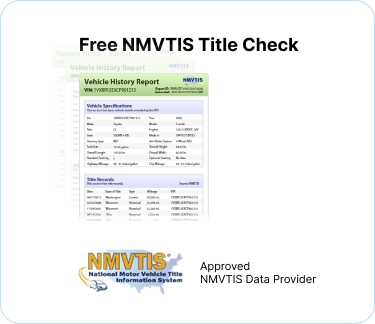
NMVTIS Title
History Check
History Check
Salvage/Rebuilt
Check
Check
Accident
Check
Check
Theft
Check
Check
Open Lien
Check
Check
Past Sale
Listings
Listings
Safety
Recalls
Recalls
Odometer
Check
Check
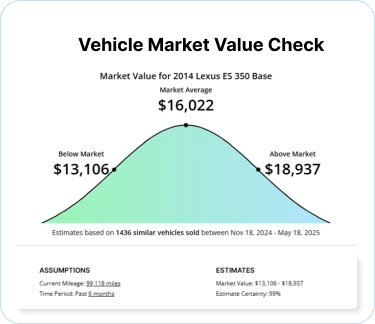
Market Price
Analysis
Analysis
What Problems Does the 2003 Yamaha YZ250 Have?
The 2003 Yamaha YZ250 is generally considered a very reliable machine, a testament to Yamaha's robust engineering. However, like any performance off-road motorcycle, especially a two-stroke, certain components are subject to wear and tear and can present issues if not properly maintained.
One of the most common areas to watch for is the clutch. Aggressive riding, especially in sandy conditions or during prolonged use without proper adjustment, can lead to premature clutch wear. This can manifest as slipping or a weak engagement. Regular oil changes and inspection of clutch plates and springs are crucial.
The two-stroke engine, while powerful and simpler than four-strokes, requires more frequent top-end maintenance. Piston and ring wear are expected over time and mileage, and a top-end rebuild (piston, rings, gaskets) is a routine maintenance item for these bikes, typically recommended every 50-100 hours of hard use, depending on riding conditions and how the bike is ridden. Neglecting this can lead to a loss of power and potential engine damage.
The power valve system, crucial for optimizing the engine's powerband, can also require attention. Carbon buildup can affect its operation, leading to reduced performance. Regular cleaning and inspection of the power valve assembly are important.
Cooling system issues, while not rampant, can occur if coolant levels are not maintained or if the radiator becomes clogged or damaged. Overheating can lead to significant engine damage.
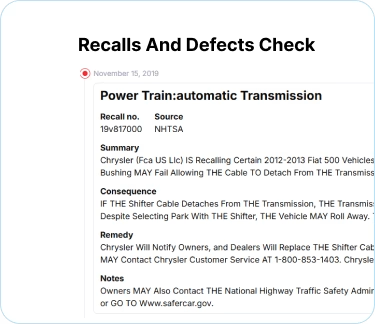
Regarding recalls, Yamaha, like other manufacturers, issues recalls for safety-related defects. However, for a 2003 model, any relevant recalls would have been addressed decades ago. It's always advisable to check the manufacturer's website or NHTSA for any outstanding recalls for a specific VIN, though it's highly unlikely for a vehicle of this age.
Long-term reliability of the 2003 YZ250 is excellent *if* it has been maintained meticulously. Owners who adhere to service intervals, use quality parts and fluids, and address wear items proactively often find their YZ250s remain strong performers for many years and numerous riding hours. The aluminum frame is durable, and the chassis components are generally robust. The primary 'weakness' is the inherent nature of a high-performance two-stroke requiring dedicated maintenance.
One of the most common areas to watch for is the clutch. Aggressive riding, especially in sandy conditions or during prolonged use without proper adjustment, can lead to premature clutch wear. This can manifest as slipping or a weak engagement. Regular oil changes and inspection of clutch plates and springs are crucial.
The two-stroke engine, while powerful and simpler than four-strokes, requires more frequent top-end maintenance. Piston and ring wear are expected over time and mileage, and a top-end rebuild (piston, rings, gaskets) is a routine maintenance item for these bikes, typically recommended every 50-100 hours of hard use, depending on riding conditions and how the bike is ridden. Neglecting this can lead to a loss of power and potential engine damage.
The power valve system, crucial for optimizing the engine's powerband, can also require attention. Carbon buildup can affect its operation, leading to reduced performance. Regular cleaning and inspection of the power valve assembly are important.
Cooling system issues, while not rampant, can occur if coolant levels are not maintained or if the radiator becomes clogged or damaged. Overheating can lead to significant engine damage.
Regarding recalls, Yamaha, like other manufacturers, issues recalls for safety-related defects. However, for a 2003 model, any relevant recalls would have been addressed decades ago. It's always advisable to check the manufacturer's website or NHTSA for any outstanding recalls for a specific VIN, though it's highly unlikely for a vehicle of this age.
Long-term reliability of the 2003 YZ250 is excellent *if* it has been maintained meticulously. Owners who adhere to service intervals, use quality parts and fluids, and address wear items proactively often find their YZ250s remain strong performers for many years and numerous riding hours. The aluminum frame is durable, and the chassis components are generally robust. The primary 'weakness' is the inherent nature of a high-performance two-stroke requiring dedicated maintenance.
How long will the 2003 Yamaha YZ250 last?
Estimating precise mileage for a 2003 Yamaha YZ250 is challenging as most are ridden off-road, and odometers are not standard. However, based on owner anecdotal evidence and maintenance logs for similar two-stroke dirt bikes, a well-maintained YZ250 can last for thousands of riding hours. A common benchmark for major engine work (top-end rebuild) is often cited between 50-100 hours of aggressive use. This means a bike ridden recreationally a few times a month could see significant service life over many years.
Long-term durability is high, particularly for the chassis, frame, and suspension components, provided they are not subjected to extreme abuse and are kept clean. The aluminum frame is inherently resistant to corrosion. The primary weakness over time, as mentioned, is the two-stroke engine's need for regular internal component replacement (piston, rings, seals) to maintain optimal performance and prevent catastrophic failure. Clutch wear is also a factor. With consistent, proper maintenance, including regular top-end rebuilds and clutch inspections, the 2003 YZ250 can remain a potent and enjoyable machine for well over a decade of ownership.
What Technology & Safety Features are Included?
The 2003 Yamaha YZ250 is a no-frills, high-performance motocross motorcycle, and as such, it is devoid of the technology, entertainment, and driver-assistance features found in modern cars or even some street-legal motorcycles. Its focus is purely on off-road capability and rider control.
Built-in Tech: The technology present is mechanical and performance-oriented. This includes a sophisticated suspension system (Kayaba front forks and rear shock) designed for absorbing impacts and maintaining traction, a potent liquid-cooled two-stroke engine with a reed-valve induction system and a responsive carburetor (Keihin PWK38S), and a robust braking system with hydraulic disc brakes front and rear for effective stopping power. The chassis is an aluminum frame, offering a balance of lightness and rigidity. There are no electronic rider aids, no digital dashboards (typically a simple mechanical hour meter might be an optional add-on), and certainly no entertainment systems.
Entertainment: The 'entertainment' for a rider of a YZ250 comes from the thrill of the ride, the sound of the two-stroke engine, and the challenge of navigating terrain.
Driver-Assistance Features: These are non-existent. The YZ250 requires direct rider input for all operations, such as throttle control, clutch operation, braking, and steering. There are no anti-lock braking systems (ABS), traction control, stability control, or cruise control.
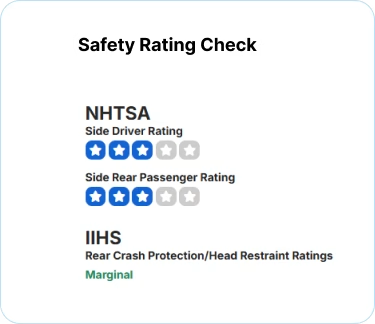
Safety Features: Safety features are limited to the functional aspects of the motorcycle's design. The powerful disc brakes are its primary safety system for avoiding obstacles. The suspension is designed to improve control and stability over rough terrain, indirectly contributing to rider safety. There are no airbags, seatbelts, or advanced safety structures. Crash-test ratings are not applicable to off-road motorcycles as they are not subjected to the same regulatory testing as road vehicles. The responsibility for rider safety lies almost entirely with the rider's skill, protective gear, and adherence to safe riding practices. Optional features typically revolve around protection (e.g., handguards, skid plates) or performance enhancements, not electronic safety systems.
Built-in Tech: The technology present is mechanical and performance-oriented. This includes a sophisticated suspension system (Kayaba front forks and rear shock) designed for absorbing impacts and maintaining traction, a potent liquid-cooled two-stroke engine with a reed-valve induction system and a responsive carburetor (Keihin PWK38S), and a robust braking system with hydraulic disc brakes front and rear for effective stopping power. The chassis is an aluminum frame, offering a balance of lightness and rigidity. There are no electronic rider aids, no digital dashboards (typically a simple mechanical hour meter might be an optional add-on), and certainly no entertainment systems.
Entertainment: The 'entertainment' for a rider of a YZ250 comes from the thrill of the ride, the sound of the two-stroke engine, and the challenge of navigating terrain.
Driver-Assistance Features: These are non-existent. The YZ250 requires direct rider input for all operations, such as throttle control, clutch operation, braking, and steering. There are no anti-lock braking systems (ABS), traction control, stability control, or cruise control.
Safety Features: Safety features are limited to the functional aspects of the motorcycle's design. The powerful disc brakes are its primary safety system for avoiding obstacles. The suspension is designed to improve control and stability over rough terrain, indirectly contributing to rider safety. There are no airbags, seatbelts, or advanced safety structures. Crash-test ratings are not applicable to off-road motorcycles as they are not subjected to the same regulatory testing as road vehicles. The responsibility for rider safety lies almost entirely with the rider's skill, protective gear, and adherence to safe riding practices. Optional features typically revolve around protection (e.g., handguards, skid plates) or performance enhancements, not electronic safety systems.
What Colors Options are Available?
2003 Yamaha YZ250 Prices and Market Value
When new in 2003, the Yamaha YZ250 had an MSRP typically ranging between $6,000 and $7,000 USD.
Currently, the used market price for a 2003 Yamaha YZ250 can vary significantly, but you can often find them in the $2,000 to $4,000 range. This price is heavily influenced by the bike's condition, the number of hours on the engine, the quality of maintenance it has received, and any aftermarket modifications. A well-cared-for, low-hour example with original parts can command a higher price, while a heavily used or poorly maintained bike will be at the lower end.
The YZ250 line is known for its strong resale value compared to many other off-road motorcycles due to its enduring performance, reliability, and the continued demand for capable two-stroke machines. Depreciation has been relatively slow for these bikes, especially in recent years as enthusiasts seek out the unique riding experience of a two-stroke. Factors affecting resale value include: the presence of original plastics, the condition of the suspension and engine internals, and whether it has been raced extensively or used for casual trail riding.
Currently, the used market price for a 2003 Yamaha YZ250 can vary significantly, but you can often find them in the $2,000 to $4,000 range. This price is heavily influenced by the bike's condition, the number of hours on the engine, the quality of maintenance it has received, and any aftermarket modifications. A well-cared-for, low-hour example with original parts can command a higher price, while a heavily used or poorly maintained bike will be at the lower end.
The YZ250 line is known for its strong resale value compared to many other off-road motorcycles due to its enduring performance, reliability, and the continued demand for capable two-stroke machines. Depreciation has been relatively slow for these bikes, especially in recent years as enthusiasts seek out the unique riding experience of a two-stroke. Factors affecting resale value include: the presence of original plastics, the condition of the suspension and engine internals, and whether it has been raced extensively or used for casual trail riding.
2003 Yamaha YZ250 Cost of Ownership
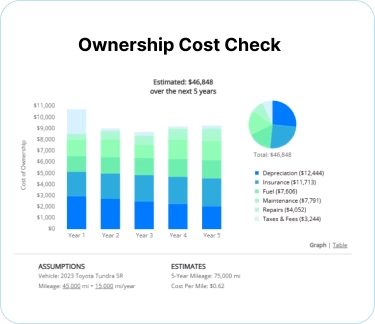
Ownership costs for a 2003 Yamaha YZ250 are moderate, leaning towards economical for its performance class, provided you are a DIY mechanic. Insurance is typically minimal as it's an off-road-only vehicle; many owners opt out of formal insurance. Fuel costs will depend on riding frequency and throttle discipline, but expect around 10-15 mpg with premium fuel. Maintenance is the significant factor: regular oil changes, air filter cleaning, and periodic top-end rebuilds (piston, rings) are essential and can range from $100-$300 for parts if done by the owner, or $500-$1000+ at a shop. Repairs can vary; clutch components are relatively inexpensive, while engine damage from neglect can be costly. Overall, it's cost-effective for the thrill it provides, especially if maintenance is handled by the owner.
2003 Yamaha YZ250 Fuel Efficiency
Fuel Type
Gasoline
Fuel Capacity
-
City Mileage
-
Highway Mileage
-
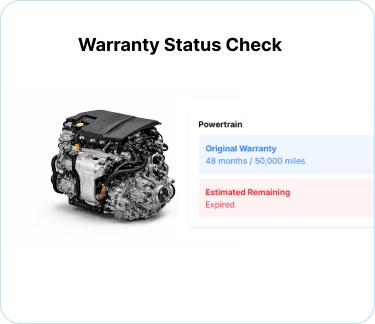
2003 Yamaha YZ250 Warranty
Basic
Original warranty
0 months / No data
Estimated remaining
Expired
Powertrain
Original warranty
0 months / No data
Estimated remaining
Expired
Rust
Original warranty
0 months / No data
Estimated remaining
Expired
2003 Yamaha YZ250 Insurance
Insurance for a 2003 Yamaha YZ250 is moderately priced, reflecting its status as a Motorcycle with strong safety ratings and
reasonable repair costs.
How Does the 2003 Yamaha YZ250 Compare to Other Motorcycle?
The 2003 Yamaha YZ250 competed in the highly competitive 250cc two-stroke motocross class against formidable rivals such as the Honda CR250R, Kawasaki KX250, and Suzuki RM250.
Performance: The YZ250 was renowned for its potent, broad powerband and excellent low-end torque for a 250cc two-stroke, making it very manageable and fun to ride. The Honda CR250R often offered a slightly peakier, more aggressive power delivery, while the KX250 was known for its snappy, rev-happy nature. The RM250 typically offered a strong mid-range hit. In terms of handling, the YZ250's aluminum frame provided a good balance of rigidity and compliance, offering predictable and stable handling. Rivals like the CR250R were often praised for their sharp handling, while the RM250 was lauded for its agility.
Features: Yamaha's YZ250 consistently featured high-quality components, including a robust Kayaba suspension that was often considered among the best in its class for stock performance. The aluminum frame was a key differentiator as it was introduced earlier than some competitors. Other bikes also featured high-quality suspension and lightweight frames, with specific brands sometimes offering slightly different tuning characteristics or chassis feel.
Reliability: Yamaha has a strong reputation for reliability, and the YZ250 is no exception. While all two-strokes require specific maintenance (top-end rebuilds), the YZ250 generally proved to be very durable and less prone to catastrophic failures than some of its peers when properly cared for. The Honda and Suzuki offerings were also generally reliable, though some model years of competitors might have had specific issues.
Price: New pricing was competitive across all Japanese brands. On the used market, the 2003 YZ250 typically held its value well, similar to or better than its contemporaries, due to its strong reputation.
Alternatives:
* Similar Alternatives: The Kawasaki KX250, Suzuki RM250, and Honda CR250R from the same era (2000-2007) are very similar in terms of purpose and capability. The choice often comes down to brand preference and specific performance characteristics.
* Better Alternatives (Modern): If seeking modern features and less maintenance, a newer four-stroke motocross bike (e.g., Yamaha YZ250F, Honda CRF250R, Kawasaki KX250F, KTM 250 SX-F) would offer electric start, broader powerbands, and longer intervals between engine rebuilds, but at a significantly higher cost and with a different riding feel. For maintaining the two-stroke experience with modern updates, consider a newer Yamaha YZ250 (models from 2007 onwards with significant updates) or other contemporary two-stroke models from KTM (150/250/300 SX/XC).
Performance: The YZ250 was renowned for its potent, broad powerband and excellent low-end torque for a 250cc two-stroke, making it very manageable and fun to ride. The Honda CR250R often offered a slightly peakier, more aggressive power delivery, while the KX250 was known for its snappy, rev-happy nature. The RM250 typically offered a strong mid-range hit. In terms of handling, the YZ250's aluminum frame provided a good balance of rigidity and compliance, offering predictable and stable handling. Rivals like the CR250R were often praised for their sharp handling, while the RM250 was lauded for its agility.
Features: Yamaha's YZ250 consistently featured high-quality components, including a robust Kayaba suspension that was often considered among the best in its class for stock performance. The aluminum frame was a key differentiator as it was introduced earlier than some competitors. Other bikes also featured high-quality suspension and lightweight frames, with specific brands sometimes offering slightly different tuning characteristics or chassis feel.
Reliability: Yamaha has a strong reputation for reliability, and the YZ250 is no exception. While all two-strokes require specific maintenance (top-end rebuilds), the YZ250 generally proved to be very durable and less prone to catastrophic failures than some of its peers when properly cared for. The Honda and Suzuki offerings were also generally reliable, though some model years of competitors might have had specific issues.
Price: New pricing was competitive across all Japanese brands. On the used market, the 2003 YZ250 typically held its value well, similar to or better than its contemporaries, due to its strong reputation.
Alternatives:
* Similar Alternatives: The Kawasaki KX250, Suzuki RM250, and Honda CR250R from the same era (2000-2007) are very similar in terms of purpose and capability. The choice often comes down to brand preference and specific performance characteristics.
* Better Alternatives (Modern): If seeking modern features and less maintenance, a newer four-stroke motocross bike (e.g., Yamaha YZ250F, Honda CRF250R, Kawasaki KX250F, KTM 250 SX-F) would offer electric start, broader powerbands, and longer intervals between engine rebuilds, but at a significantly higher cost and with a different riding feel. For maintaining the two-stroke experience with modern updates, consider a newer Yamaha YZ250 (models from 2007 onwards with significant updates) or other contemporary two-stroke models from KTM (150/250/300 SX/XC).
Final Verdict: Is the 2003 Yamaha YZ250 a Good Motorcycle?
The 2003 Yamaha YZ250 is an ideal choice for experienced motocross riders and aggressive trail riders who appreciate the raw power, engaging feel, and mechanical simplicity of a two-stroke engine. It is particularly well-suited for those who are comfortable performing regular maintenance, including top-end rebuilds. For riders looking for a thrill and a direct connection to the machine, this bike delivers.
It is absolutely worth buying if you can find one in good, well-maintained condition. The value proposition is high for a bike that offers such potent performance and legendary reliability.
Buying conditions: Focus on used models. A diligently maintained used YZ250, even with moderate hours, is a far better buy than a neglected one. Prioritize bikes that have a clear maintenance history. Avoid bikes that show excessive wear, especially on the engine cases, suspension components, or frame, which might indicate a history of hard racing or abuse. For its intended purpose, the 2003 YZ250 remains a fantastic, capable, and rewarding off-road motorcycle.
It is absolutely worth buying if you can find one in good, well-maintained condition. The value proposition is high for a bike that offers such potent performance and legendary reliability.
Buying conditions: Focus on used models. A diligently maintained used YZ250, even with moderate hours, is a far better buy than a neglected one. Prioritize bikes that have a clear maintenance history. Avoid bikes that show excessive wear, especially on the engine cases, suspension components, or frame, which might indicate a history of hard racing or abuse. For its intended purpose, the 2003 YZ250 remains a fantastic, capable, and rewarding off-road motorcycle.