
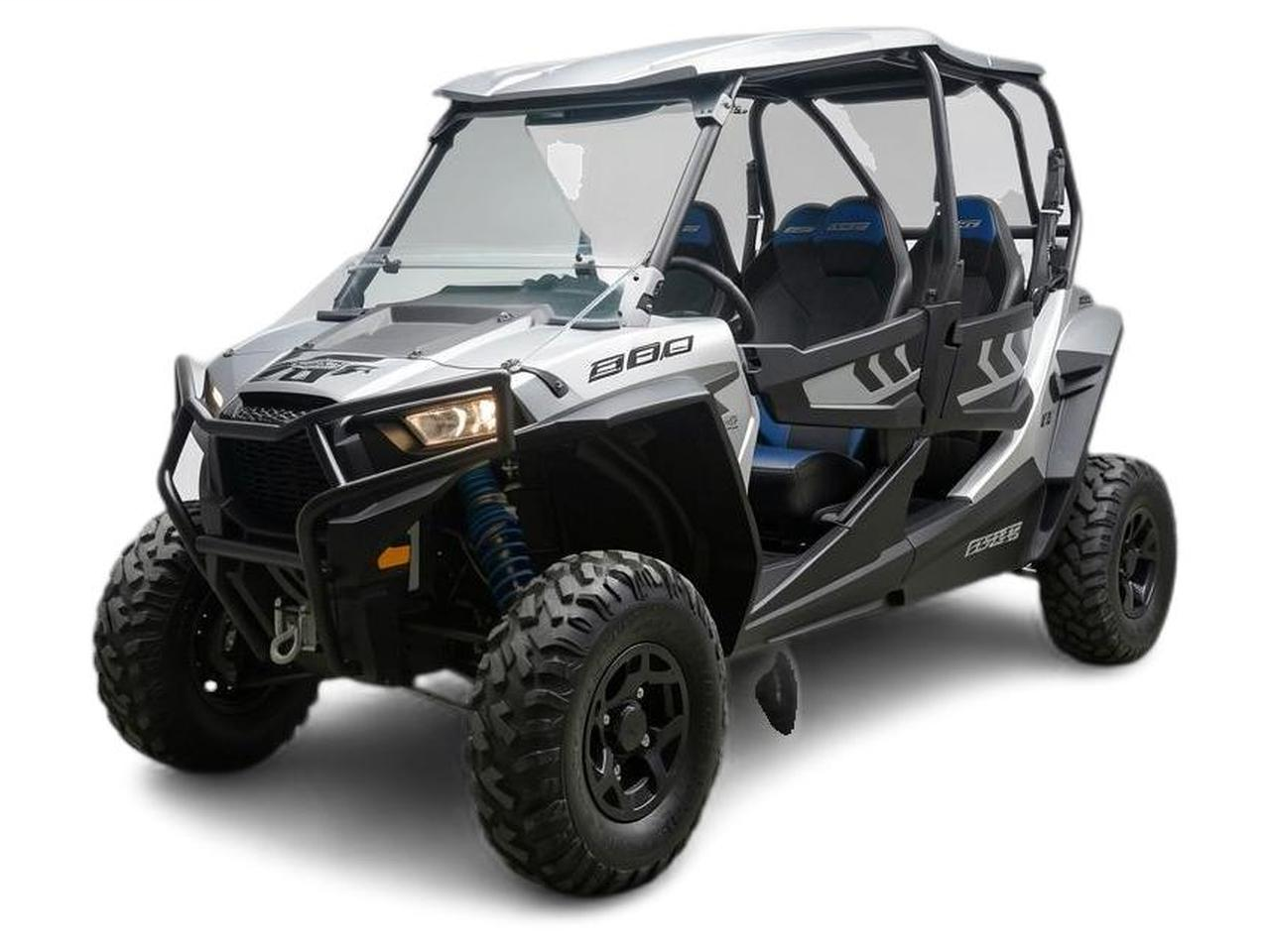
The Good
The 2017 RZR excels with exhilarating performance, robust reliability for demanding terrain, and surprisingly comfortable ride quality. Its aggressive design excites enthusiasts, while practical buyers appreciate its durable construction and capable all-around value for off-road adventures.
The Bad
Potential buyers should be aware of the 2017 RZR's tendency for driveline component wear, especially under aggressive use. Some owners report overheating issues in extreme conditions and a need for frequent maintenance on suspension and clutch systems.
2017 Polaris RZR: Quick Overview
- Engine Options: The 2017 Polaris RZR offered a range of potent engine configurations depending on the trim level.
- Horsepower:
- RZR XP 1000: 999cc ProStar DOHC 4-stroke twin-cylinder engine, producing approximately 110 horsepower.
- RZR S 900: 875cc ProStar SOHC 4-stroke twin-cylinder engine, delivering around 75 horsepower.
- RZR 570: 567cc ProStar SOHC 4-stroke twin-cylinder engine, offering about 44 horsepower.
- Fuel Economy: Fuel economy figures vary significantly based on engine size, terrain, and driving style. Generally, expect mileage in the range of 10-18 MPG. Specific EPA estimates are not typically provided for these off-road vehicles.
- 0-60 Times: While official 0-60 mph times are not commonly published for RZRs, the more powerful trims like the XP 1000 are known for rapid acceleration, capable of reaching 60 mph in the low to mid-5-second range for aggressive riders.
- Towing Capacity: Towing capacity is generally not a primary design feature or focus for Polaris RZR models, as they are built for recreational trail riding and performance rather than utility tasks. However, some models may have a limited towing capacity, typically around 500-750 lbs for light utility purposes.
- Trim-Level Features:
- RZR XP 1000: This top-tier model boasted features like Walker Evans® Needle Shocks, a stronger drivetrain, premium seats, electronic power steering (EPS), a digital display, and often aggressive styling with larger tires and suspension travel. Available in 2-seat and 4-seat (XP 4 1000) configurations.
- RZR S 900: Offered a balance of performance and agility with its 75 hp engine, power steering, improved suspension compared to base models, and more aggressive tires. Also available in 2-seat and 4-seat (S 900 4) versions.
- RZR 570: The entry-level option, providing capable performance for recreational trail riding with its 44 hp engine, power steering, and more compact design. Primarily a 2-seat model.
2017 Polaris RZR Specifications
Vehicle Information
| Year | 2017 |
| Make | Polaris |
| Model | RZR |
| Trim | - |
| Style | - |
| Type | Motorcycle |
| Category | - |
Manufacturing Details
| Made In | Taiwan |
| Manufacturing City | TAINAN |
Dimensions
| Doors | - |
| Curb Weight | - |
| Gross Vehicle Weight Rating | - |
| Overall Height | - |
| Overall Length | - |
| Overall Width | - |
| Wheelbase Length | - |
| Standard Seating | - |
Engine & Performance
| Engine | 169cc 1cyl |
| Engine Size | 169L |
| Engine Cylinders | 1 |
| Transmission | - |
| Transmission Type | - |
| Transmission Speeds | - |
| Drivetrain | - |
Additional Features
| Anti-Brake System | - |
| Steering Type | - |
Pricing
| Manufacturer Suggested Retail Price (MSRP) | - |
| Invoice Price | - |
| Delivery Charges | - |
Vehicle History Report
Specifications
History
Events
History Check
Check
Check
Check
Check
Listings
Recalls
Check
Analysis
What Problems Does the 2017 Polaris RZR Have?
Another area of concern for some 2017 RZRs is the potential for overheating, particularly in hot climates or during prolonged high-speed operation. This can sometimes be linked to radiator performance or coolant flow issues. The clutch system also requires regular maintenance and can be a point of failure if not properly cared for or if subjected to excessive abuse.
While the 2017 model year didn't have widespread, model-defining recalls that impacted all units, it's crucial to check for any outstanding recalls specific to the VIN. Polaris has issued recalls in the past for various RZR components, including braking systems and fuel lines, so vigilance is key. For long-term reliability, owners often stress the importance of consistent and thorough maintenance. This includes regular fluid changes (oil, coolant, transmission fluid), inspecting and tightening suspension components, checking belt condition, and cleaning air filters. Neglecting these can accelerate wear and lead to more significant problems.
Some specific to the 2017 model year, and consistent with other ProStar engine-equipped RZRs, may include occasional issues with starter motors or charging systems, though these are less prevalent than driveline concerns. Buyers should be prepared for the possibility of repairs related to the transmission and clutch system, especially on high-mileage or heavily used units.
How long will the 2017 Polaris RZR last?
What Technology & Safety Features are Included?
Entertainment options are typically very basic. While some higher-end trims might have pre-wired options for accessories like Bluetooth speakers or aftermarket stereos, integrated entertainment systems like touchscreens or premium audio were not standard offerings in 2017. The focus is on the auditory experience of the ride itself and the communication between occupants.
Safety features are primarily integrated into the vehicle's design for off-road conditions. These include a robust rollover protection structure (ROPS), seatbelts, and often floor nets to prevent limbs from extending outside the vehicle. Braking systems are designed for off-road use, typically powerful hydraulic disc brakes on all wheels. High-performance trims like the RZR XP 1000 also featured advanced suspension systems with significant travel, which helps maintain tire contact with the ground and improves stability over uneven surfaces, indirectly contributing to safety.
Optional features were abundant and catered to customization and enhanced capability. These could include winch kits, upgraded lighting systems (LED light bars), windshields, roofs, mirrors, and enhanced storage solutions. Specialized suspension upgrades and performance tuning kits were also popular. It's important to note that RZRs, like most ATVs and UTVs, do not undergo traditional automotive crash-test ratings from agencies like NHTSA or IIHS, as they are not street-legal vehicles and are designed for off-road environments.
What Colors Options are Available?
2017 Polaris RZR Prices and Market Value
Currently, the used market for a 2017 Polaris RZR reflects significant depreciation from its original MSRP. Condition, mileage, hours of use, and the presence of desirable accessories play a huge role. Expect to find 2017 RZR 570 models for roughly $7,000-$10,000, RZR S 900 models in the $9,000-$14,000 range, and RZR XP 1000 models from $12,000 to $18,000+.
Depreciation is steepest in the first few years, but RZRs generally hold their value reasonably well compared to many other recreational vehicles, especially popular trims like the XP 1000. Factors affecting resale value include the overall condition (cosmetic and mechanical), the number of hours/miles on the engine, recent maintenance history, and whether it has been heavily modified or used for extreme activities. A well-maintained RZR with low hours will always command a premium.
2017 Polaris RZR Cost of Ownership
2017 Polaris RZR Fuel Efficiency
2017 Polaris RZR Insurance
reasonable repair costs.
How Does the 2017 Polaris RZR Compare to Other Motorcycle?
Performance: The RZR XP 1000 was a performance benchmark in 2017, offering a potent 110 hp engine that delivered exhilarating acceleration and top-end speed. It excelled in acceleration and overall power output, often surpassing competitors in its class. Can-Am's Maverick X ds/X RS models offered comparable or sometimes superior horsepower figures (e.g., 121 hp in some variants) and a reputation for aggressive performance. Yamaha's YXZ1000R stood out with its unique 5-speed sequential manual gearbox, appealing to driving purists, but its naturally aspirated engine was generally less powerful than the RZR XP 1000 or supercharged Mavericks.
Features: Polaris RZRs typically offered a strong feature set for the price, especially the XP models, including power steering, advanced suspension (like Walker Evans shocks), and comfortable seating. Can-Am often matched or exceeded these with features like a tri-mode dynamic power steering and distinctive styling. Yamaha's YXZ emphasized its manual transmission and sporty cockpit.
Reliability: Reliability is a complex comparison. Polaris RZRs have a reputation for requiring diligent maintenance, with driveline components sometimes being a concern under heavy use. Can-Am Mavericks have also faced reports of clutch or transmission issues in some model years. Yamaha's YXZ1000R, with its robust engine and transmission, is often praised for its mechanical reliability, though its suspension might be considered less plush than some RZR or Maverick models.
Price: In 2017, the RZR XP 1000 generally offered a compelling performance-to-price ratio. Can-Am Mavericks, particularly the higher-performance variants, could be priced similarly or higher. The Yamaha YXZ1000R was also competitively priced.
Alternatives:
- Can-Am Maverick X3 (if available in late 2016/early 2017 models): If seeking absolute top-tier performance and technology, the Maverick X3 represented a significant leap forward and would be a step up from the 2017 RZR XP 1000 in terms of power and suspension.
- Can-Am Maverick (2017 models): A strong alternative that often offered comparable performance and features, sometimes with more horsepower in specific trims.
- Yamaha YXZ1000R: For enthusiasts who prioritize a manual transmission and a more connected driving experience, the YXZ1000R is an excellent, reliable choice, though it sacrifices some outright power compared to the RZR XP 1000.
Final Verdict: Is the 2017 Polaris RZR a Good Motorcycle?

Cathleen V
Cathleen is an exceptional freelance writer covering hot topics in the automotive world from a gearhead's perspective. Her articles delve into various aspects of automotive technology and history, offering readers detailed insights into engine performance, reliability, and maintenance. Through her engaging and informative writing, Cathleen provides valuable information to automotive enthusiasts and consumers alike, helping them make informed decisions about vehicle maintenance and purchases.