
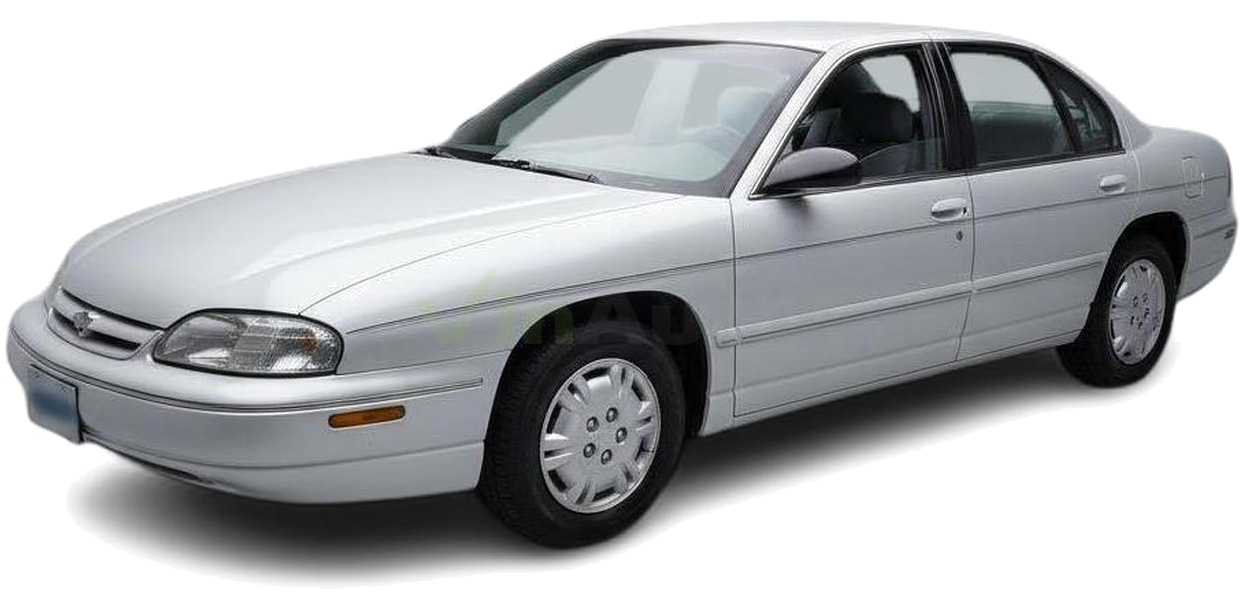
The 1998 Chevrolet Lumina represents the second generation of GM's W-body mid-size sedan, produced from 1995 to 2001. Offered as a 4-door sedan, its key trims for 1998 were the Base and LS, with the LTZ trim having been more prominent in earlier years. Originally priced around $17,000 to $22,000, the Lumina was popular for its affordability, spacious interior, comfortable ride, and straightforward design, making it a common choice for families and rental fleets.
The Good
The 1998 Chevrolet Lumina offers a comfortable, spacious cabin appealing to families. Its practical advantages include a low used market value, decent fuel economy for its era, and readily available, inexpensive parts. Emotionally, it provides a sense of familiar dependability and straightforward, no-frills transportation, giving peace of mind for daily commutes.
The Bad
Known weaknesses include notorious intake manifold gasket failures, particularly on the 3.1L V6, and potential transmission issues with the 4T60-E automatic. Owners should also watch out for front suspension wear, electrical gremlins, and rust, especially in regions that use road salt. Interior plastics can also degrade significantly over time.
1998 Chevrolet Lumina: Quick Overview
- Engine Options:
3.1L "3100" V6
3.8L "3800 Series II" V6 - Horsepower:
3.1L V6: 160 hp @ 5200 rpm
3.8L V6: 200 hp @ 5200 rpm - Fuel Economy (EPA estimates):
3.1L V6: Approx. 19-20 MPG city / 29-30 MPG highway
3.8L V6: Approx. 18-19 MPG city / 27-28 MPG highway - 0-60 Times:
3.1L V6: Roughly 9.0-9.5 seconds
3.8L V6: Roughly 7.5-8.0 seconds - Towing Capacity:
Typically around 1,000 lbs, with a maximum capacity of up to 2,000 lbs when properly equipped with a factory towing package (less common for this sedan). - Trim-Level Features:
Base Trim: Standard features included air conditioning, AM/FM stereo, power windows, power door locks, dual front airbags, and anti-lock brakes (ABS). It usually came with cloth upholstery and steel wheels with hubcaps.
LS Trim: Built upon the Base model, adding features like cruise control, a tilt steering wheel, power driver's seat, upgraded cloth interior, split-folding rear seat for increased cargo flexibility, and alloy wheels. The 3.8L V6 engine was often optional or standard on the LS, offering more robust performance. Remote keyless entry was also a common upgrade for this trim. - The LTZ trim, which previously offered sportier styling and suspension with the 3.8L V6, was less common for 1998 as many of its features migrated to options within the LS package, focusing the lineup on two main variants.
1998 Chevrolet Lumina Specifications
Vehicle Information
| Year | 1998 |
| Make | Chevrolet |
| Model | Lumina |
| Trim | - |
| Style | Sedan |
| Type | Sedan |
| Category | Mid-Size Car |
Manufacturing Details
| Made In | Canada |
| Manufacturing City | OSHAWA #1 |
Dimensions
| Doors | 4-Door |
| Curb Weight | 3330 pounds |
| Gross Vehicle Weight Rating | - |
| Overall Height | 55.20 inches |
| Overall Length | 200.90 inches |
| Overall Width | 72.50 inches |
| Wheelbase Length | 107.50 inches |
| Standard Seating | 6 |
Engine & Performance
| Engine | 3.8-L V-6 OHV 12V |
| Engine Size | 3.8L |
| Engine Cylinders | 6 |
| Transmission | 4-Speed Automatic |
| Transmission Type | Automatic |
| Transmission Speeds | 4-Speed |
| Drivetrain | Front-Wheel Drive |
Additional Features
| Anti-Brake System | Non-ABS 4-Wheel ABS |
| Steering Type | Rack & Pinion |
Pricing
| Manufacturer Suggested Retail Price (MSRP) | $17,395 |
| Invoice Price | $15,916 |
| Delivery Charges | - |
Vehicle History Report
Vehicle
Specifications
Specifications
Ownership
History
History
All History
Events
Events
NMVTIS Title
History Check
History Check
Salvage/Rebuilt
Check
Check
Accident
Check
Check
Theft
Check
Check
Open Lien
Check
Check
Past Sale
Listings
Listings
Safety
Recalls
Recalls
Odometer
Check
Check
Market Price
Analysis
Analysis
What Problems Does the 1998 Chevrolet Lumina Have?
The 1998 Chevrolet Lumina is plagued by several frequently reported problems that impact its long-term reliability. Foremost among these is the notorious intake manifold gasket failure, particularly prevalent in the 3.1L V6 engine. These plastic gaskets are prone to cracking, leading to coolant or oil leaks, which can result in overheating, engine damage, or mixing of fluids if not promptly addressed. This issue was a widespread concern across many GM V6 engines of that era.
Another significant problem involves the 4T60-E automatic transmission. Owners commonly report hard shifting, delayed engagement, and eventual transmission failure, especially as mileage accumulates. Regular fluid changes are crucial but don't always prevent these costly issues.
Front suspension components are also a weak point. Control arm bushings, tie rod ends, and strut mounts tend to wear out, causing clunking noises, imprecise steering, and premature tire wear. Furthermore, minor electrical gremlins, such as erratic fuel gauges, non-functioning power window motors, and general accessory failures, become more common with age.
Like many vehicles from the late 90s, the Lumina is highly susceptible to rust, especially in areas where road salt is used. Wheel arches, rocker panels, and the undercarriage are common areas for corrosion. A specific recall for the 1998 Lumina addressed a potential issue with the fuel pressure regulator diaphragm, which could rupture and lead to fuel leaks, posing a fire hazard. Another recall concerned lower control arm mounting bolts. Buyers should always check for recall completion via the VIN. These systemic issues contribute to significant long-term reliability concerns and potentially high repair costs.
Another significant problem involves the 4T60-E automatic transmission. Owners commonly report hard shifting, delayed engagement, and eventual transmission failure, especially as mileage accumulates. Regular fluid changes are crucial but don't always prevent these costly issues.
Front suspension components are also a weak point. Control arm bushings, tie rod ends, and strut mounts tend to wear out, causing clunking noises, imprecise steering, and premature tire wear. Furthermore, minor electrical gremlins, such as erratic fuel gauges, non-functioning power window motors, and general accessory failures, become more common with age.
Like many vehicles from the late 90s, the Lumina is highly susceptible to rust, especially in areas where road salt is used. Wheel arches, rocker panels, and the undercarriage are common areas for corrosion. A specific recall for the 1998 Lumina addressed a potential issue with the fuel pressure regulator diaphragm, which could rupture and lead to fuel leaks, posing a fire hazard. Another recall concerned lower control arm mounting bolts. Buyers should always check for recall completion via the VIN. These systemic issues contribute to significant long-term reliability concerns and potentially high repair costs.
How long will the 1998 Chevrolet Lumina last?
With diligent maintenance, a 1998 Chevrolet Lumina can realistically achieve 150,000 to 200,000 miles, or provide 10-15 years of service. Its long-term durability is profoundly influenced by how well owners managed its known weaknesses. Vehicles where the intake manifold gaskets were replaced with updated parts and transmission fluid was regularly serviced tend to last longer. The 3.8L V6 engine generally offers better longevity than the 3.1L. Over time, the weaknesses of the 4T60-E transmission, persistent front suspension wear, and advancing rust in exposed areas become more pronounced, demanding costly attention. Interior materials also show significant signs of age and degradation after two decades, impacting comfort and aesthetics.
What Technology & Safety Features are Included?
The 1998 Chevrolet Lumina featured technology standard for its late-90s mid-size sedan class. For entertainment, the base model included an AM/FM stereo, with optional upgrades such as an AM/FM stereo with a cassette player and/or a single-CD player. Higher trims like the LS could feature an upgraded sound system, sometimes with an equalizer. Basic amenities like power windows, power door locks, and power mirrors were available, becoming standard on higher trims. Cruise control and a tilt steering wheel were common options or standard on the LS, as was remote keyless entry. The instrument cluster was entirely analog, providing essential information without advanced digital displays.
Driver-assistance features were quite minimal compared to modern vehicles. The Lumina did not offer advanced systems like electronic stability control, traction control, or parking assist. Its most significant driver-assistance technology was the inclusion of Anti-lock Brakes (ABS), which was standard and provided improved control during emergency braking.
In terms of safety features, the 1998 Lumina came standard with dual front airbags (for the driver and passenger). It also featured three-point seatbelts for all outboard occupants and child safety seat anchors in the rear. Side-impact protection was integrated into the door designs to enhance occupant safety during collisions.
For crash-test ratings, the 1998 Lumina generally performed adequately for its era. The NHTSA (National Highway Traffic Safety Administration) typically rated it:
Driver-assistance features were quite minimal compared to modern vehicles. The Lumina did not offer advanced systems like electronic stability control, traction control, or parking assist. Its most significant driver-assistance technology was the inclusion of Anti-lock Brakes (ABS), which was standard and provided improved control during emergency braking.
In terms of safety features, the 1998 Lumina came standard with dual front airbags (for the driver and passenger). It also featured three-point seatbelts for all outboard occupants and child safety seat anchors in the rear. Side-impact protection was integrated into the door designs to enhance occupant safety during collisions.
For crash-test ratings, the 1998 Lumina generally performed adequately for its era. The NHTSA (National Highway Traffic Safety Administration) typically rated it:
- Frontal Impact (Driver): 4 out of 5 stars
- Frontal Impact (Passenger): 4 out of 5 stars
- Side Impact (Front Seat): 3 out of 5 stars
- Side Impact (Rear Seat): 3 out of 5 stars
What Colors Options are Available?
1998 Chevrolet Lumina Prices and Market Value
When new, the 1998 Chevrolet Lumina had an MSRP ranging approximately from $17,000 for a base model to over $22,000 for a fully equipped LS. As a volume-selling mid-size sedan, it experienced significant depreciation, typical of its class. Today, current used market prices are very low. A 1998 Lumina in fair to good condition might sell for $1,000 to $3,000, heavily contingent on mileage, maintenance history, and local demand. Models with the more reliable 3.8L engine and fewer issues may command a slight premium. Factors severely affecting its resale value include its age, common mechanical problems (transmission, intake gaskets), high mileage, rust, and the abundance of newer, safer, and more efficient alternatives. It has largely reached its depreciation floor, often serving as an inexpensive "beater".
1998 Chevrolet Lumina Cost of Ownership
The 1998 Chevrolet Lumina offers a mixed bag regarding long-term ownership costs. Initial purchase price is very economical. Insurance costs are typically low due to its age and minimal current market value. Fuel economy is decent for its size and era, contributing to reasonable running costs. However, maintenance and repair costs can be unpredictable. While common parts are inexpensive and widely available, major repairs like addressing intake manifold gasket failures or transmission overhauls can be significantly costly, potentially exceeding the vehicle's value. Proactive maintenance is crucial. Overall, it can be economical if no major failures occur, but it risks becoming costly to own if critical components fail without prior attention.
1998 Chevrolet Lumina Fuel Efficiency
Fuel Type
Gasoline
Fuel Capacity
16.60 gallons
City Mileage
20 miles/gallon
Highway Mileage
29 miles/gallon
1998 Chevrolet Lumina Safety Rating
NHTSA
IIHS
1998 Chevrolet Lumina Warranty
Basic
Original warranty
0 months / No data
Estimated remaining
Expired
Powertrain
Original warranty
0 months / No data
Estimated remaining
Expired
Rust
Original warranty
0 months / No data
Estimated remaining
Expired
1998 Chevrolet Lumina Insurance
Insurance for a 1998 Chevrolet Lumina is moderately priced, reflecting its status as a Sedan with strong safety ratings and
reasonable repair costs.
How Does the 1998 Chevrolet Lumina Compare to Other Sedan?
The 1998 Chevrolet Lumina competed in the highly competitive mid-size sedan segment against stalwarts like the Toyota Camry, Honda Accord, Ford Taurus, and Chrysler Concorde/Dodge Intrepid.
Performance: The Lumina's base 3.1L V6 (160 hp) was adequate, but the optional 3.8L V6 (200 hp) offered strong, smooth acceleration, often matching or exceeding the V6 offerings from Toyota and Honda. It generally outperformed the base four-cylinder engines of its rivals. However, it lacked the sporty handling of some European competitors or the Taurus SHO.
Features: The Lumina offered a competitive array of features for its price point, including standard dual airbags and ABS. However, rivals like the Camry and Accord often boasted slightly more refined interiors, better build quality, and superior ergonomics. The Ford Taurus, especially in its higher trims, could match or exceed the Lumina's comfort and convenience options.
Reliability: This is where the Lumina struggled compared to its top Japanese rivals. While the 3.8L engine itself was robust, the prevalent intake manifold gasket issues (especially on the 3.1L) and the notorious 4T60-E transmission problems significantly hampered its long-term reliability. The Camry and Accord of this era were renowned for their exceptional reliability and fewer critical mechanical failures, placing them a clear step above the Lumina. The Ford Taurus and Chrysler "cab forward" cars also had their share of reliability quirks, but the Lumina's specific engine and transmission issues were quite widespread.
Price: The Lumina was typically positioned as a value leader, often undercutting similarly equipped Japanese sedans when new. On the used market today, its price is among the lowest due to its age and reliability concerns, making it a very cheap acquisition.
Recommended Alternatives:
Performance: The Lumina's base 3.1L V6 (160 hp) was adequate, but the optional 3.8L V6 (200 hp) offered strong, smooth acceleration, often matching or exceeding the V6 offerings from Toyota and Honda. It generally outperformed the base four-cylinder engines of its rivals. However, it lacked the sporty handling of some European competitors or the Taurus SHO.
Features: The Lumina offered a competitive array of features for its price point, including standard dual airbags and ABS. However, rivals like the Camry and Accord often boasted slightly more refined interiors, better build quality, and superior ergonomics. The Ford Taurus, especially in its higher trims, could match or exceed the Lumina's comfort and convenience options.
Reliability: This is where the Lumina struggled compared to its top Japanese rivals. While the 3.8L engine itself was robust, the prevalent intake manifold gasket issues (especially on the 3.1L) and the notorious 4T60-E transmission problems significantly hampered its long-term reliability. The Camry and Accord of this era were renowned for their exceptional reliability and fewer critical mechanical failures, placing them a clear step above the Lumina. The Ford Taurus and Chrysler "cab forward" cars also had their share of reliability quirks, but the Lumina's specific engine and transmission issues were quite widespread.
Price: The Lumina was typically positioned as a value leader, often undercutting similarly equipped Japanese sedans when new. On the used market today, its price is among the lowest due to its age and reliability concerns, making it a very cheap acquisition.
Recommended Alternatives:
- Better Alternatives (for reliability and lower long-term headaches): For those seeking a dependable mid-size sedan from this era, the 1998 Toyota Camry or 1998 Honda Accord are generally superior choices due to their strong reputation for reliability, fuel efficiency, and overall build quality.
- Similar Alternatives (if budget is the absolute priority and mechanical diligence is high): The 1998 Ford Taurus or a platform mate like the Pontiac Grand Prix (sharing similar engines and architecture) could be considered. These offer similar spaciousness and value but may come with their own set of age-related issues.
Final Verdict: Is the 1998 Chevrolet Lumina a Good Sedan?
The 1998 Chevrolet Lumina is ideal for individuals seeking extremely budget-friendly, basic transportation with ample interior space and a comfortable ride. It could serve as a first car for a new driver on a very tight budget, a temporary commuter vehicle, or a utilitarian second car. It is generally not worth buying as a primary, long-term family vehicle in today's market due to its age and well-documented reliability concerns. If considering one used, prioritize an LS trim with the more robust 3.8L V6 engine, and insist on comprehensive service records showing that major known issues, such as intake manifold gaskets and transmission maintenance, have been addressed. Purchase only at a rock-bottom price, acknowledging potential significant repair costs in its future.