
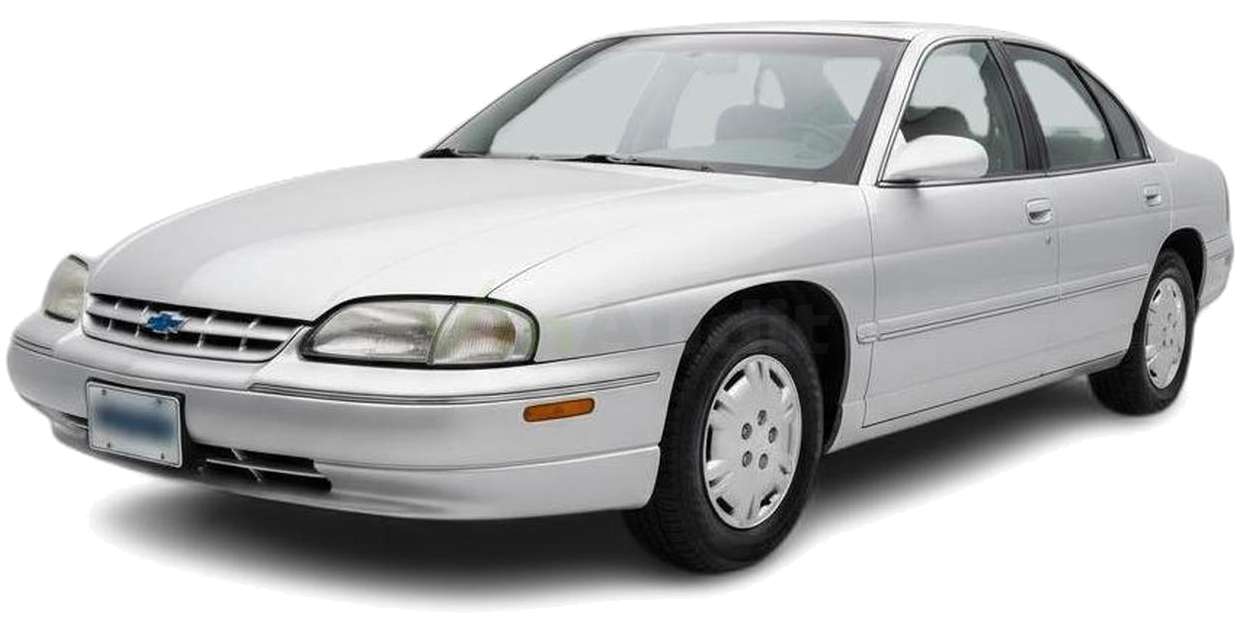
The 2001 Chevrolet Lumina, part of the GM W-body platform, served as Chevrolet's mid-size sedan and coupe offering for several years, with its final model year being 2001. Available primarily as a four-door sedan, key trims included the LS and the more upscale LT. New pricing ranged from approximately $20,000 to $25,000. Its popularity stemmed from its comfortable ride, spacious interior for its class, and a generally agreeable, if unremarkable, design, making it a solid family car choice.
The Good
The 2001 Lumina offers a comfortable and smooth ride, appealing to practical buyers seeking a reliable daily driver. Its spacious interior provides good passenger comfort, and its straightforward design contributes to its value proposition, offering a sensible choice for budget-conscious families.
The Bad
Potential buyers should be aware of common issues such as interior trim degradation, occasional transmission problems, and potential for electrical gremlins. The powertrain, while adequate, isn't known for spirited performance. Rust can also be a concern in certain climates.
2001 Chevrolet Lumina: Quick Overview
- Engine Options:
- 3.1L V6 (210.6 cubic inches)
- 3.8L V6 (229.7 cubic inches) - Primarily on LT trims or optional on LS. - Horsepower:
- 3.1L V6: Approximately 150-155 horsepower
- 3.8L V6: Approximately 180-205 horsepower (depending on specific configuration and tune) - Fuel Economy (EPA Estimated):
- 3.1L V6: Around 19 MPG city / 29 MPG highway
- 3.8L V6: Around 18 MPG city / 27 MPG highway (may vary slightly) - 0-60 Times:
- 3.1L V6: Typically in the 9.5-10.5 second range.
- 3.8L V6: Typically in the 8.0-9.0 second range. - Towing Capacity:
- The Chevrolet Lumina was not typically equipped or marketed for significant towing duties. Towing capacity, if any, would be very limited, likely not exceeding 1,000-1,500 lbs for light trailers and without a dedicated towing package. - Key Trim-Level Features:
LS Trim:
- Standard 3.1L V6 engine.
- Power windows, power door locks, power mirrors.
- Air conditioning.
- Cruise control.
- AM/FM stereo with CD player.
- Anti-lock brakes (ABS).
- Driver and front passenger airbags.
- Rear seat pass-through.
- Cloth seating.
LT Trim:
- Often featured the more powerful 3.8L V6 engine as standard or optional.
- Upgraded cloth or optional leather seating.
- Automatic climate control.
- Premium sound system.
- Alloy wheels.
- Steering wheel mounted audio controls.
- Optional power sunroof.
- Available driver-side power seat.
- Enhanced exterior trim and badging.
- OnStar communications system (optional in later years).
- Traction control (often standard or optional).
2001 Chevrolet Lumina Specifications
Vehicle Information
| Year | 2001 |
| Make | Chevrolet |
| Model | Lumina |
| Trim | - |
| Style | - |
| Type | Sedan |
| Category | Compact Car |
Manufacturing Details
| Made In | Canada |
| Manufacturing City | OSHAWA #2 |
Dimensions
| Doors | 4-Door |
| Curb Weight | - |
| Gross Vehicle Weight Rating | - |
| Overall Height | - |
| Overall Length | - |
| Overall Width | - |
| Wheelbase Length | - |
| Standard Seating | - |
Engine & Performance
| Engine | LL0 |
| Engine Size | 5.7L |
| Engine Cylinders | 8 |
| Transmission | 4-Speed Automatic |
| Transmission Type | Automatic |
| Transmission Speeds | 4-Speed |
| Drivetrain | Front-Wheel Drive |
Additional Features
| Anti-Brake System | - |
| Steering Type | - |
Pricing
| Manufacturer Suggested Retail Price (MSRP) | $18,890 |
| Invoice Price | - |
| Delivery Charges | - |
Vehicle History Report
Vehicle
Specifications
Specifications
Ownership
History
History
All History
Events
Events
NMVTIS Title
History Check
History Check
Salvage/Rebuilt
Check
Check
Accident
Check
Check
Theft
Check
Check
Open Lien
Check
Check
Past Sale
Listings
Listings
Safety
Recalls
Recalls
Odometer
Check
Check
Market Price
Analysis
Analysis
What Problems Does the 2001 Chevrolet Lumina Have?
The 2001 Chevrolet Lumina, like many vehicles from this era, has its share of commonly reported issues and potential long-term reliability concerns. One of the most frequently cited problems revolves around the transmission. Owners have reported instances of slipping gears, delayed engagement, and premature failure, particularly with the 4-speed automatic transmission. Regular fluid changes and addressing early signs of trouble are crucial for longevity.
Engine issues, while not as widespread as transmission problems, can also arise. The 3.1L V6, known as the L82, can be prone to intake manifold gasket leaks, leading to coolant loss and potential overheating. The 3.8L V6 (L36) is generally considered more robust, but still susceptible to common wear items like spark plugs, ignition coils, and fuel injectors.
Electrical system gremlins are another area to watch out for. This can manifest as malfunctioning power windows, door locks, instrument cluster issues, or problems with the heating and air conditioning controls. Loose wiring harnesses or failing control modules are often the culprits.
Interior components can also show their age. The plastic trim pieces, especially around the dashboard and door panels, can become brittle and crack or fade over time. Seat fabric can wear, and headliners may sag.
Rust and corrosion are significant long-term concerns, particularly in regions with harsh winters and road salt. Key areas to inspect include the rocker panels, wheel wells, floor pans, and frame rails. The exhaust system is also susceptible to rust.
Regarding recalls, for the 2001 model year, there were recalls related to potential issues with the fuel tank and the airbag system. It is imperative to check if these recalls were addressed on any specific vehicle being considered. For instance, a recall might have addressed a potential issue with the passenger-side airbag inflator.
While the Lumina can be a durable car with proper maintenance, its long-term reliability is often dependent on how well it was cared for. Vehicles that have received regular oil changes, transmission fluid flushes, and timely repairs for minor issues tend to fare better. However, the cumulative effect of these common problems can lead to significant repair bills as the vehicle ages, making thorough pre-purchase inspections essential.
Engine issues, while not as widespread as transmission problems, can also arise. The 3.1L V6, known as the L82, can be prone to intake manifold gasket leaks, leading to coolant loss and potential overheating. The 3.8L V6 (L36) is generally considered more robust, but still susceptible to common wear items like spark plugs, ignition coils, and fuel injectors.
Electrical system gremlins are another area to watch out for. This can manifest as malfunctioning power windows, door locks, instrument cluster issues, or problems with the heating and air conditioning controls. Loose wiring harnesses or failing control modules are often the culprits.
Interior components can also show their age. The plastic trim pieces, especially around the dashboard and door panels, can become brittle and crack or fade over time. Seat fabric can wear, and headliners may sag.
Rust and corrosion are significant long-term concerns, particularly in regions with harsh winters and road salt. Key areas to inspect include the rocker panels, wheel wells, floor pans, and frame rails. The exhaust system is also susceptible to rust.
Regarding recalls, for the 2001 model year, there were recalls related to potential issues with the fuel tank and the airbag system. It is imperative to check if these recalls were addressed on any specific vehicle being considered. For instance, a recall might have addressed a potential issue with the passenger-side airbag inflator.
While the Lumina can be a durable car with proper maintenance, its long-term reliability is often dependent on how well it was cared for. Vehicles that have received regular oil changes, transmission fluid flushes, and timely repairs for minor issues tend to fare better. However, the cumulative effect of these common problems can lead to significant repair bills as the vehicle ages, making thorough pre-purchase inspections essential.
How long will the 2001 Chevrolet Lumina last?
Based on owner data and typical maintenance habits, a 2001 Chevrolet Lumina can reasonably be expected to serve its owners for 150,000 to 200,000 miles, or roughly 12-16 years. Long-term durability is highly dependent on consistent and proactive maintenance. Vehicles that have had regular oil changes, transmission fluid services, and addressed minor issues promptly often reach these mileage figures without major mechanical failures. However, the known weaknesses, particularly with the transmission and potential for electrical issues, can become more pronounced with age and mileage, leading to more costly repairs in the later stages of its service life. Neglecting maintenance will significantly shorten its lifespan and increase the likelihood of encountering these common problems.
What Technology & Safety Features are Included?
The 2001 Chevrolet Lumina offered a functional suite of technology and safety features for its time, catering to everyday needs rather than cutting-edge innovation.
Entertainment systems typically included an AM/FM stereo radio with a CD player. Higher trims, like the LT, could be equipped with an upgraded sound system, often featuring more speakers for a richer audio experience. Steering wheel-mounted audio controls were an option on LT models, enhancing convenience.
Driver-assistance features were relatively basic. Anti-lock Braking System (ABS) was standard on most, if not all, trims, providing improved stopping control on slippery surfaces. Traction control was an available option, particularly on models equipped with the more powerful 3.8L V6, helping to prevent wheelspin during acceleration.
Safety features included standard driver and front passenger airbags. Seatbelt pretensioners were also part of the safety package. Some models were available with the OnStar communications system, offering features like emergency assistance and remote diagnostics, which was considered advanced for its era.
Optional features could further enhance comfort and convenience. These might include power-adjustable driver's seats, automatic climate control, and a power sunroof. Remote keyless entry was also often an option.
Crash-test ratings for the 2001 Chevrolet Lumina, as with many vehicles from this period, should be considered in the context of evolving safety standards. For the 2001 model year, the Lumina generally received acceptable ratings from the National Highway Traffic Safety Administration (NHTSA). Frontal crash tests typically resulted in four-star ratings for the driver and front passenger, indicating a moderate risk of injury. Side-impact crash tests also generally yielded acceptable results, though specific ratings could vary. It's important to note that these ratings do not reflect the more stringent testing protocols implemented in later years.
Overall, the Lumina provided a secure and comfortable cabin with features that were competitive for its segment in 2001, focusing on core safety and basic convenience technologies.
Entertainment systems typically included an AM/FM stereo radio with a CD player. Higher trims, like the LT, could be equipped with an upgraded sound system, often featuring more speakers for a richer audio experience. Steering wheel-mounted audio controls were an option on LT models, enhancing convenience.
Driver-assistance features were relatively basic. Anti-lock Braking System (ABS) was standard on most, if not all, trims, providing improved stopping control on slippery surfaces. Traction control was an available option, particularly on models equipped with the more powerful 3.8L V6, helping to prevent wheelspin during acceleration.
Safety features included standard driver and front passenger airbags. Seatbelt pretensioners were also part of the safety package. Some models were available with the OnStar communications system, offering features like emergency assistance and remote diagnostics, which was considered advanced for its era.
Optional features could further enhance comfort and convenience. These might include power-adjustable driver's seats, automatic climate control, and a power sunroof. Remote keyless entry was also often an option.
Crash-test ratings for the 2001 Chevrolet Lumina, as with many vehicles from this period, should be considered in the context of evolving safety standards. For the 2001 model year, the Lumina generally received acceptable ratings from the National Highway Traffic Safety Administration (NHTSA). Frontal crash tests typically resulted in four-star ratings for the driver and front passenger, indicating a moderate risk of injury. Side-impact crash tests also generally yielded acceptable results, though specific ratings could vary. It's important to note that these ratings do not reflect the more stringent testing protocols implemented in later years.
Overall, the Lumina provided a secure and comfortable cabin with features that were competitive for its segment in 2001, focusing on core safety and basic convenience technologies.
What Colors Options are Available?
2001 Chevrolet Lumina Prices and Market Value
When new, the 2001 Chevrolet Lumina had an MSRP that typically ranged from approximately $20,000 for base models to around $25,000 for well-equipped LT trims. As a vehicle from over two decades ago, it has undergone significant depreciation.
Currently, the used market prices for a 2001 Lumina vary widely based on condition, mileage, and trim level, but generally fall between $1,000 to $4,000. Well-maintained examples with lower mileage can command higher prices within this range.
Factors significantly affecting its resale value include its overall mechanical condition, the presence of rust, interior wear and tear, and whether it has a documented maintenance history. Given its age, the Lumina has experienced substantial depreciation and is now firmly in the budget used car category. Its resale value is driven more by its utility as basic transportation than by any inherent long-term value retention.
Currently, the used market prices for a 2001 Lumina vary widely based on condition, mileage, and trim level, but generally fall between $1,000 to $4,000. Well-maintained examples with lower mileage can command higher prices within this range.
Factors significantly affecting its resale value include its overall mechanical condition, the presence of rust, interior wear and tear, and whether it has a documented maintenance history. Given its age, the Lumina has experienced substantial depreciation and is now firmly in the budget used car category. Its resale value is driven more by its utility as basic transportation than by any inherent long-term value retention.
2001 Chevrolet Lumina Cost of Ownership
The 2001 Chevrolet Lumina is generally considered an economical vehicle to own. Insurance costs are typically low due to its age and common status. Fuel economy, especially with the 3.1L V6, is reasonable for its class, contributing to lower running costs. Maintenance is generally straightforward and parts are widely available and affordable. However, repair costs can escalate if major issues like transmission failure occur. While routine maintenance and minor repairs are inexpensive, the potential for more significant, age-related problems means a contingency fund is advisable for long-term ownership. Overall, it remains a budget-friendly option for those prioritizing cost savings.
2001 Chevrolet Lumina Fuel Efficiency
Fuel Type
Gasoline
Fuel Capacity
21 gallons
City Mileage
18 miles/gallon
Highway Mileage
26 miles/gallon
2001 Chevrolet Lumina Safety Rating
NHTSA
2001 Chevrolet Lumina Recalls & Defects
Seat Belts
Recall date
2000-08-07
Recall no.
00v228003
Source
NHTSA
Summary
Vehicle Description: Passenger Vehicles, Light Duty Trucks, Sport Utility Vehicles, and Mini Vans Equipped With TRW Seat Belt Buckle Assemblies. THE Buckle Base OF These Seat Belt Assemblies Were NOT Properly Heat Treated and Therefore DO NOT Pass THE Load Bearing Requirement OF Federal Motor Vehicle Safety Standard NO. 209, "seat Belt Assemblies."
Consequence
IN THE Event OF A Vehicle Crash, THE Occupant MAY NOT BE Properly Restrained.
Remedy
Dealers Will Inspect THE Vehicle's Safety Belt Buckle Assembly Date Codes And, IF Necessary, Will Replace ANY Safety Belt Buckle Assembly.
Notes
Owner Notification Began August 24, 2000. Owners WHO Take Their Vehicles TO AN Authorized Dealer ON AN Agreed Upon Service Date and DO NOT Receive THE Free Remedy Within A Reasonable Time Should Contact Buick AT 1-800-521-7300; Chevrolet AT 1-800-222-1020; GMC AT 1-800-462-8782; Oldsmobile AT 1-800-442-6537; Pontiac AT 1-800-762-2737; or Saturn AT 1-800-553-6000. Also Contact THE National Highway Traffic Safety Administration's Auto Safety Hotline AT 1-888-dash-2-dot (1-888-327-4236).
AIR Bags:frontal
Recall date
2001-02-01
Recall no.
01v026000
Source
NHTSA
Summary
Vehicle Description: Passenger, Sport Utility Vehicles and Minivans. THE Passenger AIR BAG Inflator Modules Were Built Without THE Correct Amount OF Generant, Which Produces THE GAS That Fills THE AIR Bag. Some Were Built With A Double Load OF Generant and Some Were Built Without Generant.
Consequence
IN THE Event OF A Crash That Would Trigger A Passenger AIR BAG Deployment, A Double Load OF Generant CAN Cause THE Inflator Module TO Explode. IF THE AIR BAG Module Explodes, Metal and Plastic Debris Could Cause Severe Injury TO Vehicle Occupant. A Module With NO Generant Would NOT Inflate THE AIR Bag, and THE Occupants Could Receive More Severe Injuries.
Remedy
Dealers Will Replace THE Passenger AIR BAG Module. Telephone Calls Were Made TO Owners ON January 29, 2001. Follow UP Owner Mailing Began ON April 17, 2001. Owners WHO Take Their Vehicles TO AN Authorized Dealer ON AN Agreed Upon Service Date and DO NOT Receive THE Free Remedy Within A Reasonable Time Should Contact Chevrolet AT 1-800-222-1020, Pontiac AT 1-800-762-2737, or Saturn AT 1-800-553-6000.
Notes
Also Contact THE National Highway Traffic Safety Administration's Auto Safety Hotline AT 1-888-Dash-2-dot (1-888-327-4236).
AIR Bags:frontal
Recall date
2002-12-09
Recall no.
02v329000
Source
NHTSA
Summary
ON Certain Passenger, Sport Utility Vehicles and Mini Vans, Some OF These Vehicles Have A Passenger AIR BAG That WAS Manufactured Without A Check Valve Pin. AN AIR BAG Without THE Check Valve PIN Could Produce Increased Pressure AT THE Onset OF THE AIR BAG Deployment and Reduced Pressure Afterward.
Consequence
This Could Increase THE Severity OF Injury TO A Person WHO WAS NOT Properly Restrained and WHO WAS Close TO THE Passenger AIR BAG AT THE Time OF Deployment. IT Could Also Reduce THE Ab8ility OF THE AIR BAG TO Protect A Restrained Front Seat Passenger.
Remedy
Dealers Will Inspect And, IF Necessary, Replace THE Passenger AIR Bag. Owner Notification Began December 16, 2002. Owners WHO Take Their Vehicles TO AN Authorized Dealer ON AN Agreed Upon Service Date and DO NOT Receive THE Free Remedy Within A Reasonable Time Should Contact Chevrolet AT 1-800-222-1020, Pontiac AT 1-800-762-2737, Oldsmobile AT 1-800-442-6537, or Saturn AT 1-800-553-6000, Prompt #3.
Notes
GM Recall NO. 02061. Customers CAN Also Contact THE National Highway Traffic Safety Administration's Auto Safety Hotline AT 1-888-Dash-2-dot (1-888-327-4236).
Fuel System, Other:storage:tank Assembly:pressure Relief Devices
Recall date
2007-03-12
Recall no.
07e021000
Source
NHTSA
Summary
Certain Delphi Fuel Pressure Regulators, P/Nos. Fp10020-11b1, Fp10026-11b1, and Fp10027-11b1, Sold After January 9, 2007, AS Aftermarket Equipment FOR Various Passenger Vehicles Listed Above. THE Universal Pressure Regulators (Upr) Were Produced Without AN O'ring and Retainer.
Consequence
Fuel MAY Leak, Possibly Resulting IN A Fire.
Remedy
Delphi Will Notify Owners and Replace THE UPR Free OF Charge. THE Recall Began ON April 23, 2007. Owners CAN Contact Delphi AT 877-411-8770.
Notes
This Recall Only Pertains TO Aftermarket Delphi Fuel Pressure Regulators and HAS NO Relation TO ANY Original Equipment Installed BY General Motors.customers MAY Contact THE National Highway Traffic Safety Administration's Vehicle Safety Hotline AT 1-888-327-4236 (Tty: 1-800-424-9153); or GO TO Http://Www.safercar.gov.
2001 Chevrolet Lumina Insurance
Insurance for a 2001 Chevrolet Lumina is moderately priced, reflecting its status as a Sedan with strong safety ratings and
reasonable repair costs.
How Does the 2001 Chevrolet Lumina Compare to Other Sedan?
The 2001 Chevrolet Lumina competed in a crowded mid-size sedan segment. Key rivals included the Toyota Camry, Honda Accord, Ford Taurus, and the Nissan Altima.
Performance: The Lumina's available V6 engines offered adequate power, especially the 3.8L, but generally lagged behind the refinement and overall driving dynamics of the Camry and Accord. The Ford Taurus offered similar V6 options but often suffered from a less engaging driving experience.
Features: For 2001, the Lumina offered a decent set of features, including power accessories and optional comfort items. However, the Camry and Accord often led in terms of interior quality, quietness, and available advanced features for the era. The Altima also presented a sportier option with good feature packaging.
Reliability: This is where the Lumina often faced its biggest challenge. The Toyota Camry and Honda Accord are renowned for their exceptional long-term reliability and durability, with fewer recurring mechanical issues compared to the Lumina. While the Ford Taurus had improved over earlier generations, it still wasn't on par with Japanese rivals in consistent reliability. The Nissan Altima offered a good balance but might not match the absolute longevity of Camry/Accord.
Price: The Lumina was typically priced competitively, often undercutting its Japanese rivals when new, which contributed to its value appeal. On the used market, its lower price point remains a key draw.
Recommendations:
Better Alternatives: For those prioritizing reliability and long-term ownership peace of mind, the 2001 Toyota Camry or 2001 Honda Accord are superior choices. They consistently offer better build quality, more refined powertrains, and significantly fewer common problems, translating to lower ownership costs over time despite potentially higher initial used prices.
Similar Alternatives: The 2001 Ford Taurus is a similar American-market alternative that offers comparable space and V6 power, though its reliability is often considered a notch below the Lumina. The 2001 Nissan Altima provides a more engaging driving experience and often a slightly more modern feel than the Lumina, while offering a comparable level of features and a generally good, though not legendary, reliability record.
Performance: The Lumina's available V6 engines offered adequate power, especially the 3.8L, but generally lagged behind the refinement and overall driving dynamics of the Camry and Accord. The Ford Taurus offered similar V6 options but often suffered from a less engaging driving experience.
Features: For 2001, the Lumina offered a decent set of features, including power accessories and optional comfort items. However, the Camry and Accord often led in terms of interior quality, quietness, and available advanced features for the era. The Altima also presented a sportier option with good feature packaging.
Reliability: This is where the Lumina often faced its biggest challenge. The Toyota Camry and Honda Accord are renowned for their exceptional long-term reliability and durability, with fewer recurring mechanical issues compared to the Lumina. While the Ford Taurus had improved over earlier generations, it still wasn't on par with Japanese rivals in consistent reliability. The Nissan Altima offered a good balance but might not match the absolute longevity of Camry/Accord.
Price: The Lumina was typically priced competitively, often undercutting its Japanese rivals when new, which contributed to its value appeal. On the used market, its lower price point remains a key draw.
Recommendations:
Better Alternatives: For those prioritizing reliability and long-term ownership peace of mind, the 2001 Toyota Camry or 2001 Honda Accord are superior choices. They consistently offer better build quality, more refined powertrains, and significantly fewer common problems, translating to lower ownership costs over time despite potentially higher initial used prices.
Similar Alternatives: The 2001 Ford Taurus is a similar American-market alternative that offers comparable space and V6 power, though its reliability is often considered a notch below the Lumina. The 2001 Nissan Altima provides a more engaging driving experience and often a slightly more modern feel than the Lumina, while offering a comparable level of features and a generally good, though not legendary, reliability record.
Final Verdict: Is the 2001 Chevrolet Lumina a Good Sedan?
The 2001 Chevrolet Lumina is best suited for budget-conscious buyers seeking basic, reliable transportation. It's ideal for first-time car owners, students, or those needing a second car for short commutes who prioritize affordability over advanced features or performance.
Whether it's worth buying hinges entirely on its condition and price. As a used vehicle, it can be a good value if found in excellent mechanical shape with a solid maintenance history, particularly if the price is low. The LS trim with the 3.1L V6 offers a sensible balance of features and economy, while the LT trim with the 3.8L V6 provides a bit more power and comfort for those willing to pay a slight premium. New purchase is obviously not an option. Buyers should exercise extreme caution, conduct thorough inspections, and be prepared for potential age-related repairs, especially concerning the transmission. For the right price and condition, it can serve its purpose, but alternatives with a stronger reputation for reliability, like a Toyota Camry or Honda Accord of the same vintage, might be a safer long-term investment despite a higher upfront cost.