
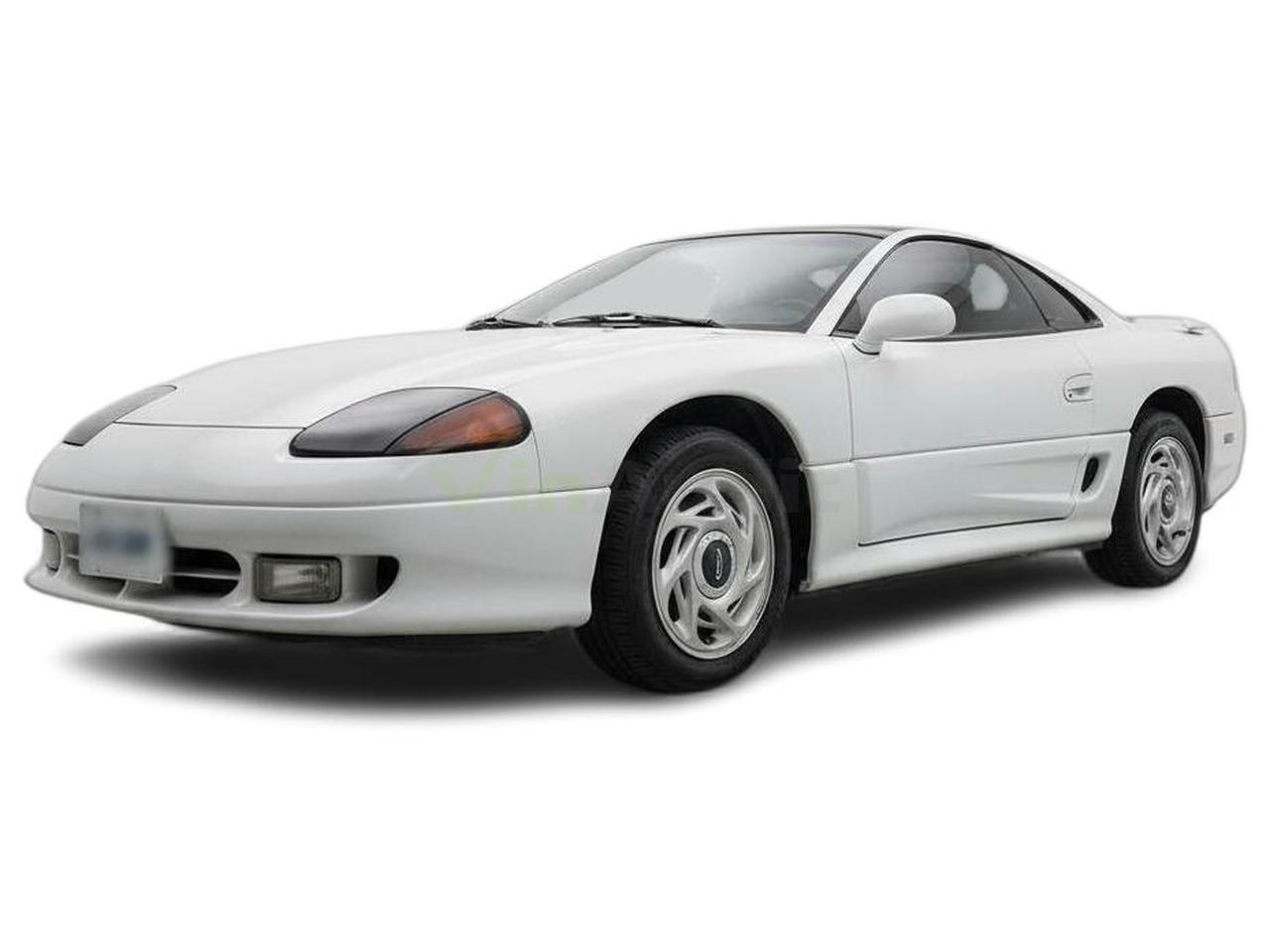
The Good
The 1991 Dodge Stealth offered a thrilling driving experience with its potent engine options, especially the turbocharged variants. Its aerodynamic, eye-catching design garnered attention, while the comfortable interior provided a pleasant ride for both daily commutes and longer journeys, representing good value for its performance and style.
The Bad
Potential buyers of the 1991 Dodge Stealth should be aware of potential issues with the automatic transmission, particularly in earlier models, and the complexity and cost associated with the twin-turbo system's maintenance. Electrical gremlins and aging interior components are also common concerns.
1991 Dodge Stealth: Quick Overview
- Engine Options: The 1991 Dodge Stealth offered two primary engine choices:
- Base and R/T: A 3.0-liter V6 engine producing approximately 222 horsepower and 217 lb-ft of torque.
- R/T Twin Turbo: A twin-turbocharged version of the 3.0-liter V6 engine, generating around 300 horsepower and 315 lb-ft of torque.
- Horsepower: Ranged from 222 hp (base/R/T) to 300 hp (R/T Twin Turbo).
- Fuel Economy: Estimated at around 18 MPG city and 25 MPG highway for the base models, with the Twin Turbo models being less fuel-efficient due to their performance focus. Exact figures varied with transmission and driving conditions.
- 0-60 Times:
- Base/R/T: Approximately 7.2-7.8 seconds.
- R/T Twin Turbo: Around 5.0-5.5 seconds, offering sports car-like acceleration.
- Towing Capacity: Not applicable. The Dodge Stealth was not designed for towing and does not have a towing capacity rating.
- Trim-Level Features:
- Base: Typically featured power windows, power locks, air conditioning, cruise control, and a cassette player.
- R/T: Added features like alloy wheels, a sport-tuned suspension, fog lights, and optional leather seats.
- R/T Twin Turbo: The flagship model included all R/T features plus the powerful twin-turbo engine, all-wheel-drive with four-wheel steering (on some models), active aerodynamics (a deployable rear spoiler), a premium sound system, and leather upholstery.
1991 Dodge Stealth Specifications
Vehicle Information
| Year | 1991 |
| Make | Dodge |
| Model | Stealth |
| Trim | - |
| Style | - |
| Type | Hatchback |
| Category | Compact Car |
Manufacturing Details
| Made In | Japan |
| Manufacturing City | - |
Dimensions
| Doors | 4-Door |
| Curb Weight | - |
| Gross Vehicle Weight Rating | - |
| Overall Height | - |
| Overall Length | - |
| Overall Width | - |
| Wheelbase Length | - |
| Standard Seating | - |
Engine & Performance
| Engine | 3L |
| Engine Size | 3L |
| Engine Cylinders | 6 |
| Transmission | 5-Speed Manual |
| Transmission Type | Manual |
| Transmission Speeds | 5-Speed |
| Drivetrain | Front-Wheel Drive |
Additional Features
| Anti-Brake System | - |
| Steering Type | - |
Pricing
| Manufacturer Suggested Retail Price (MSRP) | - |
| Invoice Price | - |
| Delivery Charges | - |
Vehicle History Report
Specifications
History
Events
History Check
Check
Check
Check
Check
Listings
Recalls
Check
Analysis
What Problems Does the 1991 Dodge Stealth Have?
The twin-turbocharged V6 engine, while powerful, is complex. Issues can arise from the turbochargers themselves, including oil leaks, worn seals, or seized bearings, especially if oil changes were not performed diligently. Intercooler hoses can degrade and leak, affecting boost pressure. The electronic control units (ECUs) for the engine and transmission have also been known to fail, leading to erratic behavior or no-start conditions.
Electrical gremlins are another common theme. This can manifest as faulty gauge clusters, malfunctioning climate control systems, or power window/lock issues. The pop-up headlight mechanisms, a distinctive feature, can also fail due to worn motors or broken gears. For the 1991 model year specifically, there weren't widespread major recalls that significantly impacted long-term reliability across the board, but individual issues like air conditioning system leaks or minor electrical component failures were not uncommon. Long-term reliability is highly dependent on how well the vehicle has been maintained. A meticulously maintained Twin Turbo can be a gem, but a neglected one can become a money pit. Parts for some of the more specialized components, especially for the Twin Turbo models, can be increasingly difficult and expensive to source.
How long will the 1991 Dodge Stealth last?
What Technology & Safety Features are Included?
Driver-assistance features were limited by modern standards. However, the R/T Twin Turbo model did offer an optional all-wheel-drive system and, notably, an optional four-wheel steering system. This advanced technology significantly enhanced maneuverability and stability, especially at lower speeds for tighter turns and at higher speeds for improved cornering grip, making it feel more sophisticated and planted. Active aerodynamics, such as a deployable rear spoiler on the Twin Turbo, were also part of the advanced tech package, designed to optimize downforce at higher speeds.
Safety features included standard front airbags for the driver and passenger. Anti-lock brakes (ABS) were typically standard on the R/T and R/T Twin Turbo models, providing enhanced braking control. Seatbelt pretensioners were also part of the safety equipment.
Crash-test ratings for vehicles from this era are not as readily available or standardized as they are today through organizations like the NHTSA or IIHS. However, based on the construction and safety equipment, it was considered a reasonably safe vehicle for its class, though it would not meet today's stringent safety standards. The focus was on active safety through its advanced drivetrain and braking systems rather than extensive passive safety features like multiple airbags or advanced crumple zones that are commonplace now. Optional leather upholstery added a touch of comfort and premium feel to the interior.
What Colors Options are Available?
Exterior Colors
Interior Colors
1991 Dodge Stealth Prices and Market Value
1991 Dodge Stealth Cost of Ownership
1991 Dodge Stealth Fuel Efficiency
1991 Dodge Stealth Recalls & Defects
Power Train:driveline
Seat Belts:front:buckle Assembly
Service Brakes, Hydraulic:foundation Components:hoses, Lines/Piping, and Fittings
Power Train:transfer Case (4-Wheel Drive)
1991 Dodge Stealth Insurance
reasonable repair costs.
How Does the 1991 Dodge Stealth Compare to Other Hatchback?
Feature-wise, the Stealth, especially the higher trims, boasted advanced technology like four-wheel steering and active aerodynamics, which were quite cutting-edge for 1991. The Supra and 300ZX also offered sophisticated features, but the Stealth often felt a bit more exotic in its presentation, partly due to its Mitsubishi sibling heritage.
Reliability is where the Stealth sometimes faced challenges compared to its Japanese counterparts. While the naturally aspirated V6 was reasonably reliable, the complexity of the twin-turbo system and AWD on the R/T Twin Turbo could lead to more frequent and costly repairs than the generally bulletproof Supra or the well-engineered 300ZX. The RX-7, while offering exhilarating performance, also had its own specific reliability quirks related to its rotary engine.
Price-wise, the Stealth often presented a compelling value proposition. It offered performance and styling that rivaled cars costing significantly more, especially when compared to European exotics. The base Stealth was more affordable than entry-level versions of some competitors.
Similar or Better Alternatives:
- Mitsubishi 3000GT VR-4: Essentially the same car as the Stealth R/T Twin Turbo, but often with slightly more aggressive styling and a direct Mitsubishi badge.
- Nissan 300ZX Twin Turbo (Z32): A strong competitor offering excellent performance, sophisticated handling, and generally strong reliability.
- Toyota Supra Turbo (Mk3): Known for its robust engine and excellent handling, though its styling might be considered less dramatic than the Stealth.
- Mazda RX-7 Turbo II (FC): Offers a more raw, driver-focused experience with unique rotary power.
Final Verdict: Is the 1991 Dodge Stealth a Good Hatchback?

Cathleen V
Cathleen is an exceptional freelance writer covering hot topics in the automotive world from a gearhead's perspective. Her articles delve into various aspects of automotive technology and history, offering readers detailed insights into engine performance, reliability, and maintenance. Through her engaging and informative writing, Cathleen provides valuable information to automotive enthusiasts and consumers alike, helping them make informed decisions about vehicle maintenance and purchases.