
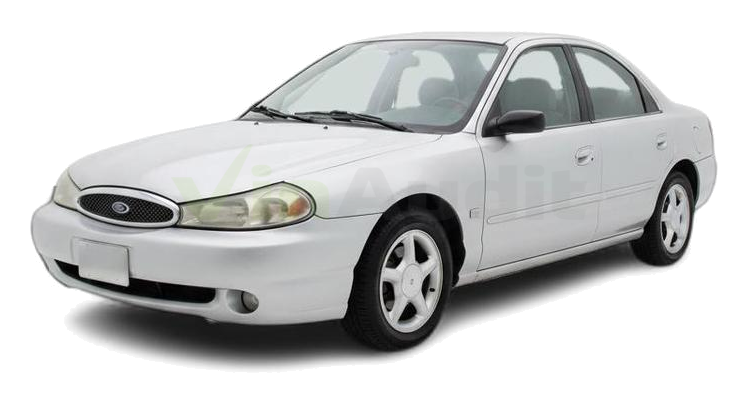
The Good
The 1998 Ford Contour offered responsive handling and a refined ride, appealing to driving enthusiasts. Its European-inspired styling provided a sophisticated aesthetic. For practical buyers, it presented a decent value proposition with acceptable fuel economy and a comfortable interior for its class.
The Bad
Potential buyers of the 1998 Ford Contour should be aware of potential issues with the automatic transmission, particularly concerning premature failure. Engine coolant leaks and electrical gremlins, such as power window malfunctions, are also commonly reported concerns that require attention.
1998 Ford Contour: Quick Overview
- Engine Options:
- 2.0L Zetec I4
- 2.5L Duratec V6
- Horsepower:
- 2.0L Zetec I4: Approximately 125 hp
- 2.5L Duratec V6: Approximately 170 hp (standard on SE, GL/Sport)
- Fuel Economy (EPA Estimates, Varies by transmission and engine):
- 2.0L I4 (Manual): ~21 MPG city / 29 MPG highway
- 2.0L I4 (Automatic): ~20 MPG city / 27 MPG highway
- 2.5L V6 (Manual): ~19 MPG city / 27 MPG highway
- 2.5L V6 (Automatic): ~18 MPG city / 25 MPG highway
- 0-60 Times (Approximate, Varies by engine and transmission):
- 2.0L I4: ~9.5 - 10.5 seconds
- 2.5L V6: ~8.0 - 8.8 seconds
- Towing Capacity: Not applicable or recommended for this vehicle class.
- Trim-Level Features (General):
- Base: Standard features usually included power windows, power locks, air conditioning, and an AM/FM stereo.
- SE: Added features often included alloy wheels, upgraded interior upholstery, cruise control, a tilt steering wheel, and sometimes a power driver's seat.
- GL/Sport: Typically featured the V6 engine as standard, sport-tuned suspension, fog lights, unique exterior trim, and often more premium interior appointments like leather seating options.
1998 Ford Contour Specifications
Vehicle Information
| Year | 1998 |
| Make | Ford |
| Model | Contour |
| Trim | - |
| Style | - |
| Type | Sedan |
| Category | Compact Car |
Manufacturing Details
| Made In | United States |
| Manufacturing City | OAKVILLE |
Dimensions
| Doors | 4-Door |
| Curb Weight | - |
| Gross Vehicle Weight Rating | - |
| Overall Height | - |
| Overall Length | - |
| Overall Width | - |
| Wheelbase Length | - |
| Standard Seating | - |
Engine & Performance
| Engine | 2.5L V6 |
| Engine Size | 2.5L |
| Engine Cylinders | 6 |
| Transmission | - |
| Transmission Type | - |
| Transmission Speeds | - |
| Drivetrain | - |
Additional Features
| Anti-Brake System | - |
| Steering Type | - |
Pricing
| Manufacturer Suggested Retail Price (MSRP) | - |
| Invoice Price | - |
| Delivery Charges | - |
Vehicle History Report
Specifications
History
Events
History Check
Check
Check
Check
Check
Listings
Recalls
Check
Analysis
What Problems Does the 1998 Ford Contour Have?
Another common area of concern is the engine coolant system. Leaks from the radiator, hoses, and the intake manifold gasket are not uncommon. Overheating can result from these leaks, leading to more severe engine damage if not addressed promptly. The 2.5L V6 engine, while offering good power, can be susceptible to intake manifold gasket failures, which can be costly to repair due to the labor involved.
Electrical gremlins also plague the Contour. Power window regulators are known to fail, leading to windows that won't go up or down. Issues with the instrument cluster, such as non-functioning gauges or warning lights, have also been reported. Some owners have experienced problems with the fuel pump, leading to starting issues or stalling.
While there haven't been widespread, catastrophic recalls specifically for the 1998 model year that stand out as major design flaws, it's always advisable to check for any outstanding recalls with Ford. Long-term reliability is often hampered by the transmission issues and the potential for ongoing minor electrical and cooling system repairs. Maintenance is key; regular fluid changes for the transmission and cooling system can help mitigate some of these problems, but owners should be prepared for potential repairs, especially as the vehicle ages.
How long will the 1998 Ford Contour last?
What Technology & Safety Features are Included?
Entertainment: Standard entertainment typically included an AM/FM stereo with a cassette player. Optional upgrades could include a CD player, providing a more modern listening experience for the late 90s. Sound systems were generally basic, with a few speakers strategically placed in the doors and dashboard.
Driver-Assistance Features: Driver-assistance features were quite limited in 1998. The Contour generally offered standard power steering, a tilt steering wheel for driver comfort, and cruise control was often available, especially on higher trims like the SE and GL/Sport. Anti-lock brakes (ABS) were typically standard or an option on most trims, enhancing braking control. Electronic brake-force distribution (EBD) might have been available as an option on some models to further optimize braking performance.
Safety Features: Standard safety features included front airbags for the driver and front passenger. Seatbelt pre-tensioners were also standard to help secure occupants during a collision. Side-impact airbags were not widely available or standard on the 1998 Contour, being more of a premium option if offered at all. The body structure was designed with crumple zones to absorb impact energy.
Crash-Test Ratings: The Ford Contour generally performed averagely in government crash tests for its era. The National Highway Traffic Safety Administration (NHTSA) rated the Contour with four out of five stars for frontal driver and passenger protection. Side-impact protection ratings varied but were generally considered adequate for the time. However, compared to modern vehicles, its safety systems and structural integrity are significantly less advanced. Optional features were relatively limited, with the main additions being things like alloy wheels, upgraded sound systems, and sometimes a power driver's seat.
What Colors Options are Available?
1998 Ford Contour Prices and Market Value
Currently, on the used market, 1998 Ford Contours can be found for prices typically ranging from $1,500 to $4,000, depending heavily on mileage, condition, and trim level. Vehicles with lower mileage and in excellent condition, particularly V6 models with manual transmissions, can fetch slightly higher prices. Factors significantly affecting resale value include the known transmission issues, overall mechanical condition, interior and exterior wear and tear, and maintenance history. A well-documented service history can positively impact its value, while evidence of neglect, especially concerning transmission or coolant system problems, will drastically reduce it.
1998 Ford Contour Cost of Ownership
1998 Ford Contour Fuel Efficiency
1998 Ford Contour Safety Rating
NHTSA
1998 Ford Contour Recalls & Defects
Exterior Lighting:headlights
Power Train:automatic Transmission:lever and Linkage:floor Shift
Exterior Lighting:headlights:switch
AIR Bags:frontal:sensor/Control Module-Inactive
Vehicle Speed Control
Service Brakes, Hydraulic:foundation Components
Fuel System, Other:storage:tank Assembly
Suspension:front:springs:coil Springs
Electrical System
Suspension:front:springs:coil Springs
Service Brakes, Hydraulic
Suspension
1998 Ford Contour Insurance
reasonable repair costs.
How Does the 1998 Ford Contour Compare to Other Sedan?
Performance: The Contour, particularly with the V6 engine and manual transmission, offered a more engaging and sporty driving experience than many of its peers, often praised for its European-inspired handling and chassis dynamics. The Honda Accord and Toyota Camry were known for their smooth and refined rides, but often less so for outright sportiness.
Features: Features on the Contour were competitive for its time, offering standard power amenities and optional upgrades like CD players and upgraded upholstery. However, rivals like the Honda Accord often boasted slightly more advanced available technology and creature comforts across their lineups. The Camry was known for its comfortable and well-appointed interior.
Reliability: This is where the Contour often fell short compared to its Japanese competitors. While the Honda Accord and Toyota Camry built legendary reputations for bulletproof reliability and longevity, the Contour was plagued by known issues, most notably with its automatic transmissions. This made it a less dependable choice for long-term ownership compared to its rivals.
Price: The Contour was generally priced competitively, often slotting between the more affordable domestic options and the slightly pricier Japanese offerings.
Recommendations:
For buyers prioritizing absolute reliability and a comfortable, predictable ownership experience, the Honda Accord or Toyota Camry would be superior alternatives. They offer similar practicality and often better fuel economy with significantly fewer recurring mechanical headaches.
If a more engaging driving experience is a priority but reliability is still a concern, the Mazda Millennia (though a bit more upscale) could be considered, or potentially a sportier trim of the Accord.
Similar alternatives that offered decent handling without the same widespread transmission concerns might include certain trims of the Nissan Altima, though its interior refinement wasn't always as strong as the Contour's. The Chevrolet Malibu offered a more American-centric approach but often lacked the refined handling of the Contour.
Final Verdict: Is the 1998 Ford Contour a Good Sedan?
Whether it's worth buying depends heavily on the specific vehicle. A carefully inspected example, preferably with a V6 engine and a manual transmission (which tended to be more reliable than the automatics), and with a documented maintenance history showing proactive care, could be a good value. Buying used is the only practical option, with prices reflecting its age and known weaknesses. It is not recommended for those seeking a set-it-and-forget-it daily driver. Thorough pre-purchase inspection is paramount.

Cathleen V
Cathleen is an exceptional freelance writer covering hot topics in the automotive world from a gearhead's perspective. Her articles delve into various aspects of automotive technology and history, offering readers detailed insights into engine performance, reliability, and maintenance. Through her engaging and informative writing, Cathleen provides valuable information to automotive enthusiasts and consumers alike, helping them make informed decisions about vehicle maintenance and purchases.