
The Good
The 2022 Ford E-Transit boasts instant electric torque for strong performance and a remarkably quiet, smooth ride enhancing comfort. Its robust electric powertrain promises enhanced reliability with fewer moving parts. High efficiency, zero emissions, and lower operational costs appeal practically, while its environmental benefits and quiet operation offer emotional satisfaction, presenting strong value for conscientious businesses.
The Bad
Potential weaknesses for the 2022 Ford E-Transit include its relatively limited range compared to gasoline vans, especially when fully loaded or in cold weather, which might induce range anxiety. Charging infrastructure availability and speed can also be a concern, and the upfront purchase price is higher than its ICE counterpart.
2022 Ford E-Transit: Quick Overview
- Engine/Motor: The 2022 Ford E-Transit is powered by a single electric motor.
- Horsepower: It delivers 266 horsepower (198 kW).
- Torque: A significant 317 lb-ft of torque is available instantly.
- Fuel Economy (MPGe): The E-Transit boasts an EPA-estimated range of 126 miles for the low-roof cargo van, translating to approximately 68 MPGe combined (city/highway) for that configuration. This rating can vary based on the specific body configuration and driving conditions.
- 0-60 Times: As a commercial van, 0-60 mph times are not typically published or a primary performance metric. However, the instant torque from the electric motor provides brisk acceleration suitable for urban delivery cycles.
- Towing Capacity: Ford generally does not recommend towing with the E-Transit. Its design and powertrain are optimized for payload capacity and urban delivery routes, not heavy towing. Therefore, official towing capacity figures are not prominently featured or are very limited.
- Battery: It features a 68 kWh usable energy capacity battery.
- Charging: Supports AC (Level 2) charging up to 11.3 kW and DC fast charging up to 115 kW, allowing for an 80% charge in about 34 minutes with a DC fast charger.
- Payload Capacity: Up to 3,880 lbs for the cargo van and 4,428 lbs for the chassis cab, varying by configuration.
- Trim-Level Features & Configurations:
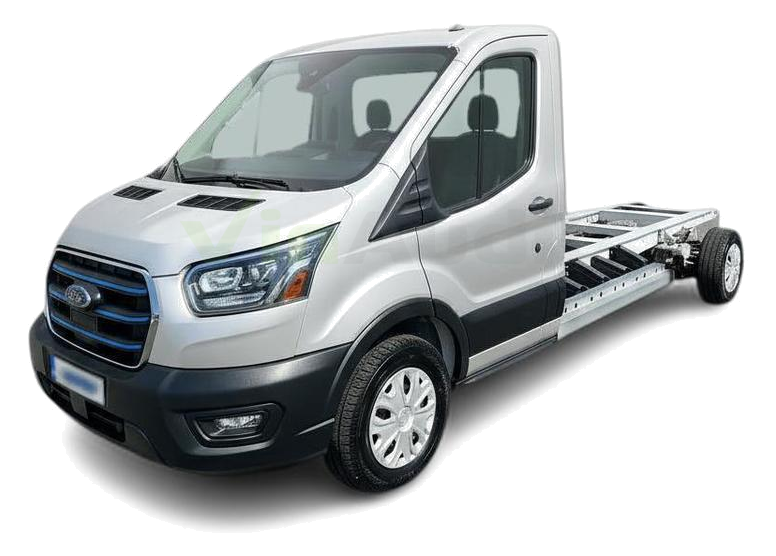
- Body Styles: Available as a Cargo Van, Chassis Cab, and Cutaway.
- Cargo Van: Offers three roof heights (low, medium, high) and three lengths (regular, long, extended).
- Chassis Cab & Cutaway: Designed for custom upfitting, allowing businesses to adapt the vehicle to specific needs (e.g., box trucks, utility bodies).
- Standard Features: Includes Ford Co-Pilot360™ Technologies (pre-collision assist with automatic emergency braking), SYNC® 4 with a 12-inch touchscreen, FordPass™ Connect with 4G LTE Wi-Fi hotspot, and intelligent access with push-button start.
- Ford Pro Telematics™: Integrated connectivity solutions for fleet management, charging management, and vehicle health monitoring.
- Pro Power Onboard: An optional feature providing up to 2.4 kW of exportable power, allowing tools and equipment to be powered directly from the vehicle's battery.
- Interior: Durable vinyl seating, ample storage, and a modern, functional cabin designed for commercial use.
2022 Ford E-Transit Specifications
Vehicle Information
| Year | 2022 |
| Make | Ford |
| Model | E-Transit |
| Trim | - |
| Style | - |
| Type | Van |
| Category | Cargo Van |
Manufacturing Details
| Made In | United States |
| Manufacturing City | KANSAS CITY |
Dimensions
| Doors | - |
| Curb Weight | - |
| Gross Vehicle Weight Rating | 10000 pounds |
| Overall Height | - |
| Overall Length | - |
| Overall Width | - |
| Wheelbase Length | - |
| Standard Seating | - |
Engine & Performance
| Engine | ELECTRIC |
| Engine Size | 7.3L |
| Engine Cylinders | 8 |
| Transmission | 6-Speed Automatic |
| Transmission Type | Automatic |
| Transmission Speeds | 6-Speed |
| Drivetrain | Rear-Wheel Drive |
Additional Features
| Anti-Brake System | Standard |
| Steering Type | - |
Pricing
| Manufacturer Suggested Retail Price (MSRP) | - |
| Invoice Price | - |
| Delivery Charges | - |
Vehicle History Report
Specifications
History
Events
History Check
Check
Check
Check
Check
Listings
Recalls
Check
Analysis
What Problems Does the 2022 Ford E-Transit Have?
Common Concerns for New EVs (Applicable to E-Transit):
- Software Glitches: New EV platforms often experience initial software bugs related to infotainment, charging management, or driver-assistance systems. These are typically resolved with over-the-air (OTA) updates.
- Charging System Quirks: Compatibility issues with various public charging stations or occasional charging interruptions can occur, though these often improve as infrastructure matures and vehicle software is refined.
- Battery Degradation: While Ford provides a battery warranty (typically 8 years/100,000 miles), long-term battery degradation is a general EV concern. How quickly the E-Transit's battery capacity diminishes under commercial use (frequent charging/discharging, varied loads) will be a key long-term reliability factor.
- Range Fluctuations: Owners may report variability in real-world range, especially under heavy loads, in extreme temperatures (hot or cold), or with aggressive driving, which can be perceived as an issue if not anticipated.
Recalls for 2022 Ford E-Transit:
As of my last update, specific significant recalls for widespread critical issues are relatively few, which is positive for a new model. However, recalling minor components is common across the auto industry. Owners should always check the NHTSA (National Highway Traffic Safety Administration) website or Ford's official recall checker with their VIN for the most up-to-date and specific recall information, as recalls can be issued at any time. For instance, some minor recalls related to seat belt components or specific software updates might have been issued. The '22 model year being the first, some early production adjustments via recall or service bulletin are not uncommon.
Long-Term Reliability Concerns:
The electric powertrain generally has fewer moving parts than an internal combustion engine, theoretically leading to lower mechanical wear. However, the longevity of specialized EV components like the power electronics, thermal management system, and the traction motor itself, under the demanding duty cycles of a commercial fleet, will define its long-term reliability. Ford's established commercial vehicle reputation suggests robust engineering, but the transition to electric introduces new variables.
How long will the 2022 Ford E-Transit last?
What Technology & Safety Features are Included?
Built-in Tech & Entertainment:
The centerpiece of the E-Transit's cabin technology is the standard SYNC® 4 infotainment system, presented on a large and intuitive 12-inch touchscreen. This system offers enhanced voice recognition, cloud-based connectivity, and allows for over-the-air (OTA) updates, ensuring the system stays current. It includes wireless Apple CarPlay® and Android Auto™ compatibility for seamless smartphone integration. FordPass™ Connect provides a 4G LTE Wi-Fi hotspot, keeping drivers and their devices connected. For commercial fleet managers, the integration with Ford Pro Telematics™ is crucial, offering tools for vehicle tracking, driver behavior monitoring, charge management, and vehicle health alerts, significantly aiding operational efficiency. The standard audio system provides essential entertainment, with USB ports available for device charging.
Driver-Assistance Features:
Ford equips the E-Transit with a range of driver-assistance technologies under its Ford Co-Pilot360™ suite, many of which are standard or available as options. Standard features often include:
- Pre-Collision Assist with Automatic Emergency Braking (AEB): Helps detect potential collisions with vehicles or pedestrians and can apply the brakes if necessary.
- Lane-Keeping System: Alerts the driver if the vehicle drifts out of its lane without signaling.
- Blind Spot Information System (BLIS®) with Cross-Traffic Alert: Warns drivers of vehicles in their blind spots and approaching traffic when backing up.
- Adaptive Cruise Control: Maintains a set speed and distance from the vehicle ahead.
- Post-Collision Braking: Automatically applies the brakes after a collision to help reduce the severity of a secondary impact.
- Reverse Sensing System: Uses ultrasonic sensors to detect objects behind the vehicle.
- Enhanced Active Park Assist: Assists with parallel and perpendicular parking maneuvers.
- 360-Degree Camera with Split View Display: Provides a comprehensive view around the vehicle, invaluable for maneuvering in tight urban spaces.
Safety Features:
Standard safety features include a comprehensive airbag system, anti-lock brakes (ABS), traction control, electronic stability control, and a tire pressure monitoring system. The robust body structure of the Transit line also contributes to occupant protection. The E-Transit specifically benefits from the foundational safety engineering of its gasoline counterpart.
Crash-Test Ratings:
Commercial vans, particularly those designed for specific utility purposes, are often not subjected to the full suite of crash-test ratings by organizations like the National Highway Traffic Safety Administration (NHTSA) or the Insurance Institute for Highway Safety (IIHS) in the same manner as passenger vehicles. Therefore, specific crash-test ratings for the 2022 Ford E-Transit may not be readily available or published.
What Colors Options are Available?
2022 Ford E-Transit Prices and Market Value
2022 Ford E-Transit Cost of Ownership
2022 Ford E-Transit Fuel Efficiency
2022 Ford E-Transit Safety Rating
NHTSA
2022 Ford E-Transit Recalls & Defects
Power Train:axle Assembly:axle Shaft
2022 Ford E-Transit Warranty
Basic
Powertrain
Rust
2022 Ford E-Transit Insurance
reasonable repair costs.
How Does the 2022 Ford E-Transit Compare to Other Van?
Performance: The E-Transit's 266 hp and 317 lb-ft of instant electric torque provide strong acceleration and smooth driving dynamics, especially beneficial in stop-and-go urban environments. This often outperforms the low-end torque delivery of some naturally aspirated gasoline rivals. The Mercedes eSprinter, depending on its specific market configuration (often a smaller battery/motor in initial versions), might offer similar or slightly less power/range than the E-Transit in certain regions. The upcoming Ram ProMaster EV aims for competitive power and range.
Features: The E-Transit stands out with its standard 12-inch SYNC® 4 touchscreen and deep integration with Ford Pro Telematics, offering robust fleet management and connectivity solutions. Its optional Pro Power Onboard is a significant advantage, providing exportable power for tools. Rivals offer varying tech levels; Mercedes eSprinter has its MBUX infotainment, but Ford Pro's ecosystem is a strong differentiator. Driver-assistance features are generally competitive across brands.
Reliability: As a first-generation EV, long-term reliability data for the E-Transit is still accumulating. The electric powertrain inherently has fewer moving parts, potentially leading to fewer mechanical failures than ICE vans. However, the reliability of new EV-specific components (battery, power electronics) under commercial stress is yet to be fully proven compared to the decades of data on ICE vans. Mercedes and Ram also benefit from extensive commercial vehicle experience.
Price: The E-Transit's new price point (starting around $47,190) is generally higher than equivalent gasoline vans, but often lower than the starting price of the Mercedes eSprinter, making it a competitive value proposition within the EV commercial space. Government incentives can significantly offset the upfront cost.
Alternatives:
- Mercedes-Benz eSprinter: A strong rival, known for quality and similar commercial focus. Consider it for brand preference or specific feature needs.
- Ram ProMaster EV: Anticipate competitive payload and range, potentially appealing to existing Ram fleet users.
- Gasoline Vans (Ford Transit, Mercedes Sprinter, Ram ProMaster): If daily range requirements exceed the E-Transit's capabilities, or if charging infrastructure is lacking, traditional ICE vans remain a more flexible and often cheaper upfront alternative. They also typically offer higher towing capacities.
Final Verdict: Is the 2022 Ford E-Transit a Good Van?

Jovan
Jovan specializes in interpreting vehicle records and making sense of VIN data. With over 10 years of experience in the automotive data industry, his work ensures that every report is clear, accurate, and useful for car buyers.