
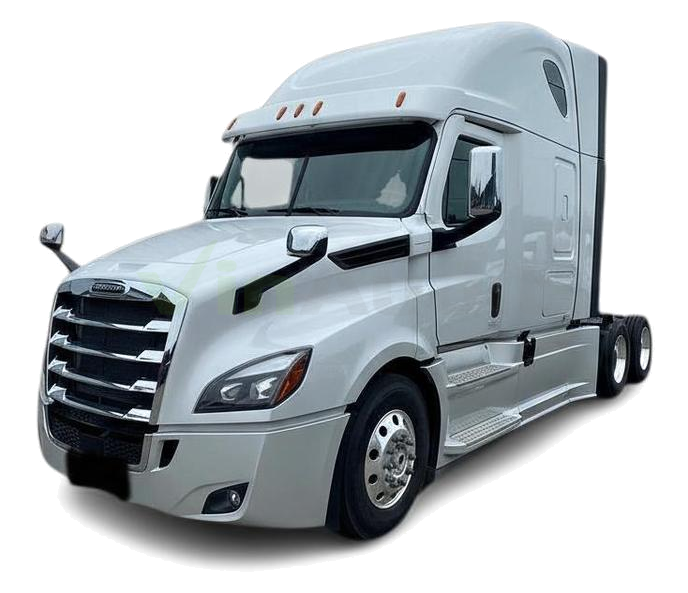
The Good
The 2024 Cascadia offers robust performance with powerful Detroit engines, renowned reliability, and superior driver comfort through its spacious, quiet cab. Its aerodynamic design ensures class-leading fuel efficiency, appealing to practical buyers seeking lower operating costs. Emotionally, drivers appreciate its advanced tech and comfortable "home on the road" feel, contributing to excellent overall value and retention.
The Bad
Potential weaknesses for the 2024 Cascadia can include the complexity and cost of repairing its advanced electronic systems, particularly emissions and driver-assistance technologies. While robust, these systems can require specialized diagnostics. The initial purchase price, especially for highly optioned models, is significant, and specific parts can be proprietary and expensive, impacting maintenance budgets.
2024 Freightliner Cascadia: Quick Overview
- Engine Options: The 2024 Cascadia primarily offers Detroit Diesel engines, including the DD13, DD15, and DD16, known for their efficiency and power. Cummins X15 engines are also available for specific configurations, providing alternative performance characteristics and fleet commonality.
- Horsepower: Horsepower ranges from approximately 350 HP for lighter-duty applications up to 600 HP for heavy-haul or performance-oriented setups, with ample torque delivered across the range for various demands.
- Fuel Economy: Fuel economy is highly variable, influenced by factors such as engine choice, axle ratios, aerodynamic packages, driving habits, load weight, and terrain. However, the Cascadia is engineered for segment-leading efficiency, often achieving 7-10+ MPG in real-world long-haul scenarios, thanks to its optimized powertrain and aerodynamic design.
- 0-60 Times: "0-60 mph" times are not a standard performance metric for Class 8 semi-trucks, which prioritize torque and sustained pulling power over rapid acceleration. Performance is measured more by gradeability and acceleration under load.
- Towing Capacity (GCWR): The Cascadia, as a Class 8 truck, is designed to operate within the standard Gross Combination Weight Rating (GCWR) of 80,000 lbs in most configurations for over-the-road freight. Specialized heavy-haul versions can achieve higher GCWRs with appropriate permits and configurations.
- Trim-Level Features:
- Day Cab: Focuses on utility for regional and local hauls, featuring robust construction, comfortable seating, and essential driver controls.
- Mid-Roof XT: Offers a sleeper compartment with stand-up room, balancing efficiency and overnight comfort. Features include enhanced storage, a comfortable bunk, and options for infotainment and HVAC.
- Raised Roof: The premium sleeper trim, providing maximum interior volume, full stand-up height, and extensive amenities for long-haul drivers. This trim includes larger bunks, ample storage, preparation for appliances (e.g., refrigerator, microwave), and often more advanced infotainment and climate control systems.
- Common Across Trims (Optional/Standard): Detroit Connect telematics, Detroit Assurance 5.0 suite of safety systems, ergonomic dashboard with digital displays, customizable interior finishes, premium seating options, advanced LED lighting, and various aerodynamic fairings and chassis extensions to optimize fuel efficiency.
2024 Freightliner Cascadia Specifications
Vehicle Information
| Year | 2024 |
| Make | Freightliner |
| Model | Cascadia |
| Trim | - |
| Style | Cascadia Truck RWD 10AT 14.8L I6 |
| Type | Pickup Truck |
| Category | passenger |
Manufacturing Details
| Made In | Mexico |
| Manufacturing City | SALTILLO |
Dimensions
| Doors | 2-Door |
| Curb Weight | - |
| Gross Vehicle Weight Rating | - |
| Overall Height | - |
| Overall Length | - |
| Overall Width | - |
| Wheelbase Length | - |
| Standard Seating | - |
Engine & Performance
| Engine | 14.8L I6 |
| Engine Size | 14.8L |
| Engine Cylinders | 6 |
| Transmission | 10-Speed Automatic |
| Transmission Type | Automatic |
| Transmission Speeds | 10-Speed |
| Drivetrain | Rear-Wheel Drive |
Additional Features
| Anti-Brake System | - |
| Steering Type | - |
Pricing
| Manufacturer Suggested Retail Price (MSRP) | - |
| Invoice Price | - |
| Delivery Charges | - |
Vehicle History Report
Specifications
History
Events
History Check
Check
Check
Check
Check
Listings
Recalls
Check
Analysis
What Problems Does the 2024 Freightliner Cascadia Have?
HVAC system performance can sometimes be inconsistent, particularly with auxiliary power units or climate control in extreme temperatures. Given the advanced nature of the Detroit Assurance 5.0 safety suite, occasional sensor calibration issues or false alerts are possible, though updates generally address these promptly. For newer models like the 2024, software-related bugs affecting various integrated systems are a potential, albeit usually resolvable, concern as new technologies are rolled out.
Recalls for Freightliner Cascadia models across various years have addressed a range of components. While specific 2024 recalls may still be emerging, past recalls for previous model years have included issues with steering components, brake systems (e.g., air lines, slack adjusters), specific wiring harnesses, seat belt retractors, and even axle assemblies. It's crucial for owners to stay informed about NHTSA recalls. Long-term reliability concerns for any modern truck include the lifespan and cost of maintaining sophisticated emissions equipment, turbochargers, and the increasing number of electronic modules. Proper preventative maintenance is paramount to mitigate these potential issues and ensure a long service life.
How long will the 2024 Freightliner Cascadia last?
What Technology & Safety Features are Included?
Driver-assistance systems are a major highlight, primarily through the advanced Detroit Assurance 5.0 suite. This comprehensive package includes:
- Adaptive Cruise Control (ACC): Maintains a set following distance from vehicles ahead.
- Active Brake Assist (ABA 5.0): Utilizes radar and camera technology to detect moving and stationary objects, providing audible, visual warnings, and applying full braking if necessary.
- Lane Departure Warning (LDW): Alerts the driver if the truck drifts out of its lane without signaling.
- Traffic Sign Display: Recognizes and displays speed limits and other important road signs.
- Side Guard Assist: Monitors the passenger-side blind spot, especially useful in urban environments for detecting vehicles or objects.
- Automatic Emergency Braking (AEB): A critical safety feature designed to prevent or mitigate frontal collisions.
Additional safety features include Electronic Stability Control (ESC), Antilock Braking System (ABS), Roll Stability Control, and driver-side airbags. LED lighting is standard or optional across various exterior lights for improved visibility and longevity. It is important to note that Class 8 commercial vehicles are not subjected to the same "crash-test ratings" as passenger cars by organizations like NHTSA or IIHS. Instead, safety is assessed through adherence to commercial vehicle regulations, active safety system effectiveness, and robust structural integrity designed for heavy-duty operation and crash prevention.
What Colors Options are Available?
2024 Freightliner Cascadia Prices and Market Value
2024 Freightliner Cascadia Cost of Ownership
2024 Freightliner Cascadia Fuel Efficiency
2024 Freightliner Cascadia Insurance
reasonable repair costs.
How Does the 2024 Freightliner Cascadia Compare to Other Pickup Truck?
Regarding features, the Cascadia excels with its Detroit Assurance 5.0 safety suite, offering one of the most comprehensive driver-assistance packages. Its integrated digital cockpit and Detroit Connect telematics are highly advanced. The Volvo VNL is another strong contender in technology and safety, particularly known for its ergonomic and quiet cab. Kenworth T680 and Peterbilt 579 offer premium interiors and strong brand loyalty, with their own suites of safety and infotainment tech, often leveraging Cummins engines for performance. The International LT Series provides a solid, value-oriented package with a focus on uptime.
Reliability across these brands is generally high, with all manufacturers producing durable trucks capable of immense mileage. However, the Cascadia's integrated Detroit powertrain and electronics are designed for seamless operation. Issues, when they arise, often relate to the complexity of modern emissions systems, which is common across all brands. Volvo is often praised for its robust build, while Kenworth and Peterbilt benefit from a strong reputation for driver satisfaction and aftermarket support.
Price-wise, the Cascadia is competitive, often offering a strong value proposition, particularly for large fleets. Fully specced models can reach similar price points as premium offerings from Kenworth, Peterbilt, or Volvo. Alternatives that are similar in nature include the Volvo VNL, highly recommended for its advanced safety and driver comfort, and the Kenworth T680, known for its strong resale value and premium driver experience. For a more budget-conscious option with solid capabilities, the International LT Series could be considered.
Final Verdict: Is the 2024 Freightliner Cascadia a Good Pickup Truck?
For fleets maximizing uptime and warranty coverage, a new Cascadia, particularly a Raised Roof sleeper for driver retention, is an excellent investment. Owner-operators seeking a lower entry cost might find a used Cascadia (3-5 years old with good maintenance records) to be a smart purchase, offering much of the new truck's capabilities at a reduced price. Day Cab versions are perfect for regional or local applications. Its blend of innovation and proven reliability makes it a top choice, provided the owner is prepared for the standard high operational costs of a Class 8 truck.

Drew B
Drew is a seasoned automotive expert and contributor to VinCheck.info. With nearly 15 years of experience as a former Porsche technician, he brings a wealth of hands-on knowledge to his writing. Born in North Carolina, a region renowned for its deep-rooted NASCAR culture, Drew developed a passion for cars early in life, often building and working on vehicles from a young age. At VINCheck, Drew leverages his extensive technical background to provide in-depth analyses of various vehicles. His articles often focus on engine performance, reliability, and maintenance insights, offering readers practical information grounded in real-world experience. Some of his notable contributions include reviews on the Mazda CX-5's longevity and detailed examinations of engine options for models like the 2011 Toyota Camry and Tacoma