
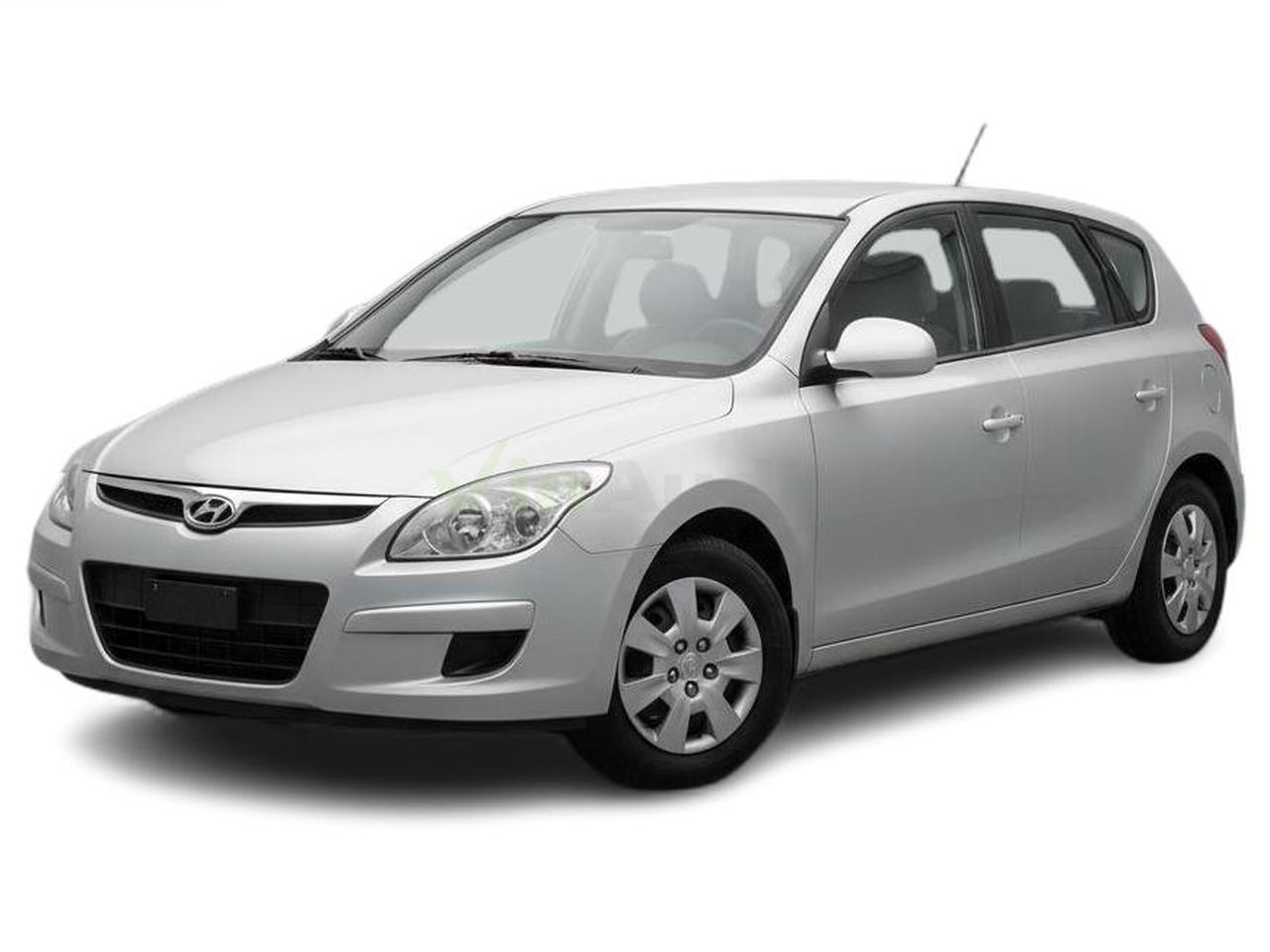
The Good
The 2011 Elantra Touring excels in value, offering generous standard features at an affordable price. Its practical hatchback design provides exceptional cargo space, appealing to families and adventurers. Decent fuel efficiency and generally good reliability ensure low running costs for practical buyers. The comfortable ride and user-friendly interior also contribute to an emotionally satisfying ownership experience.
The Bad
Potential weaknesses for the 2011 Elantra Touring include reported issues with excessive oil consumption in some engines, premature wear of suspension components leading to noise, and occasionally a "clunking" steering shaft or motor coupler. Owners should also inspect for common A/C compressor failures and rust, particularly in salt-belt regions.
2011 Hyundai Elantra Touring: Quick Overview
- Engine: The 2011 Hyundai Elantra Touring was primarily offered with one engine option across its lineup. This was a 2.0-liter DOHC 16-valve inline 4-cylinder engine with CVVT (Continuously Variable Valve Timing).
Horsepower: This 2.0-liter engine produced 138 horsepower at 6,000 rpm and 136 lb-ft of torque at 4,600 rpm. While not a performance powerhouse, it provided adequate power for daily commuting and highway driving.
Fuel Economy (EPA Estimates):- Automatic Transmission: 23 MPG city / 31 MPG highway / 26 MPG combined
- Manual Transmission: 23 MPG city / 31 MPG highway / 26 MPG combined
0-60 MPH Acceleration: The 0-60 mph time for the Elantra Touring was not a focal point and typically ranged from approximately 9.0 to 9.5 seconds, depending on the transmission and specific test conditions.
Towing Capacity: The 2011 Hyundai Elantra Touring was not rated for towing by the manufacturer in North America. It is not recommended for towing purposes.
Trim-Level Features:- GLS: The base GLS trim typically included standard features such as 15-inch steel wheels with wheel covers, air conditioning, power windows and door locks, power heated side mirrors, remote keyless entry, a 6-speaker AM/FM/CD/MP3 audio system with auxiliary input, USB port, and iPod connectivity, tilt steering wheel, and a 60/40 split-folding rear seat.
SE: The SE trim built upon the GLS features, adding more upscale appointments. These often included 17-inch alloy wheels, a sport-tuned suspension, projector-style headlights with black bezels, fog lights, a power sunroof, steering wheel-mounted audio controls, cruise control, a leather-wrapped steering wheel and shift knob, front seat-back pockets, and heated front seats. Some models might have also included an upgraded audio system.
2011 Hyundai Elantra Touring Specifications
Vehicle Information
| Year | 2011 |
| Make | Hyundai |
| Model | Elantra Touring |
| Trim | - |
| Style | - |
| Type | Hatchback |
| Category | Compact Car |
Manufacturing Details
| Made In | South Korea |
| Manufacturing City | ULSAN |
Dimensions
| Doors | 5-Door |
| Curb Weight | 1411.58 kg |
| Gross Vehicle Weight Rating | - |
| Overall Height | 151.89 cm |
| Overall Length | 447.55 cm |
| Overall Width | 176.53 cm |
| Wheelbase Length | 270 cm |
| Standard Seating | 5 |
Engine & Performance
| Engine | 2L I4 |
| Engine Size | 2L |
| Engine Cylinders | 4 |
| Transmission | 5-Speed Manual |
| Transmission Type | Manual |
| Transmission Speeds | 5-Speed |
| Drivetrain | Front-Wheel Drive |
Additional Features
| Anti-Brake System | 4-Wheel ABS |
| Steering Type | Rack & Pinion |
Pricing
| Manufacturer Suggested Retail Price (MSRP) | $15,995 USD |
| Invoice Price | $15,539 USD |
| Delivery Charges | $750 USD |
Vehicle History Report
Specifications
History
Events
History Check
Check
Check
Check
Check
Listings
Recalls
Check
Analysis
What Problems Does the 2011 Hyundai Elantra Touring Have?
Steering issues, such as a "clunking" sound when turning the steering wheel, often point to a worn rubber coupling in the electric power steering (EPS) motor, an inexpensive part but somewhat involved repair. Air conditioning compressor failures are also frequently cited, leading to loss of cooling. Owners in regions exposed to road salt should carefully inspect for rust, especially on subframe components and wheel wells, as rust protection was not always optimal.
Regarding recalls, the 2011 Elantra Touring was subject to the widespread Hyundai/Kia stop lamp switch recall (NHTSA Campaign Number: 13V113000). This recall addressed an issue where the brake light switch could fail, causing brake lights to not illuminate, the cruise control to not disengage, or the vehicle to be shifted out of park without the brake pedal being pressed. There were also smaller, specific recalls related to occupant detection systems in some models. While the vehicle generally offers reasonable reliability for its class, these common issues highlight areas where a pre-purchase inspection is highly recommended to assess its long-term reliability and potential repair costs.
How long will the 2011 Hyundai Elantra Touring last?
What Technology & Safety Features are Included?
Driver-assistance features were quite basic, reflecting the technology prevalent in compact cars of that time. It did not offer modern advanced driver-assistance systems (ADAS) like blind-spot monitoring or lane-keeping assist. Its safety foundation rested on a comprehensive set of passive and active safety measures.
Standard safety features included a full complement of airbags: front airbags, front seat-mounted side-impact airbags, and front and rear side curtain airbags. Active safety systems comprised 4-wheel anti-lock brakes (ABS) with Electronic Brakeforce Distribution (EBD), Electronic Stability Control (ESC), and a Traction Control System (TCS). These systems were designed to help maintain vehicle control in challenging driving conditions.
Optional features included a power sunroof, which added to the open-air experience, and the aforementioned Bluetooth connectivity. Crash-test ratings for the 2011 Elantra Touring were generally good. The National Highway Traffic Safety Administration (NHTSA) gave it 4 out of 5 stars overall. The Insurance Institute for Highway Safety (IIHS) awarded it "Good" ratings in frontal offset and side impact tests, and an "Acceptable" rating for roof strength, making it a reasonably safe choice for its segment.
What Colors Options are Available?
2011 Hyundai Elantra Touring Prices and Market Value
2011 Hyundai Elantra Touring Cost of Ownership
2011 Hyundai Elantra Touring Fuel Efficiency
2011 Hyundai Elantra Touring Safety Rating
NHTSA
2011 Hyundai Elantra Touring Recalls & Defects
Exterior Lighting:brake Lights:switch
Structure:frame and Members
Service Brakes, Hydraulic:antilock/Traction Control/Electronic Limited Slip:control Unit/module
2011 Hyundai Elantra Touring Warranty
Basic
Powertrain
Rust
2011 Hyundai Elantra Touring Insurance
reasonable repair costs.
How Does the 2011 Hyundai Elantra Touring Compare to Other Hatchback?
In terms of performance, the Elantra Touring's 138-hp 2.0L engine provided adequate power for daily driving but was less spirited than the Mazda 3's more engaging chassis and engine options. It offered a more comfortable, if less athletic, ride compared to the Mazda. The Honda Fit, while less powerful, excelled in nimble handling and fuel efficiency.
Regarding features, Hyundai typically offered a strong value proposition. The Elantra Touring often came with more standard amenities for its price point than comparable base models of Japanese rivals, including USB/iPod connectivity and often cruise control. However, the Mazda 3 and some higher-trim Matrix models offered slightly more refined interiors.
Reliability is generally good, but the Elantra Touring does have specific known issues like oil consumption and steering coupler problems that Honda Fit and Toyota Matrix owners report less frequently. While the Elantra Touring is reliable, the long-term reputation of Toyota and Honda for bulletproof durability often puts them slightly ahead in consumer perception.
The price was where the Elantra Touring truly shone. Both new and on the used market, it consistently undercut most of its Japanese competitors while offering comparable, if not superior, features and cargo space. This made it an attractive option for budget-conscious buyers.
Similar alternatives that offer excellent utility and reliability include the Toyota Matrix (or its Pontiac Vibe twin), which boasts Toyota's renowned reliability and practicality. For those seeking better fuel economy and even more clever cargo configurability, the Honda Fit is a top contender, though it offers less raw power. If a sportier driving experience is a priority, the Mazda 3 hatchback remains a superior choice, albeit often at a slightly higher price point. The Kia Forte 5-door is a very similar alternative, sharing many underlying components with the Hyundai and offering comparable value.
Final Verdict: Is the 2011 Hyundai Elantra Touring a Good Hatchback?
It is absolutely worth buying, but only as a used vehicle, given its age and significant depreciation. The key is to find a well-maintained example. Focus on models with lower mileage and a complete service history to mitigate potential issues like oil consumption or suspension wear. The SE trim is generally recommended for its enhanced features, including alloy wheels, a sunroof, and steering wheel controls, which add to the ownership experience without a substantial price premium on the used market. A thorough pre-purchase inspection by a trusted mechanic is crucial to identify any looming maintenance or repair needs before committing.

Eugene S
Eugene is an automotive enthusiast with over 15 years of experience in the used car market. As a writer at VINCheck.info, he brings deep industry insight and a passion for cars, helping readers make smart, informed decisions. Eugene has written hundreds of used car reviews and is known for breaking down complex automotive topics into clear, actionable advice. Over the years, he has driven and worked on a wide range of vehicles—starting with tuning street cars in his early days and eventually focusing on performance upgrades and reliability improvements. Today, he specializes in evaluating used vehicles through the lens of real-world ownership and enthusiast needs. A longtime fan of Porsche, Eugene especially appreciates vehicles that blend durability with driving enjoyment.