
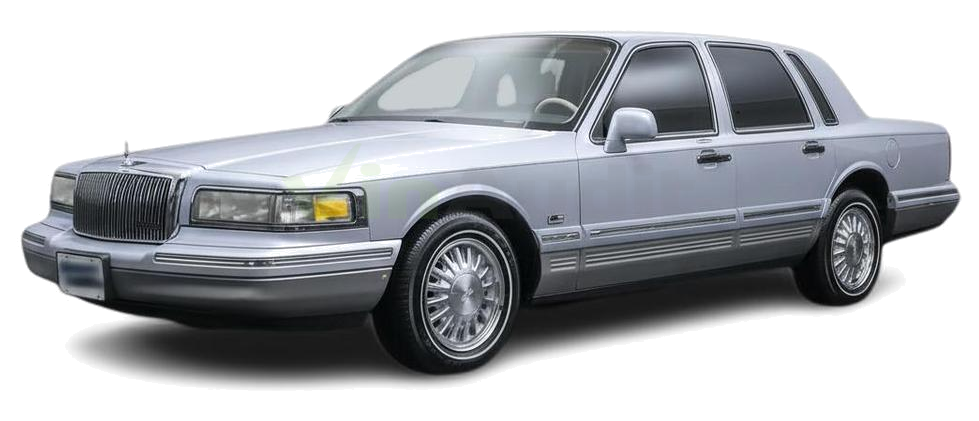
The Good
The 1995 Town Car excels in unparalleled comfort and a serene ride, appealing to emotional desires for luxury. Practically, its robust V8 engine offers reliable, effortless cruising, and its spacious interior provides exceptional utility for passengers and cargo, representing solid value.
The Bad
Potential weaknesses include aging suspension components leading to a floaty ride, potential electrical gremlins common in older vehicles, and a significant thirst for fuel. Rust, particularly in the undercarriage and wheel wells, can also be a concern for these models.
1995 Lincoln Town Car: Quick Overview
- Engine Options: The standard engine for the 1995 Lincoln Town Car was a 4.6L V8 (Modular engine).
- Horsepower: This engine typically produced around 205 horsepower.
- Torque: Approximately 260 lb-ft of torque.
- Fuel Economy: EPA estimated fuel economy was around 15 mpg city / 22 mpg highway.
- 0-60 Times: Acceleration was not a primary focus, with 0-60 mph times generally in the 9-10 second range.
- Towing Capacity: Not officially rated for towing, as it was designed as a passenger luxury vehicle.
- Transmission: A 4-speed automatic transmission (AOD-E/4R70W) was standard.
- Drivetrain: Rear-wheel drive.
- Body Style: 4-door sedan.
- Key Trim Features (Executive/Signature):
- Executive Series: Included standard features like power seats, automatic climate control, power windows and locks, cruise control, and premium sound system.
- Signature Series: Further enhanced the Executive series with additional luxury appointments such as leather seating, wood interior trim accents, a power moonroof, upgraded sound system, and often more advanced climate control. Memory seats and steering wheel adjustments were also common.
- Suspension: Designed for a smooth, comfortable ride, often featuring air suspension on the rear axle for adjustable ride height and improved comfort.
1995 Lincoln Town Car Specifications
Vehicle Information
| Year | 1995 |
| Make | Lincoln |
| Model | Town Car |
| Trim | - |
| Style | - |
| Type | Sedan |
| Category | Compact Car |
Manufacturing Details
| Made In | United States |
| Manufacturing City | LOUISVILLE |
Dimensions
| Doors | 4-Door |
| Curb Weight | - |
| Gross Vehicle Weight Rating | - |
| Overall Height | - |
| Overall Length | - |
| Overall Width | - |
| Wheelbase Length | - |
| Standard Seating | - |
Engine & Performance
| Engine | 4.6 L V-8 |
| Engine Size | 4.6L |
| Engine Cylinders | 8 |
| Transmission | - |
| Transmission Type | - |
| Transmission Speeds | - |
| Drivetrain | Rear-Wheel Drive |
Additional Features
| Anti-Brake System | - |
| Steering Type | - |
Pricing
| Manufacturer Suggested Retail Price (MSRP) | - |
| Invoice Price | - |
| Delivery Charges | - |
Vehicle History Report
Specifications
History
Events
History Check
Check
Check
Check
Check
Listings
Recalls
Check
Analysis
What Problems Does the 1995 Lincoln Town Car Have?
Electrical System: A frequent source of frustration is the electrical system. This can manifest as malfunctioning power windows, seats, mirrors, or issues with the instrument cluster. The Mass Air Flow (MAF) sensor can also fail, leading to poor engine performance and check engine lights. Battery drain is another concern.
Suspension and Steering: Over time, the air suspension system, particularly the rear air springs, can develop leaks, leading to a sagging rear end and a less comfortable ride. Ball joints and tie rods can also wear out, affecting steering and alignment. The steering rack can develop leaks.
Cooling System: Overheating can be an issue due to radiator leaks, faulty water pumps, or clogged hoses. The plastic intake manifold on some 4.6L engines can become brittle and crack, causing coolant leaks.
Transmission: While the 4R70W transmission is generally reliable, issues like slipping gears or harsh shifting can occur with age and mileage. Transmission fluid and filter changes are crucial for longevity.
Rust: For vehicles in rust-belt regions, rust can be a significant problem. It commonly affects the rocker panels, floor pans, rear wheel arches, and the frame rails. Thorough inspection of the undercarriage is essential.
Ignition System: Spark plug blowouts were a known issue on some earlier 4.6L engines, though this might be less prevalent in 1995 models compared to earlier iterations. However, ignition coil pack failures can occur.
Recalls: Specific recalls for the 1995 model year may exist, and it's advisable to check the NHTSA website for any outstanding safety recalls associated with the VIN. Common recall areas for these vehicles historically have included braking systems, airbags, and electrical components.
How long will the 1995 Lincoln Town Car last?
What Technology & Safety Features are Included?
Standard Tech & Entertainment:
The centerpiece of the infotainment system was a fairly basic AM/FM stereo radio, often with a cassette player. Higher trims might have offered a CD player option. Power amenities were abundant, including power-adjustable front seats, power windows, power door locks, and power mirrors. Automatic climate control was standard, allowing for precise cabin temperature regulation. Cruise control was also a standard feature.
Optional Features:
Optional upgrades could include a premium sound system, which might offer more speakers and better clarity. A power moonroof was a popular option for enhanced cabin ambiance. Onboard cellular phones were also available as an option in the early to mid-1990s, though these are now considered archaic. Some models might have had an optional trip computer providing basic driving information.
Driver-Assistance Features:
Driver-assistance features were very limited by today's standards. The primary focus was on making the driver's job easier through power steering and a smooth ride. Anti-lock Braking System (ABS) was standard, a significant safety enhancement for the time, helping prevent wheel lock-up during hard braking. Traction control might have been available on some higher trims or as an option.
Safety Features:
Standard safety equipment included airbags for the driver and front passenger. Seatbelts were standard. The robust construction of the Town Car contributed to its safety profile.
Crash-Test Ratings:
Specific crash-test ratings for the 1995 model year are difficult to find readily available from modern sources like IIHS or NHTSA for this vintage. However, based on tests conducted on similar Panther platform vehicles of that era, they generally performed adequately in frontal and side-impact tests for their time, benefiting from their substantial size and body-on-frame construction. Higher ratings were often achieved in frontal impacts compared to smaller vehicles of the period. Later models within the same generation saw improvements in safety systems. It's important to note that safety standards and testing methodologies have evolved significantly since 1995.
What Colors Options are Available?
1995 Lincoln Town Car Prices and Market Value
1995 Lincoln Town Car Cost of Ownership
1995 Lincoln Town Car Fuel Efficiency
1995 Lincoln Town Car Safety Rating
NHTSA
1995 Lincoln Town Car Recalls & Defects
Steering
AIR Bags:frontal
Service Brakes, Hydraulic:foundation Components:hoses, Lines/Piping, and Fittings
Fuel System, Gasoline:storage:tank Assembly:filler Pipe and CAP
Steering:linkages
Service Brakes, Hydraulic:foundation Components:hoses, Lines/Piping, and Fittings
Suspension:front:control Arm:lower Ball Joint
AIR Bags:frontal:driver Side:inflator Module
Vehicle Speed Control
1995 Lincoln Town Car Insurance
reasonable repair costs.
How Does the 1995 Lincoln Town Car Compare to Other Sedan?
Performance: The Town Car's 4.6L V8 provided smooth, effortless acceleration adequate for highway cruising but wasn't performance-oriented. The Cadillac Fleetwood, with its larger 5.7L V8, offered more brute power. The Buick Roadmaster, also using a V8, provided similar effortless cruising. Imported rivals generally offered more refined handling and quicker acceleration.
Features: The Town Car excelled in providing a spacious, comfortable cabin with a plush ride. Its features were focused on luxury and convenience of the era. Cadillac often offered slightly more advanced electronics and trim. The European rivals typically offered more sophisticated technology, better handling, and sportier driving dynamics.
Reliability: The Panther platform, used by the Town Car, is known for its robust mechanicals and can be quite reliable with proper maintenance. However, electrical issues are a common concern as they age. Cadillac's reliability in this era was often comparable, though specific issues could arise. European luxury cars from this period, while offering superior build quality and driving experience, often had more complex and costly-to-repair systems, potentially leading to lower long-term reliability and higher maintenance costs.
Price: The Town Car was positioned as a more accessible luxury option compared to its European counterparts. Its pricing was competitive with domestic rivals like Cadillac and Buick, often offering more interior space for the money.
Alternatives:
- Similar: The Cadillac Fleetwood is a very similar alternative, offering a comparable luxury experience, though often with a slightly different style and powertrain. The Buick Roadmaster is another strong domestic contender, sharing the same platform as the Chevrolet Caprice and offering a similar large, comfortable ride.
- Consider if seeking more refinement/sportiness: If comfort is key but a slightly more engaging drive is desired, a well-maintained older Mercedes-Benz E-Class (W124 generation) or a BMW 5 Series (E34 generation) could be considered, though maintenance will likely be more expensive.
Final Verdict: Is the 1995 Lincoln Town Car a Good Sedan?
Whether it's worth buying depends heavily on condition and price. Used examples can represent significant value, offering a lot of car for the money if well-maintained. It is certainly worth buying if you can find a low-mileage, meticulously cared-for example, especially in the Signature trim which offers the most luxury. Avoid examples with significant rust, known electrical issues, or neglected maintenance, as repairs can quickly become costly. It's not a vehicle for those seeking fuel efficiency or spirited driving dynamics. When buying, thorough pre-purchase inspection is crucial.

Simon A
Simon is a contributor to VinCheck, where he provides articles and reviews on various automotive topics. His work focuses on delivering accurate and up-to-date information about used cars, helping readers make informed decisions.