
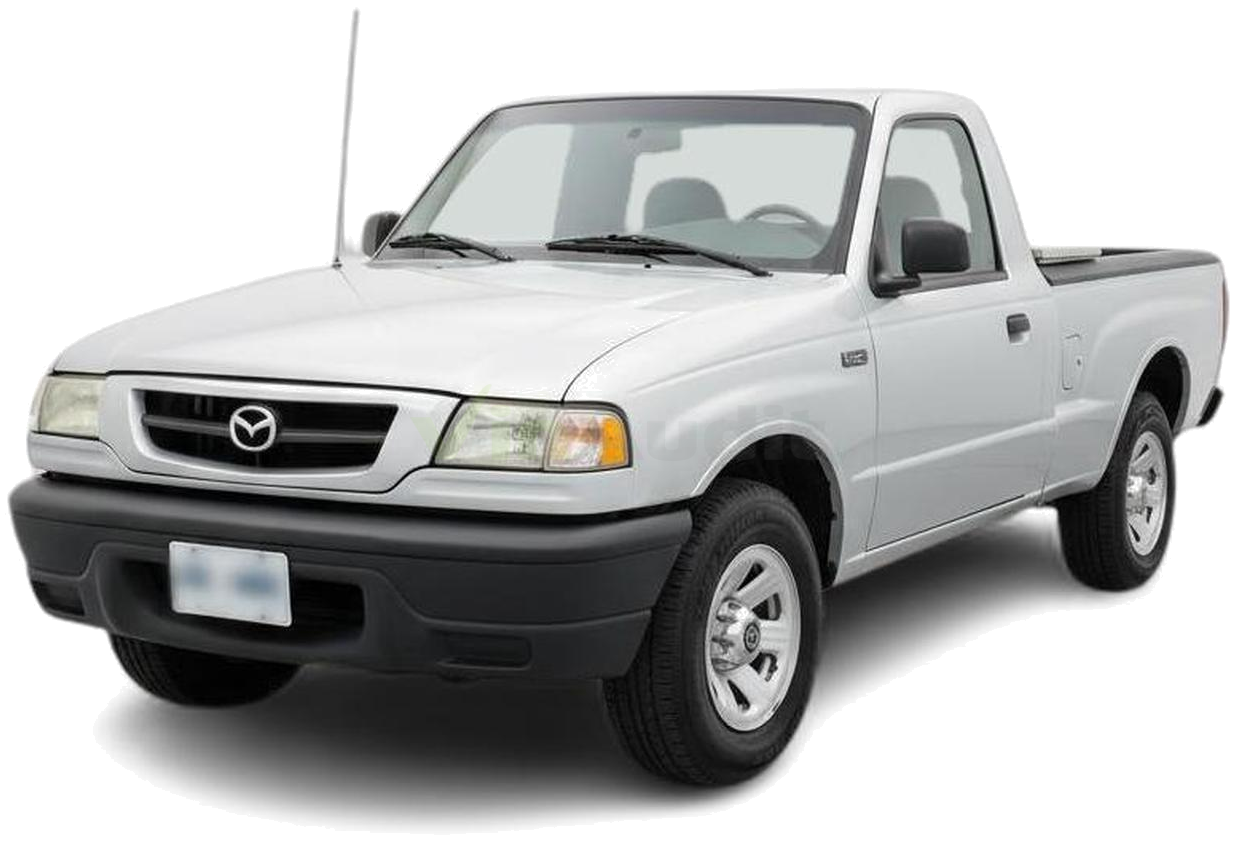
The Good
The 2003 Mazda B2300 boasts significant advantages, notably its outstanding reliability and cost-effectiveness derived from its Ford Ranger platform. Owners appreciate its practical, no-nonsense design and respectable fuel efficiency for a truck. It offers excellent long-term value and surprisingly spry performance for a 4-cylinder compact pickup, appealing to both practical buyers seeking a dependable workhorse and those valuing its straightforward, honest character.
The Bad
Known weaknesses for the 2003 Mazda B2300 include a somewhat spartan interior and limited passenger space, especially in the extended cab's rear jump seats. Owners should watch out for common rust issues on the frame and body panels, particularly in salt-prone climates. Additionally, the ride can be firm, and some shared Ford Ranger component failures, like blend door actuators, are possible concerns.
2003 Mazda B2300: Quick Overview
The 2003 Mazda B2300, a compact pickup, offered a straightforward set of specifications:
- Engine: It was exclusively powered by a 2.3-liter DOHC (Dual Overhead Cam) 16-valve inline four-cylinder engine. This engine was shared with the Ford Ranger and provided a good balance of power and efficiency for its class.
- Horsepower: The 2.3L I4 engine produced 135 horsepower at 5000 rpm and 153 lb-ft of torque at 3750 rpm. While not a powerhouse, it was adequate for light-duty hauling and daily commuting.
- Fuel Economy: For a pickup truck, the B2300 offered respectable fuel economy. Manual transmission models were rated at approximately 22 MPG city / 27 MPG highway, while automatic transmission models achieved around 21 MPG city / 26 MPG highway. These figures made it an economical choice for its segment.
- 0-60 MPH: The 0-60 mph acceleration time for the 2.3L engine typically ranged between 9.0 and 10.0 seconds, reflecting its focus on utility rather than speed.
- Towing Capacity: When properly equipped, the 2003 Mazda B2300 with the 2.3L engine had a towing capacity of up to 2,200 pounds, suitable for small trailers, jet skis, or light utility tasks.
- Trim-Level Features:
- Body Styles: Available in Regular Cab and Cab Plus (Extended Cab) configurations. The Cab Plus offered small jump seats behind the front seats, suitable for occasional short trips for additional passengers or storage.
- Base Trim: Featured essential amenities such as an AM/FM stereo, manual windows and door locks, and a vinyl bench seat, prioritizing functionality and affordability.
- SX Trim: Elevated the experience with cloth bucket seats, perhaps a CD player, upgraded interior trim, and sometimes exterior enhancements like chrome bumpers or larger styled wheels. Features remained practical rather than luxurious, emphasizing the truck's workhorse nature.
2003 Mazda B2300 Specifications
Vehicle Information
| Year | 2003 |
| Make | Mazda |
| Model | B2300 |
| Trim | - |
| Style | - |
| Type | Pickup Truck |
| Category | Small Pickup Truck |
Manufacturing Details
| Made In | United States |
| Manufacturing City | EDISON |
Dimensions
| Doors | 2-Door |
| Curb Weight | 3001 pounds |
| Gross Vehicle Weight Rating | 4360 pounds |
| Overall Height | 64.90 inches |
| Overall Length | 187.50 inches |
| Overall Width | 69.40 inches |
| Wheelbase Length | 111.60 inches |
| Standard Seating | 3 |
Engine & Performance
| Engine | 2.3L I4 |
| Engine Size | 2.3L |
| Engine Cylinders | 4 |
| Transmission | 5-Speed Manual |
| Transmission Type | Manual |
| Transmission Speeds | 5-Speed |
| Drivetrain | Rear-Wheel Drive |
Additional Features
| Anti-Brake System | 4-Wheel ABS |
| Steering Type | Rack & Pinion |
Pricing
| Manufacturer Suggested Retail Price (MSRP) | $13,930 |
| Invoice Price | $13,177 |
| Delivery Charges | $620 |
Vehicle History Report
Specifications
History
Events
History Check
Check
Check
Check
Check
Listings
Recalls
Check
Analysis
What Problems Does the 2003 Mazda B2300 Have?
The 2003 Mazda B2300, being a close sibling to the Ford Ranger, shares many of its frequently reported problems and long-term reliability concerns. One of the most pervasive issues, especially in regions exposed to road salt, is significant rust. This can affect the frame, body panels (particularly rear wheel arches and bed supports), exhaust system, and even critical components like the fuel pump mounting bracket within the fuel tank. Prospective buyers should thoroughly inspect for rust.
Another common complaint centers around the HVAC system's blend door actuator. This plastic component is notorious for failing, leading to issues where the driver cannot control the air temperature (stuck on hot or cold) and often requires extensive dashboard disassembly to repair.
Regarding the powertrain, while the 2.3L engine is generally robust, failures of the ignition coil packs can lead to misfires and rough idling. Fuel pump failures are also reported, sometimes exacerbated by rust on the hanger assembly within the fuel tank. Automatic transmissions, particularly the 4R44E/5R55E variants, can develop issues such as delayed shifts, slipping, or solenoid block failures, often at higher mileages. Manual transmission models may experience clutch master or slave cylinder problems.
Power steering leaks and pump failures are also noted, as are typical wear items like ball joints, tie rods, and suspension bushings which will require attention over the vehicle's lifespan.
For recalls, the 2003 Mazda B-Series was affected by major recalls, most notably the widespread Takata airbag inflator recall, impacting both driver and passenger side airbags. This is a critical safety recall that should be verified as completed for any used model. There were also recalls concerning the speed control deactivation switch, which posed a fire risk, and potentially some steering component issues. It is highly recommended to check a specific vehicle's VIN for outstanding recalls. Despite these issues, a well-maintained B2300 can offer remarkable long-term durability.
How long will the 2003 Mazda B2300 last?
The 2003 Mazda B2300, owing to its Ford Ranger DNA, exhibits impressive long-term durability, with many owners reporting average mileage well over 200,000 miles, and examples reaching 250,000 miles or more are not uncommon with diligent maintenance. With proper care, these trucks can easily provide 15 to 20 years or more of reliable service. The 2.3L four-cylinder engine is particularly robust and known for its longevity, as are the manual transmissions.
However, certain weaknesses emerge over time. Rust remains the primary long-term threat, especially to the frame and body in corrosive climates, significantly impacting a vehicle's lifespan. Automatic transmissions can be a weaker link than their manual counterparts at very high mileages, potentially requiring rebuilding. Additionally, interior plastics may become brittle, and minor electrical issues, like blend door actuator failures, become more frequent with age. Nonetheless, with preventative maintenance, the B2300 is a testament to compact truck endurance.
What Technology & Safety Features are Included?
The 2003 Mazda B2300, representative of compact trucks from its era, featured a functional yet minimalistic approach to technology, entertainment, and driver assistance. Built-in tech was limited to essentials: a standard AM/FM stereo, with an optional single-disc CD player available on higher trims. There was no integrated infotainment system, navigation, or connectivity features common in modern vehicles. Controls for heating, ventilation, and air conditioning (an optional but common feature) were entirely manual and straightforward. Driver convenience features like power windows, power door locks, and power mirrors were typically optional or found on the SX trim, while base models often came with manual crank windows and manual locks. Cruise control was also an available option.
Driver-assistance features, as understood today, were non-existent. There were no blind-spot monitoring, lane-keeping assist, or automatic emergency braking systems. Safety features primarily revolved around passive systems. All B2300 models came equipped with dual front airbags for both the driver and front passenger. Anti-lock brakes (ABS) were an optional feature, often limited to rear-wheel ABS on base models, with four-wheel ABS being available on some configurations. The truck also included standard three-point seatbelts with pretensioners and side-impact protection beams integrated into the doors.
Crash-test ratings, largely shared with its Ford Ranger counterpart, provide insights into its safety performance. The National Highway Traffic Safety Administration (NHTSA) rated the 2003 model with:
- Frontal Driver: 4 out of 5 stars
- Frontal Passenger: 4 out of 5 stars
- Side Impact (Driver, Regular Cab): 5 out of 5 stars
- Side Impact (Driver, Extended Cab): 3 out of 5 stars (due to impact on the rear door area)
- Rollover Resistance (2WD): 3 out of 5 stars
- Rollover Resistance (4WD, if applicable to the platform): 4 out of 5 stars
What Colors Options are Available?
2003 Mazda B2300 Prices and Market Value
When new in 2003, the Mazda B2300 was an affordably priced compact pickup. A base Regular Cab model typically started around $13,000 to $14,000, while a well-equipped Extended Cab or SX trim could range from $15,000 to approximately $18,000. These prices positioned it as an accessible option for buyers seeking utility without a significant investment.
In today's used market (2024), current prices for a 2003 Mazda B2300 vary significantly. A rough, high-mileage example might fetch $2,000 to $3,500, whereas a well-maintained, lower-mileage, rust-free truck can command anywhere from $5,000 to $8,000 or even higher, particularly for manual transmission models. Depreciation insights show that the B2300 experienced significant initial depreciation but has largely reached a value floor. Good condition examples now hold their value remarkably well, often appreciating slightly due to high demand for reliable, simpler compact trucks. Factors critically affecting resale value include the overall condition (especially rust-free status), documented maintenance history, mileage, and the presence of a manual transmission, which many enthusiasts prefer.
2003 Mazda B2300 Cost of Ownership
The 2003 Mazda B2300 is a highly economical vehicle to own in the long term. Insurance costs are typically low due to its modest market value, low performance, and status as a work-oriented vehicle. Fuel costs are reasonable for a truck, with its 2.3L engine delivering respectable MPG figures (22-27 highway), running on regular unleaded gasoline.
Maintenance and repair costs are a significant advantage. Parts are widely available and inexpensive, thanks to its mechanical identicality to the Ford Ranger. Many routine maintenance tasks and common repairs are straightforward, making them amenable to DIY or affordable at independent shops. Long-term ownership is notably budget-friendly, making it an excellent choice for those prioritizing cost-efficiency and reliability over luxury.
2003 Mazda B2300 Fuel Efficiency
2003 Mazda B2300 Safety Rating
NHTSA
IIHS
2003 Mazda B2300 Warranty
Basic
Powertrain
Rust
2003 Mazda B2300 Insurance
reasonable repair costs.
How Does the 2003 Mazda B2300 Compare to Other Pickup Truck?
The 2003 Mazda B2300 competes in the compact pickup segment against key rivals like the Toyota Tacoma, Nissan Frontier, and the Chevy S-10/GMC Sonoma.
In terms of performance, the B2300's standard 2.3L four-cylinder engine, with 135 horsepower, is adequate for light duties but generally less powerful than the V6 options available in rivals. The Toyota Tacoma offered a capable 3.4L V6 (190 hp), the Nissan Frontier had a 3.3L V6 (180 hp), and the Chevy S-10/GMC Sonoma featured a strong 4.3L V6 (180-190 hp). For towing and heavier hauling, the B2300 is outmatched by these V6-equipped trucks and the larger Dodge Dakota, which even offered V8 options.
Regarding features, the B2300, like its Ford Ranger twin, was known for its no-frills, utilitarian approach. Interiors were basic, prioritizing function over luxury. Rivals like the Tacoma and Frontier often offered slightly more refined interiors, better seating comfort, and a broader range of optional amenities, though none were luxurious by modern standards. The S-10/Sonoma were comparable in their simplicity.
Reliability is where the B2300 truly shines, often rivaling the legendary Toyota Tacoma. Its simple mechanics and robust Ford Ranger underpinnings mean excellent long-term durability, though rust can be a significant factor. The Tacoma is arguably the benchmark for reliability, while the Frontier and S-10/Sonoma are also generally considered reliable, though specific issues can vary.
In terms of price, the B2300 (and Ranger) were typically the most affordable new and continue to be strong value propositions on the used market. The Toyota Tacoma consistently holds its resale value exceptionally well, often commanding higher prices used. The Nissan Frontier offers a good balance of capability and value, while the Chevy S-10/GMC Sonoma can often be found for prices similar to or even lower than the B2300, especially the 4-cylinder versions.
Recommendations:
- For buyers prioritizing ultimate long-term reliability, off-road prowess, and don't mind paying a premium, the Toyota Tacoma is a superior alternative.
- For a capable and reliable truck with slightly more power and features than the B2300/Ranger but without the Tacoma's price tag, the Nissan Frontier is a solid choice.
- If maximum affordability and similar core attributes are desired, especially with more V6 engine options, the Chevy S-10/GMC Sonoma are similar alternatives.
- However, if simplicity, parts availability, and low running costs are paramount, the Ford Ranger is virtually identical to the B2300 and an excellent similar alternative.
Final Verdict: Is the 2003 Mazda B2300 a Good Pickup Truck?
The 2003 Mazda B2300 is an ideal vehicle for individuals seeking a reliable, no-nonsense compact pickup truck for light-duty hauling, occasional utility tasks, or as an economical daily driver. It appeals strongly to budget-conscious buyers, DIY enthusiasts, and those who appreciate mechanical simplicity and low ownership costs. It's an excellent first truck or a secondary vehicle for homeowners needing a bed without the bulk of a full-size pickup.
Given its enduring reliability and value, the B2300 is absolutely worth buying on the used market, but under specific conditions. Prioritize a vehicle with minimal to no frame or body rust, as this is its primary long-term Achilles' heel. Look for documented maintenance history and ensure common issues like the blend door actuator or fuel pump have been addressed. While trims are basic, a manual transmission often offers greater longevity. It's crucial to approach this purchase with realistic expectations: it's a basic, functional workhorse, not a powerhouse or a luxury vehicle. For its purpose, it remains a smart and dependable choice.

Cathleen V
Cathleen is an exceptional freelance writer covering hot topics in the automotive world from a gearhead's perspective. Her articles delve into various aspects of automotive technology and history, offering readers detailed insights into engine performance, reliability, and maintenance. Through her engaging and informative writing, Cathleen provides valuable information to automotive enthusiasts and consumers alike, helping them make informed decisions about vehicle maintenance and purchases.