
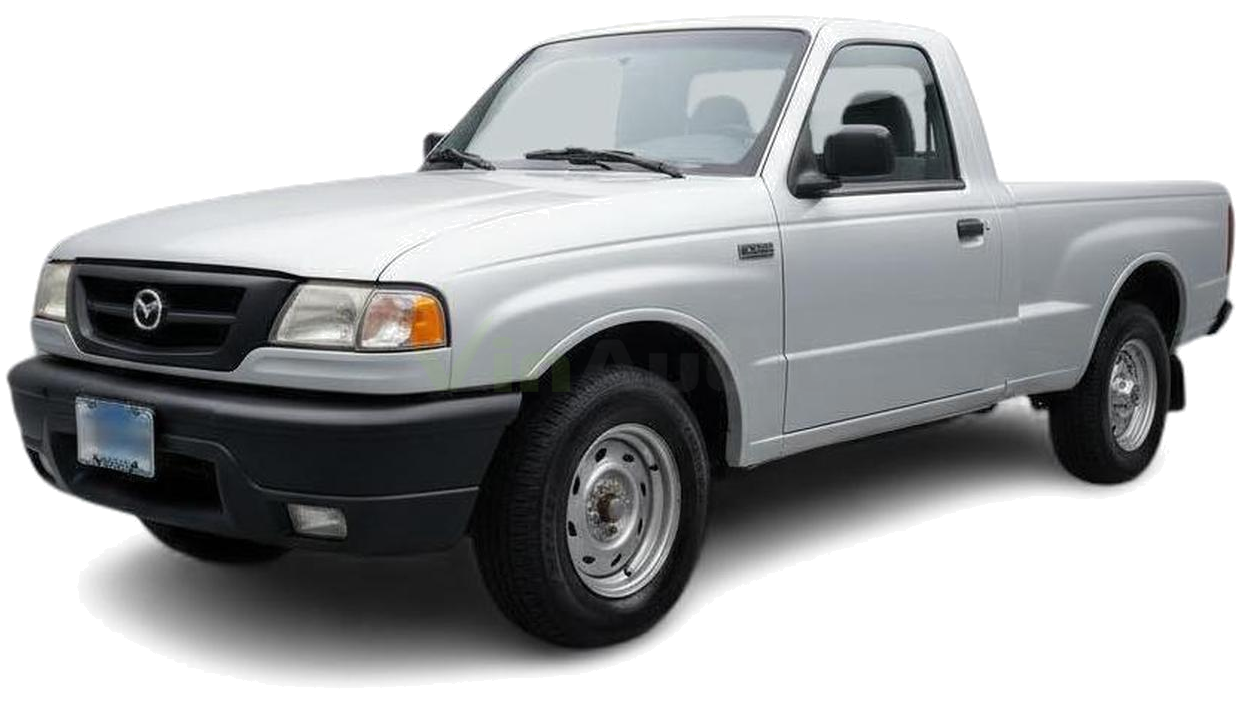
The Good
The 2005 Mazda B2300 offers exceptional value and impressive reliability, appealing to practical buyers seeking a dependable, economical truck. Its 2.3L engine provides good fuel efficiency, while its compact design ensures easy maneuverability and parking. Emotionally, it's a nostalgic, honest work companion, simple to maintain, and a testament to enduring mechanical simplicity, offering a "get-the-job-done" satisfaction without unnecessary frills.
The Bad
Known weaknesses for the 2005 Mazda B2300 include its relatively low power for heavy-duty tasks, a basic interior lacking modern conveniences, and a somewhat stiff ride. Crucially, watch out for significant rust on the frame, suspension components, and body, particularly in regions that use road salt, as this is a common long-term concern.
2005 Mazda B2300: Quick Overview
- Engine Options: The 2005 Mazda B2300 specifically features a 2.3-liter DOHC 16-valve I4 (Duratec) engine. Other B-Series trucks offered 3.0L V6 and 4.0L V6 engines, but the B2300 designation is for the I4.
- Horsepower: The 2.3L I4 engine produces 143 horsepower at 5,250 rpm and 154 lb-ft of torque at 3,750 rpm.
- Fuel Economy: Estimated fuel economy for the 2.3L RWD manual transmission is approximately 21 MPG city / 27 MPG highway. With the automatic transmission, it's around 20 MPG city / 26 MPG highway.
- 0-60 Times: The 2.3L engine typically allows for 0-60 mph acceleration in the 9.0 to 10.0-second range, which is adequate for a compact utility truck.
- Towing Capacity: With the 2.3L engine, the maximum towing capacity is generally around 1,580 pounds (715 kg), depending on specific configuration and equipment.
- Trim-Level Features:
- Base: Standard features were quite spartan, typically including manual windows and door locks, AM/FM stereo, vinyl bench seat, and rear-wheel anti-lock brakes (RABS).
- DX: Added a few more conveniences over the Base, such as power steering and a tachometer.
- SE: The more equipped trim, often featuring cloth seats, a sliding rear window, and offering options like air conditioning, power windows, power door locks, and cruise control.
- Transmission: A 5-speed manual transmission was standard, with a 5-speed automatic transmission available as an option.
- Drivetrain: The B2300 was exclusively offered in Rear-Wheel Drive (RWD) configuration. 4WD was only available with V6 engine options on other B-Series models.
- Body Styles: Available as a Regular Cab with seating for two or three, and an Extended Cab (Cab Plus) with small jump seats for occasional rear passengers.
- Bed Lengths: Typically offered with a 6-foot bed, with a 7-foot bed available on some regular cab configurations.
2005 Mazda B2300 Specifications
Vehicle Information
| Year | 2005 |
| Make | Mazda |
| Model | B2300 |
| Trim | - |
| Style | - |
| Type | Pickup Truck |
| Category | Small Pickup Truck |
Manufacturing Details
| Made In | United States |
| Manufacturing City | ST. PAUL |
Dimensions
| Doors | 2-Door |
| Curb Weight | 2994 pounds |
| Gross Vehicle Weight Rating | 4380 pounds |
| Overall Height | 64.90 inches |
| Overall Length | 187.50 inches |
| Overall Width | 69.40 inches |
| Wheelbase Length | 111.60 inches |
| Standard Seating | 3 |
Engine & Performance
| Engine | 2.3L I4 |
| Engine Size | 2.3L |
| Engine Cylinders | 4 |
| Transmission | 5-Speed Manual |
| Transmission Type | Manual |
| Transmission Speeds | 5-Speed |
| Drivetrain | Rear-Wheel Drive |
Additional Features
| Anti-Brake System | 4-Wheel ABS |
| Steering Type | Rack & Pinion |
Pricing
| Manufacturer Suggested Retail Price (MSRP) | $15,340 |
| Invoice Price | $14,513 |
| Delivery Charges | $620 |
Vehicle History Report
Specifications
History
Events
History Check
Check
Check
Check
Check
Listings
Recalls
Check
Analysis
What Problems Does the 2005 Mazda B2300 Have?
Engine-related issues for the 2.3L Duratec can include occasional ignition coil or spark plug failures leading to misfires and a rough idle. Vacuum leaks are also not uncommon, often triggering a check engine light and affecting engine performance. Over time, owners might encounter power steering pump leaks or issues with the steering rack, requiring attention.
Regarding the suspension, wear and tear on front suspension components such as ball joints and control arm bushings are common, leading to clunks or loose steering. The HVAC system can sometimes develop issues, notably a failing blower motor resistor, which affects fan speed settings. While generally robust, the automatic transmission (if equipped) can, in some cases, develop shifting irregularities or solenoid issues, though this is less common than other reported problems.
As for recalls, the 2005 B2300 falls under the widespread Takata airbag recall. It's crucial for any potential buyer to verify if the airbag replacement has been performed on the specific VIN. Earlier model years of the Ford Ranger (and thus Mazda B-Series) also had recalls related to the cruise control deactivation switch which posed a fire risk; while less prevalent for 2005, it's worth being aware of. Despite these issues, the core powertrain, particularly the 2.3L engine and manual transmission, are known for impressive long-term durability if maintained, making age-related wear the primary concern rather than inherent design flaws.
How long will the 2005 Mazda B2300 last?
However, long-term weaknesses over time primarily involve significant rust on the frame, body panels, and brake lines, especially in corrosive environments. Other common age-related issues include wear of rubber components like suspension bushings, hoses, and belts, as well as minor electrical gremlins affecting accessories. While the core mechanicals are tough, rust and aging peripherals typically dictate the vehicle's ultimate lifespan and the extent of necessary repairs.
What Technology & Safety Features are Included?
Driver-assistance features are essentially non-existent. You won't find traction control, electronic stability control, blind-spot monitoring, or any other advanced systems that are standard on today's vehicles. The driving experience is entirely analog, relying on driver input.
Regarding safety features, the B2300 came standard with dual front airbags for the driver and passenger. Rear-wheel anti-lock brakes (RABS) were standard, with a four-wheel ABS system available as an option. Beyond that, safety equipment was limited to basic seatbelts and side-impact door beams designed to help protect occupants in a collision.
Optional features that enhanced comfort or convenience included air conditioning, power windows and door locks, and cruise control. A sliding rear window was also a popular option.
Crash-test ratings, largely mirroring its Ford Ranger sibling, provided a mixed picture:
- NHTSA (National Highway Traffic Safety Administration):
- Frontal Driver: 4 out of 5 stars
- Frontal Passenger: 4 out of 5 stars
- Side Impact: Not rated, or low scores (due to the absence of side airbags)
- Rollover: 3 out of 5 stars
- IIHS (Insurance Institute for Highway Safety):
- Moderate Overlap Front: "Acceptable" (for its time)
- Side Impact: "Poor" (due to lack of side airbags and side structure)
- Roof Strength: Not rated, or "Marginal"
What Colors Options are Available?
2005 Mazda B2300 Prices and Market Value
Today, its depreciation curve has flattened completely; it's largely considered to have hit its bottom-out value. Current used market prices for a 2005 B2300 typically range from $3,000 to $8,000, heavily dependent on condition, mileage, and region. Exceptionally well-preserved, rust-free examples with low mileage might command a bit more, sometimes approaching $10,000.
Factors significantly affecting resale value now include the presence of body or frame rust, overall mechanical condition, and maintenance history. Lower mileage and a clean, documented service record will always command a higher price. Geographic location also plays a role, with demand often higher in rural areas or places where simple, reliable compact trucks are prized.
2005 Mazda B2300 Cost of Ownership
2005 Mazda B2300 Fuel Efficiency
2005 Mazda B2300 Safety Rating
NHTSA
IIHS
2005 Mazda B2300 Warranty
Basic
Powertrain
Rust
2005 Mazda B2300 Insurance
reasonable repair costs.
How Does the 2005 Mazda B2300 Compare to Other Pickup Truck?
In terms of performance, the B2300's 2.3L I4 engine is adequate for light-duty hauling and daily driving, offering good fuel economy. It's comparable to the 4-cylinder versions of the S-10 and Frontier. The 4-cylinder Toyota Tacoma, while also capable, often felt a bit more refined and sometimes offered slightly better payload/towing with its available V6 options that the B2300 didn't share.
Features across all these compact trucks from 2005 were generally spartan. The B2300 offered basic comforts like optional AC and power accessories. The Tacoma and Frontier might have presented slightly more upscale interiors or a wider range of optional convenience items, but none boasted modern tech.
Reliability is where the B2300/Ford Ranger shines, particularly its core powertrain. It's known for being mechanically robust. However, rust, especially on the frame and body, is a significant long-term concern that can diminish its perceived reliability over time, particularly in salt-belt states. The Toyota Tacoma often holds the crown for legendary reliability and generally superior rust resistance (though older Tacomas also had frame rust issues). The Nissan Frontier and Chevy S-10 also offer decent reliability, but typically don't quite match the Ranger/B-Series' reputation for sheer mechanical tenacity or the Tacoma's bulletproof image.
Regarding price in the used market, the B2300/Ranger is almost always the most affordable option, making it an excellent budget choice. The Toyota Tacoma commands a significant premium due to its strong reliability reputation. The Frontier and S-10 typically fall somewhere between the Ranger and Tacoma in price.
Similar alternatives would be the Ford Ranger (it's the same truck, just with Ford badging) or the Chevrolet S-10/GMC Sonoma. For a better alternative if budget allows for more refinement, payload, or off-road capability, the Toyota Tacoma is often recommended, though you'll pay a premium. The Nissan Frontier can also be a good alternative, sometimes offering a bit more comfort or features than the Ranger/B-Series for a mid-range price.
Final Verdict: Is the 2005 Mazda B2300 a Good Pickup Truck?
The key condition for purchase is a thorough inspection for rust, particularly on the frame, suspension, and brake lines. A well-maintained example with documented service history and minimal rust is a fantastic value. Any trim (Base, DX, SE) is suitable, as the 2.3L engine is the primary highlight for its efficiency and durability. Buyers should set realistic expectations: it's a basic, no-frills older truck, not a modern luxury vehicle. If you find a solid, rust-free B2300, it offers immense long-term value as an economical, dependable workhorse.

Eugene S
Eugene is an automotive enthusiast with over 15 years of experience in the used car market. As a writer at VINCheck.info, he brings deep industry insight and a passion for cars, helping readers make smart, informed decisions. Eugene has written hundreds of used car reviews and is known for breaking down complex automotive topics into clear, actionable advice. Over the years, he has driven and worked on a wide range of vehicles—starting with tuning street cars in his early days and eventually focusing on performance upgrades and reliability improvements. Today, he specializes in evaluating used vehicles through the lens of real-world ownership and enthusiast needs. A longtime fan of Porsche, Eugene especially appreciates vehicles that blend durability with driving enjoyment.