
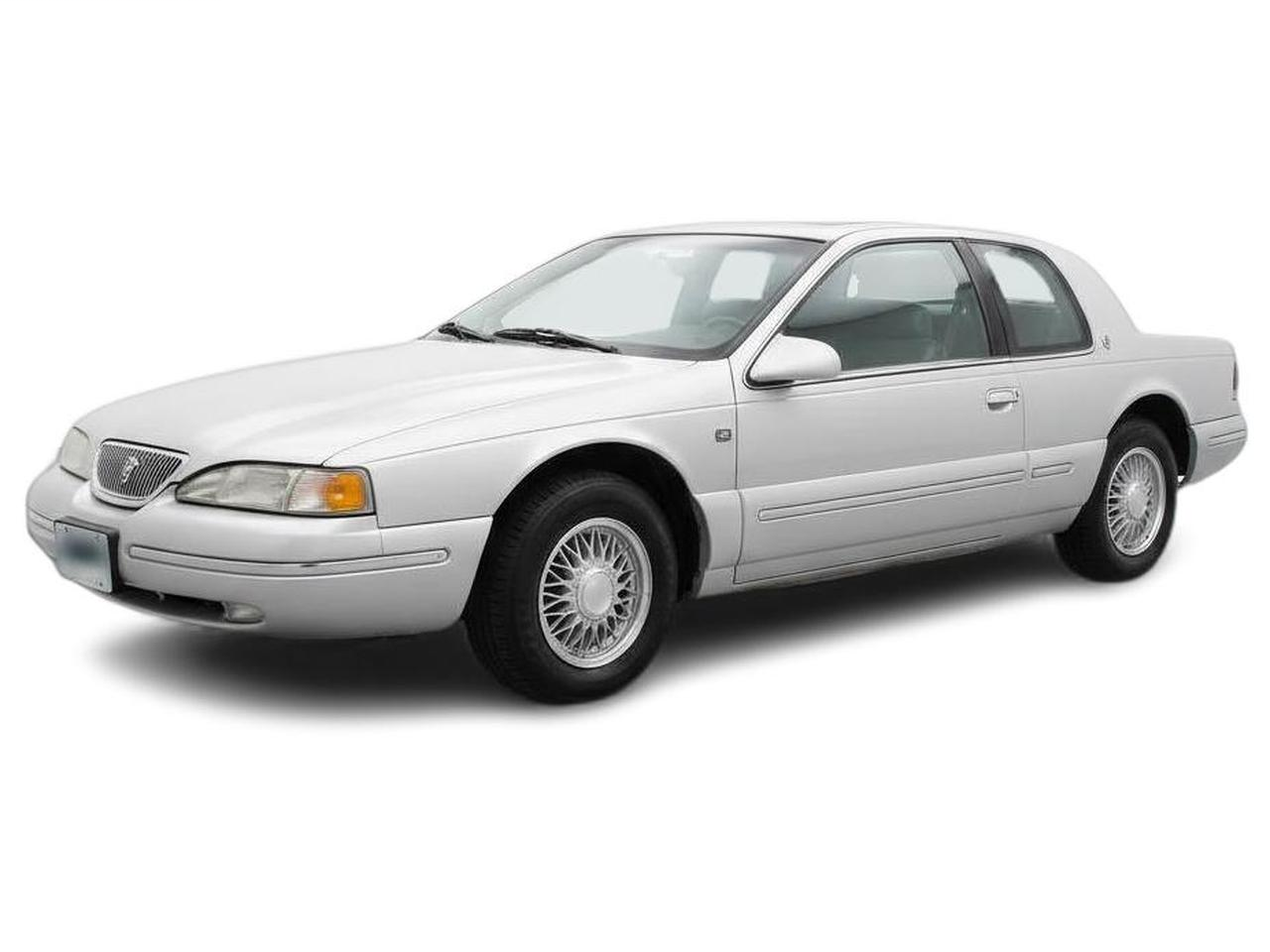
The Good
The 1996 Cougar offers a comfortable ride and stylish design, appealing to emotional buyers. Practically, it provides decent V6 performance and relatively straightforward maintenance, making it a sensible, albeit aging, choice for value-conscious owners.
The Bad
Potential buyers should watch out for common issues like transmission problems, electrical gremlins, and rust, especially in the unibody structure. The aging interior materials can also show significant wear. Performance from the base V6 might feel sluggish to some.
1996 Mercury Cougar: Quick Overview
- Engine Options: The 1996 Mercury Cougar was primarily offered with two V6 engine options. The standard engine was a 3.0-liter Vulcan V6, and an optional, more powerful 3.8-liter Essex V6 was available, particularly in higher trims.
- Horsepower: The 3.0-liter Vulcan V6 typically produced around 140-150 horsepower. The more potent 3.8-liter Essex V6 offered approximately 155-160 horsepower.
- Fuel Economy: Fuel economy varied depending on the engine and transmission. For the 3.0L V6, expect figures in the range of 17-19 MPG in the city and 23-25 MPG on the highway. The 3.8L V6 would be slightly lower, around 16-18 MPG city and 22-24 MPG highway.
- 0-60 Times: Acceleration for the 1996 Cougar was not its strong suit. Models equipped with the 3.0L V6 generally took between 9.5 to 11 seconds to reach 60 mph. The 3.8L V6 offered a slight improvement, with 0-60 times closer to 9 to 10 seconds.
- Towing Capacity: The Mercury Cougar was not designed for towing, and a towing capacity is generally not specified or recommended for this vehicle.
- Trim-Level Features: The base model typically included standard features like power windows, power locks, air conditioning, and an AM/FM stereo. The XR7 trim, often considered the higher-end option, added features such as upgraded interior materials (e.g., leather seats), a premium sound system, alloy wheels, fog lights, and sometimes a sport-tuned suspension. Optional features could include a sunroof, cruise control, and anti-lock brakes (ABS).
1996 Mercury Cougar Specifications
Vehicle Information
| Year | 1996 |
| Make | Mercury |
| Model | Cougar |
| Trim | - |
| Style | XR7 Sedan RWD 4AT 4.6L V8 |
| Type | Sedan |
| Category | passenger |
Manufacturing Details
| Made In | United States |
| Manufacturing City | LORAIN |
Dimensions
| Doors | 2-Door |
| Curb Weight | 3500 pounds |
| Gross Vehicle Weight Rating | - |
| Overall Height | 54 inches |
| Overall Length | 192 inches |
| Overall Width | 72 inches |
| Wheelbase Length | 108 inches |
| Standard Seating | 5 |
Engine & Performance
| Engine | 4.6L V8 |
| Engine Size | 4.6L |
| Engine Cylinders | 8 |
| Transmission | 4-Speed Automatic |
| Transmission Type | Automatic |
| Transmission Speeds | 4-Speed |
| Drivetrain | Rear-Wheel Drive |
Additional Features
| Anti-Brake System | 4-Wheel ABS |
| Steering Type | Rack & Pinion |
Pricing
| Manufacturer Suggested Retail Price (MSRP) | $23,900 |
| Invoice Price | $22,000 |
| Delivery Charges | $600 |
Vehicle History Report
Specifications
History
Events
History Check
Check
Check
Check
Check
Listings
Recalls
Check
Analysis
What Problems Does the 1996 Mercury Cougar Have?
Another area of concern is the electrical system. Owners have reported issues with various electrical components, including power windows not working, faulty door locks, malfunctioning interior lights, and problems with the instrument cluster. These can be attributed to aging wiring harnesses, corroded connectors, or failing modules. The engine itself, particularly the 3.0L Vulcan V6, is generally considered robust, but accessory components like the alternator, starter, and cooling system (radiator, water pump, hoses) can require replacement over time due to wear and age. The 3.8L V6 is also generally reliable but can be prone to intake manifold gasket leaks.
Rust and body integrity are significant long-term reliability concerns, especially for vehicles in rust-prone climates. The unibody construction can be susceptible to corrosion, particularly around the wheel wells, rocker panels, and subframes. Addressing rust early is critical to prevent structural damage.
There were also some recalls associated with this generation of Cougar, though specific recalls for the 1996 model year might be less common than for earlier or later years. However, general recalls for related Ford platforms could potentially apply. Owners should always check the NHTSA website for any outstanding recalls.
In terms of specific model year issues, while the 1996 model is generally consistent with its siblings, minor tweaks and improvements might have been made throughout the production run. However, the fundamental issues of transmission wear, electrical gremlins, and potential rust remain the primary long-term reliability concerns for any 1996 Cougar.
How long will the 1996 Mercury Cougar last?
What Technology & Safety Features are Included?
In terms of driver-assistance features, the 1996 Cougar was quite basic. Cruise control was a common option and widely available. Anti-lock brakes (ABS) were also an optional feature on most models, providing improved braking control during emergency stops, especially on slippery surfaces. Other than these, advanced driver-assistance systems were virtually non-existent. Features like power windows, power door locks, and power mirrors were standard or commonly optioned, contributing to convenience.
Safety was addressed with the standard equipment of the time. The vehicle was equipped with front airbags for the driver and front passenger. Seat belts were, of course, standard. Side-impact door beams were incorporated for enhanced occupant protection in side collisions. The car's structure was designed to absorb and dissipate impact energy.
Regarding crash-test ratings, specific ratings for the 1996 Mercury Cougar are not as readily available or as detailed as modern crash test results from organizations like the IIHS or NHTSA for newer vehicles. However, its sibling, the Ford Thunderbird, from the same platform, received mixed to good ratings in its era from the NHTSA in frontal and side-impact tests. It's important to note that safety standards and testing methodologies have evolved significantly since 1996, so these older ratings should be viewed within their historical context. For a vehicle of this age, the presence of airbags and optional ABS are the primary safety advancements.
What Colors Options are Available?
1996 Mercury Cougar Prices and Market Value
1996 Mercury Cougar Cost of Ownership
1996 Mercury Cougar Fuel Efficiency
1996 Mercury Cougar Insurance
reasonable repair costs.
How Does the 1996 Mercury Cougar Compare to Other Sedan?
Features-wise, the Cougar aimed for a more upscale and comfortable experience than some competitors, often boasting a plusher interior and quieter cabin, especially in the XR7 trim. However, it lagged behind contemporary imports in terms of advanced technology and innovative features.
Reliability was a mixed bag for the Cougar, as discussed in previous sections. While the basic V6 engines were reasonably robust, transmission issues and electrical gremlins were common concerns, often making it less reliable in the long run than some Japanese competitors like the Toyota Camry or Honda Accord (though these were typically sedans and not direct coupe competitors).
In terms of price, the Cougar offered a reasonable value proposition when new, providing a more luxurious feel than some domestic rivals at a comparable price point. Used, its low prices make it very accessible.
Alternatives:
- Ford Thunderbird: A very similar vehicle, sharing most mechanical components. The choice between the two often comes down to personal styling preference or specific feature availability.
- Chevrolet Monte Carlo: A more traditionally styled American coupe, often with V8 engine options offering better performance, but potentially less refined interior appointments and a different driving dynamic.
- Dodge Intrepid: While a four-door sedan, it offered a more modern design and often more potent engine options for the time, though it lacked the coupe styling.
- Imports (e.g., older Toyota Celica/Supra, Nissan 300ZX): For those prioritizing performance and potentially better long-term reliability, older Japanese sports coupes might be considered, though they will likely be more expensive to purchase and maintain.
Final Verdict: Is the 1996 Mercury Cougar a Good Sedan?

Eugene S
Eugene is an automotive enthusiast with over 15 years of experience in the used car market. As a writer at VINCheck.info, he brings deep industry insight and a passion for cars, helping readers make smart, informed decisions. Eugene has written hundreds of used car reviews and is known for breaking down complex automotive topics into clear, actionable advice. Over the years, he has driven and worked on a wide range of vehicles—starting with tuning street cars in his early days and eventually focusing on performance upgrades and reliability improvements. Today, he specializes in evaluating used vehicles through the lens of real-world ownership and enthusiast needs. A longtime fan of Porsche, Eugene especially appreciates vehicles that blend durability with driving enjoyment.