
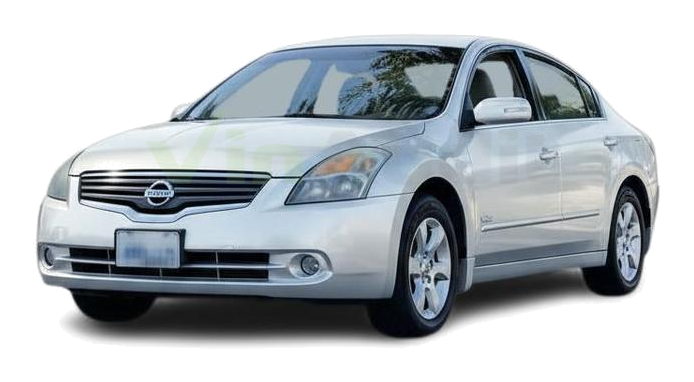
The 2009 Nissan Altima Hybrid, part of the fifth generation Altima lineup, was a notable entry into the mid-size sedan market. Produced for a limited run, it offered a blend of traditional sedan appeal with hybrid efficiency. It was available in a single, well-equipped trim level, making its pricing straightforward. Its popularity stemmed from Nissan's reputation for sporty driving dynamics combined with the fuel-saving benefits of its hybrid powertrain, appealing to those seeking both performance and economy.
The Good
The 2009 Altima Hybrid offers a compelling package with its impressive fuel efficiency that saves money, a comfortable and refined interior for pleasant journeys, and a stylish exterior that turns heads. Its spirited performance provides an engaging driving experience, making it a smart and enjoyable choice.
The Bad
Potential buyers should be aware of the hybrid battery's lifespan and replacement cost, as this is a common concern with older hybrid vehicles. Additionally, some owners have reported issues with the continuously variable transmission (CVT) and potential electrical gremlins. Thorough inspection is advised.
2009 Nissan Altima Hybrid: Quick Overview
- Engine Options: The 2009 Nissan Altima Hybrid features a unique powertrain consisting of a 2.5-liter four-cylinder gasoline engine paired with an electric motor.
- Horsepower: The combined system output is approximately 198 horsepower.
- Fuel Economy: Estimated EPA ratings are around 35 mpg in the city and 33 mpg on the highway, offering significant fuel savings.
- 0-60 Times: Acceleration figures are generally in the 7.5 to 8.5-second range, providing brisk performance for a hybrid sedan.
- Towing Capacity: The 2009 Nissan Altima Hybrid is not designed for towing, and no towing capacity is listed.
- Trim-Level Features (Typically a single, well-equipped trim):
- Leather upholstery
- Heated front seats
- Power-adjustable driver's seat
- Push-button ignition
- Dual-zone automatic climate control
- Bose premium audio system
- Bluetooth connectivity
- Power windows, locks, and mirrors
- Cruise control
- Keyless entry
- Anti-lock Braking System (ABS)
- Electronic Stability Control (ESC)
- Traction Control System (TCS)
- Front, side, and curtain airbags
- 16-inch alloy wheels
- Fog lights
- Automatic headlights
- Steering wheel-mounted audio and cruise controls
- Satellite radio capability
2009 Nissan Altima Hybrid Specifications
Vehicle Information
| Year | 2009 |
| Make | Nissan |
| Model | Altima Hybrid |
| Trim | - |
| Style | - |
| Type | Sedan |
| Category | Mid-Size Car |
Manufacturing Details
| Made In | United States |
| Manufacturing City | SMYRNA |
Dimensions
| Doors | 4-Door |
| Curb Weight | 3471 pounds |
| Gross Vehicle Weight Rating | 4537 pounds |
| Overall Height | 57.90 inches |
| Overall Length | 189.80 inches |
| Overall Width | 70.70 inches |
| Wheelbase Length | 109.30 inches |
| Standard Seating | 5 |
Engine & Performance
| Engine | 2.5L I4 |
| Engine Size | 2.5L |
| Engine Cylinders | 4 |
| Transmission | Continuously Variable Transmission |
| Transmission Type | Automatic |
| Transmission Speeds | Continuously Variable |
| Drivetrain | Front-Wheel Drive |
Additional Features
| Anti-Brake System | 4-Wheel ABS |
| Steering Type | Rack & Pinion |
Pricing
| Manufacturer Suggested Retail Price (MSRP) | $26,650 |
| Invoice Price | $24,976 |
| Delivery Charges | $695 |
Vehicle History Report
Vehicle
Specifications
Specifications
Ownership
History
History
All History
Events
Events
NMVTIS Title
History Check
History Check
Salvage/Rebuilt
Check
Check
Accident
Check
Check
Theft
Check
Check
Open Lien
Check
Check
Past Sale
Listings
Listings
Safety
Recalls
Recalls
Odometer
Check
Check
Market Price
Analysis
Analysis
What Problems Does the 2009 Nissan Altima Hybrid Have?
The 2009 Nissan Altima Hybrid, while generally considered reliable for its era, does have a few commonly reported issues that potential buyers should be aware of. One of the most significant concerns for any hybrid vehicle of this age is the potential degradation or failure of the hybrid battery pack. Replacement of this component can be quite costly, often ranging from $2,000 to $5,000 or more, depending on the source and labor costs. While specific to the 2009 model, this is a general hybrid concern that intensifies with mileage and age.
Another area of concern for some owners has been the continuously variable transmission (CVT). While Nissan's CVTs have improved over the years, earlier iterations, like those in some 2009 models, can sometimes exhibit issues such as rough shifting, hesitation, or premature failure. Regular maintenance of the CVT fluid is crucial to prolong its life.
Electrical gremlins have also been reported by a subset of owners, manifesting as intermittent malfunctions in various systems like the power windows, infotainment, or instrument cluster. These can be challenging and expensive to diagnose and repair.
Regarding recalls, it's essential to check the National Highway Traffic Safety Administration (NHTSA) website for any outstanding recalls specific to the vehicle's VIN. While no widespread, major recalls specific to the hybrid system have been consistently highlighted for the 2009 model year, it is always prudent to verify.
Long-term reliability can be good if the vehicle has been meticulously maintained. The hybrid system itself is generally robust, but the battery is the primary long-term cost consideration. Given its limited production run, finding parts for the specific hybrid components might become more challenging over time compared to more common gasoline-only models. Owners who have kept up with all scheduled maintenance, especially fluid changes for the engine and CVT, tend to report fewer significant problems.
Another area of concern for some owners has been the continuously variable transmission (CVT). While Nissan's CVTs have improved over the years, earlier iterations, like those in some 2009 models, can sometimes exhibit issues such as rough shifting, hesitation, or premature failure. Regular maintenance of the CVT fluid is crucial to prolong its life.
Electrical gremlins have also been reported by a subset of owners, manifesting as intermittent malfunctions in various systems like the power windows, infotainment, or instrument cluster. These can be challenging and expensive to diagnose and repair.
Regarding recalls, it's essential to check the National Highway Traffic Safety Administration (NHTSA) website for any outstanding recalls specific to the vehicle's VIN. While no widespread, major recalls specific to the hybrid system have been consistently highlighted for the 2009 model year, it is always prudent to verify.
Long-term reliability can be good if the vehicle has been meticulously maintained. The hybrid system itself is generally robust, but the battery is the primary long-term cost consideration. Given its limited production run, finding parts for the specific hybrid components might become more challenging over time compared to more common gasoline-only models. Owners who have kept up with all scheduled maintenance, especially fluid changes for the engine and CVT, tend to report fewer significant problems.
How long will the 2009 Nissan Altima Hybrid last?
The 2009 Nissan Altima Hybrid, with diligent maintenance, can realistically achieve an average of 200,000 to 250,000 miles or more in terms of overall service life. Many owners report consistent service well into the 150,000-mile range without major powertrain issues, provided regular oil changes and CVT fluid services are performed. The primary long-term weakness is the hybrid battery, which typically begins to degrade significantly between 100,000 and 150,000 miles, though some may last longer. The rest of the vehicle, including the engine and chassis, exhibits good durability. However, early detection and repair of minor issues are key to maximizing its lifespan and avoiding more costly repairs down the line.
What Technology & Safety Features are Included?
The 2009 Nissan Altima Hybrid offered a respectable suite of technology, entertainment, and safety features for its time, aiming to provide a modern driving experience. Standard on most models was a fairly advanced audio system, often a Bose premium sound system, which included an in-dash CD player, AM/FM radio, and auxiliary audio input. Bluetooth hands-free phone connectivity was also a notable feature, enhancing convenience for making calls on the go. While not boasting a large touchscreen like modern vehicles, the interface was functional and easy to navigate.
Driver-assistance features were limited by today's standards, but ABS, traction control, and electronic stability control were typically standard, providing a foundation for active safety. This helped drivers maintain control in slippery conditions or during sudden maneuvers.
Safety was a priority, with standard features including front-seat side-impact airbags, roof-mounted curtain airbags for front and rear occupants, and active front head restraints designed to reduce whiplash injuries in rear-end collisions. The vehicle's structure was designed to absorb and dissipate crash energy.
Optional features could have included a power moonroof, which added a touch of luxury, and potentially a navigation system, though this was less common. Satellite radio capability was also an option for enhanced entertainment choices.
In terms of crash-test ratings, the 2009 Nissan Altima (the non-hybrid model, as hybrid-specific ratings can vary) generally performed well in tests conducted by the National Highway Traffic Safety Administration (NHTSA) and the Insurance Institute for Highway Safety (IIHS). For instance, the 2009 Altima received four out of five stars in NHTSA frontal and side-impact crash tests and was rated "Good" (the highest rating) by the IIHS in frontal-offset and side-impact crash tests, indicating a strong overall safety profile for occupants.
Driver-assistance features were limited by today's standards, but ABS, traction control, and electronic stability control were typically standard, providing a foundation for active safety. This helped drivers maintain control in slippery conditions or during sudden maneuvers.
Safety was a priority, with standard features including front-seat side-impact airbags, roof-mounted curtain airbags for front and rear occupants, and active front head restraints designed to reduce whiplash injuries in rear-end collisions. The vehicle's structure was designed to absorb and dissipate crash energy.
Optional features could have included a power moonroof, which added a touch of luxury, and potentially a navigation system, though this was less common. Satellite radio capability was also an option for enhanced entertainment choices.
In terms of crash-test ratings, the 2009 Nissan Altima (the non-hybrid model, as hybrid-specific ratings can vary) generally performed well in tests conducted by the National Highway Traffic Safety Administration (NHTSA) and the Insurance Institute for Highway Safety (IIHS). For instance, the 2009 Altima received four out of five stars in NHTSA frontal and side-impact crash tests and was rated "Good" (the highest rating) by the IIHS in frontal-offset and side-impact crash tests, indicating a strong overall safety profile for occupants.
What Colors Options are Available?
2009 Nissan Altima Hybrid Prices and Market Value
When new, the 2009 Nissan Altima Hybrid carried a premium price tag compared to its gasoline counterparts, typically starting in the high $20,000s and approaching $30,000 depending on options. Due to its hybrid powertrain and limited production, it experienced moderate depreciation. Currently, used market prices for a 2009 Altima Hybrid range broadly from $4,000 to $8,000, heavily influenced by mileage, condition, and the remaining health of the hybrid battery. Factors significantly affecting resale value include the number of miles driven, documented maintenance history, and the prevalence of known hybrid system issues in that particular vehicle. A well-maintained example with lower mileage will command a higher price.
2009 Nissan Altima Hybrid Cost of Ownership
The 2009 Nissan Altima Hybrid offers economical ownership primarily due to its excellent fuel efficiency, significantly reducing fuel costs compared to a non-hybrid sedan. Insurance costs are generally moderate, comparable to other mid-size sedans. Maintenance costs are typical for a well-built car, with routine services like oil changes and tire rotations being standard. However, the major variable cost is potential hybrid battery replacement, which can be substantial ($2,000-$5,000+). While repairs to the standard components are reasonable, specialized hybrid system repairs can be more expensive. Overall, it's economical for daily driving, but long-term costs depend heavily on the hybrid battery's longevity.
2009 Nissan Altima Hybrid Fuel Efficiency
Fuel Type
Gasoline
Fuel Capacity
20.00 gallons
City Mileage
35 miles/gallon
Highway Mileage
33 miles/gallon
2009 Nissan Altima Hybrid Safety Rating
NHTSA
IIHS
2009 Nissan Altima Hybrid Warranty
Basic
Original warranty
36 months / 36,000 miles
Estimated remaining
Expired
Powertrain
Original warranty
60 months / 60,000 miles
Estimated remaining
Expired
Rust
Original warranty
60 months / unlimited miles
Estimated remaining
Expired
2009 Nissan Altima Hybrid Insurance
Insurance for a 2009 Nissan Altima Hybrid is moderately priced, reflecting its status as a Sedan with strong safety ratings and
reasonable repair costs.
How Does the 2009 Nissan Altima Hybrid Compare to Other Sedan?
The 2009 Nissan Altima Hybrid competed in a growing mid-size hybrid sedan segment. Its primary rivals included the Toyota Camry Hybrid and the Ford Fusion Hybrid. In terms of performance, the Altima Hybrid often offered a sportier, more engaging driving experience than the often softer-riding Camry Hybrid, thanks to Nissan's focus on handling. The Fusion Hybrid, introduced around the same time, also provided a balanced approach.
Feature-wise, the Altima Hybrid was typically well-equipped for its price point, often including leather seats and a premium audio system as standard, which sometimes made it more appealing out-of-the-box than base trims of competitors. The Camry Hybrid, however, was renowned for its exceptionally smooth ride and refined interior.
Reliability is where the Camry Hybrid historically held an edge. Toyota's hybrid system had a longer track record of proven durability and fewer battery issues in earlier generations. While the Altima Hybrid's gasoline engine and basic mechanics were solid, the long-term reliability of its specific hybrid battery and CVT were points of caution compared to the proven Toyota system. The Fusion Hybrid was also a strong contender, but its hybrid system was newer compared to Toyota's.
Price-wise, the Altima Hybrid was often competitively priced, especially considering its standard features. However, its limited production run means finding one can be harder. Similar alternatives include the 2009 Toyota Camry Hybrid, which is generally recommended for its stellar reliability and strong resale value, though it may offer a less dynamic driving feel. The 2009 Ford Fusion Hybrid is also a viable option, offering a good blend of efficiency and comfort, with a more conventional automatic transmission in some configurations, which some buyers might prefer over a CVT. For those prioritizing absolute fuel economy and proven long-term battery life, the Camry Hybrid remains the benchmark. For a sportier feel with good efficiency, the Altima Hybrid is a worthy consideration, provided a thorough inspection of the hybrid system is performed.
Feature-wise, the Altima Hybrid was typically well-equipped for its price point, often including leather seats and a premium audio system as standard, which sometimes made it more appealing out-of-the-box than base trims of competitors. The Camry Hybrid, however, was renowned for its exceptionally smooth ride and refined interior.
Reliability is where the Camry Hybrid historically held an edge. Toyota's hybrid system had a longer track record of proven durability and fewer battery issues in earlier generations. While the Altima Hybrid's gasoline engine and basic mechanics were solid, the long-term reliability of its specific hybrid battery and CVT were points of caution compared to the proven Toyota system. The Fusion Hybrid was also a strong contender, but its hybrid system was newer compared to Toyota's.
Price-wise, the Altima Hybrid was often competitively priced, especially considering its standard features. However, its limited production run means finding one can be harder. Similar alternatives include the 2009 Toyota Camry Hybrid, which is generally recommended for its stellar reliability and strong resale value, though it may offer a less dynamic driving feel. The 2009 Ford Fusion Hybrid is also a viable option, offering a good blend of efficiency and comfort, with a more conventional automatic transmission in some configurations, which some buyers might prefer over a CVT. For those prioritizing absolute fuel economy and proven long-term battery life, the Camry Hybrid remains the benchmark. For a sportier feel with good efficiency, the Altima Hybrid is a worthy consideration, provided a thorough inspection of the hybrid system is performed.
Final Verdict: Is the 2009 Nissan Altima Hybrid a Good Sedan?
The 2009 Nissan Altima Hybrid is ideal for budget-conscious buyers seeking a comfortable, stylish, and fuel-efficient mid-size sedan with a bit more driving engagement than some rivals. It's worth buying if you prioritize good fuel economy and a pleasant ride over cutting-edge technology or absolute long-term reliability assurance. It is exclusively a used car purchase at this point. Conditions for buying should include a thorough pre-purchase inspection by a mechanic specializing in hybrids, with particular attention paid to the battery health and CVT. If the battery shows signs of significant degradation, the repair cost might outweigh the vehicle's value. It's best suited for someone looking for a reliable daily driver on a moderate budget, who understands the potential long-term cost of hybrid battery replacement.